
There’s a quiet irony baked into the music industry: some of the most iconic songs ever heard were not the original versions. They were the second attempt, the reworked take, the version somebody else insisted on making. Remixing has been part of recorded music since the Jamaican dub culture of the late 1960s, when producers began stripping tracks down to their rhythmic bones and stretching them out for the dancefloor. From those roots, the practice evolved into something far more transformative.
Remixing began in modern music as a means of streamlining potential singles for radio play, with early alternate versions often cut almost exclusively for brevity. The rise of disco culture in the 1970s then inspired producers to cut longer extended versions so club patrons could enjoy songs for more than the usual three or four minutes. What follows are 13 moments when that creative reinvention went beyond improvement and became the definitive version of a song.
1. Suzanne Vega – “Tom’s Diner” (DNA Remix, 1990)

Vega’s track first appeared as an a cappella opener on her singer-songwriter album Solitude Standing. DNA envisioned something else entirely, pairing her conversational vocal with a thunderous rhythm section and bursts of brass, resulting in a hit unlike anything else from that record. Mashing up Vega’s vocals with the beat from Soul II Soul’s “Keep On Movin’,” DNA turned a low-key narrative into a rhythmic adventure. Three years after its original release, “Tom’s Diner” became a top 10 hit in multiple countries.
British electronic duo DNA didn’t just create a good remix of Suzanne Vega’s song; they arguably made the definitive version of it. The fact that most casual listeners still don’t know an a cappella original even exists says everything about how thoroughly the remix eclipsed its source material.
2. R. Kelly – “Ignition” (Remix, 2003)

The remix peaked at number two on the Billboard Hot 100 in March 2003. R. Kelly was an important figure in merging R&B with hip-hop, embracing the remix format more common in rap than R&B. On his Chocolate Factory album, Kelly placed “Ignition” and its remix back to back so they flowed easily together. The original version is a slower, more stripped-down track that most people have simply never encountered.
The remix was a massive hit to the point where most people don’t even remember the original. That specific phenomenon, where the reworked version becomes so dominant it effectively erases the source, makes this one of the cleanest examples of a remix simply taking over a song’s entire identity.
3. Everything But the Girl – “Missing” (Todd Terry Remix, 1995)

Todd Terry turned “Missing” into a juggernaut, beefing up the beat and adding an extra riff that cycles through the whole song, helping the listener find their way to Tracey Thorn’s hook. The original had a quiet, introspective quality that worked well on an indie level but never quite found mainstream traction on its own terms.
The result was a number two hit on the Hot 100, a chart on which Everything But the Girl had never appeared before. It remains one of the sharpest examples of a dance remix not just improving a song’s commercial fortunes, but fundamentally revealing what the song was always capable of becoming.
4. Duran Duran – “The Reflex” (Nile Rodgers Remix, 1984)

Duran Duran’s “The Reflex” peaked at number one for two weeks. The band had been listening heavily to Diana Ross’s 1980 album Diana, which Nile Rodgers and Bernard Edwards of Chic had helped produce, when they put together the original track. For the single release, they asked Rodgers to remix the album version. What Rodgers delivered was a more elastic, groove-forward reworking with a now-legendary cascading water effect in the video performance.
In an interview celebrating the track’s 30th anniversary, the band said Rodgers “took the song to another level.” The Rodgers remix gave Duran Duran their first number one in the United States and remains one of the era’s most distinctive production achievements.
5. Method Man feat. Mary J. Blige – “I’ll Be There for You / You’re All I Need” (Remix, 1995)

The Method Man and Mary J. Blige duet went to number three on the Hot 100 in 1995, driven by its long, luxurious groove and Motown-interpolating chorus. The original “All I Need” had appeared on Method Man’s Tical album in leaner, rougher form, with a mantra-like hook that did not evoke Marvin Gaye and Tammi Terrell.
Lyor Cohen, then the CEO of Def Jam, pushed for a remix featuring Blige in order to expand Method Man’s appeal beyond hip-hop. Blige agreed, though the rapper was initially reluctant. The remix became a genuine crossover moment for both artists and remains one of the most beloved hip-hop and R&B collaborations of the 1990s.
6. Lana Del Rey – “Summertime Sadness” (Cedric Gervais Remix, 2013)

Lana Del Rey’s “Summertime Sadness” peaked at number six on the Billboard Hot 100 in September 2013. The original built around sweeping strings and a distant military drum-roll, but listeners quickly picked up on the song’s natural sense of build. Cedric Gervais sped things up and synced Lana with a battering-ram beat, helping Del Rey land her biggest chart hit to date.
Lana Del Rey’s music evokes feelings of nostalgia for a romanticized version of the past, but this remix is pure 2010s bliss. Taking Del Rey’s sweeping ballad, French DJ Cedric Gervais put out all the production stops in his remix, with handclaps, drumrolls, eccentric synths, and more. The remix essentially introduced millions of mainstream pop fans to an artist who had previously lived in a more atmospheric corner of the music world.
7. Eric B. & Rakim – “Paid in Full” (Seven Minutes of Madness Remix, 1987)

The title cut from Eric B. & Rakim’s masterpiece thrived on Rakim’s flawless rhymes and Eric B.’s flip of Dennis Edwards’ “Don’t Look Any Further.” It became a hit when British dance producers got hold of it and released the Seven Minutes of Madness remix, which doubled the running time and added new samples. The Coldcut remix, as it became known, was a radical reimagining rather than a simple extension.
Eric B. hated it and called it “girly disco music,” but Rakim loved it, and it became one of the first examples of a song’s remix becoming a hit single. Its influence on how remixes were understood as creative works in their own right is hard to overstate. The track helped define an entirely new approach to what a remix could be.
8. Kid Cudi – “Day ‘N’ Night” (Crookers Remix, 2009)

The Crookers remix of “Day ‘N’ Night” peaked at number three on the Billboard Hot 100 in May 2009. The original already contained a minimal, pointy riff that rose and fell repeatedly. Crookers put their stamp on the track with carefully placed bells and whistles, including an alarm-like sound during the hook and a percussive synthesizer.
The Crookers version is the one that introduced most of the world to Kid Cudi, turning what could have been a modest album cut into an international crossover moment. In many cases, remixes reach much bigger audiences than their original versions, and this is a near-perfect illustration of that phenomenon in action.
9. Megan Thee Stallion – “Savage” feat. Beyoncé (Remix, 2020)

Megan Thee Stallion’s music is full of sharp flows, memorable lyrics, and utter confidence, and “Savage” is one of the best songs in her discography. Shortly after its release, a remix dropped featuring vocals from another Houston artist. Rather than just tacking a verse onto Megan’s original, the remix essentially created a new, better song.
It seemed like everyone learned the “Savage” TikTok dance during quarantine, and when Beyoncé appeared on the official remix, the dance craze grew even more. Megan Thee Stallion’s “Savage” featuring Beyoncé hit number one on Billboard’s Songs of the Summer chart dated June 13, 2020. The remix gave an already popular song a second, far bigger life.
10. Luis Fonsi & Daddy Yankee – “Despacito” feat. Justin Bieber (Remix, 2017)

Three months after “Despacito” was released, Canadian singer Justin Bieber wanted to record a remix version after hearing the song in a Colombian nightclub during a South American tour. The following day, Fonsi received a call from Universal Latin about the intentions for a remix. Bieber’s manager Scooter Braun contacted his vocal producer Josh Gudwin, who flew to Bogotá to record Bieber’s vocals.
A remix with Bieber joining Fonsi and Yankee then took “Despacito” where no Latin song had gone before: to the top of the Billboard Hot 100 chart for a record-breaking 16 weeks, and to radio stations around the world. Music industry executives and journalists celebrated the collaboration as inaugurating an unprecedented entry for Latin music into the mainstream. “Despacito” became only the third track predominantly in Spanish to ever top the Hot 100, following “La Bamba” and the Bayside Boys remix of “Macarena.”
11. Lil Nas X – “Old Town Road” feat. Billy Ray Cyrus (Remix, 2019)

The first official remix of “Old Town Road,” featuring American country singer Billy Ray Cyrus, was released on April 5, 2019, by Columbia Records. The remix was recorded in support of “Old Town Road” being recognized as a country song. The backstory matters: Billboard had removed the original from its Hot Country Songs chart, sparking a controversy that amplified the song’s visibility enormously.
Of the record 19 weeks that “Old Town Road” topped the Billboard Hot 100, the first week was without Billy Ray Cyrus, who was then credited for the next 18 weeks, as the remix took over as the song’s dominant version. The song was certified diamond by the RIAA in October 2019 for selling ten million total units in the United States, the fastest song to be certified diamond. At the 62nd Annual Grammy Awards, the remix featuring Billy Ray Cyrus was nominated for Record of the Year and won Best Pop Duo/Group Performance.
12. Dua Lipa – “Levitating” feat. Madonna & Missy Elliott (The Blessed Madonna Remix, 2020)

Eighteen years after Missy Elliott appeared on “4 My People,” she hopped on the remix of another artist’s song, “Levitating” by Dua Lipa. The remix also features a double dose of Madonna: produced by DJ The Blessed Madonna, who made a whole remix album with Lipa, and featuring vocal contributions from the Queen of Pop herself. The already anthemic “Levitating” became even more invigorating with a faster tempo, heavier beat, and legendary guest stars.
Lipa’s “Levitating” left little room for improvement, but with Madonna on the remix, it instantly became as iconic as the Queen of Pop herself. It’s a rare case where a genuinely excellent pop song was upgraded rather than simply repurposed, and the remix still holds up as one of the decade’s great dance floor moments.
13. Missy Elliott feat. Eve – “4 My People” (Basement Jaxx Remix, 2001)
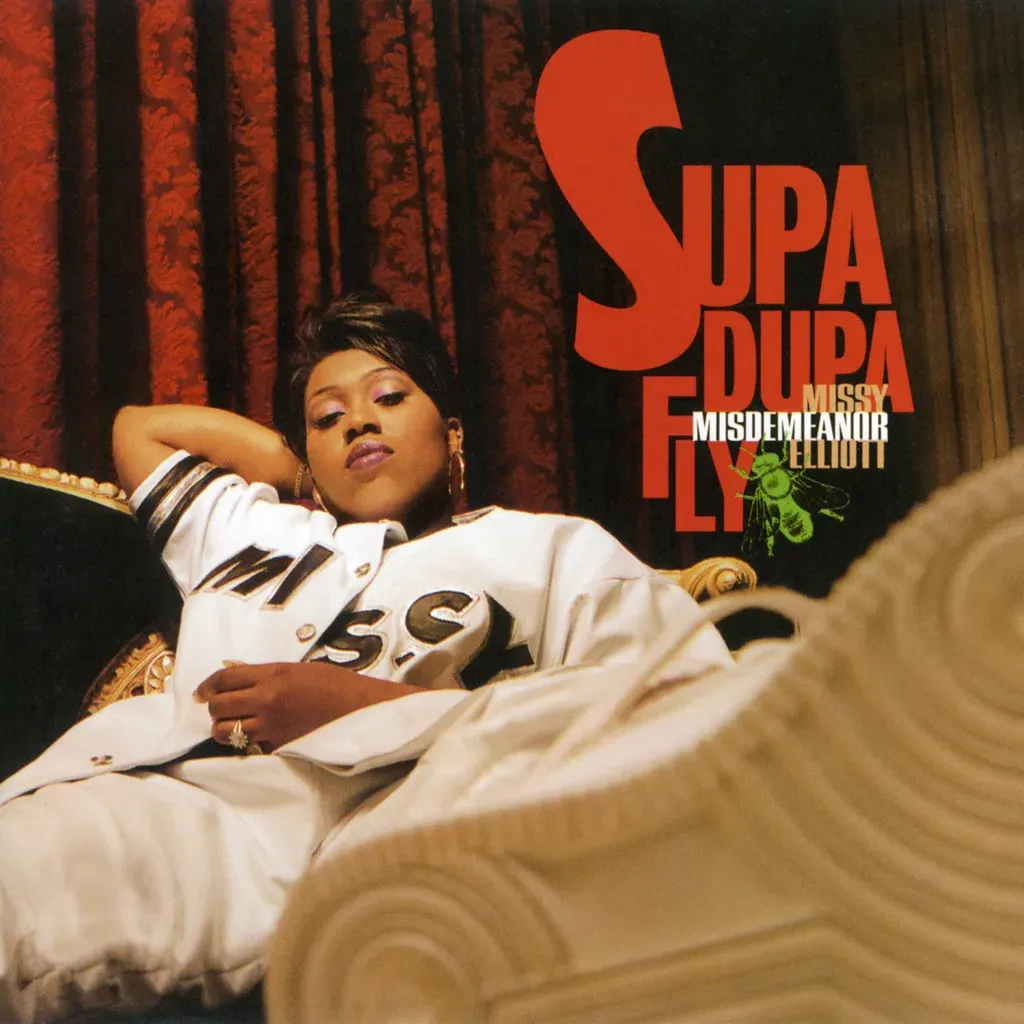
A good remix takes what’s great about the original and expands upon it. “4 My People” by Missy Elliott featuring Eve was already a total dancefloor banger, but London electronic duo Basement Jaxx managed to give the song even more energy than seemed possible. Adding a heavy dose of house music to the production and extending the length to seven minutes, Basement Jaxx made listeners feel like they were at the club. More sounds were added, but they never distracted from the song’s addictive rhythm and catchy hooks.
Basement Jaxx hit the nail on the head with this remix. Missy Elliott’s big hit was a fan-favourite hip-hop song, and Basement Jaxx turned it into an iconic dance floor anthem. It’s a reminder that a great remix doesn’t have to transform the original’s DNA. Sometimes the right move is simply to amplify what’s already there until the room can’t stand still.
What ties these 13 moments together is not just chart performance or streaming numbers. It’s the fact that each remix understood something about the original song that had not yet been fully expressed. The remix format, at its best, is not an act of replacement but of completion. Remixes can make you appreciate the original more, but there are times where a remix totally overshadows the original, sometimes to the point where you think the remix IS the original. These thirteen cases suggest that’s not always a problem. Sometimes, that’s exactly the point.