Every once in a while, an audition stops being a routine industry ritual and becomes the moment a film, or an entire career, tips in a completely different direction. Casting decisions usually happen quietly, behind closed doors, long before anyone in the audience has a reason to care. Yet a handful of these sessions left such a mark that they are still discussed decades later, not just as trivia but as turning points that reshaped how Hollywood thinks about risk, talent, and timing.
Harrison Ford’s accidental audition for Han Solo


Harrison Ford was not supposed to be in the room at all. He was working as a carpenter to support his family in the mid 1970s, and one of his jobs happened to involve building an office entrance for Francis Ford Coppola, where George Lucas was holding early casting sessions for a new science fiction film. Harrison Ford was working as a carpenter for Francis Ford Coppola when George Lucas walked in to begin the first interviews for Star Wars. Lucas had made a point of avoiding actors from his previous film, American Graffiti, since he did not want the new project compared to it.
Ford ended up reading lines with other actors purely as a favor to the casting team, standing in so hopefuls trying out for Luke Skywalker had someone to play off. Casting director Fred Roos asked Ford “to read as a favor to them,” and after reading with all the other actors, they gave him the part. Lucas later confirmed the screen tests made the decision obvious, recalling that when he watched the screen tests, “there was just no question about who was the best,” and he hired him for Star Wars. A role born out of convenience turned into one of the most recognizable characters in film history, and it reshaped the trajectory of Ford’s entire career.
Marlon Brando’s cotton ball screen test for The Godfather

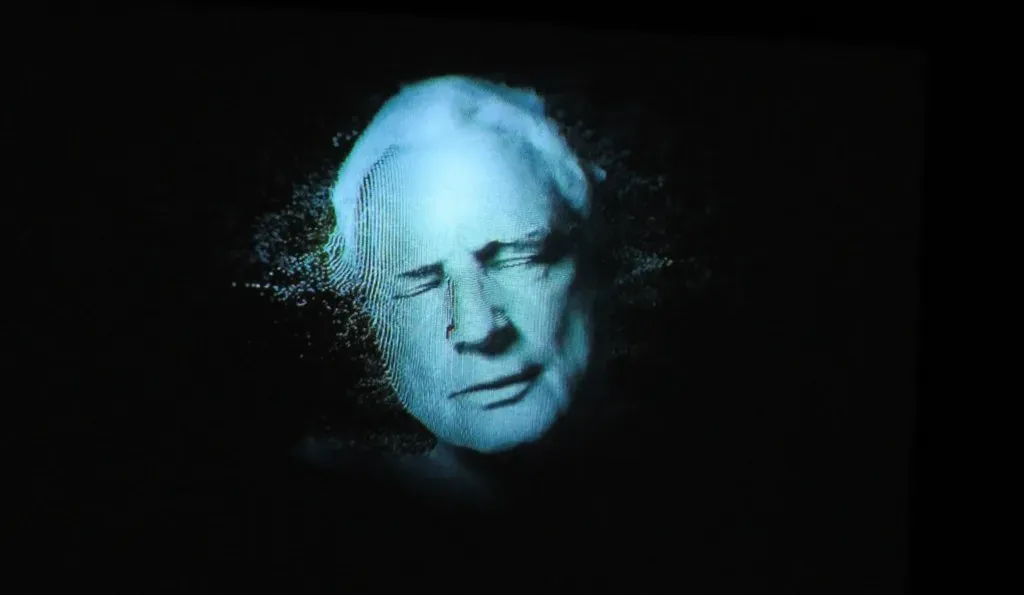
By the early 1970s, Marlon Brando’s name carried real risk rather than guaranteed box office. He had appeared in a series of flops in the mid 1960s that made him unhirable, until Francis Ford Coppola fought to have him play Don Vito Corleone in The Godfather. Paramount was deeply skeptical, and the studio only agreed to consider him under strict conditions.
Partner offer

The compromise was a screen test, something Brando rarely had to do given his stature. The studio agreed “if Marlon will do a screen test and do it for nothing and put up a million-dollar bond that he wouldn’t cause trouble during the production.” For that test, Brando transformed his own appearance, and as one retrospective describes it, he transformed himself into the ageing mafia don, stuffing his cheeks with cotton balls to create Vito’s distinctive jowls and adopting a gravelly voice that would become one of the character’s trademarks. The test won over a reluctant studio, and the resulting performance did more than save one film. It helped launch a new era of gritty, character-driven filmmaking in American cinema, and it gave Brando a second Academy Award at a point when many had written him off.
Kate Winslet fighting for Rose in Titanic


James Cameron did not initially see Kate Winslet as his leading lady. According to accounts of the casting process, Cameron had wanted a better-known actress for the part, and favored Winona Ryder, Claire Danes and Gwyneth Paltrow over Winslet. Winslet had built a strong reputation through films like Sense and Sensibility and Hamlet, but that critical respect had not yet translated into the kind of star power Cameron was looking for in a film of this scale.
She pushed for the opportunity anyway. She secured an audition and went on camera with actor Jeremy Sisto, impressing Cameron with her performance, though he worried that her look would not fit the character. Rather than walking away, Winslet agreed to audition again, this time with Leonardo DiCaprio, whom Cameron considered for the male lead. That second reading settled the matter, and the pairing became one of the most commercially successful screen partnerships in film history, turning Titanic into a global phenomenon and cementing Winslet as one of her generation’s defining leading actresses.
These three sessions share very little on the surface. One happened by chance in a carpenter’s toolbelt, one was staged reluctantly to satisfy a nervous studio, and one required a young actress to push past a director’s initial doubts. Each of them, though, ended with a decision that reshaped not just a single film but the wider direction of the actor’s career, and in each case, Hollywood ended up rewriting its own expectations because someone in a small room made a choice worth remembering.Partner offer
Planning a trip to Vegas?
Compare hotel rates and show tickets on VEGAS.com.