Some ideas don’t just move the needle. They flip the entire table. Throughout history, certain individuals arrived at a single, crystallizing insight so powerful that it reshaped the world as every person before them had known it. We’re not talking about the slow, grinding work of committees or the steady accumulation of institutional knowledge. We’re talking about one person, one idea, and an aftershock that is still reverberating today.
Honestly, it’s both humbling and a little thrilling to look back at these moments. Each of these three geniuses came from unexpected places, faced serious doubt, and still managed to hand humanity something it had never possessed before. Get ready to see familiar names in an entirely new light. Let’s dive in.
Isaac Newton: The Man Who Unified the Universe With One Law
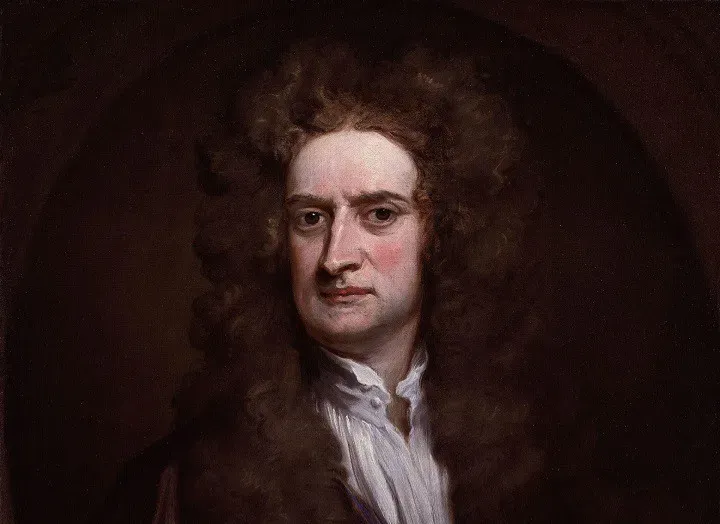
Here’s a thought that should stop you cold. Before Isaac Newton, nobody could explain why the planets stayed in their orbits. The best guess people had was that some invisible shield held them in place. No one had been able to explain why the planets stayed in their orbits, and less than 50 years before Newton was born, it was thought that they were held in place by an invisible shield. Newton proved they were held in place by the Sun’s gravity. That’s how radical the shift was.
In 1665, the plague closed his university, and for most of the following two years Newton was forced to stay at home. It was during that enforced isolation that he laid the foundations of calculus and extended an earlier insight into the elements of circular motion, applying his analysis to the Moon and planets and deriving the inverse square relation, which was later crucial to the law of universal gravitation. Think about that. One of the most consequential scientific discoveries in human history was born out of a pandemic quarantine.
The publication of Newton’s law became known as the “first great unification,” as it marked the unification of the previously described phenomena of gravity on Earth with known astronomical behaviors. In other words, Newton proved that the same invisible force pulling a falling apple toward the ground was the exact same force keeping the Moon locked in its orbit around the Earth. Same force. Same law. Everywhere in the universe.
Together, Newton’s laws of motion describe the relationship between any object, the forces acting upon it, and the resulting motion, laying the foundation for classical mechanics. They contributed to numerous advances during the Industrial Revolution and were not improved upon for more than 200 years. Many of these advances still underpin non-relativistic technologies today. That’s an almost incomprehensible legacy for one man’s one core idea.
To this day, reflecting telescopes, including the Hubble Space Telescope, are mainstays of astronomy, another direct inheritance from Newton’s optical work. I think it’s safe to say the world literally looks different because of him, in more ways than one.
Albert Einstein: The Patent Clerk Who Rewrote Space and Time
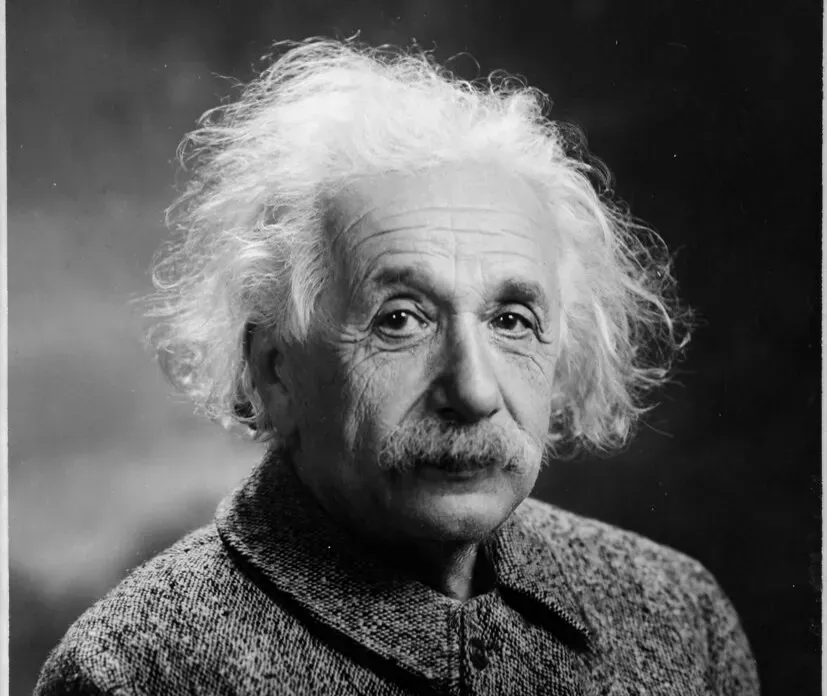
Let’s be real. If you told a colleague in 1904 that a young patent clerk with no university affiliation was about to overturn two hundred years of established physics, they would have laughed you out of the room. Yet the theory of relativity transformed theoretical physics and astronomy during the 20th century, superseding a 200-year-old theory of mechanics created primarily by Isaac Newton. It happened anyway. That’s the thing about a truly brilliant idea. It doesn’t care who’s holding it.
Albert Einstein’s 1905 theory of special relativity revolutionized modern physics. This groundbreaking theory explains how speed affects mass, time, and space, and introduced the world to the most famous equation in science: E = mc². That single equation, derived from one foundational insight about the constancy of the speed of light, connected energy and mass in a way that nobody had previously imagined possible.
Special relativity produced the most famous equation ever written: E = mc². It says that the energy associated with an object is equal to its total mass multiplied by the square of the speed of light. As the speed of light is about 300,000 km per second, this means there is a whole lot of energy tied up in any mass. Knowing about this energy ultimately gave us nuclear power plants and nuclear bombs. The scale of the consequences, for better and for worse, is staggering.
As a result, time on a GPS satellite clock advances faster than a clock on the ground by about 38 microseconds a day. This might not seem like a big difference, but if left unchecked it would cause navigational errors within minutes. GPS compensates for the time difference, electronically adjusting rates of the satellite clocks. Every time you navigate with your phone, you are benefiting from Einstein’s relativity. It’s not theoretical anymore. It never really was.
General relativity predicted that light would bend in a gravitational field. In 1919, British expeditions to Africa and South America observed a total solar eclipse to see if the position of stars near the Sun had changed. The observed effect was exactly what Einstein had predicted, and Einstein instantly became world-famous. It’s hard to say for sure, but I think that 1919 eclipse confirmation may have been the single most dramatic public proof of a scientific theory in all of recorded history.
Nikola Tesla: The Visionary Who Electrified a Planet
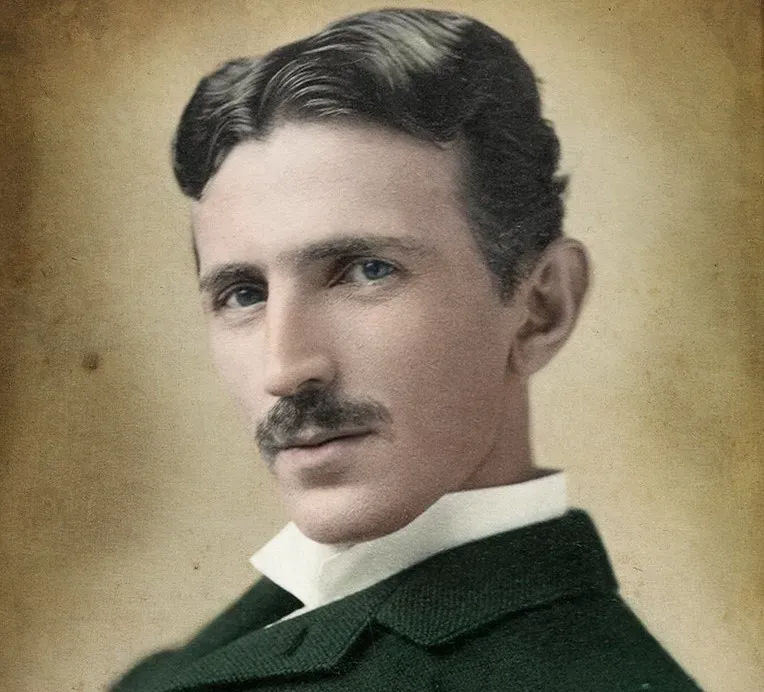
Picture the world at the end of the 19th century. Homes lit by candlelight. Factories limited by proximity to energy sources. Cities shrouded in gaslight after dark. Then one man’s singular insight about rotating magnetic fields changed all of that, almost overnight. Tesla pioneered the generation, transmission, and use of alternating current (AC) electricity, which can be transmitted over much greater distances than direct current. That “much greater distances” part is everything. It meant a city no longer had to be next to its power source.
Tesla did not invent alternating current, as that work began with Michael Faraday’s early experiments in the 1830s, but Tesla revolutionized its application with the rotating magnetic field. This led to the development of a practical system of AC power, including the AC induction motor in 1887 and the polyphase AC system in 1888, inventions which made it possible to efficiently transmit power over long distances and thus power entire cities. The distinction matters. Tesla’s genius was not invention from nothing. It was the leap from theory to working reality.
In 1887, Tesla filed for seven U.S. patents describing a complete AC system based on his induction motor and including generators, transformers, transmission lines, and lighting. Seven patents. One cohesive system. A complete blueprint for the electrified world we still inhabit today. Our AC power system remains essentially unchanged today. That’s the quiet miracle hiding in plain sight.
Together, Tesla and Westinghouse lit the 1893 World’s Columbian Exposition in Chicago and partnered with General Electric to install AC generators at Niagara Falls, creating the first modern power station. Lighting up a world exposition was a statement. It was Tesla essentially telling the world what the future was going to look like, in real time, in blazing electric light.
Tesla obtained around 300 patents worldwide for his inventions. Yet he died nearly broke, his broader visions for wireless energy transmission never fully funded. What matters is that his innovations, and his inexhaustible enthusiasm to promote their uses, advanced human progress, while his life and legend continue to inspire new generations of makers and thinkers. Few stories in the history of science carry quite that bittersweet combination of triumph and tragedy.
Three minds. Three breakthrough moments. Three ideas that cascaded outward until they became the invisible architecture of civilization itself. Newton gave us the rules of the universe, Einstein rewrote them, and Tesla wired the world to run on their implications. What would you have guessed lay behind the switch when you flipped on the lights tonight?