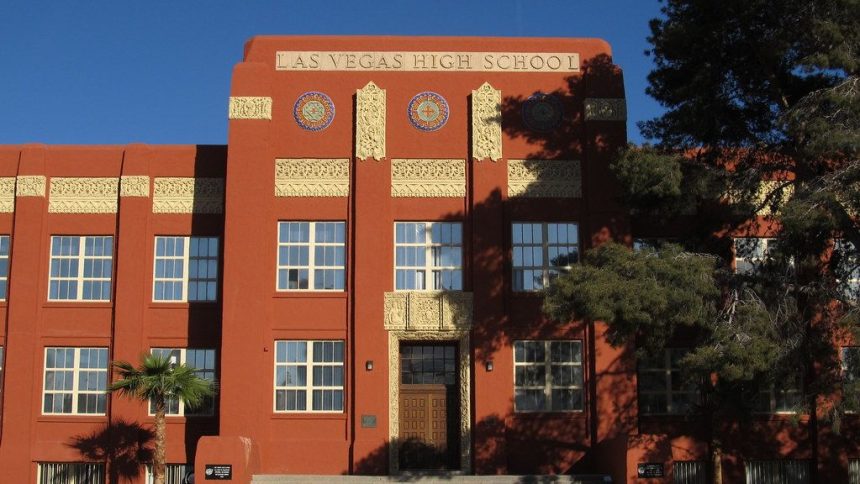
Las Vegas is a city that tears down its own history like it’s changing a slot machine. Whole eras vanish overnight, replaced by glass towers and resort megaplexes that age faster than they were built. So when something genuinely old survives in this town, it’s not just remarkable. It feels almost defiant.
Standing quietly in downtown Las Vegas, the original Las Vegas High School building – now home to the Las Vegas Academy of the Arts – has been watching this city reinvent itself for nearly a century. It doesn’t shout. It doesn’t flash. It just endures, and honestly, that might be the most Las Vegas thing about it. Let’s dive in.
A Building Born From Controversy and Community Ambition
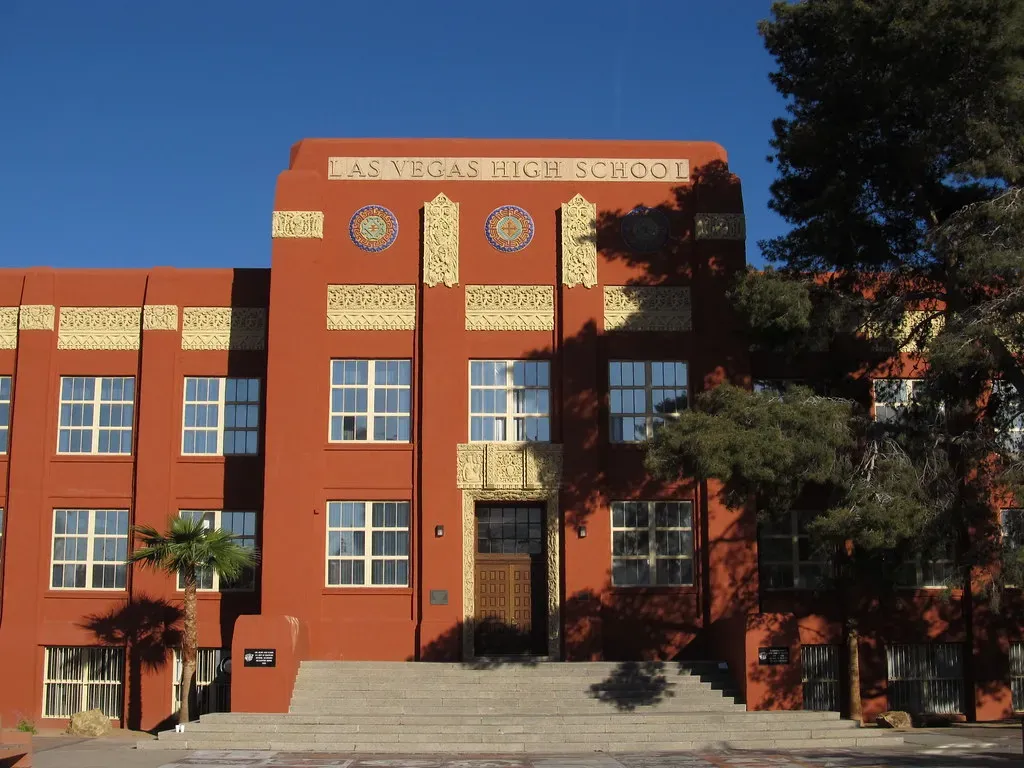
As the population of Las Vegas grew through the 1920s, and the construction of Hoover Dam became increasingly certain, many residents saw an urgent need for a new high school. Principal Maude Frazier had to overcome public criticism that the proposed location was simply “too far out of town.” Let’s be real – it’s almost hilarious in retrospect. A spot that now feels like the city’s historic core was once considered the middle of nowhere.
Despite fierce opposition, Frazier led a successful bond measure to fund the school. The result was a noteworthy example of Art Deco architecture, completed in 1930 for $350,000. That’s roughly equivalent to several million dollars today. For a desert city barely on the map, it was an extraordinary civic statement.
The Aztec Moderne Style That Sets It Apart
The academic building and gymnasium represent a specific subset of Art Deco style known as “Aztec Moderne,” in which Aztec design motifs were used within an overall Art Deco palette of forms and materials. It’s a label that sounds strange until you actually see the building, and then it clicks immediately. Think geometric boldness layered with something ancient and southwestern.
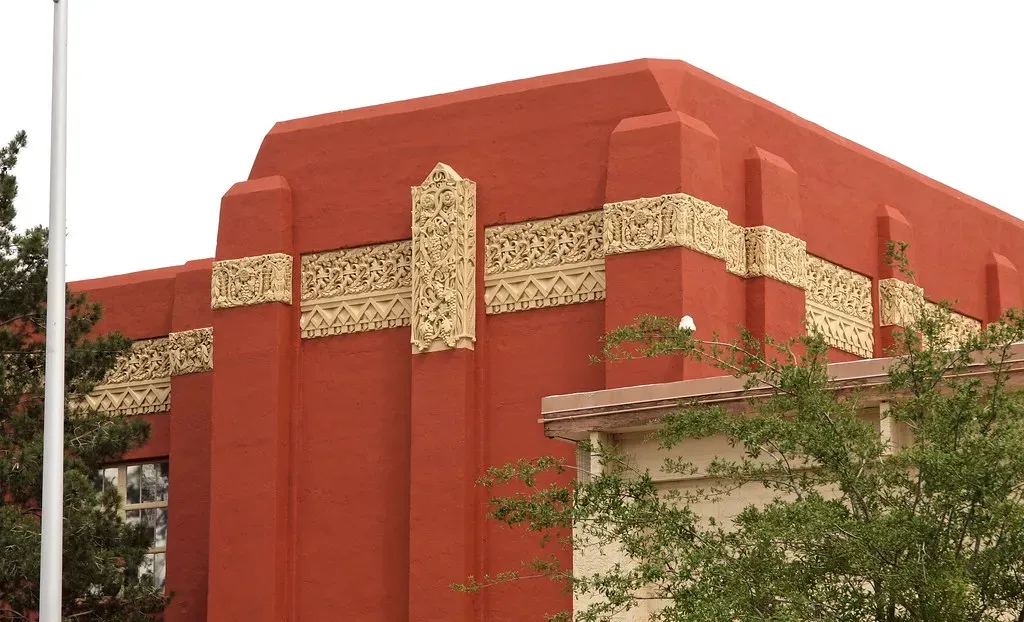
Taking cues from pre-Columbian cultures of Central America and Art Deco motifs, the historic Las Vegas High School is beautifully adorned with intricate friezes depicting figures, flora, and fauna. The stucco-covered reinforced concrete buildings are decorated with a variety of polychrome medallions and friezes depicting animals and plants. That level of decorative craft is almost unimaginable in a public school building today.
Designed by a Father-Son Duo From Reno
Described as the best example of Art Deco in Las Vegas, the school was designed by father-and-son architects George A. Ferris and Son of Reno, Nevada. It’s a detail that often gets overlooked, but it matters. These weren’t out-of-town big-city architects parachuting in – they were Nevadans who understood the landscape and the culture.
Designed by the father-son firm of George A. and Lehman A. Ferris of Reno, the three-story concrete building has a five-part facade marked by a central pavilion and two corner pavilions flanking two recessed sections, all marked off by buttresses. Ferris and his son, Lehman Ferris, utilized a blend of Art Deco and southwestern motifs in the buildings’ ornamentation. The result is a building that feels rooted in place rather than dropped from a catalog.
The City Grew to Meet It
Las Vegas High School was the first high school in Las Vegas, and its location caused controversy at the time. Many residents believed the school was too far away from the small population, which changed as the city grew around the school. This is one of those moments in urban history that proves visionaries right. What looks like poor planning in the short term can look like genius within a generation.
Just two years after its construction, the school was filled to capacity because of the influx of children of the workers building Hoover Dam. Las Vegas’s only high school until the 1950s, this building is certainly the best example of the Art Deco style in the city. The building didn’t just serve the community – it defined it, becoming the anchor around which a neighborhood took shape.
Protected, Preserved, and Celebrated
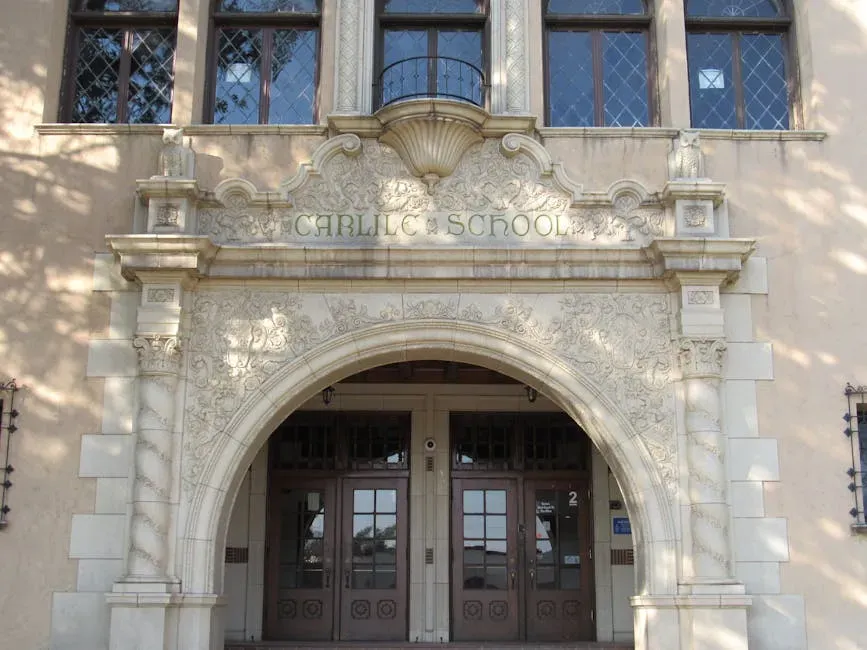
Recognizing their architectural and historical value, the Academic Building and Gymnasium were listed on the National Register of Historic Places on September 24, 1986, affirming their status as cultural icons of early Las Vegas education. The listing was expanded to include Frazier Hall in 2021. That progression tells its own story – more people, over more decades, kept deciding this place was worth protecting.
The Las Vegas High School Historic District was listed on the National Register of Historic Places in 2022. The campus reflects both the educational and architectural advancements made from the 1930s through the modern era, with significant upgrades and expansions taking place as a response to the city’s growing population. Preservation here hasn’t meant freezing things in amber. It’s been an active, evolving process.
From a High School to a World-Class Arts Academy

In 1992, plans for a magnet school for the arts were announced, and on August 23, 1993, Las Vegas High School was re-opened as the Las Vegas Academy for International Studies and Performing Arts. Starting with only 735 students, the student body has since grown to an excess of 1,700 students attending the school pursuing majors in the performing and visual arts. That growth, from a modest reopening to a thriving arts institution, is remarkable by any measure.
The school’s core programs are organized into four conservatories – Dance, Music, Theatre, and Visual Arts – offering 17 specialized majors that allow students to pursue intensive artistic development alongside a standard high school curriculum, including Advanced Placement courses. Las Vegas Academy has been honored by the U.S. Department of Education as both a New American High School and a Blue Ribbon School. The Arts Schools Network awarded the school Outstanding Arts School status for 2013-2014 and Exemplary Arts School status for 2014-2016. It’s become one of the most decorated public high schools in the entire state.
Rankings That Prove Beauty and Brains Can Coexist

Las Vegas Academy of the Arts is ranked fourth within Nevada according to U.S. News and World Report, which bases rankings on state test performance, graduation rates, and college preparation. The Advanced Placement participation rate at the school is an impressive sixty-six percent. In a state where public education faces serious challenges, those numbers are genuinely striking.
The school is proud to be one of the most sought-after schools for both the arts and academics, with a five-star rating, a near-perfect graduation rate, and some of the highest test scores in the state. The school has earned two College Success Awards since the 2021-22 school year, most recently for 2023-24, based on its success in preparing students for college. The beautiful shell houses something genuinely exceptional on the inside.
Why It Still Matters in a City That Forgets
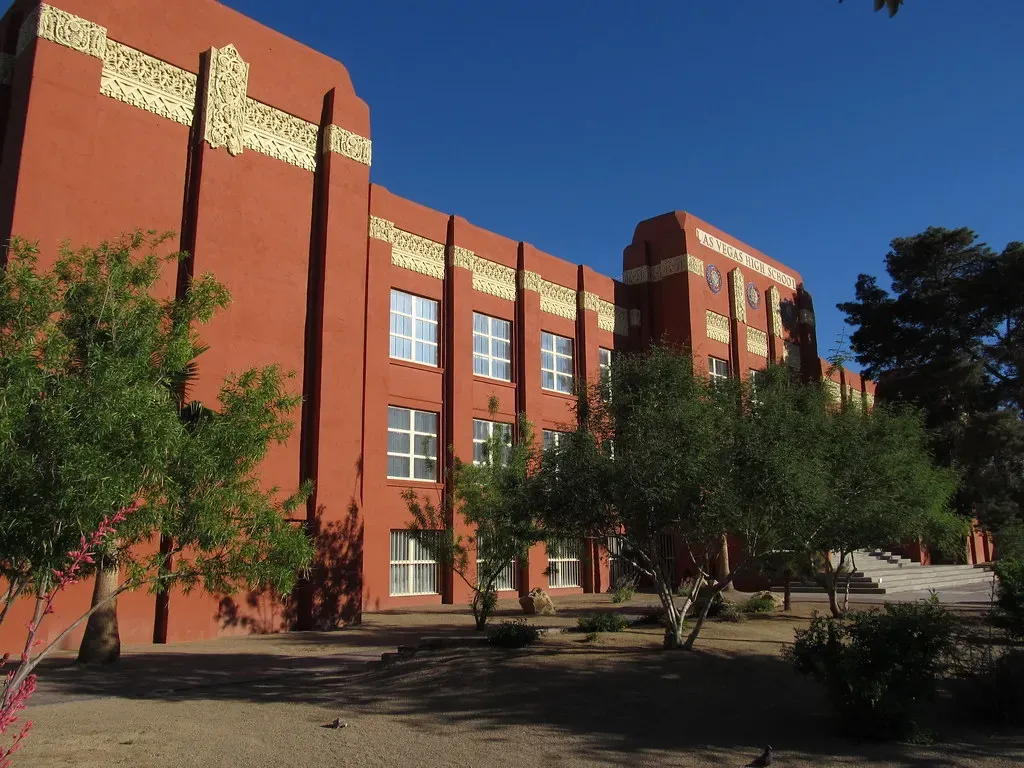
The two remaining buildings are listed as the Las Vegas High School Academic Building and Gymnasium on the National Register of Historic Places, representing Las Vegas’ best example of Art Deco architecture of the 1930s. In a city that has demolished countless landmarks without a second glance, that recognition carries real weight. Honestly, it almost feels miraculous that it’s still standing.
The school’s outer appearance has been maintained while the interior has been changed since its original construction. Today, the campus occupies a four-square-block area, with performing arts venues, classrooms, and open grounds giving the historic core space to breathe. It’s a living campus, not a museum piece, and that distinction matters enormously for its long-term survival.
A Conclusion Worth Thinking About

There’s something quietly radical about a building like this existing in Las Vegas. The city has built its entire identity around novelty, spectacle, and the thrill of the new. Yet here, just blocks from Fremont Street, a ninety-five-year-old Art Deco school stands firm – listed on the National Register of Historic Places multiple times over, housing one of Nevada’s top-ranked high schools, and still pulling visitors to its sidewalk just to photograph its friezes and buttresses.
It’s easy to walk past old buildings without really seeing them. In Las Vegas especially, where the next glittering thing is always demanding your attention, that temptation is constant. The original Las Vegas High School asks you to slow down, look closely, and understand that beauty doesn’t always need to blink to get your attention.
When a city this young has a building this significant still standing, still functioning, still inspiring – that’s not just historic preservation. That’s a kind of miracle. What does it say about a place that the oldest school in town might still be its most stunning building?