Not every world-changing invention came from a grand plan or years of deliberate research. Some of the most transformative breakthroughs in human history started with a spilled petri dish, a melted candy bar, or a dog covered in burrs. Some of the most transformative discoveries in human history weren’t the result of a direct line of inquiry – they were happy accidents, fortunate mistakes, and incredible moments of serendipity. What made the difference each time wasn’t luck alone – it was a prepared, curious mind that recognized something extraordinary hiding inside the ordinary mess.
1. Penicillin: The Mold That Rewrote Medicine

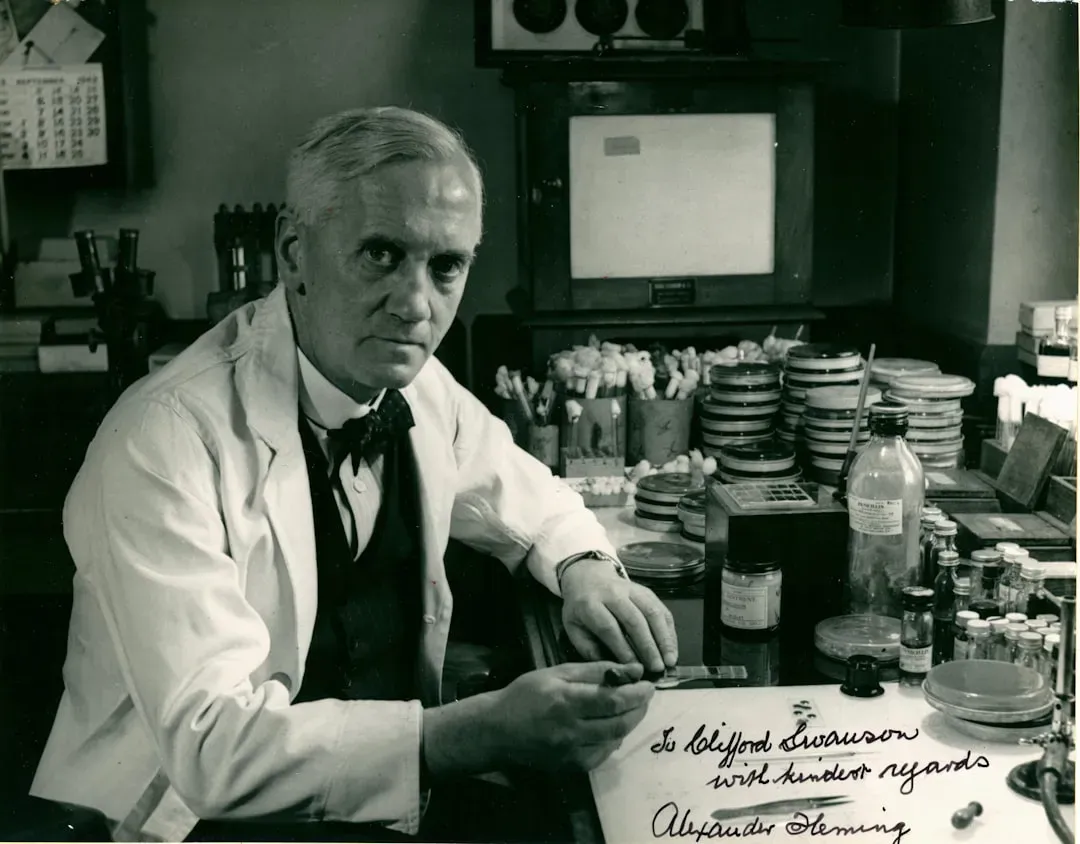
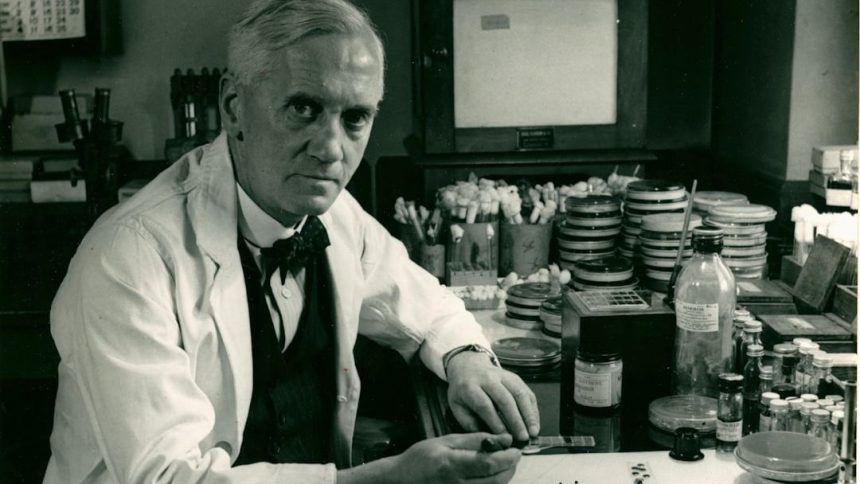
In 1928, Alexander Fleming left a petri dish of Staphylococcus bacteria uncovered. To his surprise, mold spores contaminated the dish and killed the bacteria around them. This mold, later identified as Penicillium notatum, became the foundation of the first true antibiotic: penicillin. It wasn’t a deliberate experiment – it was a messy lab and a scientist who happened to notice something that others would have tossed in the bin. While Fleming wasn’t able to purify the substance in large quantities, his accidental observation laid the groundwork for Howard Florey and Ernst Chain to develop it into a mass-produced, life-saving drug years later.
Penicillin launched the antibiotic revolution, saving countless lives from infections once considered deadly. By World War II, mass production made it a medical miracle on the battlefield and in hospitals worldwide. Since penicillin became widely available in the 1940s, antibiotics have played an indispensable role in reducing morbidity and mortality from both common ailments, such as streptococcal infections, and life-threatening conditions, like sepsis. The shadow side of that miracle is growing, however. A landmark 2024 study published in The Lancet – the first global analysis of its kind – found that more than 39 million people around the world could die from antibiotic-resistant infections over the next 25 years, with more than one million people dying each year as a result of antimicrobial resistance between 1990 and 2021. Fleming’s discovery remains one of the most pivotal moments in science, and the stakes attached to it have never been higher.
2. X-Rays: A Glowing Screen That Changed Diagnosis Forever

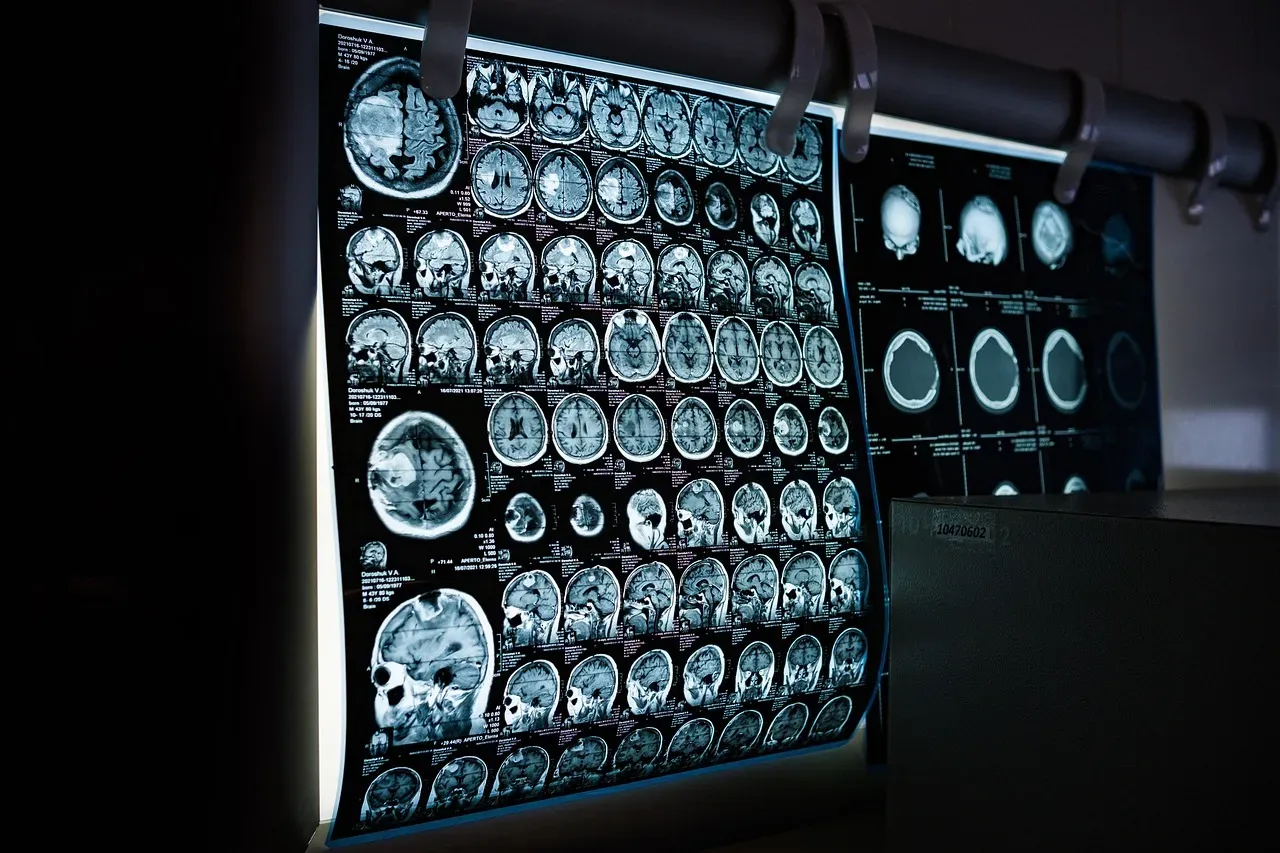
In 1895, Wilhelm Roentgen, a professor of physics in Bavaria, was working on an experiment with cathode ray tubes to learn if cathode rays could travel through a vacuum tube. What he hadn’t expected was a fluorescent screen across the room glowing on its own – without any obvious light source. To test the effect, Röntgen placed his wife’s hand between the ray source and a photographic plate. What appeared was shocking: a clear image of her bones – and her wedding ring. It was the first X-ray image in history.
Röntgen named them “X-rays” because of their mysterious quality; within weeks of his finding, doctors were already employing them to investigate fractured bones. The speed of adoption was remarkable for the era. This accidental discovery transformed medicine, physics, and even airport security. Refinements and advances in equipment design since 1920 have made X-rays much safer for patients and technicians. Today’s films use chemicals that make them more sensitive to X-rays, so they require less time and less radiation to create an image. A single evening in a Bavarian physics lab ended up reshaping how doctors see the human body – quite literally.
3. The Microwave Oven: Radar Tech That Reinvented the Kitchen


In 1945, engineer Percy Spencer was testing radar equipment at a military lab when he felt something odd – a chocolate bar in his pocket had melted. At first, he thought it was just the heat from the machine, but curiosity got the better of him. He placed popcorn kernels near the radar tube next – and they popped. Then he tried an egg, which exploded. Spencer realized the radar’s magnetron was emitting microwaves – a form of energy that could cook food from the inside out. Nobody had been trying to revolutionize cooking. Spencer was trying to win a war.
He patented the idea in 1945, and the first microwave oven was sold in 1947. Early models were big and expensive, costing about $5,000 and weighing 750 pounds. Over time, microwaves became smaller and cheaper. By the 1970s, they were common in U.S. homes. The transformation from military radar technology to countertop appliance is striking. Today, about 90% of American households have a microwave oven. Microwaves transformed kitchens, offering speed and convenience in food preparation. They also reshaped the frozen food industry, ready-to-eat meals, and modern dining habits.
4. Velcro: A Dog Walk That Spawned a Global Fastening Industry


It was in 1941 that George de Mestral took the walk that would lead to his most impactful patent. As he and his dog, an Irish Pointer, hiked through the woods, de Mestral noticed that burrs from burdock plants clung to his pants and his dog’s fur. Curious, de Mestral decided to bring a burr home so he could examine it under a microscope. He found that the burr was covered in thousands of tiny hooks, which allowed it to firmly cling to the looped threads of his clothing and the strands of his dog’s coat. Most people would have brushed off the nuisance. De Mestral asked a question instead.
It took de Mestral nearly a decade of trial and error to create a fastener that would cling as well as the burrs. In early trials, the loops were too big for the hooks, or the hooks were too big for the loops. Together with a skilled French weaver, de Mestral eventually learned how to make nearly indestructible burr-like nylon hooks. On May 13, 1955, de Mestral patented the Velcro hook and loop fastener. Soon the company was selling over 60 million yards of Velcro per year, making de Mestral a multimillionaire. Velcro has since become a practical, effective, and ubiquitous material, used in an endless list of products and applications including clothing, shoes, sports equipment, luggage, wallets, toys, and home furnishings. It has even been used in heart surgery and by NASA to keep objects tied down during space shuttle missions.
5. Post-it Notes: The Glue That Failed – Then Stuck Around Forever

In 1968, Spencer Silver, a scientist at 3M in the United States, attempted to develop a super-strong adhesive. Instead, he accidentally created a “low-tack,” reusable, pressure-sensitive adhesive for the aerospace industry. By every standard measure of the assignment, it was a failure. For five years, Silver promoted his “solution without a problem” within 3M both informally and through seminars, but failed to gain adherents. The adhesive sat in development limbo, seemingly useless.
In 1974, a colleague who had attended one of his seminars, Arthur Fry, came up with the idea of using the adhesive to anchor his bookmark in his hymn book. The original notes’ canary yellow color was chosen by chance, from the color of the scrap paper available at the lab next door to the Post-it team. Even after Fry’s breakthrough moment, the road to market was rocky. After overcoming initial marketing challenges – turns out people needed to actually try them to understand their value – Post-it Notes officially launched nationwide in 1980. Within two years, they became one of 3M’s most successful products ever. Without Silver’s “accident” discovery and Fry’s persistence, the Post-it Note might not be used in more than 150 countries today.
6. The Pacemaker: A Wrong Resistor That Keeps Hearts Beating

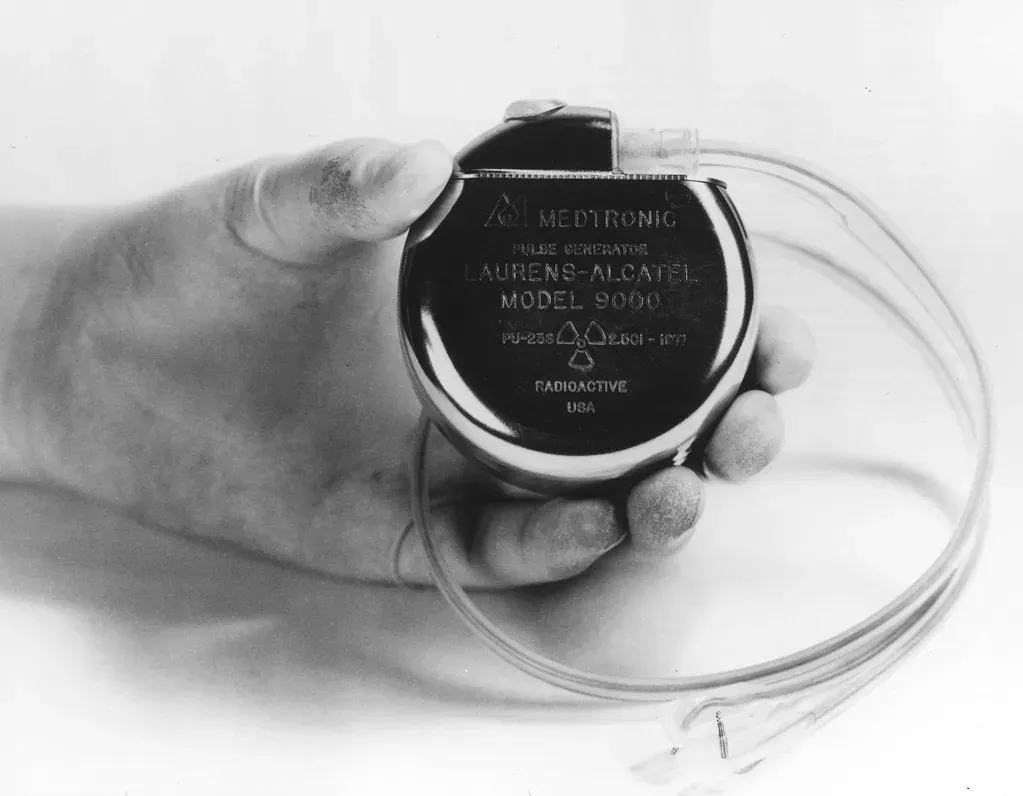
In 1956, American engineer Wilson Greatbatch accidentally installed the wrong resistor into a heart rhythm recording device. Instead of recording, it emitted electrical pulses – similar to those that could regulate a human heartbeat. This mistake led to the creation of the implantable pacemaker. The device he intended to build was never finished. The device that emerged from that error turned out to be vastly more important. It’s the kind of wrong turn that, in retrospect, feels like fate – though it was really just a misplaced component and a sharp mind that noticed the implication.
The pacemaker has saved millions of lives by correcting irregular heart rhythms and keeping patients’ hearts beating steadily. It’s now a cornerstone of cardiac care worldwide, and its lineage traces directly back to a careless equipment mix-up in a research lab. What unites these stories is not just chance, but open-mindedness. Each inventor recognized the significance of something unexpected. Where another might have dismissed an accident, they saw opportunity. The pacemaker is perhaps the most intimate example of this principle – its very pulse now lives inside millions of human chests, a quiet reminder that some of the most profound progress begins not with a plan, but with a mistake.