
Think back to the hours spent memorizing the periodic table or diagramming sentences. Useful, maybe. But for a lot of women, those lessons never came close to preparing them for the real decisions they’d face as adults. The gap between what school covers and what life actually demands has a way of showing up at the worst possible moments.
There are a handful of subjects that consistently come up when women reflect on their education. Not skills they picked up late, exactly, but knowledge they had to piece together on their own, often the hard way. Here are four of them.
How Money Actually Works
The 2025 Personal Finance Index finds that only about 45% of women in the U.S. are considered financially literate. That’s a striking number when you consider how many daily decisions hinge on understanding interest rates, debt, or investment basics. Women lacking competency in financial literacy face serious repercussions, such as taking on large amounts of credit card debt, defaulting on student loans, and experiencing difficulty managing income, taxes, and investments.
The problem often isn’t motivation. More than one in two women surveyed said “I wish I understood more about my finances, but I don’t know where to start,” compared to roughly half of men who said the same. Only about 16% of women between the ages of 40 and 65 have ever received any formal financial education, according to a 2022 survey. School could have changed that trajectory early on, long before student loans, mortgages, and retirement accounts entered the picture.
Salary Negotiation and Knowing Your Own Worth

Men are roughly four times more likely to negotiate salaries than women, and that reluctance leads to long-term income disparities that are hard to reverse. The lifetime effect is substantial. Over her lifetime, the average female worker loses over $530,000 due to the gender wage gap, while a college-educated woman faces losses closer to $800,000. Those aren’t abstract numbers. They translate directly into retirement savings, housing options, and financial security.
Partner offer
In 2024, women earned an average of 85% of what men earned, according to Pew Research Center’s analysis of median hourly earnings. Caregiving responsibilities often lead women to reduce hours or pause careers, while barriers to advancement and bias in pay negotiations widen the gap even further. Teaching girls to understand market value, to research what roles pay, and to advocate for themselves in professional settings could have a meaningful impact. Negotiating isn’t about confrontation – it’s about knowing your market value and confidently asking for fair compensation.
Menstrual and Reproductive Health Literacy

Around the world, menstrual health and hygiene needs are being overlooked due to limited access to information, education, products, and services, according to a UNICEF and WHO report on menstrual health in schools globally. The numbers in the U.S. aren’t much more reassuring. As of 2025, only 13 states have direct curricula for menstrual education within K-12 health programs, and when it is taught, the quality varies significantly from one school district to another.
A survey conducted with over 1,000 menstruating students in the U.S. found that nearly three quarters have questions about their periods, yet only about 43% report that periods were an openly discussed topic in schools. Most lessons heavily focus on the biological processes of menstruation, often skimming or skipping topics like hygiene, stigma, and health challenges. Understanding your own cycle, what’s normal, what isn’t, and how conditions like PCOS or endometriosis present, is the kind of knowledge that affects doctor visits, work, and daily wellbeing for decades.
Boundaries, Assertiveness, and the Right to Say No
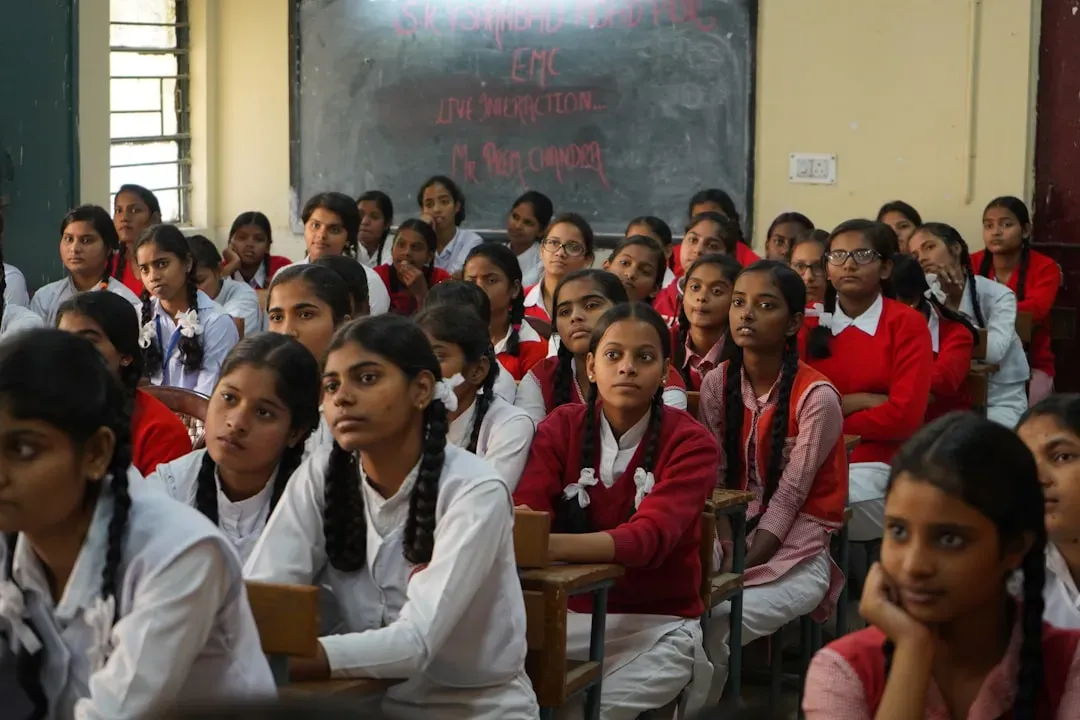
School teaches academic subjects well enough, but social and emotional skills – particularly those that help girls develop a clear sense of personal boundaries – tend to be treated as secondary. Research consistently shows that girls are socialized to be accommodating, agreeable, and quiet, often at the expense of their own needs. Research shows that the gap in confidence isn’t necessarily about a lack of ability; it’s often about the social environment kids grow up in, where girls are subtly encouraged to doubt themselves even when they’re performing well.
That conditioning follows women into adulthood, shaping how they handle workplace conflict, personal relationships, and medical appointments. Women who were never taught that advocating for themselves is not only acceptable but necessary often spend years learning this lesson through difficult experiences. Although a large majority of women rate their financial and personal literacy as “good,” this self-assessment is often accompanied by lower confidence in managing change and a greater likelihood of feeling anxious or ashamed. The ability to set boundaries clearly, without guilt, is a skill. It can absolutely be taught.
It’s worth noting that none of these four subjects are particularly complex or controversial. They’re practical, grounded, and directly relevant to how women navigate adult life. The fact that they’ve been largely absent from formal education is less a mystery and more a reflection of what has historically been considered worth teaching. That’s a conversation schools, parents, and curriculum designers are slowly beginning to have – and not a moment too soon.Partner offer
Planning a trip to Vegas?
Compare hotel rates and show tickets on VEGAS.com.