Most of us spent over a decade absorbing facts, rules, and diagrams that were presented as settled truth. Teachers wrote them on chalkboards with full confidence, textbooks printed them in bold, and nobody in the room raised a hand to question them. It felt solid.
The problem is that some of what got burned into our brains simply wasn’t right, or has since been dismantled by better research. After 50, it’s worth taking a second look at a few of the big ones.
You Only Use 10% of Your Brain

This common classroom claim has been debunked by neuroscientists for years. In reality, brain imaging shows that virtually all parts of the brain have identifiable functions, and even when you’re resting or asleep, your brain is still active in complex ways. The myth likely started as a loose metaphor for human potential and somehow made the leap into science class as literal fact.
Research shows that the brain uses about a fifth of the body’s total energy, and experts at institutions like Johns Hopkins have noted that humans “use virtually every part of the brain.” Technologies like PET scans have made this crystal clear. Positron Emission Tomography scans changed the way we understand the human brain, and they confirm that all humans are using the full extent of it.
The Food Pyramid Was a Reliable Guide to Healthy Eating

In the 1990s, the Food Pyramid was everywhere. Developed by the U.S. Department of Agriculture as a nutrition education tool, it was plastered on cereal boxes, bread bags, TV commercials, and elementary classrooms – published at a time when Americans had a dramatically different understanding of what constitutes a healthy diet, fueled by a combination of supply chain imbalances, outdated science, and good marketing.
The problem with the US government’s original Food Guide Pyramid, released in 1992, was that it conveyed the wrong dietary advice. With an overstuffed breadbasket as its base, it failed to show that whole grains are healthier than refined grains, and with fat relegated to the “use sparingly” tip, it ignored the health benefits of plant oils. No study has actually demonstrated long-term health benefits that can be directly attributed to a low-fat diet. The USDA has since replaced it entirely with the MyPlate model.
You Are Either a Visual, Auditory, or Kinesthetic Learner

Most people who went through school in the 1980s or 1990s were told to figure out their “learning style” and lean into it. It felt personalizing, even empowering. According to research, however, there is no more widely believed and yet “thoroughly debunked” neuromyth than learning styles. The most well-known model is VAK: visual, auditory, kinesthetic.
Fifteen years of careful research consistently shows the same finding: matching instruction to a student’s supposed learning style makes no difference to their grades or learning outcomes. The idea that the brain has separate “visual,” “auditory,” and “kinesthetic” processing channels is a neuromyth with no basis in cognitive science. Scholars have found that we learn equally well whether we listen to a lecture, watch a video, or build a model, and individuals retain the same amount of information regardless of which modality they say helps them most.
Humans Have Exactly Five Senses
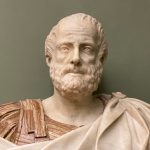
Sight, hearing, smell, taste, touch. Every science teacher said it, every textbook confirmed it, and it seemed complete enough. The idea of five senses was popularized by Aristotle, not modern science. That’s a detail worth sitting with.
Partner offer
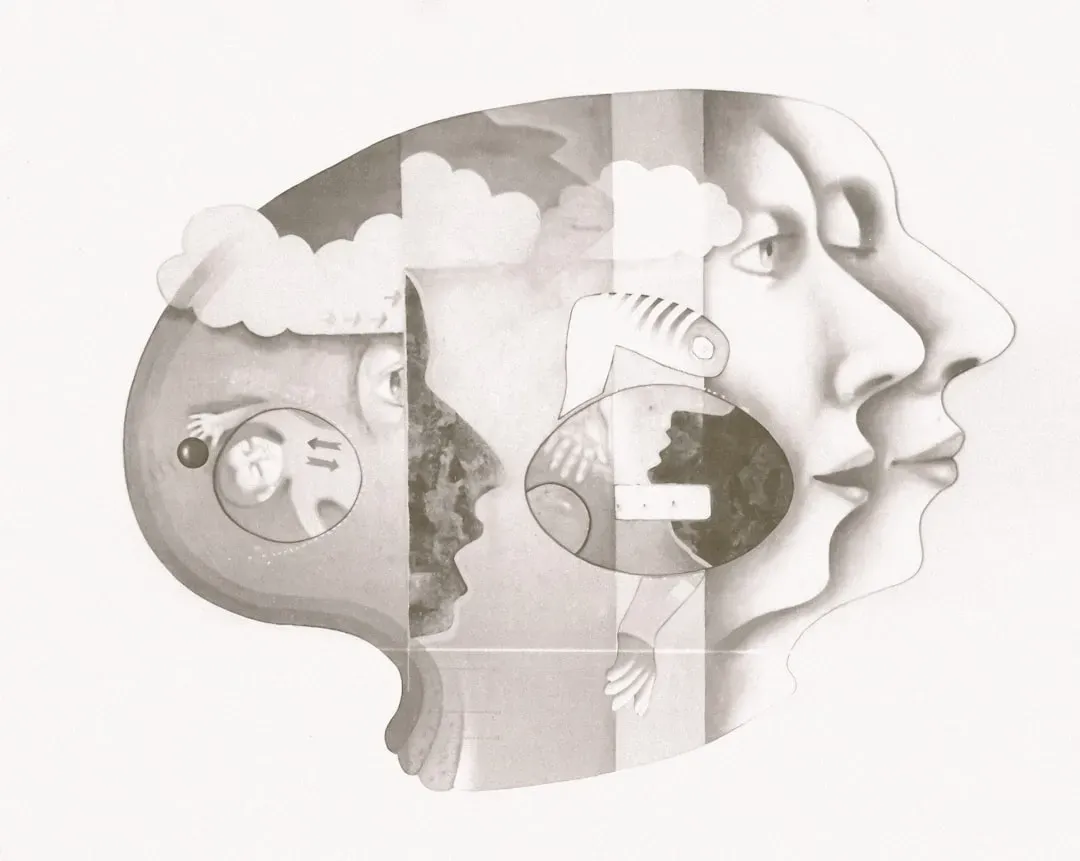
Neurologists now say humans have at least 9 to 20 senses, depending on how you count, including balance, temperature perception, pain, and body position. Aristotle’s ancient list became so entrenched in education that we forgot to update it. Modern researchers have identified up to 21 distinct senses, including proprioception, interoception, equilibrioception, thermoception, and nociception. The number still varies by researcher and definition, but “five” hasn’t been a serious scientific claim for a long time.
The Tongue Has Specific Taste Zones

The diagram was a classroom staple for decades: sweet at the tip, bitter at the back, salty on the sides. Many of us drew it on tests and got full marks. That taste map of the tongue has been proven false. All taste buds are capable of detecting all five basic tastes: sweet, salty, sour, bitter, and umami. The myth came from a mistranslation of a 1901 German paper, but it somehow made its way into textbooks for decades.
Virginia Collings’s 1974 experiments definitively proved that taste receptors respond uniformly across the tongue, debunking decades of bad science education. Still, the outdated diagram lingered in curricula long after the research had moved on. It’s a good reminder that what gets printed in a textbook and what’s actually supported by evidence are not always the same thing.
Memorization Is the Foundation of Real Learning

For generations, learning was treated as synonymous with memorization. Cramming facts and figures for tests became a staple of traditional education. That approach, however, overlooks the deeper dimensions of understanding and application. After 50, most people recognize that they retained almost nothing from pure rote drilling, while the things they actually understood stayed with them.
Research shows that learning is most effective when it involves active engagement, spaced repetition, and the application of knowledge to different contexts, rather than mere rote memorization. While memorization has its place, it shouldn’t be the primary focus. True understanding comes from connecting new information with existing knowledge and developing critical thinking skills. The school system largely rewarded short-term recall, not long-term comprehension.
A Scientific Theory Is Just a Guess

This one created a lot of confusion, and still does. In everyday conversation, “theory” means a hunch or an unproven idea. Schools taught the word without clarifying that science uses it very differently. A lot of people carry the misconception that a scientific theory, when supported through evidence, becomes a scientific law. In reality, they are two different types of scientific knowledge.
A theory explains a phenomenon, and a law describes a phenomenon. They don’t sit on a ladder where one eventually graduates into the other. Natural selection is the theory that explains why things happen in nature – so technically, it is the theory of evolution by natural selection. Calling something “just a theory” in a scientific context isn’t a criticism. It’s actually a marker of how well-supported and rigorously tested an explanation really is.
The real takeaway here isn’t embarrassment about what we were taught. Most teachers passed on the best available understanding of the time, and knowledge genuinely does change. What matters more is staying curious enough after 50 to question the things we’ve quietly held as settled, because some of the most interesting updates are still arriving.
Partner offer
Planning a trip to Vegas?
Compare hotel rates and show tickets on VEGAS.com.