Long before search engines, smartphones, or even widely available printed books, ordinary people had to carry enormous amounts of knowledge inside their own heads. Dates, rulers, calendars, causes of wars – all of it had to be retained without a single external device to look it up. The solutions they came up with were surprisingly clever, and many of them are still with us today.
Ancient humans, lacking devices to store large amounts of information, invented and developed a system of mnemonics which evolved and passed to modern times. These weren’t just fun tricks. They were survival tools for scholars, students, clergy, and anyone who needed to navigate a world where forgetting something important could have real consequences. Here are six of the most enduring examples.
1. “In 1492, Columbus Sailed the Ocean Blue” – The Date-Rhyming Tradition

Few historical facts have been drilled into more generations of schoolchildren than the year Columbus reached the Americas. The reason it sticks so effortlessly comes down to one thing: rhyme. The mnemonic “In 1492, Columbus sailed the ocean blue” was designed to help people remember the year of Columbus’s voyage to the New World. It’s almost unfairly simple, but that’s precisely why it works.
This kind of date-rhyming fits into a much older tradition of encoding historical facts into verse so they could survive in memory and be passed on orally. The use of song, dance, rhythmic music, chanting, or anything performed and repeated in rituals and ceremonies were ancient memory devices. What seems like a nursery rhyme is actually an ancient technology in disguise, one that managed to outlast textbooks, empires, and entire civilizations.
2. “Thirty Days Hath September” – The Calendar Rhyme with Medieval Roots

“Thirty Days Hath September” is a traditional verse mnemonic used to remember the number of days in the months of the Julian and Gregorian calendars, and it arose as an oral tradition, existing in many variants. Most people who know it today probably learned it as children without ever wondering where it came from. It turns out the answer reaches back centuries further than most expect.
The earliest known precursor to the English mnemonic rhyme appears in a French poem from the 13th century, which lists the lengths of the months in verse form. The first documented English version of the rhyme emerges from a manuscript dated circa 1425, unearthed by Welsh author and journalist Roger Bryan while researching historical mnemonics. The first published English version appeared in Richard Grafton’s Abridgment of the Chronicles of England in 1562. The rhyme has been called “one of the most popular and oft-repeated verses in the English language” and “probably the only sixteenth-century poem most ordinary citizens know by heart.”
3. “Divorced, Beheaded, Died / Divorced, Beheaded, Survived” – The Fates of Henry VIII’s Wives
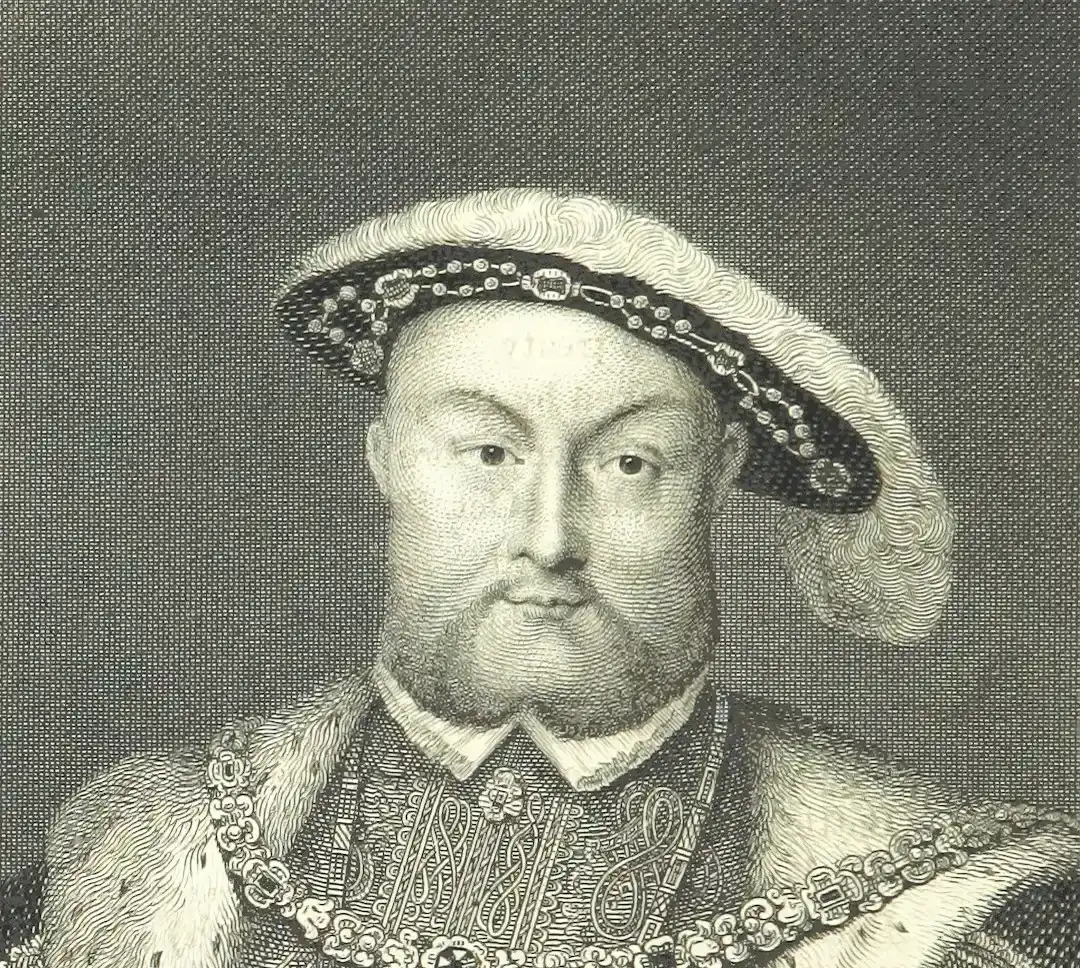
Henry VIII had six wives, and keeping track of what happened to each of them is the kind of thing that should be complicated. The names of Henry VIII’s six wives – Aragon, Boleyn, Seymour, Cleves, Howard, Parr – and their fates: divorced, beheaded, died, divorced, beheaded, survived – became a standard classroom mnemonic. The rhythm of it is almost hypnotic, which is exactly the point.
The chant became widely used in British schools, and historians note it as an essential tool for teaching the complex family tree of one of England’s most infamous monarchs. The rhyme works not just because it’s rhythmic, but because it compresses an entire chapter of political and personal drama into a handful of words. It also creates a kind of emotional hook – once you know what each word represents, the story behind it tends to follow.
4. The Method of Loci – Remembering History Through Imaginary Architecture

Mnemonic devices have been used for thousands of years as aids for memorization. One of the earliest recorded examples comes from ancient Greece in the 5th century BC when Simonides discovered a powerful technique known as the Method of Loci, which involved mentally visualizing a familiar location and associating specific pieces of information with different locations within that space. This wasn’t just used for abstract facts. It was used to memorize speeches, doctrine, historical sequences, and entire chronicles.
Cicero’s “Rhetorica ad Herennium” is believed to be the earliest treatise on mnemonics, from about 90 BCE. These arts fell into neglect after Alaric sacked Rome in 410 AD, but were subsequently revived in 1323 by Saint Thomas Aquinas, who transferred them from a division of rhetoric to ethics and used them to recall Catholic doctrine and versions of biblical history. A book about mnemonics from 1619 by Robert Fludd uses the loci method of place to build a memory palace in the form of an imaginary classical stage with five entrances. The technique never truly disappeared – it just kept changing hands.
5. MAIN – The Acronym That Compressed World War I Into Four Letters

Teaching the causes of World War I has always been a challenge. The conflict was the product of decades of tension, competing empires, and fragile alliances, none of which collapse easily into a tidy explanation. Many world history teachers are familiar with a handy acronym for teaching the causes of World War I: “MAIN,” whose letters stand for Militarism, Alliances, Imperialism, and Nationalism. It gave students a foothold in an otherwise unwieldy topic.
There were several complex factors at play leading up to the start of World War I in 1914, and a mnemonic device isn’t enough to fully understand this part of history, but it can help jog your memory in a pinch. While this acronym is a useful way to remember the range of causes, it is important to be aware that this is a modern construction used to simplify very complex ideas. That tension between utility and oversimplification is something educators still wrestle with, but few deny the acronym’s staying power in classrooms across the world.
6. The Guidonian Hand – Music Theory Worn on the Palm

Not all mnemonics lived in the mind. Some were literally mapped onto the body. The so-called “Guidonian hand” owes its name to the eleventh-century Italian music teacher and scholar Guido d’Arezzo. Arranging the different pitches in a scale onto the joints, he developed this technique to help students learn music most easily and correctly. A student could literally point to a knuckle or a fingertip and recall the corresponding pitch.
One scholar has described the Guidonian hand as “fundamental conceptual equipment” for all musicians of the time. A global survey of hand mnemonics includes Jewish hand-calendars, hand-based techniques with which mariners tracked moon and tide, an elaborate manual system for remembering key moments in Dutch history, and a mnemonic alphabet from 1579 in which different hand shapes represent different letters. The hand, always present and always portable, turned out to be one of history’s most reliable memory devices – a living reference tool that required no paper, no ink, and no printing press.
What’s remarkable about these six mnemonics isn’t just their ingenuity. It’s their durability. Techniques invented to survive the absence of written records managed to outlast the very civilizations that created them, and some are still taught in classrooms today. Memory, it turns out, has always found a way.