Most people who recite nursery rhymes to children aren’t thinking about the politics, plagues, or executions that may have shaped those cheerful little verses. They’re just trying to get a toddler to laugh or settle down before bed. Nursery rhymes have shaped our childhoods for generations, introducing us to language and nurturing early reading skills. Beneath their cheerful rhythms and playful verses, however, lie grim tales of death, disease, violence, and religious strife.
The five rhymes below are among the most widely recognized in the English-speaking world. Their true backstories range from genuinely verified history to fascinating theories that scholars still debate today. Some are darker than you’d expect. Others are simply stranger.
Ring Around the Rosie: The Plague Theory Everyone Loves (and Experts Question)

Few nursery rhymes have inspired more unsettling speculation than “Ring Around the Rosie.” Scholars have long maintained that this cryptic rhyme is about the deadly plague that killed millions of people in medieval Europe. The widely-repeated belief holds that “ring-a-round the rosie” is a coded reference to the red circular rash common in certain forms of plague, and that the “posies” were the flowers people carried to fend off the illness.
However, folklorists and historical linguists take issue with this interpretation because the rhyme did not appear in print until the late 1800s, hundreds of years after the plague. There is also no known reference tying roses to symptoms of the plague in historical texts of the time. This dark interpretation, compelling as it is, appears to be a fictional history attached to a silly children’s rhyme. A more likely explanation is that the rhyme originated in the 19th century, when Protestant dogma frowned upon dancing, and to get around the restriction, kids took to having play parties featuring pseudo-dance moves and rhymes without musical accompaniment.
Humpty Dumpty: The Cannon That Couldn’t Be Put Back Together

Humpty Dumpty describes a character who sits on a wall, falls off, and cannot be put back together by all the king’s horses and all the king’s men. Though commonly depicted as an egg in modern interpretations, there is no mention of Humpty Dumpty being an egg in the original rhyme. This has led to theories about its origins, including one that suggests Humpty Dumpty was actually a powerful cannon used during the English Civil War.
During the English Civil War in the 1640s, “Humpty Dumpty” was the nickname for a large cannon used by Royalist defenders during the Siege of Colchester. The cannon was placed atop the city wall, but when the wall was damaged by enemy fire, it tumbled down and could not be repaired or replaced. The famous lines about “all the king’s horses and all the king’s men” failing to put Humpty together again refer to the Royalists’ defeat. The association with an egg came much later, likely through illustrations in 19th-century children’s books. Worth noting: this theory itself originates with a 1956 spoof article in The Oxford Magazine, so even here, the history comes with an asterisk.
Jack and Jill: Royal Heads, Tax Scandals, and a Village Love Affair

The origins of “Jack and Jill” are murky, but several compelling theories exist. One of the most dramatic links the rhyme to the French Revolution. The characters Jack and Jill are often believed to represent King Louis XVI and Marie Antoinette. King Louis XVI was beheaded by guillotine in 1793, corresponding to “Jack fell down and broke his crown,” while Marie Antoinette was beheaded months later. The problem with this interpretation is that the earliest publication of the rhyme occurred in 1777, almost three decades before their executions.
Partner offer
A more likely possibility is that the rhyme satirized the attempt by King Charles I to reform the tax on liquid measures. Charles I reduced the volume of a “Jack” without changing the tax, as a way to raise revenue. As an unfortunate consequence, the Gill, a quarter pint in liquid measure, also went down in value, which is referenced by Jill “tumbling after” in the rhyme. There is also the more personal legend that the story commemorates a love affair between an unmarried couple who regularly met on a hill for romantic trysts. According to this account, Jill became pregnant, Jack died just before the birth of their child from a fall or a blow to the head, and Jill then died in childbirth, “tumbling after” her clandestine lover.
Three Blind Mice: Bloody Mary and the Protestant Martyrs
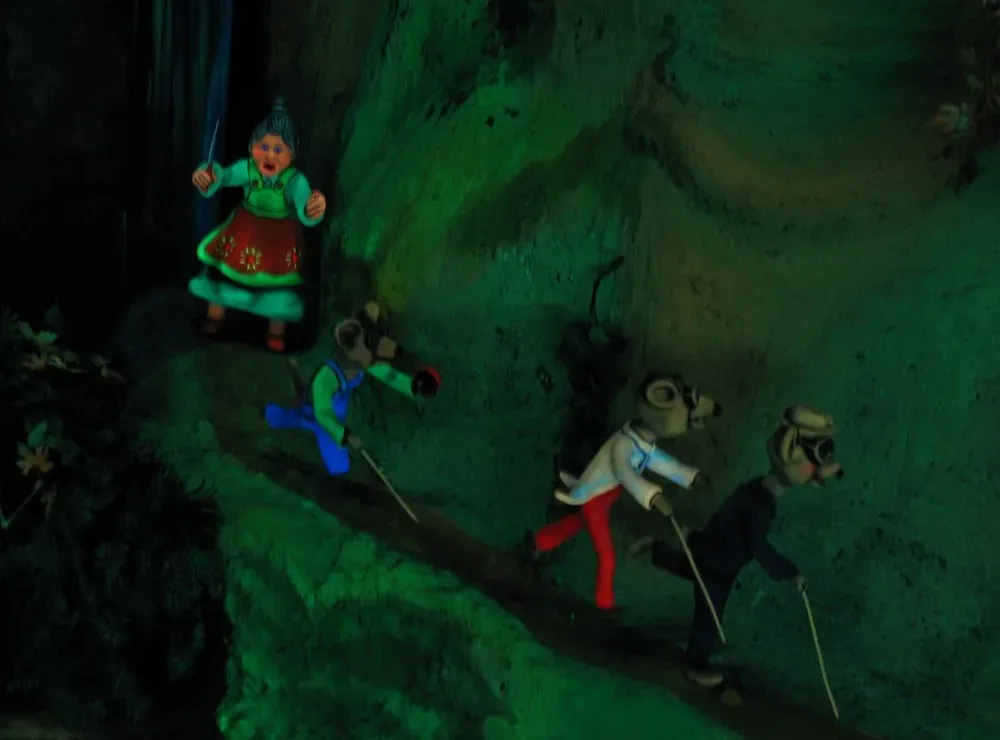
Many have thought that “Three Blind Mice” was written earlier than its 1609 publication date and that it refers to Queen Mary I of England, who was believed to have blinded and executed three Protestant bishops. It is believed that the three blind mice represent three Anglican bishops: Thomas Cranmer, the Archbishop of Canterbury; Nicholas Ridley, the Archbishop of London; and Hugh Latimer, the Bishop of Worcester. These men were staunch Protestant believers who refused to renounce their faith and became known as the Oxford Martyrs. They stood by their beliefs and were accused of heresy, convicted, and executed.
The Oxford Martyrs, Ridley, Latimer and Cranmer, were burned at the stake rather than blinded, though if the rhyme was composed by crypto-Catholics, the mice’s “blindness” could refer to their Protestantism. Complicating the theory further is the fact that the earliest lyrics don’t reference harming the mice at all, and the first known date of publication is 1609, well after Queen Mary had died. In the end, it seems like the origins of “Three Blind Mice,” like many old writings, are a matter of educated guesswork. We may never truly know the meaning behind the lyrics, though the folk history linking it to the martyrdom of three Protestants will continue to be associated with the rhyme.
Mary Had a Little Lamb: A Real Girl, a Real Lamb, and a Disputed Poem
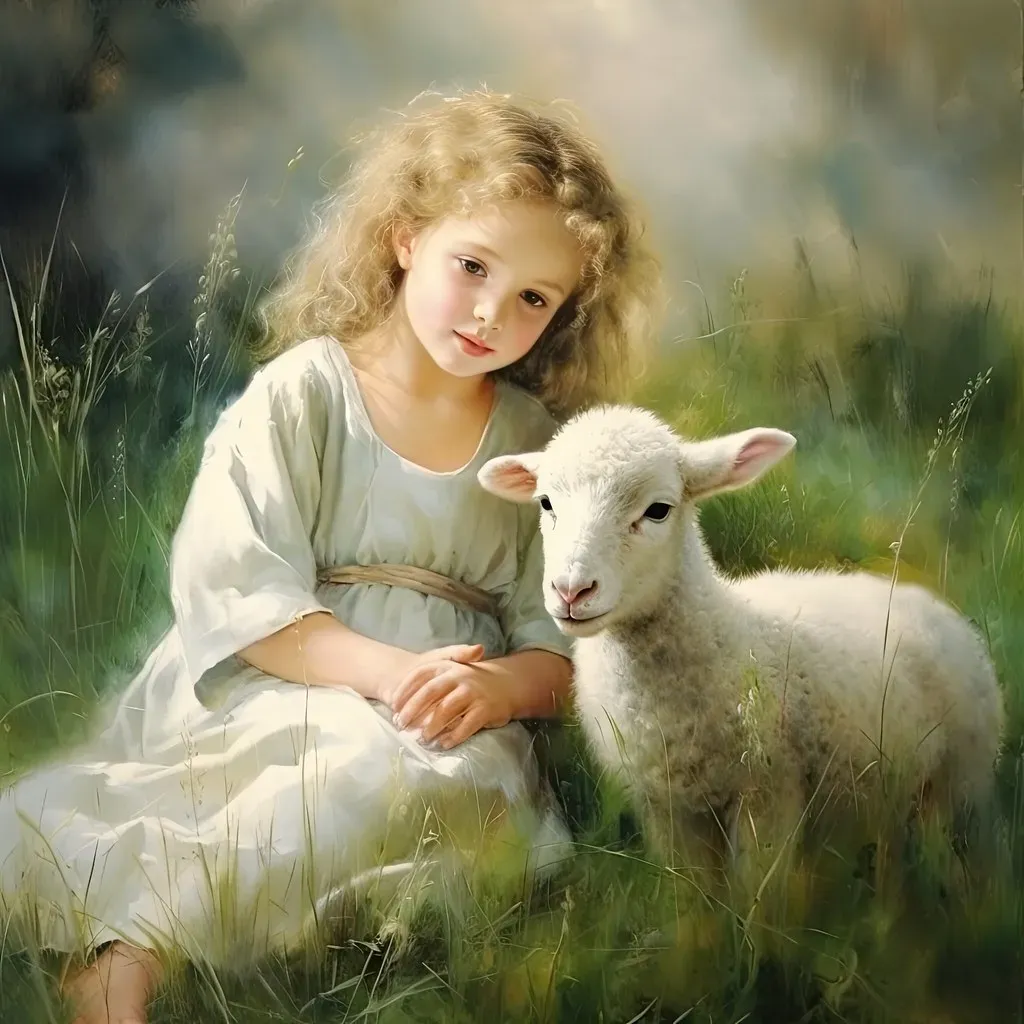
Among all nursery rhymes with real-world roots, “Mary Had a Little Lamb” stands out. It is an English-language nursery rhyme of 19th-century American origin, first published by writer Sarah Josepha Hale in 1830. The poem was first published by the Boston firm Marsh, Capen and Lyon and was possibly inspired by an actual incident. According to the popular story, in 1815 a girl named Mary Sawyer found a sick newborn lamb while assisting her father on their Sterling, Massachusetts farm. Mary convinced her father to let her keep the lamb as a pet, and she nursed it back to health. On one occasion, she was walking to school and turned to find the lamb was following her.
In 1830, author and editor Sarah Josepha Hale published a collection that included the rhyme, and she claimed to have written it herself. Since Roulstone was long gone and Sawyer had lost his original poem, controversy about the rhyme’s true origins grew. Both Hale and Sawyer signed sworn statements attesting to their versions of the story, but to date it remains unclear who exactly came up with “Mary Had a Little Lamb.” What is less disputed is what happened to the rhyme next: it became the first audio ever recorded by Thomas Edison on his newly invented phonograph in 1877, making it the first instance of recorded English verse.
What makes these rhymes so enduring is exactly this quality: they carry more weight than they show on the surface. Whether a verse started as political satire, coded protest, or just a genuine childhood moment worth capturing, the fact that we’re still singing them centuries later says something worth pausing on. The tunes stuck. The history, for most people, didn’t.
Partner offer
Planning a trip to Vegas?
Compare hotel rates and show tickets on VEGAS.com.