
Music is one of those subjects where everyone seems to have an opinion, a half-remembered fact, or a piece of advice handed down through the years. Some of those “facts” turn out to be grounded in real science. Others, it turns out, have been quietly falling apart for decades, surviving mostly on repetition and cultural momentum.
From the myth that classical music makes you smarter to the idea that you need to be born with natural talent, these stubborn beliefs shape how people approach music, how they teach it, and how they feel about themselves as listeners and learners. It’s worth taking a closer look at what actually holds up.
Myth 1: Listening to Classical Music Makes You Smarter


This one has proven almost impossible to kill. In popular culture, the “Mozart effect” refers to the claim that listening to Mozart’s music can increase your general intelligence, or IQ. The idea spawned an entire industry of products, and at one point it even influenced government policy. Back in 1998, Georgia governor Zell Miller was so enthusiastic he launched a program to distribute classical music CDs to every newborn in his state.
The science, though, never supported the hype. The author of the original study stressed that listening to Mozart has no effect on general intelligence. Frances Rauscher, Gordon Shaw, and Catherine Ky investigated the effect of listening to Mozart on spatial reasoning, and the results were published in Nature. A research team in Vienna conducted a meta-analysis of all follow-up studies and concluded, based on 40 independent studies and more than 3,000 participants over 15 years, that there is no support for the idea that listening to Mozart improves intelligence. The best explanation is that any music a listener enjoys, classical or otherwise, can temporarily enhance mood and alertness, which may slightly improve performance on certain tasks.
Myth 2: You Need Natural Talent to Learn Music

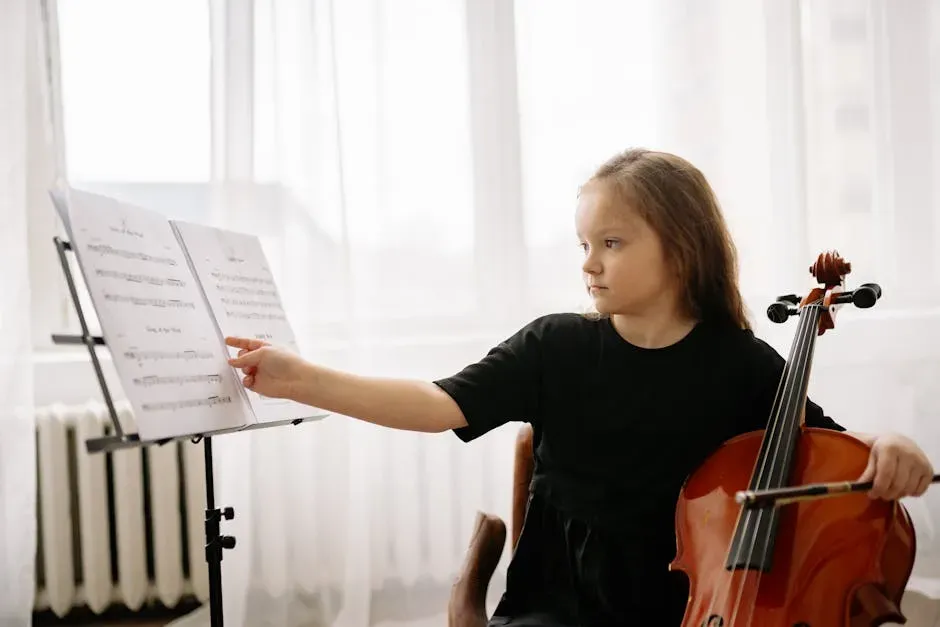
Ask most adults why they never learned an instrument and you’ll hear some version of the same answer: they just weren’t born with it. There is a myth out there that only people who are born with a “musical gift” can play an instrument or sing. It’s a comforting story in a way, because it removes personal responsibility. If talent is fixed at birth, there’s no point in trying.
Anders Ericsson, the researcher behind the theory of deliberate practice, found that top musicians didn’t rely on natural flair. They reached elite levels through years of structured, focused practice, often with expert feedback. Mozart, often considered a prime example of inborn talent, had an instructor guiding him from age 3. Even the most celebrated “natural” musicians in history were the product of relentless, structured effort. When it comes to actually becoming skilled, the science is clear: it’s mostly about what you do, not what you’re born with.
Myth 3: The Music Industry Is Dead


Ever since digital downloads disrupted the traditional album model, people have been writing obituaries for the music business. The claim that the music industry is dead has been around for decades. Album sales have plummeted. In fact, the demand for good music is higher than ever before. The channels changed dramatically; the appetite for music did not.
While streaming services have without a doubt been controversial, they significantly increased music consumption, expanded people’s listening habits, and even increased the likelihood of physical recordings being sold. The industry is not dead. It’s merely in the middle of a transformation we haven’t seen finish. There’s been no slowdown in the demand for new music, just a shift in the way fans discover and consume it. Declaring the music industry dead has always said more about resistance to change than about reality.
Myth 4: Music Lessons Automatically Make Children Smarter


Closely related to the Mozart effect myth, this belief holds that simply putting a child in music classes will boost their grades, IQ, and overall cognitive performance. More than 80 percent of American adults think that music improves children’s grades or intelligence. Even in the scientific community, there’s a general belief that music is important for these extrinsic reasons. Yet there is very little evidence supporting the idea that music classes enhance children’s cognitive development.
A 2013 study by Harvard researchers debunked the idea that music lessons automatically increase IQ, showing that while music enhances certain cognitive abilities, it doesn’t make someone smarter in the traditional sense. That doesn’t mean music education is without value. Far from it. Beyond physical benefits that include improved coordination, muscle memory, hand strength, posture, tone, and endurance, music can help manage anxiety, build self-confidence, and fight depression. The case for music in schools is rich and well-supported; it just doesn’t rest on a simple IQ boost.
Myth 5: Phil Collins Wrote “In the Air Tonight” After Witnessing a Drowning

Few music myths have had the staying power of this one. The myth behind Phil Collins’ signature song “In the Air Tonight” is that he wrote it after witnessing a drowning. Allegedly, a young boy was drowning in a lake while Collins and others looked on, unable to help. But is it true? The story has circulated for decades, passed along in conversations and online forums with total confidence.
Collins himself has stated that he doesn’t know what the song is actually about. What he has acknowledged is that the track emerged from intense personal pain around the breakdown of his first marriage, not from any lake, any boy, or any drowning. This myth has thoroughly been debunked. It’s a reminder of how compellingly dramatic stories can outpace the much quieter truth, especially when the song itself has that kind of slow-building, cinematic intensity that makes the listener want a dramatic backstory to match.
Myth 6: Classical Music Is Elitist and Not for Ordinary People


Many people still approach classical music with a sense of intimidation, as if enjoying it requires a certain level of education, income, or cultural refinement. Many assume classical music is for rich, highly educated, or snobbish concertgoers. Yet before the rise of recorded music and mass media, classical composers like Mozart, Beethoven, and Chopin were writing some of the most popular music of their day.
Mozart wrote operas like The Magic Flute in the vernacular, in German instead of Italian, deliberately so that everyday people could enjoy it. Later, composers like Franz Liszt and Niccolò Paganini were treated like modern pop stars. In fact, Liszt’s concerts caused “Lisztomania,” with audiences screaming, fainting, and scrambling to grab locks of his hair, foreshadowing the fan frenzy associated with modern celebrities. Sure, some venues are fairly formal, but many aren’t. You can enjoy classical music in relaxed settings like outdoor festivals, pubs, warehouses, barges, gardens, graveyards, crypts, even buses. The elitist image is a relatively modern invention, and it was never the whole picture.
Music myths tend to survive not because people are gullible, but because many of them contain a kernel of something appealing: a dramatic story, a reassuring excuse, or a simple explanation for a complicated thing. Knowing what’s actually true doesn’t diminish music at all. If anything, the real story behind how people learn, create, and connect through sound is more interesting than the myths that replaced it.