
History has a habit of simplifying things. A complicated series of events gets reduced to a single name, a single moment, a single hero. It’s tidy, teachable, and often wrong. The truth is that historical acclaim for discoveries is often assigned to persons of note who bring attention to an idea that is not yet widely known, whether or not that person was its original inventor.
The Matthew effect, coined by Robert K. Merton, describes how eminent scientists get more credit than a comparatively unknown researcher, even if their work is similar, so that credit will usually be given to researchers who are already famous. The six cases below show just how far from the truth the official story can drift – and how the people who actually did the work can spend decades in the shadow of someone else’s name.
Christopher Columbus and the “Discovery” of America

Christopher Columbus is often held up as the man who “discovered” America in 1492, a claim repeated in textbooks and popular culture for generations. The reality is considerably more complicated. To say he “discovered” America is a bit of a misnomer, because there were plenty of people already here when he arrived. Beyond the Indigenous populations who had lived on the continent for thousands of years, European contact had already occurred long before Columbus set sail.
Norsemen are believed to have set sail from Greenland and Iceland to become the first known Europeans to reach the North American mainland, nearly 500 years before Columbus reached the Caribbean. The 1960s discovery of a Norse settlement dating to around 1000 CE at L’Anse aux Meadows, Newfoundland, partially corroborates accounts within the Icelandic sagas of Leif Erikson’s exploration of a place he called Vinland. The American continent was named after the Florentine explorer Amerigo Vespucci, who received credit for recognizing it as a “New World,” and not after Columbus. So even the naming went to someone else.
Rosalind Franklin and the Structure of DNA

On February 28, 1953, Cambridge University molecular biologists James Watson and Francis Crick determined that the structure of DNA was a double helix polymer. Nearly ten years later, Watson and Crick, along with biophysicist Maurice Wilkins, received the 1962 Nobel Prize in Physiology or Medicine for uncovering what they called the “secret of life.” Yet another person was conspicuously absent from the ceremony. Rosalind Franklin was a chemist and X-ray crystallographer who studied DNA at King’s College London from 1951 to 1953, and her unpublished data paved the way for Watson and Crick’s breakthrough.
Franklin and her PhD student Raymond Gosling took the X-ray crystallography photograph that made history and is still studied in textbooks today. Known as “Photograph 51,” it clearly shows the double-helix structure of DNA and the genes contained inside. This photograph combined with all the research was enough to create a model that would change scientists’ understanding of DNA. Franklin was unaware that Wilkins, Watson, and Crick had used her X-ray photograph, and they did not receive her permission to use her data. Not only did they use her photograph, but they published their findings without any mention of Franklin. Franklin died of ovarian cancer at age 37 in 1958, making it impossible for the Nobel committee to recognize her when the prize was awarded four years later.
Lise Meitner and Nuclear Fission
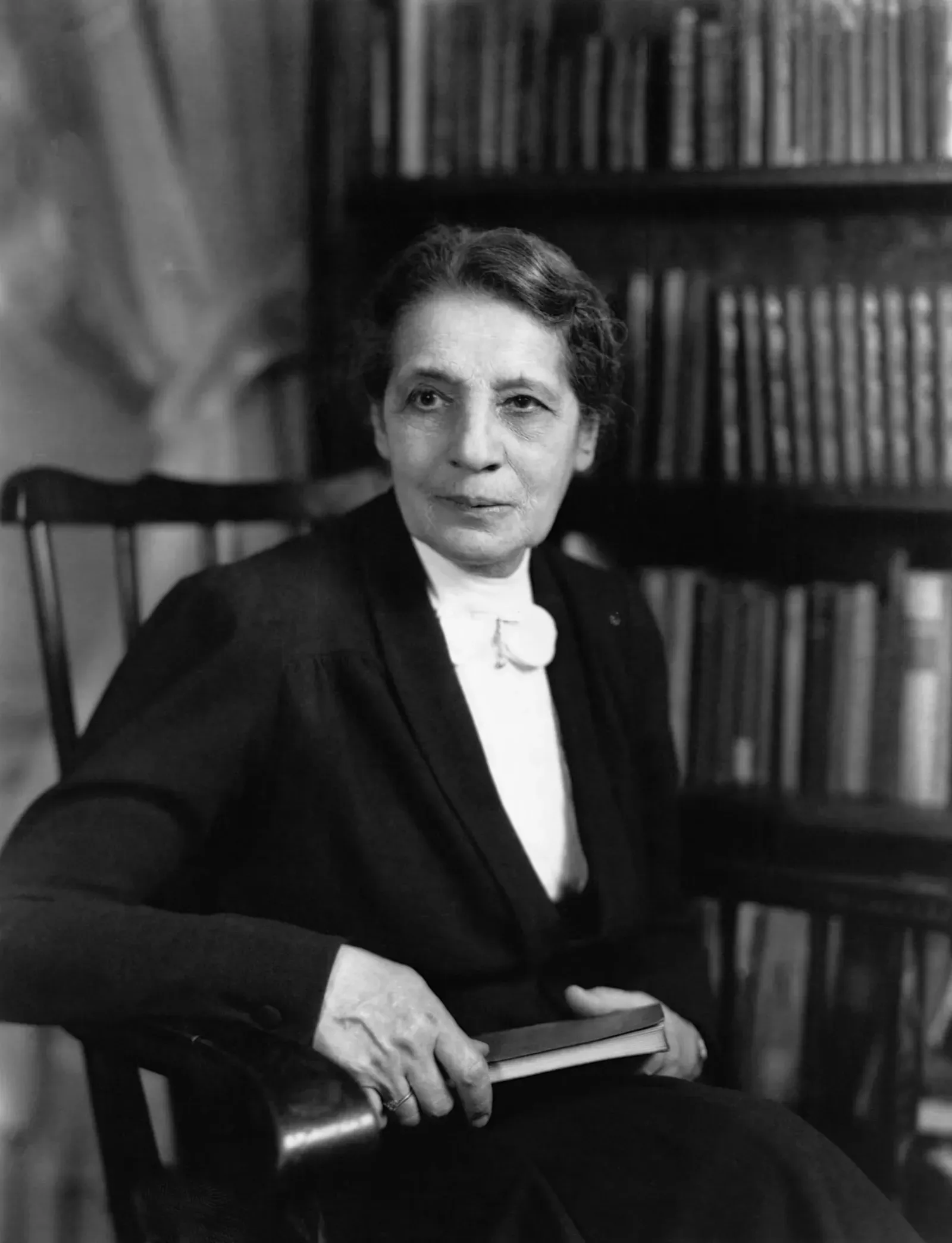
Hahn isolated the evidence for nuclear fission, but Meitner and her nephew Otto Frisch were the first to articulate how the process occurred. Hahn would receive the Nobel Prize for this work, but never acknowledge Meitner’s contribution. The backstory involves a decades-long scientific partnership cut short by political horror. Forced to flee Nazi Germany in July 1938 due to her Jewish heritage, Meitner escaped to Sweden with help from Dutch physicists. She continued corresponding with Hahn from exile, and it was she who provided the theoretical framework that made sense of his experimental results.
Partner offer
Meitner wrote her famous fission letter to the editor, explaining the mechanism of “Hahn’s discovery.” The Nobel Committee awarded the 1944 Nobel Prize in Chemistry “for the discovery of the fission of heavy nuclei” to Hahn alone. Paradoxically, the word “fission” never appeared in Hahn’s original publication, as Meitner had been the first to coin the term in the letter published afterward. Meitner’s exclusion from the 1944 Chemistry Nobel Prize has remained particularly controversial, especially given the fact that she was nominated for a Nobel Prize a grand total of 48 times. Today, element 109 on the periodic table, meitnerium, bears her name – a belated tribute that can’t quite fill the gap left by the prize she never received.
Galileo Galilei and the Invention of the Telescope
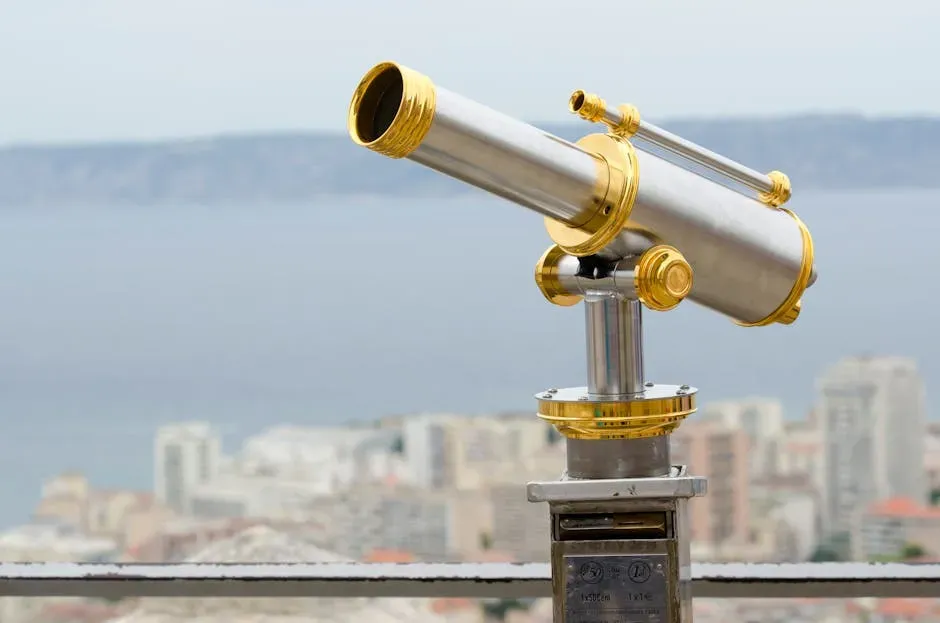
Galileo is rightly celebrated for the astronomical discoveries he made using a telescope, but the common assumption that he invented the instrument itself is inaccurate. Galileo made his first telescope in 1609 after hearing about “perspective glasses” being made in the Netherlands. The first person to apply for a patent for a telescope was Dutch eyeglass-maker Hans Lippershey in 1608, a year before Galileo. His telescope could magnify objects only three times, but it was nonetheless a landmark in the history of optics.
The earliest known working telescopes appeared in 1608 and are credited to Hans Lippershey. Among many others who claimed to have made the discovery were Zacharias Janssen, spectacle-makers in Middelburg, and Jacob Metius of Alkmaar. By the end of 1609, Galileo had developed a telescope that magnified objects 20 times. Whether Lippershey should be credited as the inventor of the telescope remains an open debate, as it is entirely possible that others created similar devices before he filed his patent. Galileo’s genius was in how far he pushed the instrument – not in building the first one.
The Pythagorean Theorem and Its True Origins
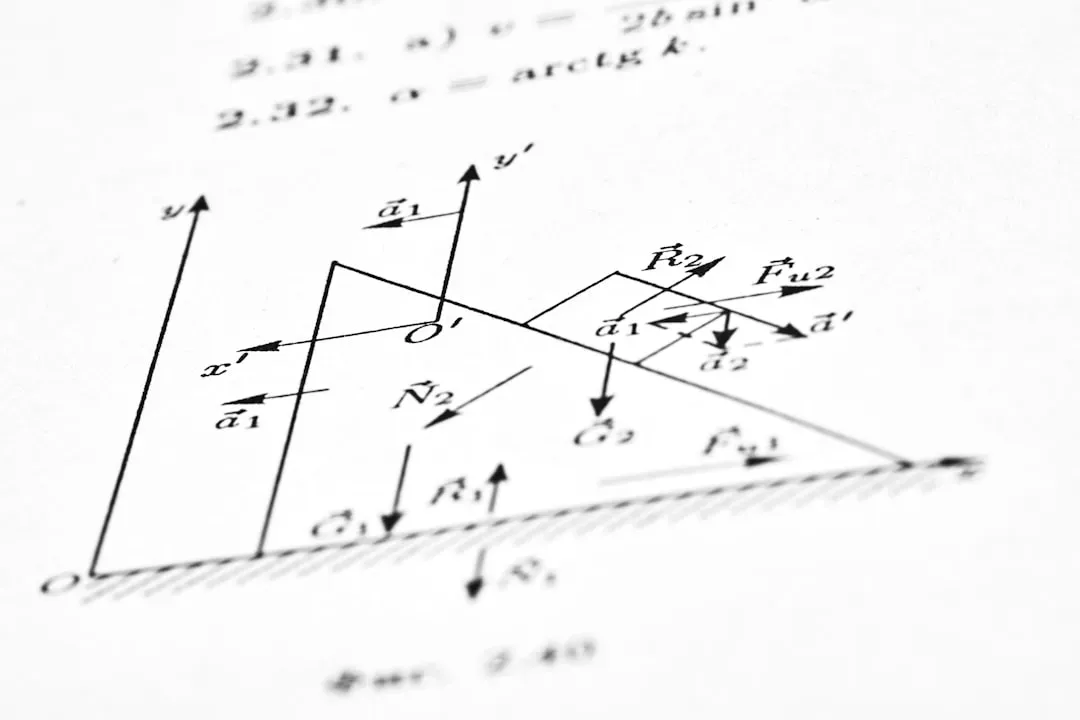
Few mathematical facts are more universally associated with a single name. Say “Pythagorean theorem” and almost everyone thinks of the ancient Greek philosopher Pythagoras. The inconvenient truth is that the relationship between the sides of a right triangle was understood by other civilizations long before Pythagoras was born. The Pythagorean theorem was known to Babylonian mathematicians and to Indian mathematicians before Pythagoras. Clay tablets from ancient Mesopotamia demonstrate that Babylonian scholars were using this geometric relationship as far back as 1800 BCE, over a thousand years before Pythagoras lived.
Stigler’s law of eponymy, proposed by University of Chicago statistics professor Stephen Stigler in 1980, states that no scientific discovery is named after its original discoverer. The theorem named after Pythagoras is one of its most textbook examples. It can be dependent on the publicity of the new work and the fame of its publisher as to whether a scientist’s name becomes historically associated. Pythagoras was a famous philosopher with a devoted following, and his school in Croton gave the theorem the cultural platform it needed to stick. The Babylonian mathematicians who got there first left no such legacy behind.
Edwin Hubble and the Expanding Universe

Edwin Hubble is widely celebrated as the man who discovered that the universe is expanding, and the Hubble Space Telescope was named in his honor. The relationship between a galaxy’s distance and its recession velocity – the cornerstone of modern cosmology – carries his name as Hubble’s Law. Hubble’s law was actually derived by Georges Lemaître two years before Edwin Hubble. Lemaître, a Belgian priest and physicist, published his findings in 1927 in a French-language journal, where they attracted little attention outside specialist circles.
When Hubble published his own version of the relationship in 1929, with more observational data and in the English-language Proceedings of the National Academy of Sciences, the scientific world took notice. Historical acclaim for discoveries is often assigned to persons of note who bring attention to an idea that is not yet widely known, whether or not that person was its original inventor. In the case of eponymy, the idea becomes named after that person, even if that person is acknowledged by historians of science not to be the one who discovered it. It was only in 2018 that the International Astronomical Union officially voted to rename the relationship the “Hubble-Lemaître Law” – a quiet correction made nearly a century after the original oversight.
These six stories share a common thread: the person who got the credit was often more visible, more connected, or simply more fortunate than the person who did the actual work. Fame amplifies discovery, and discovery without an audience can vanish into history’s footnotes. The names we remember are not always the names that most deserve remembering.Partner offer
Planning a trip to Vegas?
Compare hotel rates and show tickets on VEGAS.com.