Most people picture the White House as a place of grand ceremonies, formal state dinners, and the famous Oval Office. What they rarely imagine is the sprawling world that exists beneath and behind those polished white walls – rooms built in secret, spaces converted for war, and bunkers designed to survive nuclear strikes. The story of the White House’s hidden architecture is, in many ways, the story of America’s most defining moments. Each concealed space was born out of crisis, urgency, or an extraordinary need for secrecy that the public was never meant to know about.
The Presidential Emergency Operations Center: America’s Most Classified Room
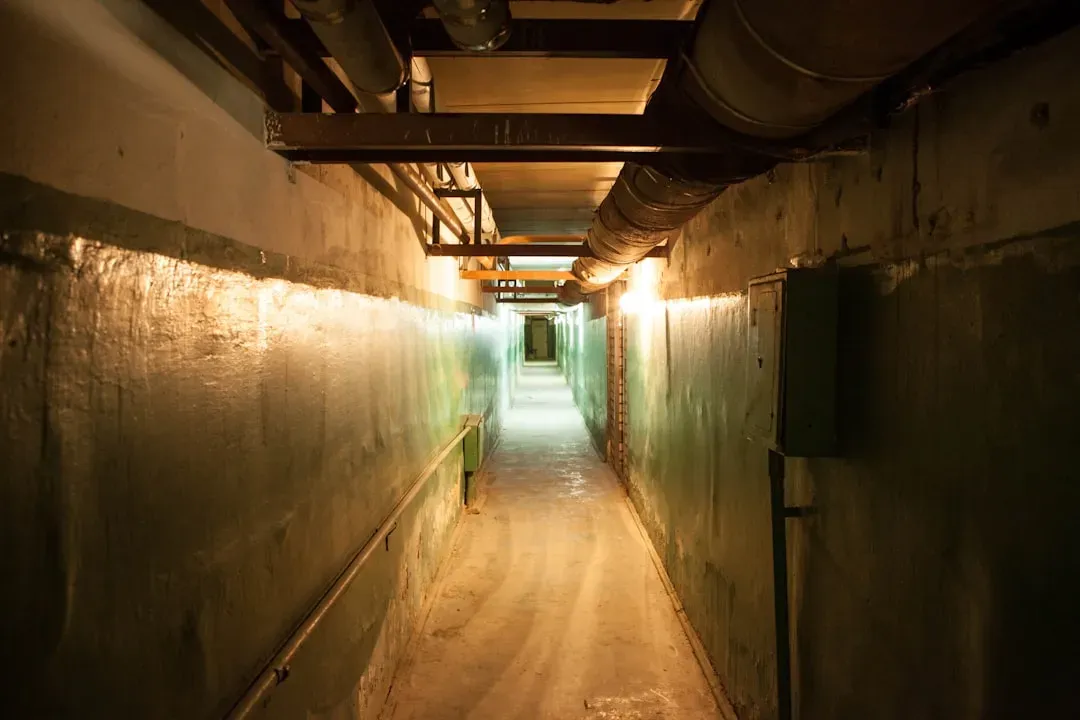
According to the White House Historical Association, the most significant secret passageway in the White House is the Presidential Emergency Operations Center – known as the PEOC – an emergency passage and bomb shelter that lies beneath the building. The underground passage was constructed beneath the East Wing during Franklin D. Roosevelt’s presidency, just after the bombing of Pearl Harbor in 1941. Roosevelt had been encouraged to build a bomb shelter at the White House in the aftermath of that attack, and at the time, “no public acknowledgment was made of there being a bomb shelter under construction, only the East Wing,” according to White House Historical Association historian Bill Seale.
Over the decades, the PEOC evolved from a basic bomb shelter into a hardened command and control center designed to withstand a nuclear strike. Sources described it as a self-contained facility with its own power, water, and air filtration systems, as well as secure communications and an emergency escape route. The PEOC was staffed around the clock by joint-service military officers and non-commissioned officers. The room was never simply a place to hide – it was a fully operational nerve center capable of managing a national catastrophe from deep underground.
The Bunker That Witnessed September 11
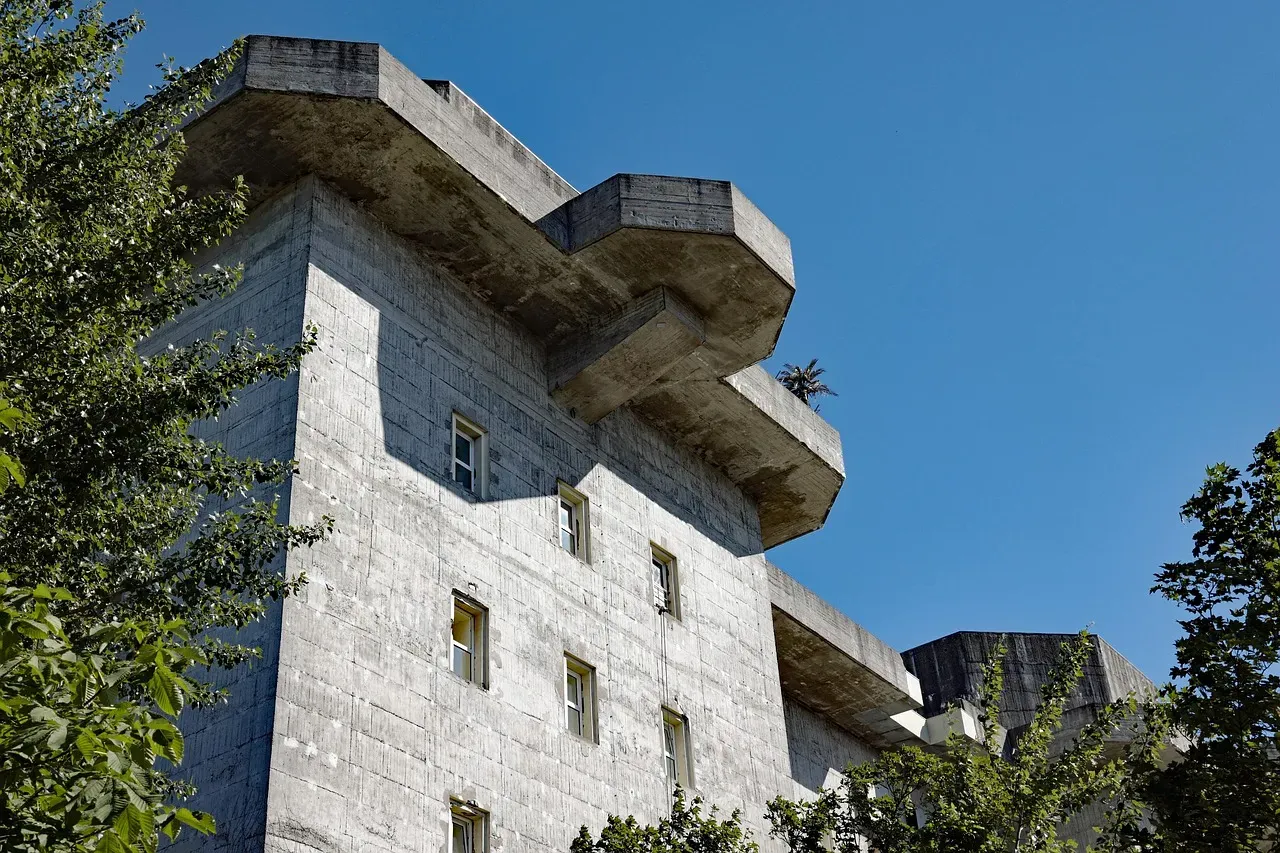
During the September 11 attacks, a number of key personnel were evacuated from their offices in the White House to the PEOC. These included Vice President Dick Cheney, First Lady Laura Bush, Lynne Cheney, Condoleezza Rice, and other senior staff including Norman Mineta. According to the 9/11 Commission report, it was inside the shelter’s conference room that Cheney authorized fighter aircraft to engage with United 93 if necessary.
In her 2010 memoir, First Lady Laura Bush described her September 11 experience of going through a pair of big steel doors to access an unfinished subterranean hallway underneath the White House on her way to the PEOC conference room. “I was hustled inside and downstairs through a pair of big steel doors that closed behind me with a loud hiss, forming an airtight seal,” Bush wrote. While the White House has remained rather close-lipped on the bunker’s interior aesthetic, images of past presidents in the space reveal grim concrete walls and a small central room, complete with a large oak oval table, a pair of flat-screen televisions, and satellite-connected phones.
The 2025 Demolition: A New Secret Bunker Is Being Built
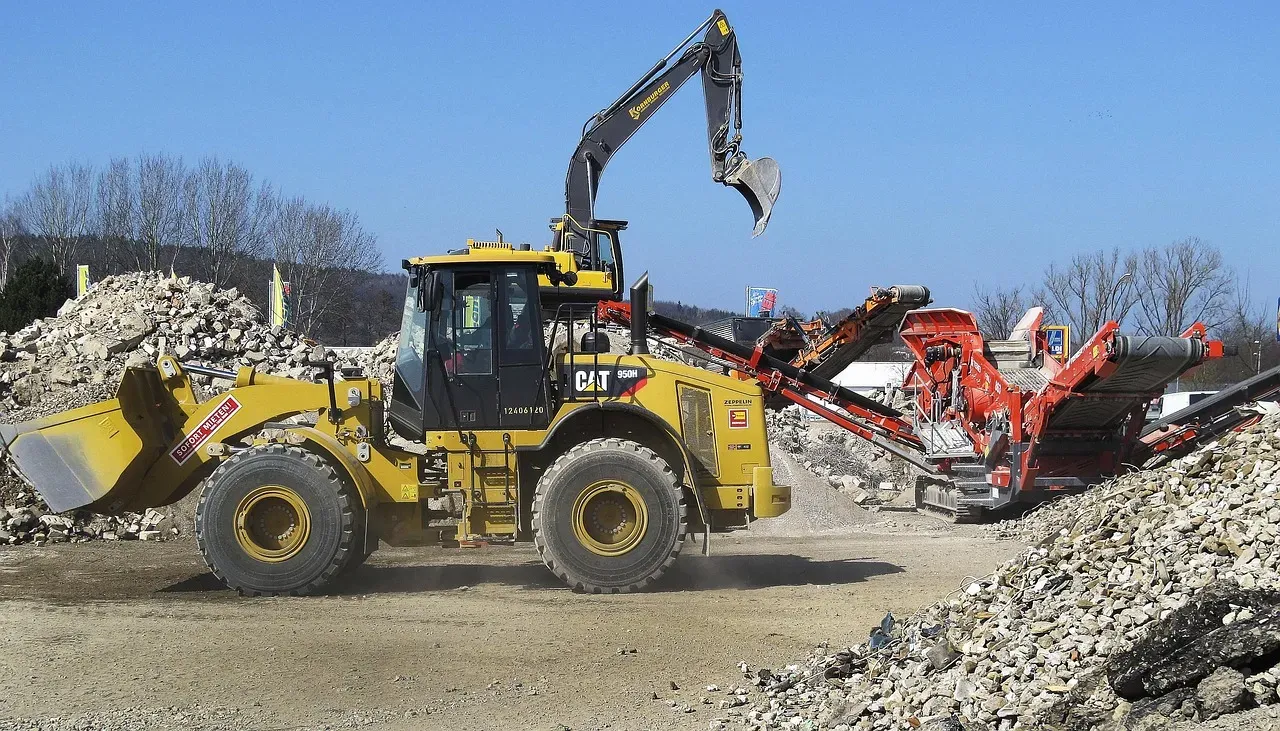
The decades-old underground complex beneath the White House East Wing, which included the Presidential Emergency Operations Center, was dismantled during a controversial demolition tied to Trump’s new ballroom project, with plans for a classified replacement using modern technology underway, according to CNN. Demolition began in October 2025, and with the East Colonnade and office areas removed, sources told CNN that legacy subterranean structures, including the PEOC and related utilities, appeared to be gone.
During a National Capital Planning Commission meeting, a senior White House official referenced “top-secret” work as the reason demolition proceeded before typical approvals, while a recent court filing argued that halting underground construction would “endanger national security.” Jonathan Wackrow, a former U.S. Secret Service agent, told CNN that any successor to the current underground facility would need to anticipate and withstand emerging threats – from nuclear blasts and aircraft impacts to chemical, biological, and electromagnetic dangers – while keeping its capabilities hidden from adversaries.
Partner offer
FDR’s Map Room: The Secret Intelligence Hub That Started It All
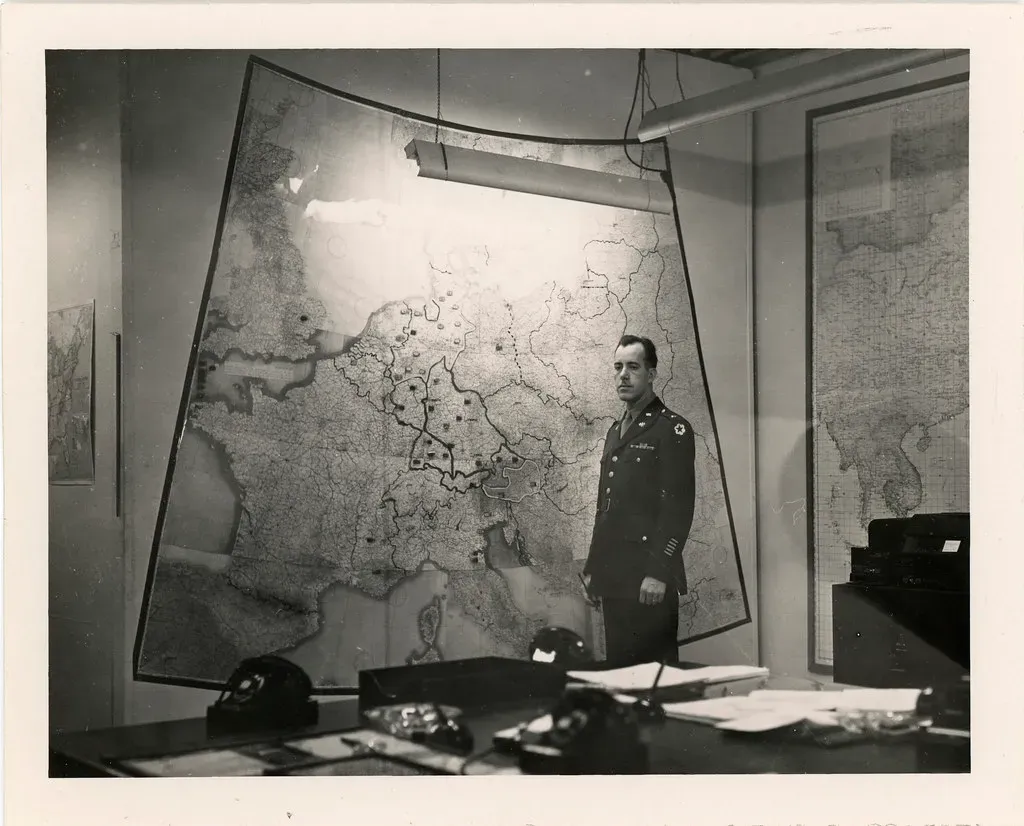
In January 1942, FDR converted a ladies’ cloakroom in the White House basement into a top-secret communications center. Modeled on a similar room maintained by Winston Churchill, the Map Room was a place where the President could monitor military activities around the globe. Reports, documents, and coded messages were received, summarized, and filed there. Through the Map Room, Roosevelt communicated with Allied leaders around the globe, including Churchill, Stalin, and Chiang Kai-Shek.
The drably furnished office was staffed 24 hours a day by Army and Navy officers. The President could drop in at any time. Access was restricted to him, the Map Room staff, and specific individuals at the direction of the President. Even the Secret Service was barred. FDR’s Map Room was the precursor to the modern-day White House Situation Room. Following the war’s end, the room was repurposed as a private reception and meeting space, furnished in Chippendale style and adorned with historical maps that preserve its legacy as a nerve center of American command during a pivotal global struggle.
The Situation Room: A $50 Million Intelligence Complex Hidden in Plain Sight
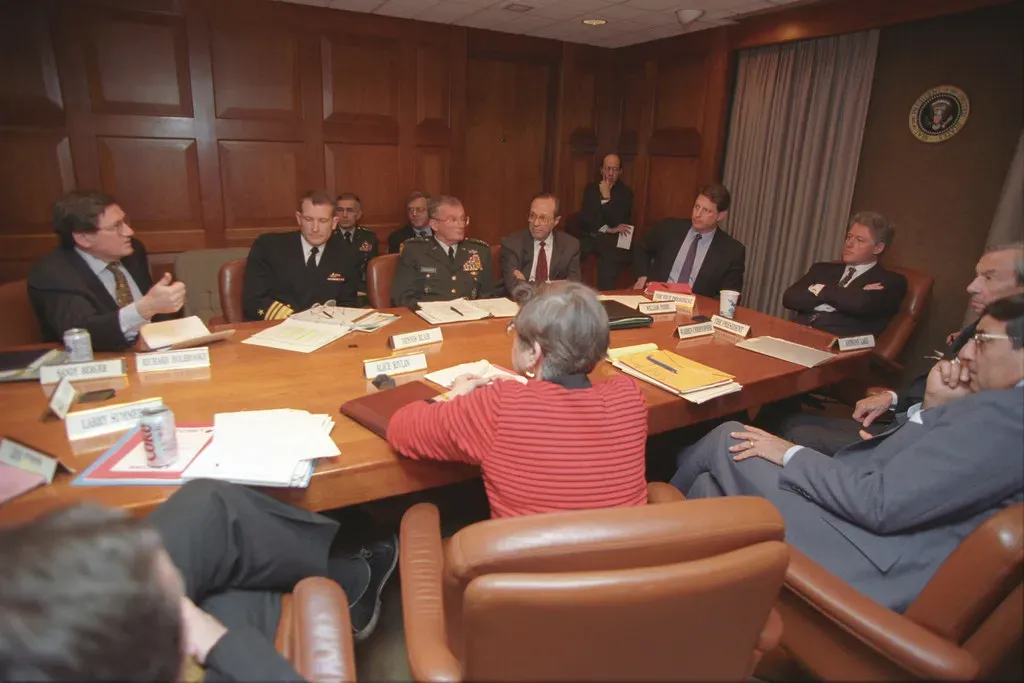
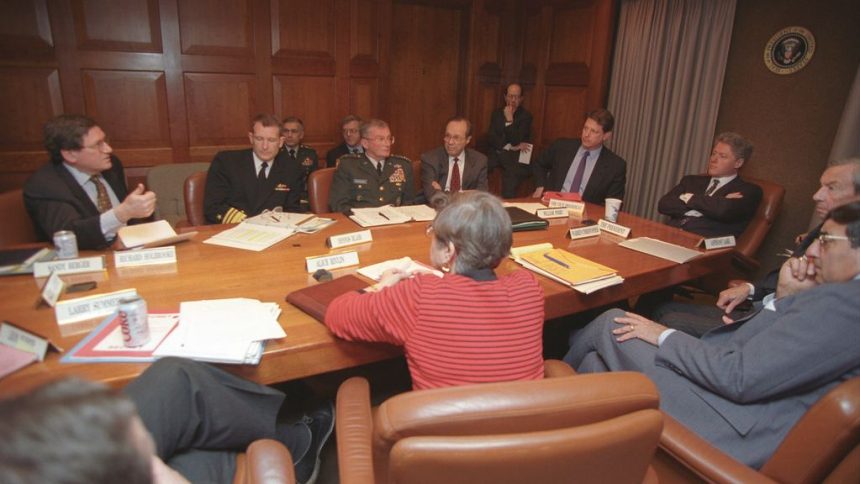
The White House Situation Room, the nerve center for a president’s most sensitive national security meetings, has a new look and new capabilities after a yearlong renovation. Despite its name, the Situation Room is not a single room but instead a sprawling 5,500-square-foot complex with numerous meeting spots, all of which were gutted and refurbished at a cost of $50 million. The complex was created in 1961 by the Kennedy administration after the Bay of Pigs invasion. President John F. Kennedy believed there should be a dedicated crisis management center where officials could coordinate intelligence faster and better.
As part of the renovation project, the White House Situation Room can now detect if someone has brought a mobile device into the space. Old floors, furniture, computers, and other tech were stripped out and replaced with pristine mahogany paneling from Maryland, stonework from a Virginia quarry, LED lights that can change colors, and flat-screen panels. See-through glass offices fade to opaque with the press of a button. There are still a number of landline phones because cellphones are prohibited in the secure space for security reasons.
The White House Tunnel System: Confirmed Routes and Classified Mysteries
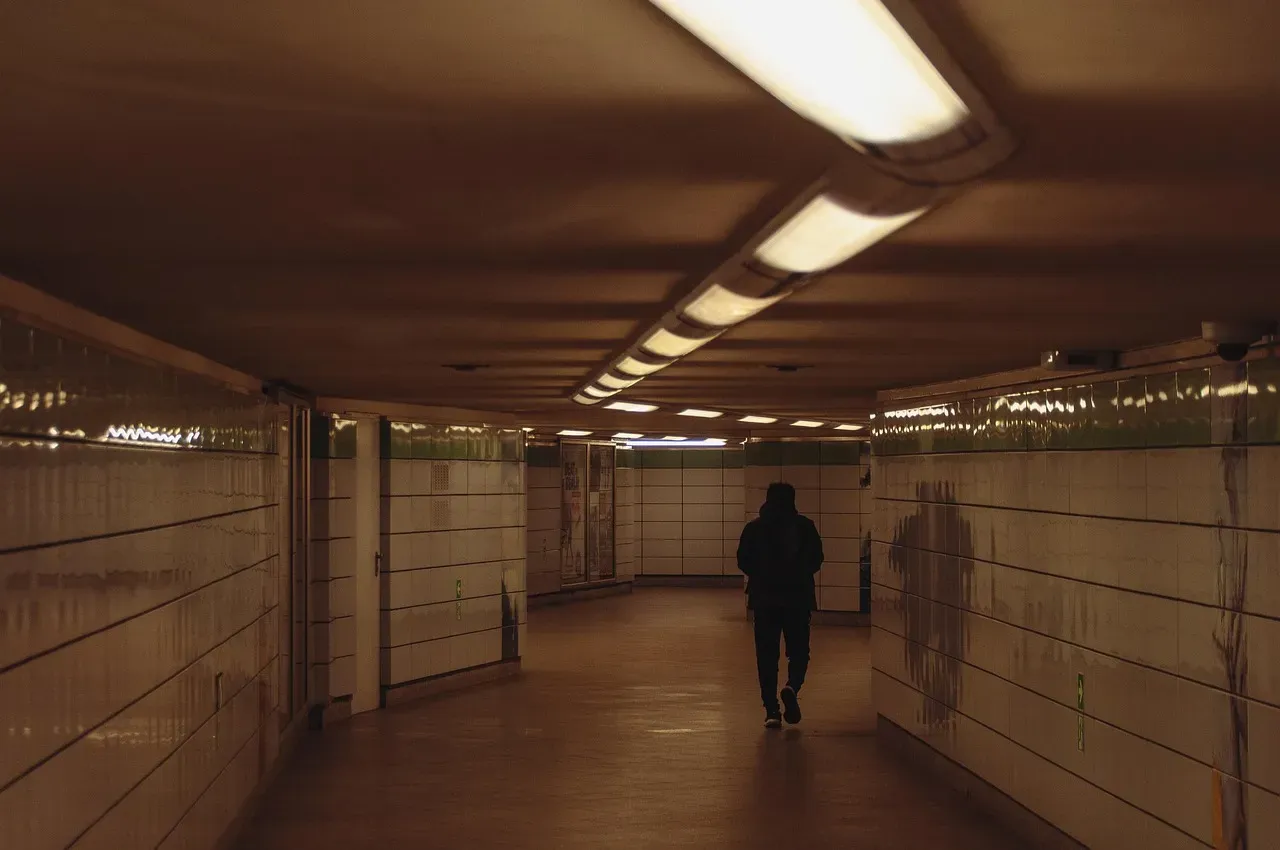
It is believed that an extensive tunnel system connects the White House to other key government buildings, though the total length remains classified. One confirmed tunnel runs for 761 feet and connects the East Wing to a secret basement of the adjacent Treasury Building. During the Truman-era reconstruction, a tunnel was built connecting the West Wing and East Wing, providing access to the bomb shelter. In 1987, another secret tunnel was built during the Reagan Administration to protect the President in the event of a terrorist attack.
This Reagan-era tunnel allows the President to access a secret staircase outside the Oval Office by pressing on a wall panel to reveal and open a secret door. The passageway at the bottom of the stairs leads to a closet near the President’s private elevator in the basement of the Residence. There are also rumors of tunnels connecting the White House to the Capitol, the Blair House, the Vice President’s residence, the Pentagon, and even Camp David – but these remain unsubstantiated for now.
Partner offer
Planning a trip to Vegas?
Compare hotel rates and show tickets on VEGAS.com.