
There’s a peculiar tension at the heart of contemporary art: the more deliberately an artist blurs the line between the mundane and the meaningful, the harder it becomes for the rest of the world to know which is which. A pile of cigarette butts on a gallery floor. Two dented beer cans in a lift shaft. A bathtub coated in grease. Each of these has, at some point, been unceremoniously discarded by someone who had no idea they were holding a piece of cultural history.
These stories aren’t just amusing footnotes. They raise a genuinely uncomfortable question about art, value, and perception: if trained gallery staff can’t always tell the difference, what does that say about the works themselves? Here are seven real cases where art was taken for trash – and the very mix-up became part of the legend.
Damien Hirst’s Ashtray Installation – London’s Eyestorm Gallery, 2001


In 2001, Damien Hirst lost a pile of beer bottles, ashtrays, and coffee cups – meant to represent the life of an artist – when a janitor at London’s Eyestorm Gallery cleared it away. The artwork, meant to represent a painter’s studio, was valued at around $6,000. The cleaner simply thought someone had forgotten to clean up after a party.
Fortunately, the trash was sorted and disposed of separately, so recovery and restoration was not difficult, and the exhibition was reopened three days after the incident. The episode became one of the most-cited examples of conceptual art’s vulnerability to misinterpretation. Hirst, for his part, reportedly found the whole situation genuinely funny – which, given that his work is about the relationship between art and everyday life, makes a certain kind of sense.
Martin Kippenberger’s “When It Starts Dripping From the Ceiling” – Dortmund, 2011


The piece, entitled “When It Starts Dripping From the Ceiling,” comprised a tower of wooden slats with a plastic bowl at the bottom painted brown to give the impression of discolouration caused by water. A cleaner took the paint to be an actual stain and scrubbed the bowl until it looked new. The cleaning lady at Dortmund’s Ostwall Museum used soap and water to remove what she thought was an unwanted stain, permanently altering the valuable artwork in 2011.
The piece by Martin Kippenberger was valued by the museum at £690,000. The irreversible scrubbing didn’t just damage the work – it wiped out the carefully applied patina that was central to its meaning. Kippenberger’s piece, which explored themes of disorder and unpredictability, ironically became a real-life example of art’s vulnerability. The incident forced museums to rethink their training and protocols, and it has become a cautionary tale about miscommunication in the art world.
Gustav Metzger’s “Recreation of First Public Demonstration of Auto-Destructive Art” – Tate Britain, 2004

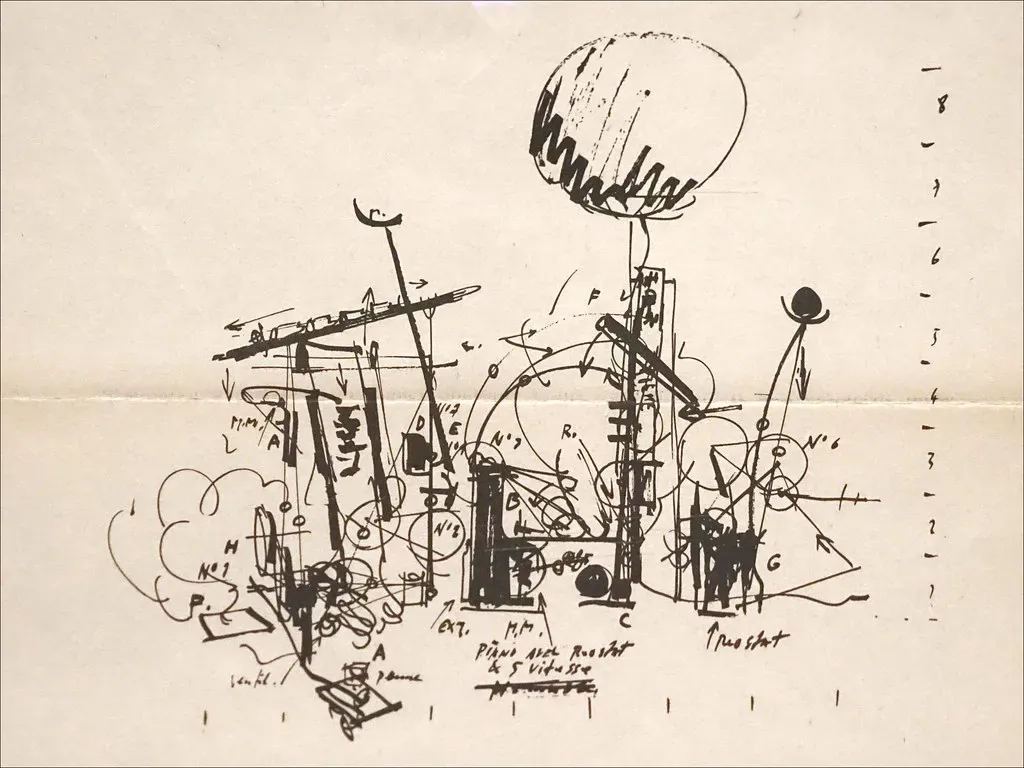
In 2004, the artist’s installation “Recreation of First Public Demonstration of Auto-Destructive Art” was on display at the Tate Britain when a museum employee accidentally threw part of it away. How was he to know that the plastic bag of trash sitting next to the artwork was actually part of the artwork? The work was a deliberate recreation of one of Metzger’s earlier demonstrations from the 1960s, when auto-destructive art – art designed to decay or self-destruct – was his signature.
The bag was later recovered, but it was too damaged to display, so Metzger replaced it with another bag. The replacement was entirely consistent with the work’s concept: Metzger’s whole point was that the artwork was never meant to be permanent. Still, the incident underlined just how difficult it is to protect work that is, by definition, designed to look disposable.
Goldschmied & Chiari’s “Where Are We Going to Dance Tonight?” – Museion, Bolzano, 2015


Cleaners accidentally cleared away a modern art installation on Saturday morning at a gallery in northern Italy, believing it to be the remnants of a party that took place the evening before. The installation at the Museion modern art gallery in Bolzano comprised numerous empty bottles, cigarette butts, confetti, streamers, and a disco ball as well as items of clothing strewn across the floor. It was a satirical work, intended to display the excesses of the Italian political classes during the 1980s.
The cleaner was new, and was asked to clean up the room where a book presentation had been held the night before. She placed everything in the recycling bins, so the museum could retrieve most of the items – minus 30 bottles of Champagne – and recreate the installation from scratch. The story gained additional irony when a prominent Italian art critic publicly defended the cleaner, arguing that if an artwork looks like rubbish, perhaps it is.
Joseph Beuys’s Bathtub – Leverkusen, Germany, 1973

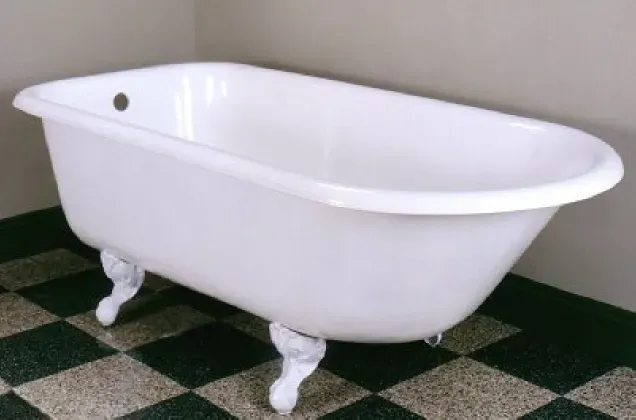
In 1973, two individuals at the Museum Schloss Morsbroich failed to identify a Beuys infant bathtub as an artwork on display. They cleaned the object and even rinsed glasses in it. It was stored at Castle Morsbroich in Leverkusen, Germany, in preparation for an exhibition. Members of the local branch of the Social Democrat Party found the work and accidentally destroyed it by removing the gauze, plaster, and fat.
The art collector Lothar Schirmer, who had loaned the object, was awarded financial compensation. Beuys later restored the artwork as best he could using photographs. A judge put the loss at 40,000 DM. For Beuys, a German artist whose practice frequently involved humble, organic materials like fat and felt, the bathtub wasn’t an oddity – it was a serious sculptural statement. The people who cleaned it had no idea what they were touching.
Tracey Emin’s “My Bed” – Tate Gallery, London, 1999

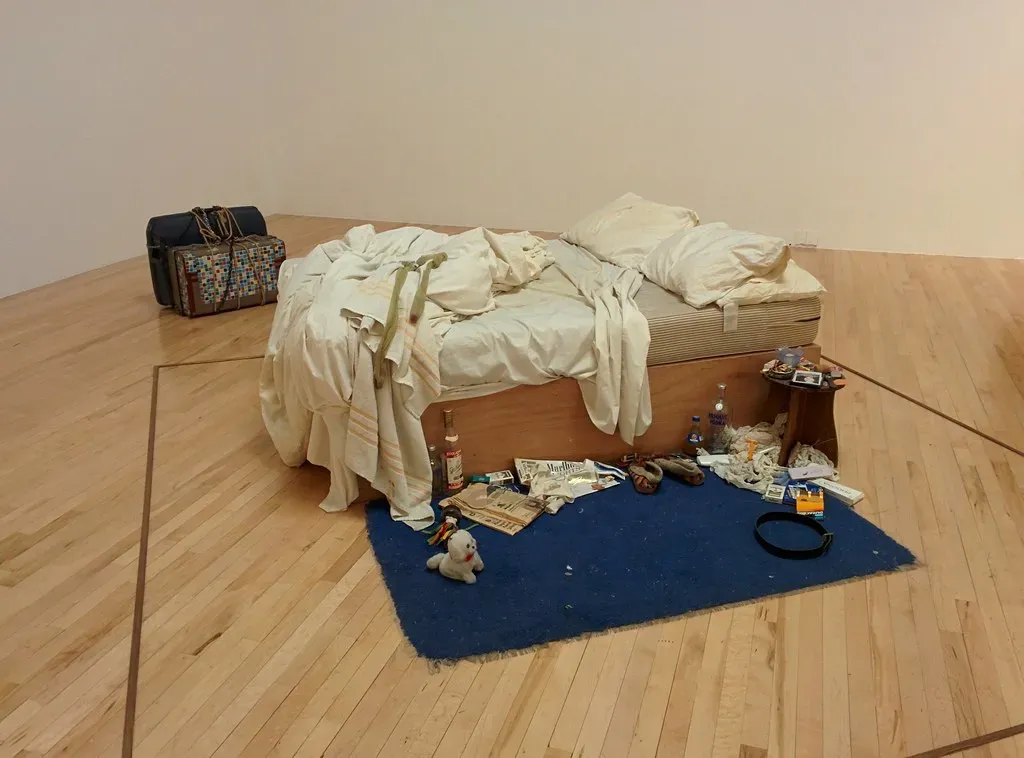
Emin exhibited “My Bed” – a readymade installation consisting of her own unmade dirty bed, in which she had spent several weeks drinking, smoking, eating, sleeping and having sexual intercourse while undergoing a period of severe emotional flux. When it was first exhibited, some people thought it was just a mess left behind by the cleaning staff, not a statement on vulnerability and depression. The piece was mocked in the press and misunderstood by many visitors, some of whom wondered if it was part of the gallery’s cleaning process.
First created in 1998, it was exhibited at the Tate Gallery in 1999 as one of the shortlisted works for the Turner Prize. Although it did not win the prize, it gained much media attention and its notoriety has persisted. At a Christie’s auction in 2014, “My Bed” was sold for 2.5 million pounds, including buyer’s commission. What started as something visitors dismissed as an uncleaned corner of the gallery eventually became one of the defining British artworks of the late 20th century.
Alexandre Lavet’s “All the Good Times We Spent Together” – LAM Museum, Netherlands, 2024

A lift technician at a museum in the Netherlands mistakenly threw away a piece of artwork made to look like two empty beer cans. “All the Good Times We Spent Together” by French artist Alexandre Lavet may look like it belongs in a trash can at first glance, but closer inspection reveals it is in fact “meticulously hand-painted with acrylics, with each detail painstakingly replicated,” according to the LAM Museum. The two-can piece was exhibited inside the museum’s glass elevator shaft, meant to appear as if it had been left behind by construction workers.
A curator at the Dutch art museum found herself rummaging through the trash, looking for the two dented beer cans. With great relief, she found them intact. They were then cleaned and put back on display. The director of the LAM museum said the incident was “in a way a testament to the effectiveness of Alexandre Lavet’s art.” The 2024 episode brought the old pattern back into sharp focus: place art in an unexpected location that looks exactly like reality, and reality will eventually assert itself.
What runs through all seven of these stories is a quiet paradox. The more successfully an artwork mimics the overlooked, the disposable, or the ordinary, the more likely it is to be treated that way. Conceptual and installation art deliberately invites this confusion – and every time a cleaner reaches for a mop or a technician tosses something in a bin, the work, in a strange way, proves its own point. The question of where trash ends and art begins doesn’t always have a clean answer.