
Some books don’t announce themselves as life changers. They sit on a nightstand for weeks, get read in fragments, and then show up in a person’s habits, their choices, or the way they talk to themselves.
The seven below span several decades and genres. What they share is a long record of readers saying that a few pages shifted how they saw their own days.
Man’s Search for Meaning by Viktor Frankl
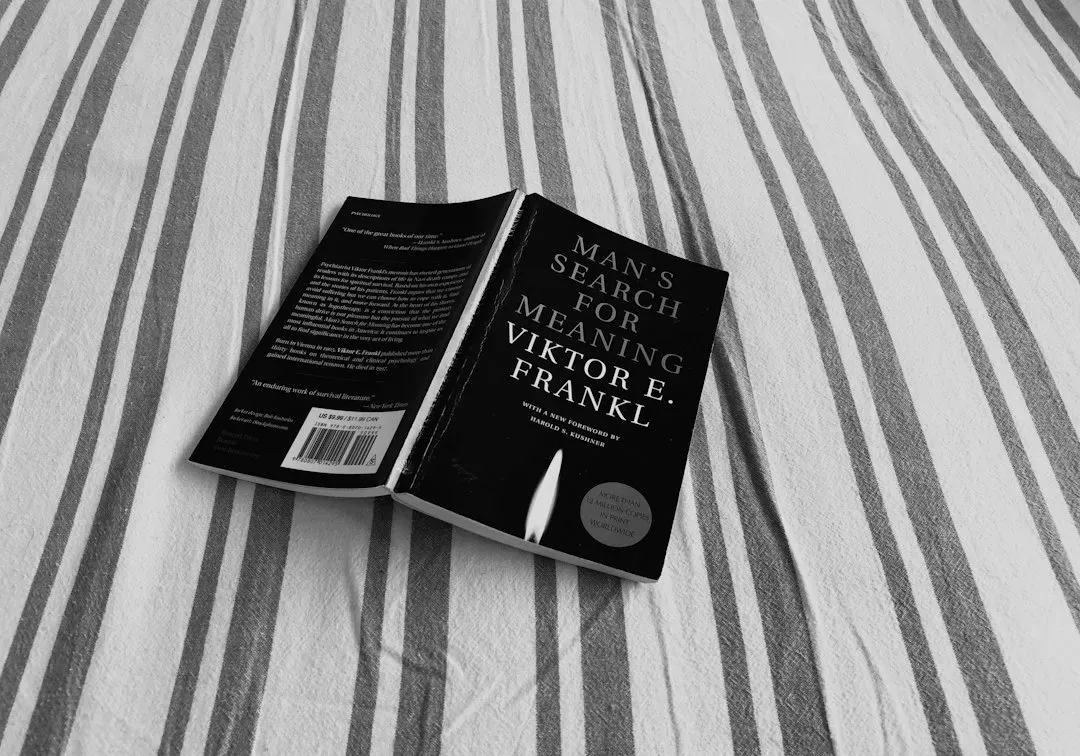
Viktor Frankl, a Viennese psychiatrist, wrote about his time in Nazi concentration camps and what he observed about human endurance. The book first appeared in German in 1946, and it later became the foundation for his approach called logotherapy. That approach centers on the idea that people are driven mainly by a search for purpose.
Readers often describe it as a reframing tool rather than a comfort read. Frankl argued that even when circumstances can’t be changed, a person can still choose an attitude toward them. The book has sold in the millions worldwide and remains a staple in psychology courses.
Atomic Habits by James Clear

Published in 2018, this book spent years on bestseller lists and has sold well over ten million copies worldwide, according to its publisher and author. Its main argument is modest: small changes, repeated daily, add up more reliably than dramatic resolutions. Clear organizes the idea around cues, cravings, responses, and rewards.
What readers tend to notice is how practical it feels. Instead of asking people to overhaul their personalities, it asks them to redesign an environment, like putting a book where a phone used to sit. For many, that was the first time self-improvement felt manageable.
The Four Agreements by Don Miguel Ruiz

This short 1997 book draws on Toltec wisdom traditions and offers four principles: be impeccable with your word, don’t take things personally, don’t make assumptions, and always do your best. It stayed on the New York Times bestseller list for many years, and it gained a huge second wave after Oprah Winfrey recommended it.
Its appeal is brevity. A reader can finish it in an afternoon, then spend months noticing how often they assume what others are thinking. Critics point out that its spiritual framing is loosely sourced, yet its everyday advice has clearly stuck with a wide audience.
Quiet by Susan Cain

Susan Cain’s 2012 book examined how Western culture tends to reward extroversion, and it made a case for the strengths of introverts. She drew on psychology research, including work on temperament and sensitivity to stimulation. The book was a long running bestseller and spawned a popular TED talk.
For many readers, the effect was relief. People who had long assumed that being reserved was a flaw began to see it as a different way of working and relating. Several workplaces and schools later adjusted meeting formats and classroom participation partly because of the conversation it started.
The Alchemist by Paulo Coelho

Originally published in Portuguese in 1988, this fable follows a shepherd named Santiago who travels in search of treasure. It’s been translated into dozens of languages, and Guinness World Records has recognized it as the most translated book by a living author. The story is simple on purpose.
Readers often say it nudged them to take a personal calling seriously, whether that meant a career change or a long delayed trip. Literary critics have been less kind about its style. Still, its staying power suggests that plain stories about following a direction can land with real force.
The Body Keeps the Score by Bessel van der Kolk

Psychiatrist Bessel van der Kolk’s 2014 book explores how trauma affects the brain and body, and it spent years on the New York Times bestseller list. It brought terms like trauma response and body based therapy into everyday conversation. Many readers said it gave them language for experiences they hadn’t been able to explain.
Some of its claims have drawn scrutiny from other researchers, who argue certain neuroscience points are presented with more certainty than the evidence supports. That debate is worth knowing about. The book’s reach, however, shows how many people were looking for a way to understand their own reactions.
Walden by Henry David Thoreau

Thoreau published Walden in 1854, after living for two years in a small cabin near Walden Pond in Massachusetts. He wrote about simplicity, work, and how much of life people spend earning things they don’t really need. Though more than 170 years old, it keeps turning up in modern conversations about minimalism and burnout.
Readers rarely come away planning to build a cabin. More often they start questioning small things, like which commitments they’d actually miss if they dropped them. The prose can be dense, but a few pages at a time tends to be enough to make a reader pause.