There is something quietly fascinating about the idea that the movie you just watched could have ended in a completely different way. Maybe darker. Maybe more tragic. Maybe so bizarre it would have tanked the entire franchise before it ever had one. Hollywood endings are not always born from pure creative vision. They are negotiated, tested, argued over, and sometimes scraped at the last minute when a screening room goes deathly silent. The stories behind these changes are often more dramatic than anything on screen. Let’s dive in.
1. World War Z (2013): When a Zombie Epic Nearly Drowned in Its Own Chaos


There are troubled productions, and then there is World War Z. Starring Brad Pitt and released in 2013 amid the zombie craze in Hollywood, World War Z seemed destined for success until reports of major reshoots surfaced. What audiences never saw was a wildly different third act that would have sent the entire film in a far darker direction.
In the original script, Gerry and the survivors crash-land in Russia, where the elderly and infirm are summarily executed. Gerry becomes part of a battle-tested team tasked with clearing the tunnels of Moscow, making use of a melee weapon called the “Lobo” – a weapon showcased in the source novel. Included in this segment was a massive battle taking place in Moscow’s Red Square.
When the first cut of World War Z was shown to Paramount executives, it was very poorly received, and Pitt, also a producer on the project, dubbed it “atrocious.” This led to seven weeks of reshoots in the summer of 2012, which pushed the film back from its originally scheduled December 2012 release date. Lost co-creator Damon Lindelof, along with Drew Goddard, was then brought in to completely rewrite the third act.
The reshoots, coupled with other overages, caused the film’s budget to balloon to around $190 million. Several of the scenes shot in Budapest, including a large-scale battle with the zombies in Moscow’s Red Square, were dropped from the final cut in order to water down the film’s political undertones and steer it towards a more broadly friendly summer blockbuster. Despite all that chaos, World War Z exploded to a box office take of $202.4 million domestically and $540 million worldwide.
2. Get Out (2017): The Ending That Changed Because America Changed

Honestly, this one is one of the most fascinating cases in modern cinema history. In the original ending, Chris kills Rose and is arrested by the police. Jordan Peele originally intended the ending to reflect the realities of racism, but later shifted his approach after considering the cultural moment and audience reactions at test screenings, opting for a more hopeful resolution while still preserving a brief moment where viewers might fear Chris will be arrested.
The movie’s original ending was significantly more depressing, highlighting the inescapable trappings of systemic racism as Chris finds himself arrested and imprisoned after his exhaustively traumatizing ordeal. In the movie’s original ending, it wasn’t Rod who arrived to save the day, but real police officers who showed up and arrested Chris for the murder of the Armitage family. Chris is sent to prison and, with no one believing his account of the events, loses hope of actually achieving justice. Rod visits Chris in jail, asking him for more information about the night so that they can continue investigating.
Peele has often talked about how the original ending of Get Out was darker, with Kaluuya’s character arrested for the death of his girlfriend. That ending was designed to shock audiences into having a conversation about race, but by the time he was finishing the film, he felt that the country was having that conversation, so he softened it. The result? The film grossed over $255 million worldwide, made the long trek to the awards race following a February release date, and came away with four Oscar nominations: Best Picture, Director, Actor, and Original Screenplay.
3. I Am Legend (2007): The Ending That Betrayed Its Own Title


Here’s the thing about I Am Legend – the theatrical ending and the alternate ending carry completely opposite philosophical messages. The original ending of I Am Legend was a profound twist: Dr. Neville realizes he is the true monster in the eyes of the mutants and spares them, upending the typical hero narrative. However, early screenings left audiences dissatisfied, longing for a more conventional conclusion. The filmmakers reshot the finale, showing Neville sacrificing himself with a grenade to save others, thus reinforcing his heroism.
The alternate ending stays true to the original 1954 novel of the same name by Richard Matheson. I Am Legend’s alternate ending is a far more fitting finale for Neville – the virologist realizes his mistakes and feels guilt for his past experiments, reflecting on how his work has impacted his current situation.
The new ending was more palatable to general audiences and resonated with themes of redemption and sacrifice. This revised conclusion helped the film gross over $585 million worldwide, becoming one of Will Smith’s highest-earning movies. Still, the irony is not lost on cinephiles – the title “I Am Legend” only truly makes sense in the alternate ending, where Neville realizes the creatures see him as the monster. In the theatrical version, the title becomes almost meaningless.
4. Fatal Attraction (1987): The Test Audience That Demanded Revenge

Few endings in Hollywood history were so dramatically reinvented under audience pressure as Fatal Attraction. In the original cut, Alex Forrest dies by suicide and frames Dan for her death, a chilling and ambiguous conclusion. However, test audiences felt unsatisfied and wanted to see justice served. The studio responded by filming a new, violent bathroom confrontation where Alex is killed, giving viewers the catharsis they craved.
Paramount ordered three weeks of reshoots. The rejigged ending transforms Alex from an obsessive ex-lover to a slasher movie killer, complete with that one bit where she comes back from being drowned so that Dan’s wife can shoot her to death. Glenn Close, who played Alex, was furious about having to reshoot. Although Close was incredibly upset with the new ending, she later admitted she didn’t think it would become the phenomenon it became if they hadn’t changed the ending.
This dramatic change in the film’s conclusion provided a sense of closure and accountability, which resonated deeply with audiences. As a result, Fatal Attraction grossed more than $320 million globally and remains a cultural touchstone for thrillers centered on obsession and betrayal. The original ending is genuinely chilling too, in a completely different way – it just left people wanting something they could root for.
5. Terminator 2: Judgment Day (1991): A Future Too Peaceful to Show


James Cameron always had a softer, more hopeful finale in mind for his sci-fi masterpiece. The original ending of Terminator 2: Judgment Day flashed forward 30 years to a peaceful future in which an older Sarah Connor is living happily and John has a daughter. However, during filming, this was changed to a more ambiguous ending in which Sarah and John ride off on a motorcycle and Sarah’s voiceover explains, “The unknown future rolls toward us.”
The theatrical cut is the resolution that most fans know and love. There was a special edition cut that was released and included an alternate ending set thirty years after the main events of the movie. Sarah is at a park bench watching her son play with his granddaughter. Most fans agree the sequence seems out of place.
Think of it like closing a thriller novel with a vacation photo. It technically ends the story, but the emotional punch is completely gone. The decision to cut that hopeful flash-forward and leave audiences in uncertainty was, in hindsight, one of the smartest editorial choices in the film’s history. The ambiguous ending is scarier, more honest, and far more resonant.
6. Blade Runner (1982): The Studio Happy Ending Nobody Wanted

Ridley Scott’s neo-noir classic is notorious for having more cuts than almost any film in history. Due to test screenings and studio meddling, Blade Runner has become notorious for its multiple alternate endings. There were seven alternate endings, and Ridley Scott continued to work on the most definitive version of the film after its poor reception in 1982.
Nervous that they and the audience didn’t understand the film, the financiers decided to use previously abandoned voiceover narration to give them a happy ending and then spliced that over unused helicopter footage Stanley Kubrick had shot for The Shining. The final cut suggests that Deckard may be a replicant, with a more ambiguous ending. The original theatrical release featured a voiceover and a happy ending where Deckard and Rachael escape together. Director Ridley Scott preferred a more open-ended, philosophical conclusion, which was later restored in the director’s cut and final cut versions.
The Director’s Cut gets rid of narration and the happy ending and includes a dream sequence. The Final Cut has all the changes of the Director’s Cut plus the violence of the International Cut, an extended dream sequence, and additional footage added, and is what Scott considers to be the definitive version of Blade Runner. It took decades, but the version Scott actually wanted is now the one most people know and admire. Studios meddling with genius, it turns out, just delays the inevitable.
7. A Nightmare on Elm Street (1984): The Director Who Lost His Own Ending


Wes Craven’s iconic slasher film almost ended in a way that would have permanently shut the door on Freddy Krueger, and the horror genre would be unrecognizable today if it had. Wes Craven wanted to give A Nightmare on Elm Street a happy ending in which Nancy defeats Freddy simply by refusing to believe he exists, then she wakes up to discover the whole movie was one long nightmare.
Producer Bob Shaye saw franchise potential, so he demanded that Craven rewrite the ending to include a twist in which Freddy survives. As a result of this rift, Craven didn’t return to the franchise for a decade. It’s a clash that illustrates something deeply real about Hollywood: artistic intent and commercial instinct are almost never perfectly aligned, and whoever controls the money usually wins.
The irony is that Craven’s original vision, in which belief itself is what defeats the monster, is philosophically richer than the ending we got. Yet the survival twist created one of cinema’s most enduring villains and spawned a franchise. Sometimes the less satisfying creative choice is the one that goes on to define pop culture for generations. It’s hard to say for sure whether Craven was right or Shaye was right – but we do know who got the last word.
8. Pretty Woman (1990): From Grim Fairy Tale to Classic Romance

It is almost impossible to picture Pretty Woman ending any other way than with that iconic white limo and Richard Gere climbing the fire escape. Yet the original script was far from a fairy tale. In the first version, Vivian is thrown out of Edward’s car in a grim, realistic conclusion, leaving her alone and the tone much darker. This ending was intended to show the harsh realities of life, but early screenings and studio feedback were overwhelmingly negative.
Executives decided to pivot, transforming the story into a sweet romance that has captivated audiences for decades. The new ending turned Pretty Woman into a box office sensation, earning over $463 million worldwide. The film’s iconic final moments not only redefined romantic comedies in the ’90s but also changed Julia Roberts’ career forever.
The original concept, which carried the working title 3,000, was reportedly far darker in tone overall, not just in its ending. The studio transformation of a gritty script into a feel-good fantasy is one of the most dramatic tone shifts in romantic comedy history. The finished version, of course, is beloved by nearly everyone. The original might have been a more honest film – but honesty doesn’t always sell popcorn.
9. The Shining (1980): Kubrick Cuts His Own Epilogue

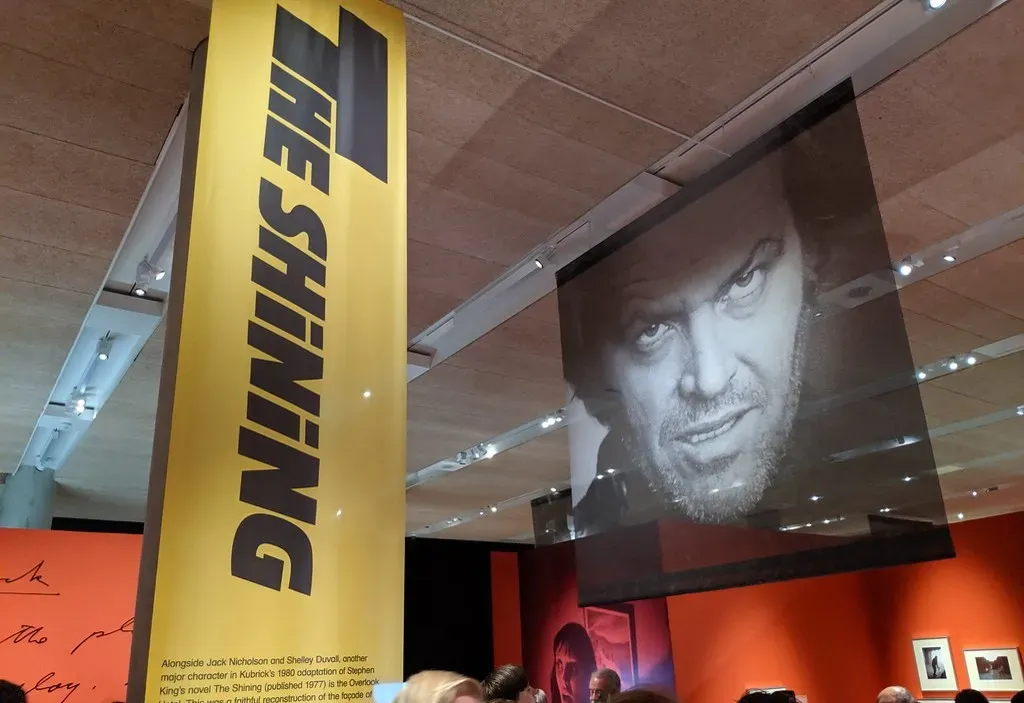
Most directors fight to keep their footage. Stanley Kubrick was perfectly willing to destroy his. Kubrick’s adaptation of The Shining originally included a hospital scene after the climactic events at the Overlook Hotel. In this scene, Wendy and Danny are told by the police that no trace of Jack was found, offering some resolution to the terror. Kubrick, ever the perfectionist, decided to delete this scene after initial screenings, instead opting for a hauntingly ambiguous ending.
This change has fueled decades of discussion and analysis, cementing The Shining as one of the most enigmatic and influential horror films ever made. What makes this case fascinating is that Kubrick did not change the ending because of studio pressure or poor test scores. He changed it because he felt it was wrong. That level of artistic conviction is genuinely rare.
The deleted hospital scene is not merely a trimmed footnote – it is an entirely different philosophical statement. With it, the movie resolves. Without it, the movie haunts. Kubrick clearly understood something that many filmmakers do not: ambiguity is not the absence of meaning. It is, in fact, meaning in its purest form. In a separate but equally bold Kubrick decision, Dr. Strangelove almost ended in a massive pie fight between world leaders. Already shot and ready to go, the scene was scrapped after a test screening where Kubrick deemed the ending “too farcical,” and potentially offensive due to the recent assassination of President John F. Kennedy.
10. Casablanca (1942): The Ending That Was Written Around a Single Line

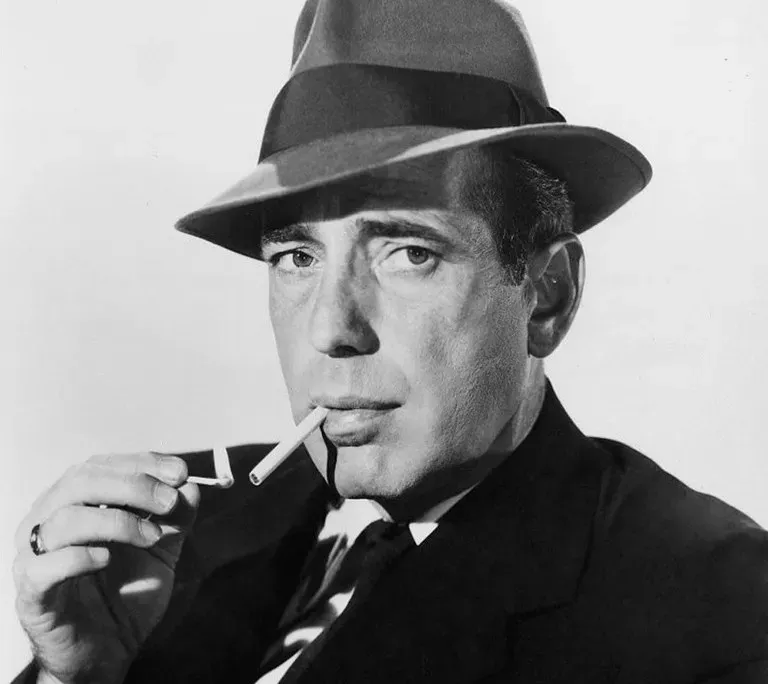
Casablanca, widely regarded as one of the greatest films ever made, went into production without a finished script. Let that sink in. Production began on Casablanca without a complete script. The original ending would have seen Rick and Ilsa leaving for America together, but the Hays Code prohibited movies from depicting adultery working out in people’s favor. So, the filmmakers had to come up with a new ending that satisfied everyone, which proved to be almost impossible.
In the end, they reverse-engineered the ending from a line they liked: “Round up the usual suspects.” The famous farewell scene at the airport, Rick’s sacrifice, Ilsa leaving with Victor – all of it was essentially crafted on the fly to work backward from a piece of dialogue the writers loved. It’s the cinematic equivalent of building a house starting from the window and working out to the foundation.
The fact that this improvised conclusion became arguably the most emotionally satisfying ending in film history says something profound about the creative process. Sometimes the constraints force the brilliance. Sometimes the thing you cannot do leads you to the thing you should have done all along. Endings seem to be particularly fluid when it comes to test-screening feedback, and there are countless stories of movies ending differently as a result of how a sample audience reacted to a preview screening. Casablanca is perhaps the ultimate proof that the best ending is not always the one you planned – it’s the one that earns it.
Conclusion
What these seven films – and more – all have in common is a reminder that movies are not carved in stone. They are living, evolving things, shaped by fear, finance, ambition, and accident. A single test screening, a producer’s instinct, or a director’s second thought can send an entire story in a completely different direction.
The endings we know and love are sometimes accidental masterpieces. The ones that were cut or rewritten are often more honest, more daring, and more artistically pure. Directors and writers hate being told to change their stories, but the alterations aren’t always for the worse – in some cases, the audience’s instinct proves correct for posterity.
Next time you watch a film, it’s worth asking: is this really the ending the filmmaker wanted? Or did a nervous producer, a chilly screening room, or a budget spiral give you the version you see instead? What would you have chosen?