Nobody tells you the most important things. School gives you formulas, dates, and the anatomy of a frog. It does not tell you how to sit with grief, how to find meaning when everything collapses, or how to truly see another human being. That gap between what we are taught and what we actually need to know is enormous. Quietly, stubbornly, novels have always tried to fill it.
There is something almost conspiratorial about a great novel. It pulls you in with a story, and then somewhere around page eighty, it starts telling you the truth about yourself. The seven books below have been doing exactly that for readers across generations. Some are celebrated, some are criminally underappreciated. All of them carry a lesson that no classroom ever put on the curriculum. Let’s dive in.
1. The Alchemist by Paulo Coelho – The Lesson of Listening to Your Own Life


This is the story of an Andalusian shepherd boy named Santiago who travels from Spain to the Egyptian desert searching for a treasure buried in the Pyramids. What starts as a journey to find worldly goods turns into a discovery of the treasure found within. Simple premise, right? Honestly, it sounds almost too neat. But the reason this book has sold over sixty-five million copies is not the plot. It is what the plot is really saying.
In a fast-paced, success-driven world, The Alchemist reminds readers that true fulfillment lies in pursuing what makes us feel alive, whether it’s a career change, a creative pursuit, or a personal passion. The lesson nobody taught us: pay attention to what your life is actually asking of you, not just what your resume demands. Most people never do. This book dares you to.
2. Man’s Search for Meaning by Viktor Frankl – The Lesson of Choosing Your Response

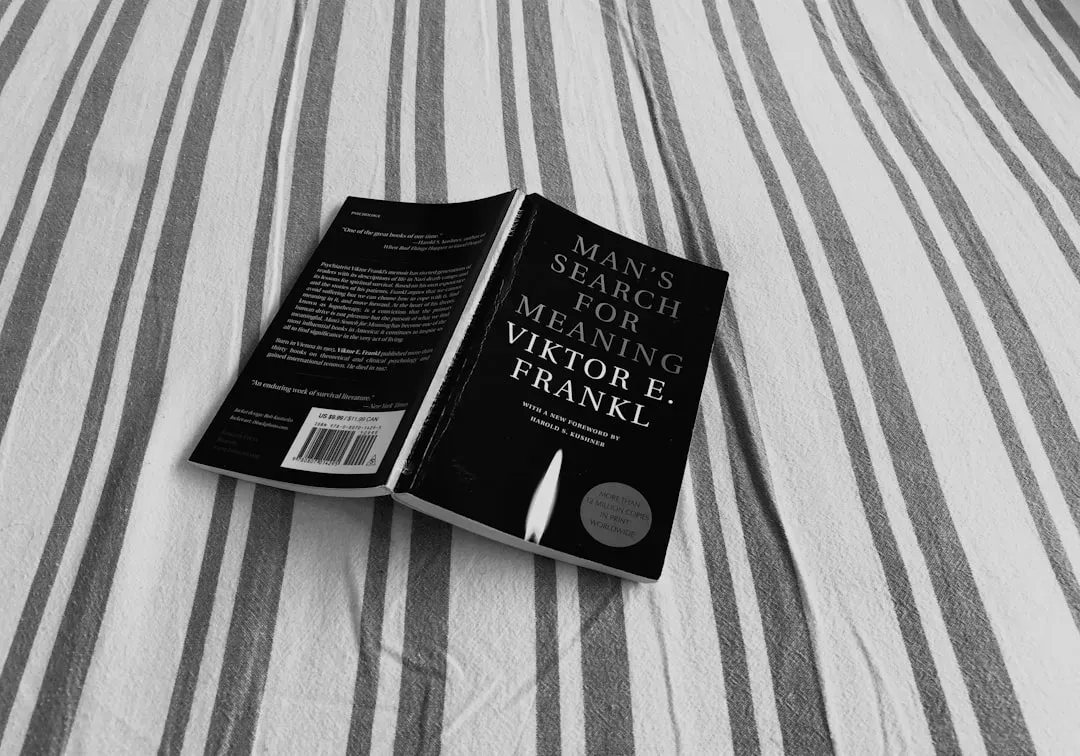
Man’s Search for Meaning has riveted generations of readers with its descriptions of life in Nazi death camps and its lessons for spiritual survival. Between 1942 and 1945, psychiatrist Viktor Frankl labored in four different camps, including Auschwitz, while his parents, brother, and pregnant wife perished. Based on his own experience and the stories of his many patients, Frankl argues that we cannot avoid suffering but we can choose how to cope with it, find meaning in it, and move forward with renewed purpose.
Let’s be real: nobody prepares you for the kind of suffering that has no apparent reason. School teaches you problem-solving but not meaning-making. Frankl’s logotherapy, rooted in the Greek word for “meaning,” is essentially the idea that a person can survive almost anything as long as they understand why. Because Frankl’s personal experience was so extreme, the lessons are that much more stark. Most importantly, his lessons are universally applicable to all our lives. That universality is exactly what makes it so devastating and so necessary.
3. To Kill a Mockingbird by Harper Lee – The Lesson of Radical Empathy

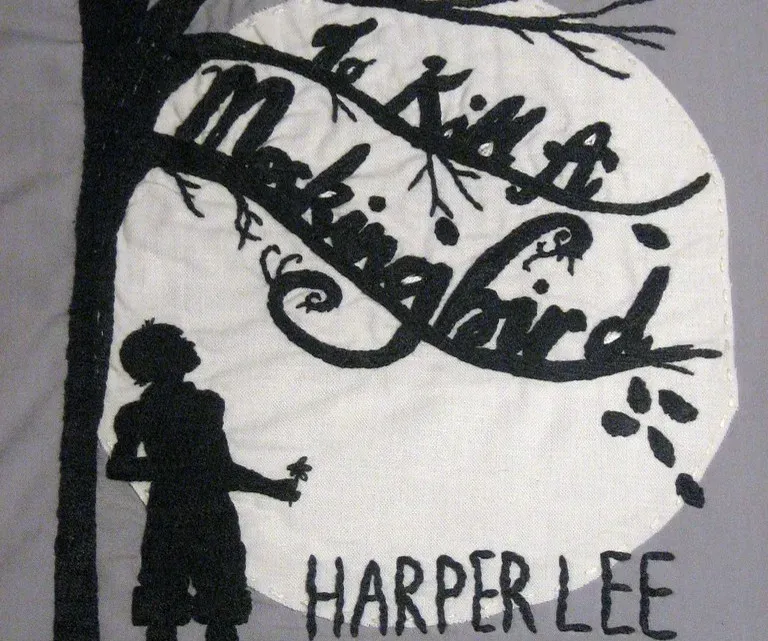
Harper Lee’s To Kill a Mockingbird is one of the most iconic novels in American literature. Set in the racially segregated South during the 1930s, the book explores themes of prejudice, moral integrity, and justice. At the heart of the novel is the character of Atticus Finch, a lawyer who defends a Black man, Tom Robinson, falsely accused of raping a white woman. But here is the thing: the real teacher in this novel is not Atticus. It is Scout, a little girl learning to see the world as it actually is.
Atticus teaches his children, Scout and Jem, the importance of empathy, standing up for what’s right, and treating others with respect regardless of their race, social status, or background. The whispered lesson here is that justice requires imagination. To be just, you first have to imagine yourself into someone else’s skin. It sounds so obvious. It is, in practice, extraordinarily rare. Most adults never fully learn it. Scout does, at age eight.
4. Siddhartha by Hermann Hesse – The Lesson of Learning by Living

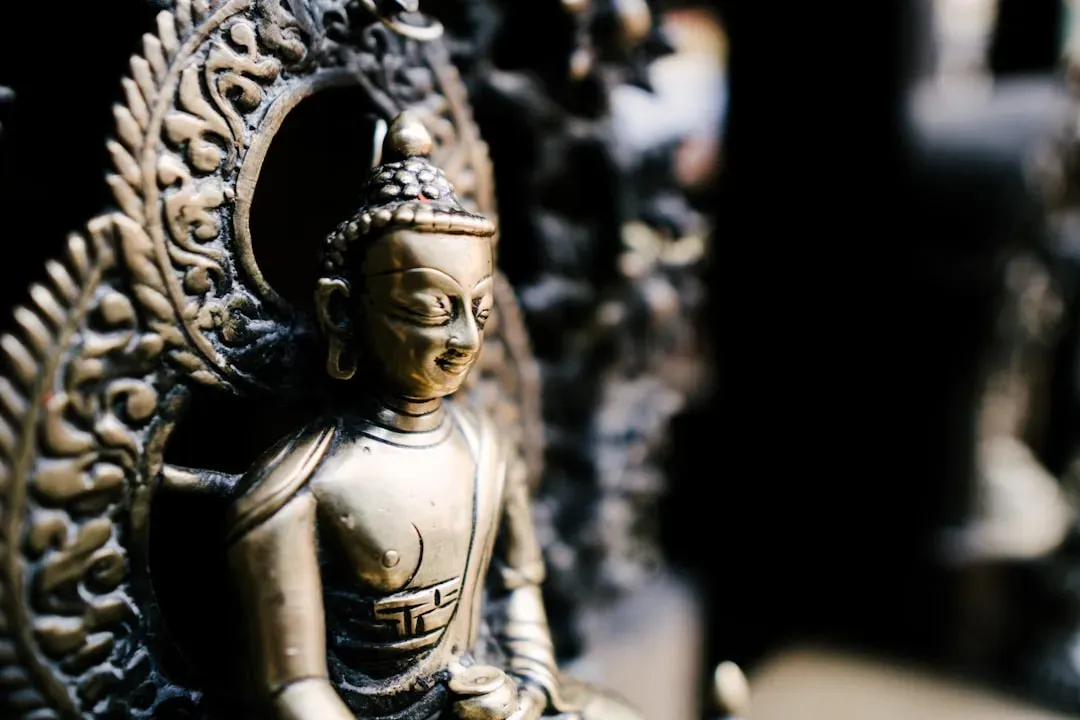
Hermann Hesse wrote Siddhartha in 1922, and it still reads like it was meant for the exact moment you are having a crisis about your life’s direction. The novel follows a young spiritual seeker in ancient India who abandons formal religious instruction to find truth through direct experience. He becomes a merchant, a lover, a gambler, and eventually a ferryman. Siddhartha’s main message pivots on finding inner peace, and in our modern, chaotic world, many people truly do not know how to find their own.
What makes this book quietly radical is its insistence that wisdom cannot be transmitted, only discovered. You can sit at the feet of the wisest teacher alive, and still, the important things will have to be lived. I think this idea is almost subversive today, in a world where we expect to learn everything from a podcast or a ten-minute summary. Hesse is essentially saying: some knowledge has no shortcut. You have to earn it by going through it. That is not a lesson anyone puts in a syllabus.
5. The Handmaid’s Tale by Margaret Atwood – The Lesson of How Freedom Disappears


In Margaret Atwood’s feminist dystopian classic, shortlisted for the Booker Prize in 1986, nothing happens that hasn’t already happened at some time or another. Offred is a national resource. In the Republic of Gilead, her viable ovaries make her a precious commodity, and the state allows her only one function: to breed. As a Handmaid, she carries no name except her Master’s, for whose barren wife she must act as a surrogate.
The lesson here is not simply “dystopia is bad.” It is far more uncomfortable than that. Atwood built Gilead from pieces of real history, real systems, and real complacencies. The novel teaches that freedoms are rarely taken in a single dramatic moment. They erode gradually, quietly, plausibly. Few books in adult life have affected readers as powerfully as The Handmaid’s Tale, and that power comes from recognition: the sickening feeling that this is not so far-fetched after all. That is precisely the lesson nobody wants to sit with.
6. A Fine Balance by Rohinton Mistry – The Lesson of Gratitude and Invisible Privilege


At a time of political turmoil, the lives of four strangers collide. Rohinton Mistry’s masterpiece, shortlisted for the Booker Prize in 1996, is set in an unnamed Indian city in the mid-1970s, where a state of emergency has been declared. In the tiny flat of the widowed Dina Dalal, Ishvar and Omprakash Darji, tailors forced from their village into the city, and Maneck Kohlah, a young student from a hill-station near the Himalayas, are painfully constructing new lives, which become entwined in circumstances no one could have foreseen.
This is one of those novels that physically alters your interior landscape. A Fine Balance definitely changes perspective on life and how fortunate many of us are to have a home and security. Readers still think about this novel years later, especially when they hear people complaining about minor inconveniences. The lesson it whispers is brutal and beautiful at the same time: most of us live on a knife-edge of luck we never acknowledge. Mistry makes that edge visible, and you never quite look at ordinary life the same way again.
7. The Book of Disquiet by Fernando Pessoa – The Lesson of Sitting With Uncertainty


Fernando Pessoa’s The Book of Disquiet is a fragmented masterpiece that resonates deeply with anyone who has ever felt lost in their own thoughts. Its introspective passages reveal the beauty of uncertainty and the value of solitude. Pessoa’s musings teach readers to embrace inner chaos, finding comfort in the fact that life’s ambiguity is not something to fear but something to explore. It is not a novel in any conventional sense. There is no plot, no neat arc, no resolution. That is entirely the point.
We live in a culture allergic to ambiguity. Every app, every self-help framework, every motivational speaker is selling you certainty. Pessoa had almost none, and he made something extraordinary out of that void. The book was assembled posthumously from thousands of scraps found in a trunk, which somehow makes it more profound, not less. It teaches the rarest thing: how to be comfortable not knowing. How to find richness in the unresolved. Most of us were never taught to do that. School gave us right answers. Pessoa gives us the permission to live inside the question.
Taken together, these seven novels form a kind of shadow curriculum, the one that runs parallel to everything you were officially taught. They cover grief and meaning, empathy and oppression, freedom and its fragility, luck and its absence, and the strange courage required to simply sit with the uncertainty of being alive. Books have the ability to teach us profound life lessons that extend far beyond the classroom. They offer wisdom about love, resilience, ambition, purpose, and the human experience, providing readers with valuable tools for personal growth. The shelf is waiting. Which one will you pick up first?