
Some twists reshape a story for the better. They make you rethink everything you just watched, and in the best cases, they make a sequel or a rewatch even richer. Then there are the other kind, the reveals that stop a franchise dead in its tracks, alienate longtime fans, and leave writers scrambling for years to patch up the damage. These are stories where a single decision, often made under pressure to shock audiences or wrap up a saga, ended up doing more harm than good. Some of these twists tanked box office numbers outright. Others simply poisoned the goodwill a franchise had spent decades building.
Rey Palpatine in Star Wars: The Rise of Skywalker

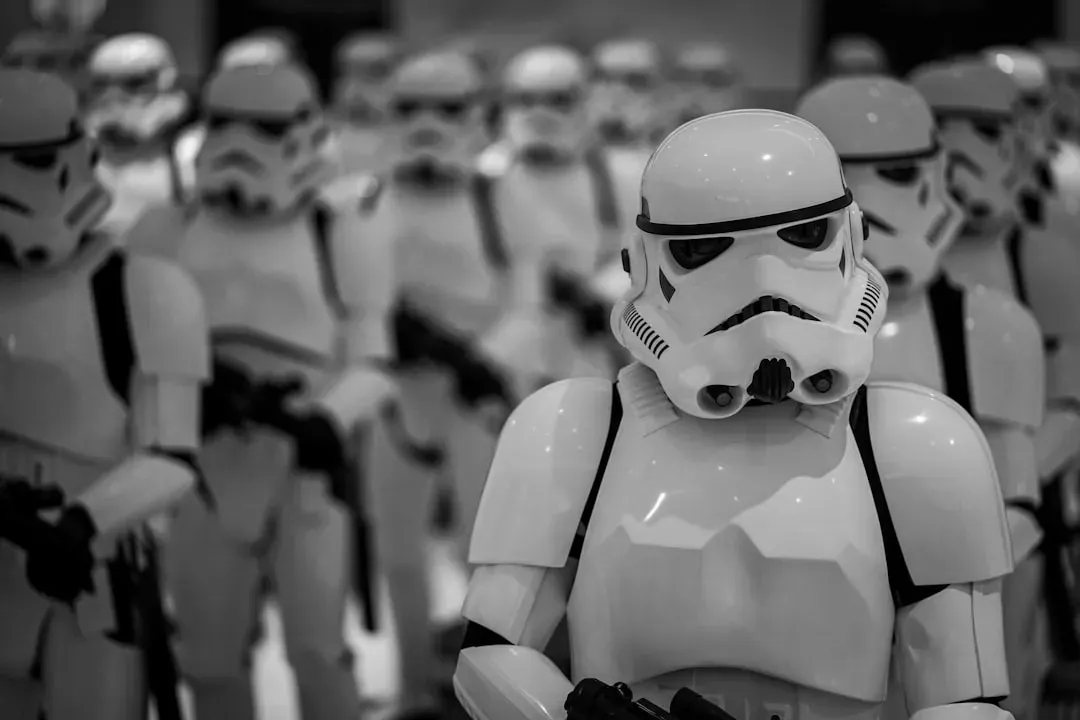
When Rian Johnson’s The Last Jedi suggested Rey’s parents were nobody special, a lot of fans actually liked the idea. It fit the theme that anyone, not just bloodline royalty, could be strong with the Force. Then The Rise of Skywalker walked it all back, revealing Rey was secretly the granddaughter of Emperor Palpatine, a character killed off decades earlier in Return of the Jedi.
The reversal felt less like a plan and more like damage control, an attempt to please fans who complained the sequel trilogy had strayed too far from the original saga’s DNA. Instead, it created a mess of conflicting messages about what these new films were even trying to say. The sequel trilogy limped to a close with critics and audiences divided, and Lucasfilm has spent years since trying to figure out how to move the franchise forward on the big screen.
The aliens in Indiana Jones and the Kingdom of the Crystal Skull

Indiana Jones spent three films chasing biblical artifacts and ancient curses grounded in earthly mythology, even if that mythology bent reality by the end. The fourth film swapped that formula for interdimensional beings, revealing the titular skull belonged to an alien creature that had been guiding human civilization for millennia. The shift in tone landed with a thud for longtime fans who had signed up for archaeology adventures, not science fiction.
The backlash was so pointed that it spawned its own shorthand for a franchise jumping the shark, and the phrase still gets tossed around whenever a beloved series makes a baffling creative leap. Indiana Jones and the Dial of Destiny, released in 2023, largely avoided repeating that mistake, but the damage from Crystal Skull lingered over the character for a decade and a half. It remains one of the most cited examples of a franchise twist nobody asked for.
The Engineers in Prometheus and Alien: Covenant


Ridley Scott’s Alien built its reputation on mystery, particularly the unexplained horror of a derelict ship full of eggs on a distant moon. Prometheus tried to answer that mystery by introducing the Engineers, a race of pale giants responsible for seeding life on Earth and, eventually, for creating the Xenomorph itself. Critics noted that this urge to explain everything undercut what made the original film so unsettling in the first place, since this inclination completely misunderstands what made Alien so powerful to begin with, as the key to its success comes not from the rationality of its plot but from its terrifying serendipity.
Alien: Covenant doubled down on the idea, with the android David taking credit for engineering the Xenomorph, which only tangled the timeline further. Even 2024’s Alien: Romulus, while largely praised for returning to practical effects and claustrophobic horror, could not fully escape the shadow of this lore, since the idea that the Xenomorph was a relatively recent life form created or partially engineered by an android was not universally well received. The mystery that once made the franchise terrifying has largely been replaced by an origin story nobody was clamoring for.
Aliens from Zeist in Highlander II: The Quickening


The original 1986 Highlander gave audiences a moody, sword swinging tale of immortal warriors fighting through the centuries for a mysterious prize. It never fully explained where these immortals came from, and that ambiguity was part of the charm. Highlander II: The Quickening threw that mystery out entirely, revealing the immortals were actually banished aliens from a planet called Zeist, a twist that clashed so badly with the tone of the first film that it is still cited as one of the most notorious retcons in movie history.
Partner offer

The film was such a critical and commercial disaster that it nearly buried the franchise’s credibility for good, even as sequels and a television series limped on through the 1990s. Decades later, a reboot is finally trying to give the story a clean slate. Henry Cavill is currently starring in a new Highlander film directed by Chad Stahelski, and as of mid-2026 the production has confirmed it is currently halfway through production, with filming taking place in Scotland and Hong Kong, targeting a release sometime around 2027 or 2028.
The new timeline in Terminator: Genisys

The Terminator franchise had already stumbled through a couple of shaky sequels by the time Genisys arrived in 2015, but this one took a swing at the very foundation of the story. The film revealed that the villainous T-3000 was actually John Connor himself, corrupted by Skynet, while simultaneously rewriting the events of the original 1984 film through a new, tangled timeline. It was meant to feel clever, a puzzle box for longtime fans, but it mostly left audiences confused about which version of events even mattered anymore.
The convoluted approach to time travel logic, something the franchise had always handled with a lighter touch, made the mythology feel more like homework than entertainment. Genisys underperformed at the box office relative to its budget, and the planned trilogy it was supposed to launch never materialized. Terminator: Dark Fate arrived four years later and simply ignored Genisys altogether, treating it as a timeline that never happened, which says plenty about how poorly that twist was received.
Bran the Broken in Game of Thrones

Game of Thrones spent eight seasons building toward a climax that fans had theorized about for years, with most bets landing on Daenerys Targaryen or Jon Snow claiming the Iron Throne. Instead, the final episode handed the crown to Bran Stark, a character who had spent most of the later seasons as a passive, largely silent observer wandering the story’s margins. The reasoning offered, that Bran’s memory and detachment made him an ideal ruler, arrived so abruptly that it felt disconnected from everything the show had spent building toward its characters.
Paired with Daenerys’s rushed and controversial turn toward tyranny in the same final stretch, the ending soured a huge portion of the fanbase who had followed the story for nearly a decade. The backlash was significant enough that a petition demanding a remake of the final season gathered enormous attention online. HBO’s prequel series House of the Dragon has since tried to rebuild trust in the wider universe, but the original show’s ending remains a cautionary tale about rushing a long-simmering mythology to its conclusion.
The meta revival twist in The Matrix Resurrections

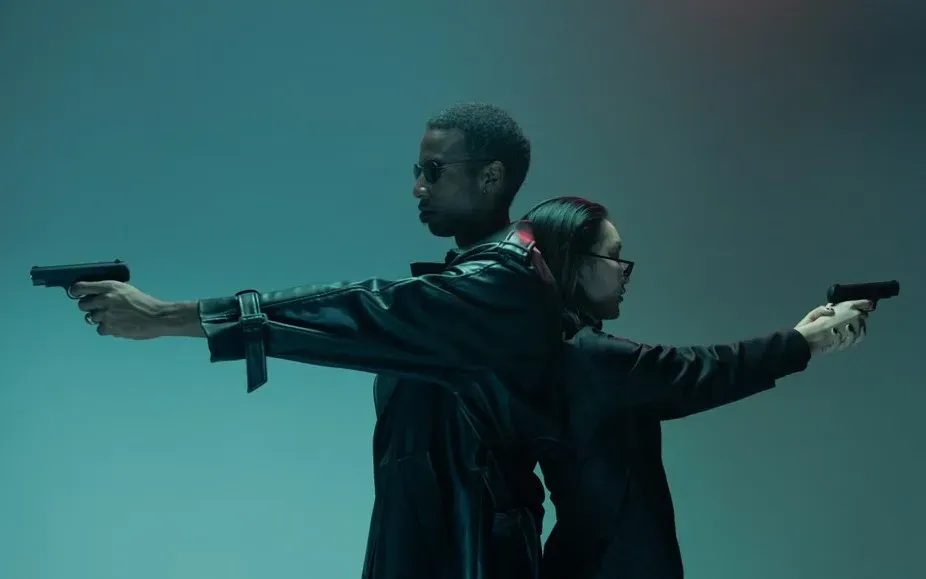
The Matrix trilogy ended in 2003 with Neo and Trinity both dead, a conclusion that felt final in every sense. Nearly two decades later, The Matrix Resurrections resurrected both characters through a twist that folded the franchise’s own legacy into its plot, revealing that Warner Bros. within the story had commissioned a video game based on Neo’s life, blurring the line between the original trilogy and corporate cash grabs.
The self aware commentary was clever on paper, a pointed jab at Hollywood’s habit of reviving old franchises for profit. In practice, many longtime fans felt the metafictional angle came at the expense of a satisfying story, leaving the new film feeling more like an essay about franchise fatigue than an actual continuation of Neo and Trinity’s journey. Box office returns were soft, and there has been no serious momentum toward another sequel since its release, suggesting the twist did little to reignite interest in where the story could go next. Looking back across all seven of these examples, a pattern emerges. The twists that damage a franchise most tend to share one trait: they trade the internal logic and tone that made audiences care in the first place for a jolt of surprise that does not hold up under scrutiny. Mystery, once resolved carelessly, rarely improves a story. It just closes a door that fans had wanted to keep exploring on their own terms.
Partner offer
Planning a trip to Vegas?
Compare hotel rates and show tickets on VEGAS.com.