Hollywood loves a comeback story, but it rarely talks about the flip side: the movies that never had a chance to recover. Every few years, a film arrives with enormous ambition, a nine-figure budget, and a marketing campaign that promises the next big thing, only to vanish from theaters within days. What follows is usually quiet, a studio earnings call, a line item, a shrug from executives who’d rather move on. Some of these failures reshaped entire studios. Others simply became cautionary tales passed around film school classrooms. Either way, the following seven productions represent the sharpest, costliest collisions between ambition and audience indifference that cinema has ever seen.
Heaven’s Gate (1980): The Western That Broke a Studio


Michael Cimino arrived at United Artists fresh off an Oscar win for The Deer Hunter, and the studio handed him near total creative freedom for his next project. That trust turned into one of the most notorious production spirals in film history, with United Artists giving Cimino complete creative control and a budget of $12 million, only for the production to spiral into major cost overruns. By the time filming wrapped, the budget had ballooned to somewhere between thirty two and forty four million dollars, a staggering sum for 1980.
The theatrical results were even more brutal than the budget overruns. A truncated re-cut version released in April 1981 earned only $3.5 million against its $44 million budget and was lambasted by critics. The fallout extended well beyond the film itself, since United Artists ceased to be an independent studio and was sold to MGM in the aftermath of the failure, cementing Heaven’s Gate as shorthand for financial catastrophe in the industry.
Cutthroat Island (1995): Piracy That Sank a Studio


Long before superhero franchises dominated summer schedules, Cutthroat Island tried to revive the swashbuckling pirate genre with Geena Davis at the helm. The production costs spiraled so badly that the financial trouble started before the movie even reached theaters, as the price tag was so high, and the buzz so bad, that even before the 1995 pirate adventure opened, the film company behind it struggled for cash. Renaissance Pictures, the production company backing the film, never recovered from the losses.
The film’s failure became so legendary that Guinness World Records once listed it as the biggest box office bomb relative to its budget, a title it held for years afterward. Audiences simply stayed away, and the pirate genre itself went into a long hibernation until a certain Disney franchise revived it nearly a decade later. Cutthroat Island remains a textbook example of how a single expensive misfire can end a company’s independent run entirely.
John Carter (2012): Disney’s Martian Misadventure

Disney poured a fortune into adapting Edgar Rice Burroughs’ pulp novels for the big screen, betting that a science fiction epic set on Mars could launch a new franchise. The numbers on paper looked almost survivable, since the film’s estimated budget of $263.7 million and worldwide gross of $282.8 million made it appear as if the film made about $19 million. That impression was misleading.
Once marketing, distribution, and licensing costs entered the picture, the real damage became clear. Disney reportedly lost $200 million on the 2012 flop once marketing, distribution, and intellectual property rights were factored in. The film’s underperformance led directly to layoffs and a studio shakeup, proving that box office gross alone rarely tells the full financial story behind a disaster.
Mars Needs Moms (2011): Animation’s Costliest Miscalculation


Disney’s motion capture animated feature Mars Needs Moms arrived with high hopes and an unusual visual style, but audiences never showed up. The financial toll ranks among the worst in the studio’s history, since the film is considered the biggest box office failure of its decade, with a net loss of over one hundred eleven million dollars. For a family animated film, that kind of loss was almost unheard of.
Part of the problem traced back to the uncanny valley effect of its motion capture animation, which unsettled younger viewers rather than charming them. Marketing struggled to explain the concept to parents, and the film quietly disappeared from multiplexes within weeks. It remains one of the clearest examples of a visual gamble that simply never connected with the audience it needed most.
47 Ronin (2013): A Samurai Epic Lost in Translation


Universal bet heavily on Keanu Reeves and a reimagined samurai legend, financing a lavish production that ultimately struggled to find its audience anywhere in the world. Domestically, the damage was severe, as the film suffered the biggest domestic loss on record compared to its production budget, totaling more than $136 million, though its total loss factoring in foreign box office was closer to $23 million. International audiences softened the blow considerably, but not enough to make the project financially sound.
The film’s budget placed it among the most expensive misfires of its era, tied for the largest production cost on record among modern box office disasters at one hundred seventy five million dollars. Critics were unimpressed with the tonal mismatch between Western blockbuster conventions and Japanese folklore, and audiences largely agreed. It stands as a reminder that even a beloved star and striking visuals cannot guarantee a return on a nine figure investment.
Megalopolis (2024): Coppola’s Self-Funded Gamble

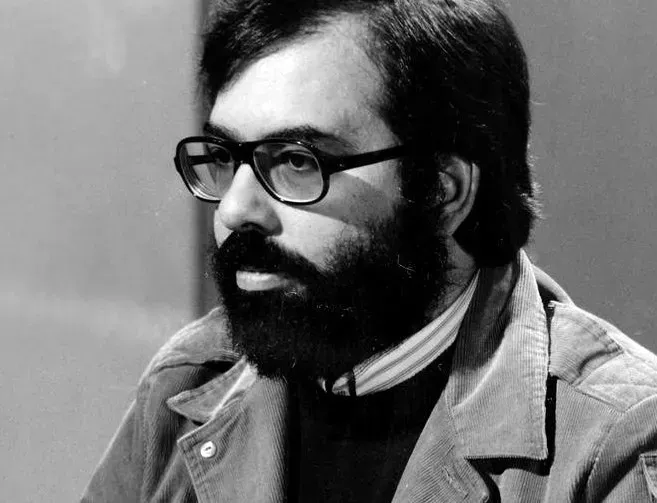
Few disasters in recent memory carry the personal weight of Megalopolis, since Francis Ford Coppola financed the project almost entirely out of his own pocket. Coppola sold off enough of his winery business that he could afford the film’s $120 million budget without risking bankruptcy, a decision that later proved far more costly than anticipated. No studio wanted to shoulder the risk, and it became clear why once the film reached theaters.
The opening weekend numbers told the story plainly, with the film opening to just $4 million at the box office, going down as not only one of the biggest bombs of 2024, but perhaps one of the biggest of all time. By the end of its run, it had only grossed $14.3 million at the worldwide box office. The fallout followed Coppola personally, as reports later confirmed he had borrowed heavily against his wine business and was left financially strained well after the film left theaters.
Borderlands (2024): A Video Game Adaptation Gone Wrong


Lionsgate’s adaptation of the popular Borderlands video game franchise arrived with a star studded cast, including Cate Blanchett, Kevin Hart, and Jamie Lee Curtis, yet nothing about the finished product resonated with fans or general audiences. The critical reception was brutal from the start, with the film opening to a 9% critics’ score on Rotten Tomatoes and a terrible D+ CinemaScore. Word spread fast, and the box office collapse followed almost immediately.
The financial reality became clearer as the weeks passed, with the film ultimately grossing $33 million worldwide against a $110-120 million budget. Lionsgate’s CEO later addressed the failure directly during an earnings call, acknowledging that nearly everything that could go wrong did go wrong, from pandemic delays to costly reshoots and rising interest rates that pushed the project outside the studio’s usual financial safety net. It capped off a rough year for the studio, joining Megalopolis and several other 2024 releases in a stretch of box office disappointments that executives openly admitted reflected deeper problems in how mid-budget films were being greenlit.