Pop music has always sold the idea of the solo star, the singular voice pouring out personal truth over a microphone. Yet behind plenty of those glossy album sleeves sits a much less romantic story: a producer, a songwriting team, or a hired hand quietly building the entire record while the credited artist mostly just showed up to sing, or in some cases, to lip sync. The following seven albums each tell a version of that story, some scandalous, some simply standard industry practice for their era, but all worth knowing before you stream that old favorite again.
1. Milli Vanilli, Girl You Know It’s True (1989)

No album on this list carries a bigger asterisk than Milli Vanilli’s American debut. Rob Pilatus and Fab Morvan were rebranded and promoted as the camera-friendly public faces representing songs produced by Frank Farian and secretly sung by the anonymous studio session trio of John Davis, Brad Howell and Charles Shaw. Even the title track wasn’t written for them at all. “Girl You Know It’s True” was written by Bill Pettaway Jr., Sean “DJ Spen” Spencer, Kevin Liles, Rodney “Kool Rod” Holloman and Ky Adeyemo, most of whom were members of the Baltimore, Maryland based group Numarx, who first recorded the song.
The whole arrangement unraveled during a live show. The first public sign that something wasn’t right came during a live performance at Lake Compounce in Bristol, Connecticut in July 1989, when the backing track began to skip and repeat the line “Girl, you know it’s…,” exposing that Pilatus and Morvan were lip-syncing. The fallout was historic in scale. Arista Records dropped the act from its roster and deleted their album and its masters from their catalog, making it one of the largest-selling albums to ever be deleted, and their Grammy Award was revoked, marking the only time a Grammy was ever rescinded from an artist.
2. The Monkees, The Monkees (1966)
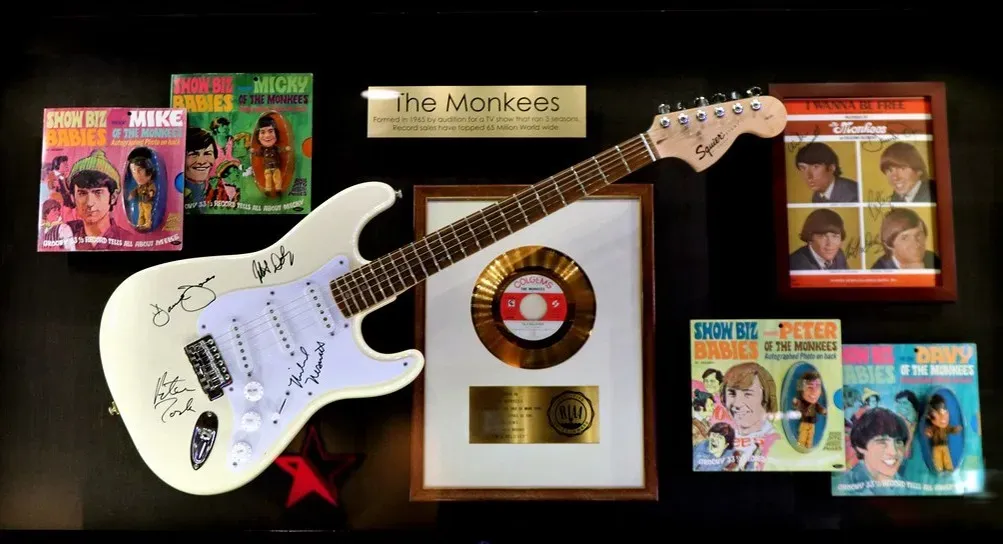
Long before Milli Vanilli made headlines, the Monkees had already normalized the idea of a band whose music came almost entirely from elsewhere. Although the album cover credits the band as playing instruments, the group’s actual contributions were limited almost entirely to vocal tracks, with seven of the album’s twelve tracks featuring one lone Monkee singing lead over instrumentation and backing vocals recorded entirely by session musicians. The songwriting bench was stacked with talent the public rarely associated with a made-for-television pop group. Songwriting credits include Boyce and Hart, who penned half the album’s tracks, along with David Gates, Carole King, Gerry Goffin, Russ Titelman, Steve Venet, and Nesmith, the only Monkee with songwriting credits on the album.
The show’s format made this arrangement almost invisible to fans at the time. Don Kirshner was appointed music coordinator for the series, and Tommy Boyce and Bobby Hart, a producing and songwriting team, signed on to handle most of the day to day chores of creating music for the show’s fictive band. It worked commercially in a way few manufactured acts ever have. The album became the first of four consecutive US number one albums for the group and has been certified quintuple platinum by the RIAA, with sales of over five million copies.
3. New Kids on the Block, New Kids on the Block (1986)
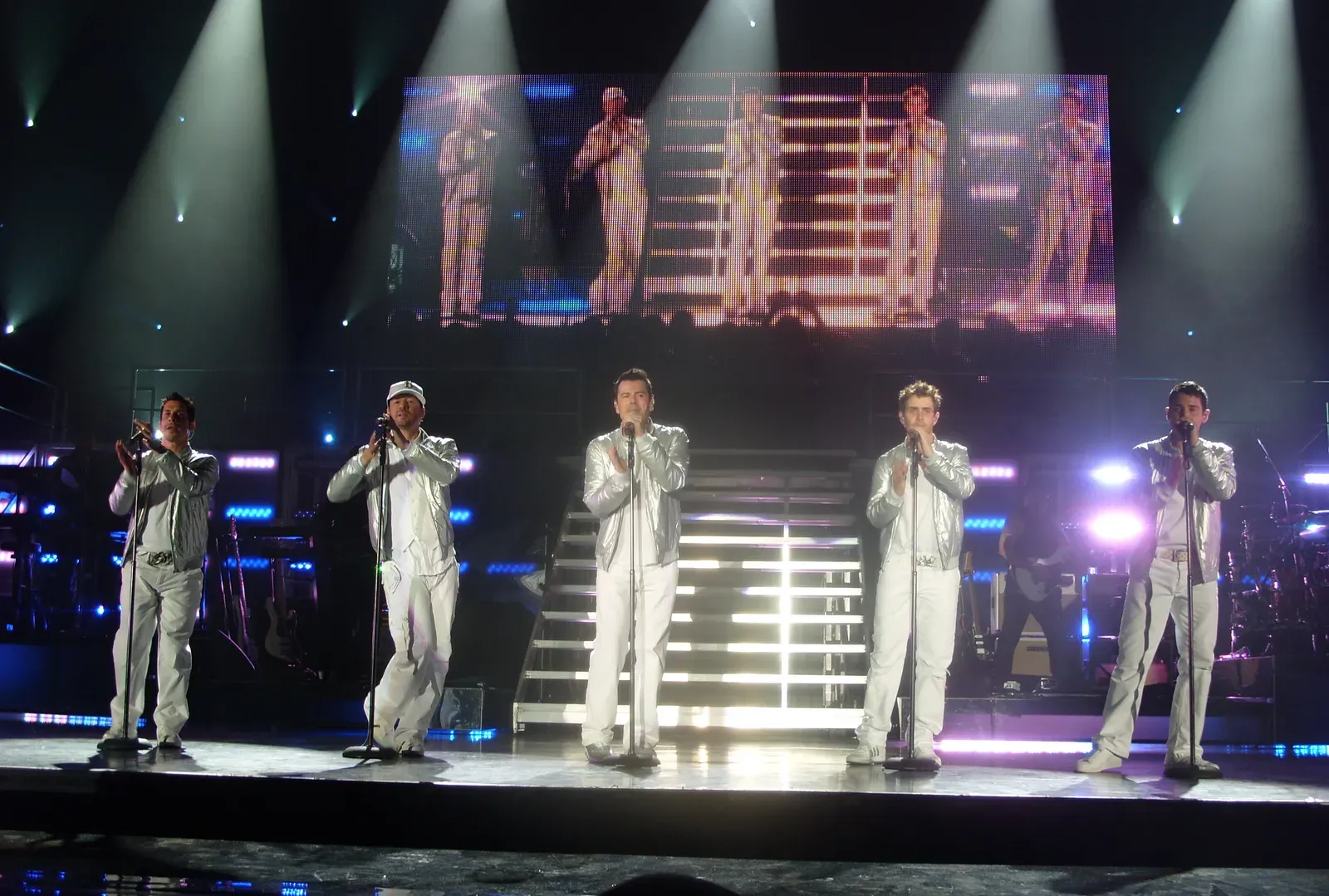
Before Backstreet Boys or NSYNC, there was a Boston producer named Maurice Starr who essentially invented the modern boy band template, and he did it by writing every note himself. Like he did on New Edition’s early albums, Starr wrote and produced every single one of that band’s hits from their first few albums, applying the same approach when he assembled New Kids on the Block. The group’s own official history confirms just how little creative control the five teenagers had at the outset. Maurice Starr’s songwriting and production gave the group a blend of R&B influenced vocals and mainstream pop structures, helping them bridge Black and white radio formats at a time when such crossover was not guaranteed.
It took years, and a change of fortune, before the members themselves got real input into the material. The group eventually grew into a credible urban R&B outfit, eschewing the help of Maurice Starr and writing many of the songs themselves, though by then the commercial magic had faded. Starr’s fingerprints, meanwhile, remained the defining feature of the era that made them famous, with reported earnings from the group’s peak reaching well into the millions weekly during the height of Hangin’ Tough mania.
4. Kylie Minogue, Kylie (1988)
Kylie Minogue arrived in the music business as a soap opera actress with almost no say over her own sound. The success of her debut single “Locomotion” resulted in her working with Stock Aitken Waterman, who produced the album and wrote nine of its ten tracks. The title track that launched her pop career was written in a matter of minutes by people who barely knew her. The producers wrote “I Should Be So Lucky” in 40 minutes and Minogue recorded it quickly before she returned to Australia that afternoon to work on Neighbours.
Even her voice wasn’t left entirely untouched by the production team’s formula. Her voice was double tracked for most of the album, with the producers only allowing Minogue to use her real voice on one track that she felt sounded more like herself than the rest. The results were undeniable regardless of authorship, and Minogue would not take creative control of her own writing until years later on 1997’s Impossible Princess, on which she penned every track, touching on themes of self discovery and freedom of expression.
5. Rick Astley, Whenever You Need Somebody (1987)
Rick Astley’s breakout record is remembered today mostly for a single ubiquitous song, but the whole album followed the same pattern as Kylie’s debut: written, produced, and largely engineered by the Stock Aitken Waterman machine. Astley was one of several acts folded into the operation described in industry retrospectives as a mixture of hi-NRG influenced sound, romantic Motown lyrics and Italo disco melodies with singles from Rick Astley, Bananarama, Mel and Kim, Donna Summer, Sinitta, Dead or Alive, Jason Donovan and Kylie Minogue. Even the album’s title had a recycled origin. The tendency toward interchanging artists and repertoire was well established, since Rick Astley’s breakout album Whenever You Need Somebody got its name and title track from a minor hit the trio had produced a year earlier for O’Chi Brown.
This wasn’t a one-off arrangement either. Stock Aitken Waterman effectively ran a songwriting assembly line, and many of their songs were tried out and recorded by multiple artists, with Mel and Kim, Pepsi and Shirlie and Sinitta all recording the song “Who’s Gonna Catch You,” while both Kylie Minogue and Mandy Smith recorded “Got To Be Certain.” Astley’s smooth baritone gave the material its identity, but the words and melodies belonged to the same three men behind nearly every other PWL release that year.
6. Bananarama, Wow! (1987)
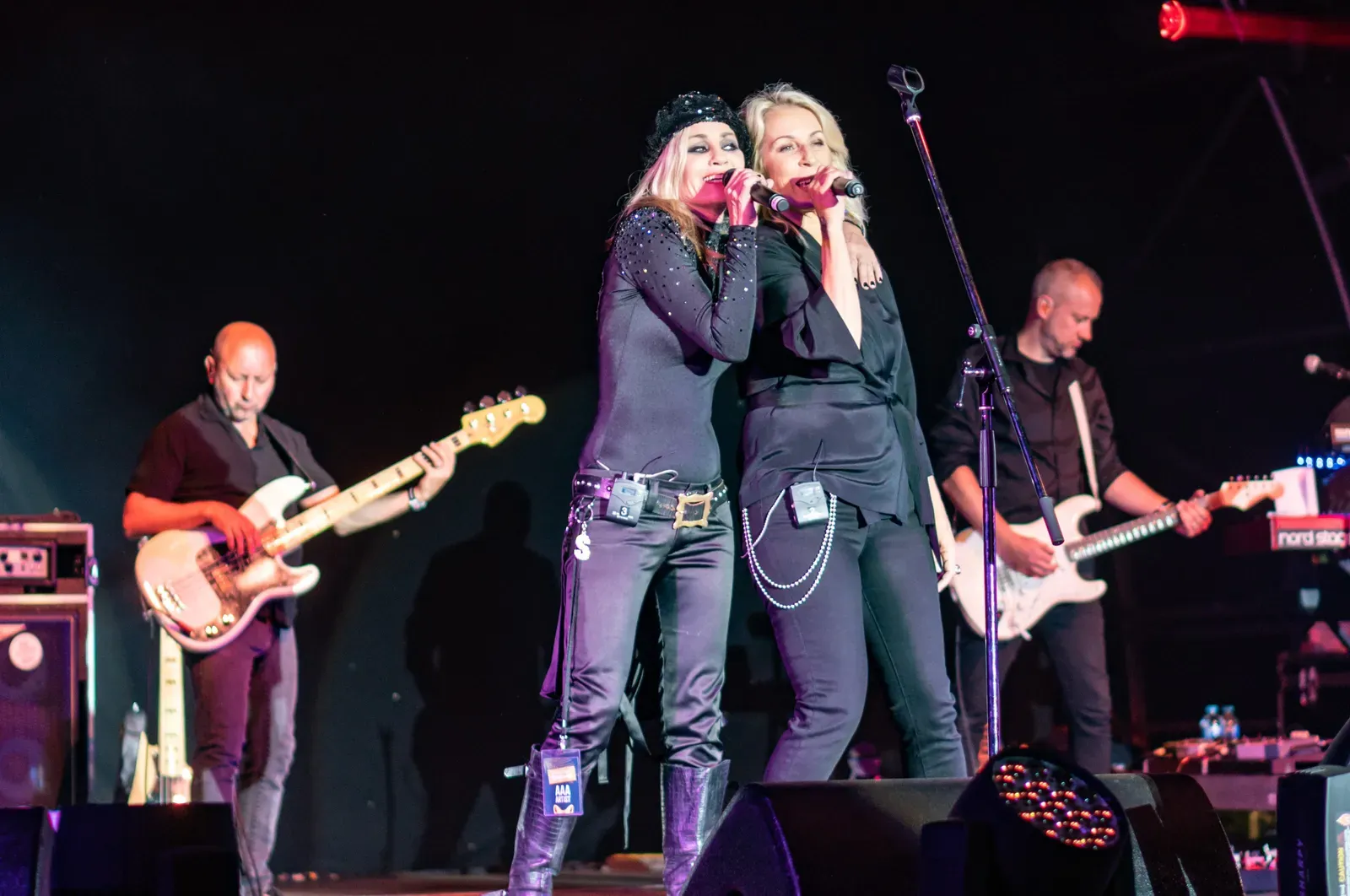
Bananarama had built a reputation in the early 1980s as a scrappy, self-directed girl group, but by the mid-decade they too had been absorbed into the Stock Aitken Waterman hit factory. The trio’s later albums, including 1987’s Wow!, were part of the same production sweep that generated over seven albums’ worth of material for artists such as Kylie Minogue, Jason Donovan, Bananarama, Donna Summer, Cliff Richard and Paul McCartney during that single year. The songwriting formula was interchangeable across the roster, which is precisely why so many of these songs feel stylistically identical decades later.
What made Bananarama’s case a little different from Astley’s or Kylie’s was the group’s earlier independence, which made the shift more noticeable to longtime fans. They had started out writing much of their own material, so the handover to a hit factory that treated their songs as one more entry in a shared catalog marked a genuine change in creative control. Commercially it paid off handsomely, keeping them in the charts well past the point most of their peers had faded.
7. Jason Donovan, Ten Good Reasons (1989)

Jason Donovan’s transition from Neighbours co-star to pop chart fixture followed the exact playbook that had already worked for Kylie Minogue. Stock wrote “Especially for You,” sang the demo with a SAW backing singer, and Aitken flew to Australia to record Minogue and Donovan’s vocals in time for release, while Donovan’s follow-up “Too Many Broken Hearts” went to number one soon after. Neither song began with Donovan in the room, let alone the writing session.
The album built around those singles became one of the era’s biggest sellers almost entirely on the strength of songs he had no hand in composing. His debut album Ten Good Reasons held the top spot for three weeks, selling 1.5 million copies. It stands as one of the clearest examples of how the late 1980s British pop machine could turn a telegenic newcomer into a chart phenomenon using someone else’s pen entirely.
These seven records span more than sixty years of pop history, from a manufactured 1960s sitcom band to a 1980s hit factory that treated its artists almost interchangeably, to a late-decade lip syncing scandal that briefly changed how the industry talked about authenticity. What connects them isn’t fraud in every case. Sometimes it was simply how the business worked, with songwriters and producers operating as the true architects behind a face the public had been sold as the whole story.