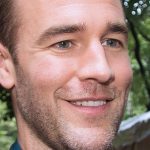
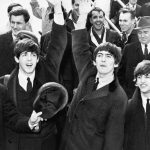
Hollywood has a way of making everything look effortless. The red carpets, the laughter, the polished performances – all of it creates a version of a person that the public falls in love with. But behind every carefully lit scene, there is a real human being navigating grief, illness, rejection, and pain that no amount of fame can dissolve. What is often unseen is the emotional pain beneath the surface. In many cases, it is only after a tragic end that the public learns the individual had been battling severe depression, anxiety, or other mental health conditions. These struggles are frequently hidden, untreated, or minimized – even by those closest to the person.
The seven actors profiled here lived vastly different lives and worked across different eras of film and television. What they shared was a private world far darker than the one audiences ever saw. Their stories are not meant to sensationalize, but to humanize – and to remind us that mental health struggles can find anyone, regardless of talent, wealth, or public adoration.
1. Robin Williams (1951–2014)
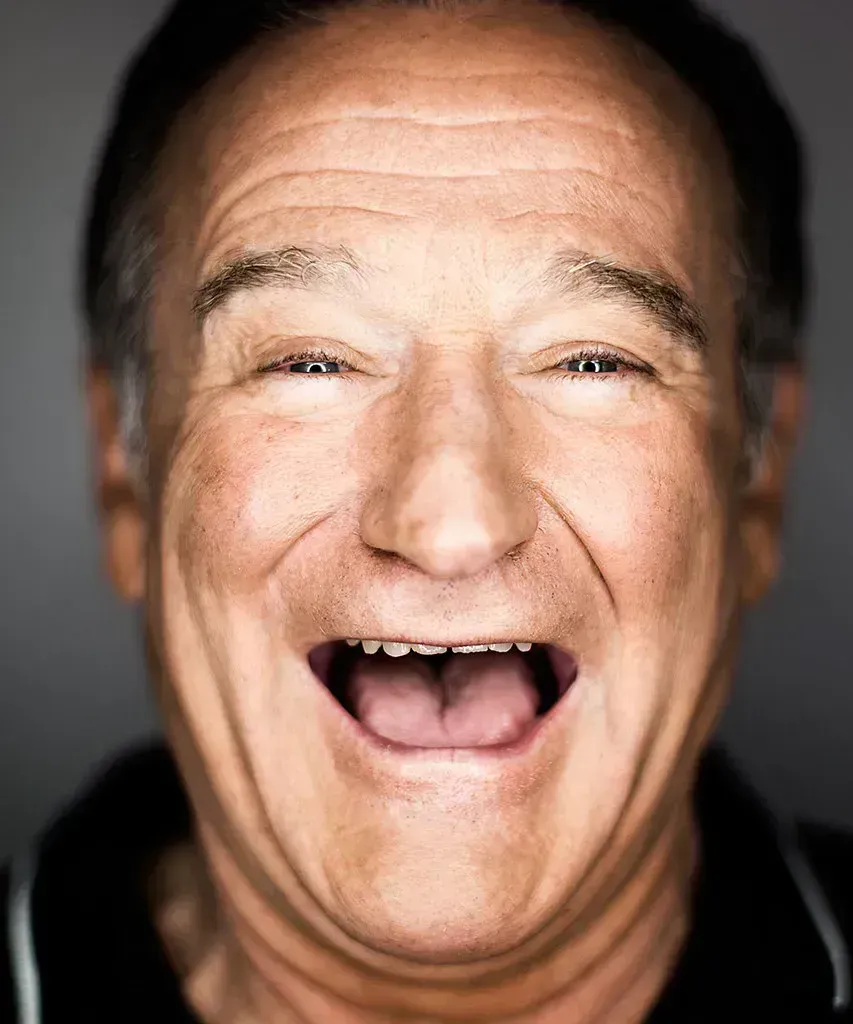
Robin Williams was a comedic genius and profoundly talented actor who captivated audiences as the alien Mork in the sitcom Mork & Mindy and starred in beloved films like Mrs. Doubtfire. His dramatic work in Good Will Hunting earned him an Academy Award. Williams is regarded as one of the greatest comedians of all time, having won various awards throughout his career, including five Grammy Awards and an Academy Award. Yet behind his extraordinary public warmth, something was going profoundly, invisibly wrong.
What many people do not know is that depression was not the underlying cause of Tragic End – rather, it was a little-known brain disease called Lewy body dementia. In the last year of his life, Robin experienced a startling pattern of behavior. His friends, family, and film colleagues could tell he was not himself as he began exhibiting symptoms like confusion, forgetfulness, paranoia, hallucinations, anxiety, personality changes, and difficulty with movement. Robin and his wife, Susan Schneider Williams, sought help from numerous medical specialists but were unable to obtain a correct diagnosis before his untimely death. After his death, an autopsy revealed advanced stages of Lewy body dementia, a less common form of dementia that affects an estimated 1.4 million people in the U.S. Williams died at his Paradise Cay, California, home on August 11, 2014. His primary cause of death was declared as taking his own life by hanging amid Lewy body dementia and other associated factors.
2. Freddie Prinze (1954–1977)

The father of Freddie Prinze Jr. and one of the funniest stand-up comics of his time, Prinze broke ground for Hispanic actors like no one before him. Best loved for his performance in the 1970s television show Chico and the Man, he also performed for President Jimmy Carter and cracked up Johnny Carson on The Tonight Show. His rise was staggering in its speed – from working-class New York kid to national television star before he had turned 20 years old. That velocity, as it turned out, came at a devastating cost.
Although he had signed contracts with NBC and Caesar’s Palace that would have secured him over $7 million and was negotiating with film studios like Warner Bros. and Universal, his addiction to cocaine and Quaaludes and his impending divorce depressed him. On January 28, 1977, in Los Angeles, Prinze wrote a note, put a gun in his mouth, and sent a .38-caliber bullet through his head. His son, Freddie Prinze Jr., was less than a year old. He was just 22. His story remains one of the starkest illustrations of how sudden fame, without adequate support, can shatter a person from the inside.
3. Jonathan Brandis (1976–2003)
In 1990, Brandis portrayed Bill Denbrough in the television miniseries It, and starred in The NeverEnding Story II: The Next Chapter. In 1993, at the age of 17, he was cast in the role of teen prodigy Lucas Wolenczak on the NBC series seaQuest DSV. The character was popular among teenage viewers, and Brandis regularly appeared in teen magazines. For a while, he seemed to have everything. Then the roles started drying up.
After his death, friends reported that he had been depressed about his extended career lull and was reportedly disappointed when his appearance in the 2002 war drama Hart’s War – a role he hoped would revive his career – was significantly reduced to a mere deleted scene in the film’s final cut. Friends reported that Brandis had been drinking heavily and struggling with depression in the months leading up to his death. His career decline in the late 1990s and early 2000s contributed to his emotional state. On November 12, 2003, Jonathan Brandis died at the age of 27 after hanging himself in his Los Angeles apartment. In 2021, his father, Greg Brandis, told People Magazine that Jonathan was suffering from bipolar disorder. “His death wasn’t due to the entertainment industry,” Greg said. “I look back now, and in his 20s, he showed signs of manic depression.”
4. Dana Plato (1964–1999)
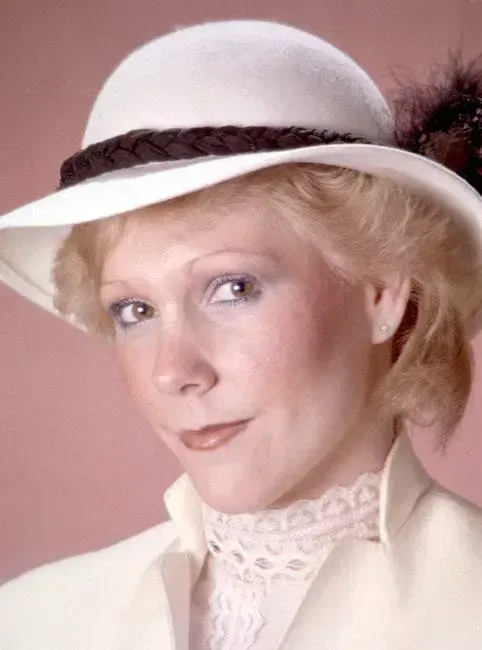
Dana Plato won hearts as Kimberly Drummond in Diff’rent Strokes from 1978 to 1986. Her early fame led to roles in smaller projects, but personal struggles overshadowed her career. Dana Plato began working in the industry from a very early age, and by the time she got to Diff’rent Strokes at age 14 was already abusing alcohol and hard drugs. She was dismissed from Diff’rent Strokes in 1984 for an unplanned pregnancy. After the show ended, her world unraveled steadily and very publicly.
A day before her death she went on the Howard Stern Show and talked about how she was clean and working to come back. The next day she overdosed on painkillers in her and her fiancé’s RV, parked outside her fiancé’s mother’s house. At 34, she died in 1999 after battling addiction and financial loss. Her story underscores the pressures of child stardom. Plato’s tragedy was layered with the specific cruelty of an industry that elevates children to celebrity status and then offers them very little once that status fades.
5. Charles Boyer (1899–1978)

Boyer’s career spanned over 50 years and some 80 films, and he garnered four Academy Award nominations. It was the 1930s and 1940s that were his golden times. Classic films like The Garden of Allah, Algiers, Love Affair, and the thriller Gaslight captured his sensuous appeal as a romantic leading man and a talented thespian. The French-born actor became one of Hollywood’s most enduring romantic icons, his accented voice and melancholy gaze imprinted on cinema history. His private life, however, centered on a love story as sweeping as anything he acted in.
He retired from his career in the 1970s to take care of his first and only wife, Pat Paterson, who was afflicted with cancer at the time. Her death in 1978 proved too much for Boyer to handle, and he ended his life two days after by ingesting a lethal dose of barbiturates. Devastated by his wife’s death, he took his life in 1978 at 79. He had outlasted an entire era of Hollywood glamour, only to find that without the person who mattered most to him, the life he had built no longer held any appeal.
6. Spalding Gray (1941–2004)

Spalding Rockwell Gray was an American actor and writer, best known for driving autobiographical monologues that he wrote and performed for theater in the 1980s and 1990s, as well as for his film adaptations of these works, beginning in 1987. Gray achieved renown for his monologue Swimming to Cambodia, which he adapted as a 1987 film in which he starred, directed by Jonathan Demme. He turned his own anxieties, memories, and darkest thoughts into theater, finding an audience that recognized its own struggles in his.
A horrific head-on car crash during a 2001 vacation in Ireland to mark his 60th birthday left him disheartened and in poor health, and he tried jumping from a bridge near his Long Island home in October 2002. Gray, whose mother took her own life when she was 52, spoke openly about considering the same fate. Spalding received frontal lobe damage to his brain as well as severe damage to his sciatic nerve. His widow has stated that the emotional and physical pain that Spalding suffered was directly related to his eventual death. In early March 2004, Gray’s body was found in the East River. It is believed that he jumped off the Staten Island Ferry. He was 62. Gray was reported to have been working on a new monologue at the time of his death.
7. Gig Young (1913–1978)
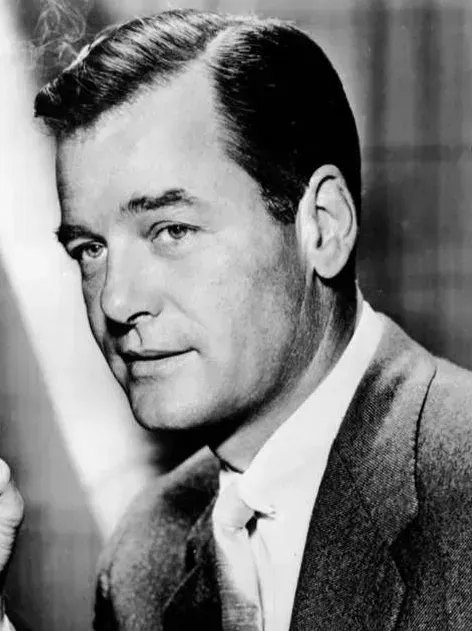
Gig Young had a prolific career as a character actor, often playing charming sidekicks. He appeared in dozens of films and won an Academy Award for Best Supporting Actor for his dramatic role in They Shoot Horses, Don’t They? That 1969 film, with its relentless bleakness about human endurance, would prove to be one of the most striking artistic choices of his career – and, in hindsight, deeply personal. Young had long carried inner darkness beneath his easy, agreeable screen presence.
Young struggled with alcoholism and mental health issues for much of his life. In 1978, just a few weeks after marrying his fifth wife, he shot her and then himself in their New York apartment. He was 64 years old. Young’s story is among the most tragic on this list precisely because his suffering expanded outward, claiming another life in its final act. It stands as a reminder of why untreated addiction and mental illness demand urgent attention – not just for the person suffering, but for everyone around them.
If you or someone you know is in crisis, call or text 988 in the U.S., or contact the Crisis Text Line by texting HOME to 741741.