Some of the most transformative moments in film history didn’t come from studios with unlimited resources. They came from desperate, determined people working in their own backyards, maxing out credit cards, or shooting at night in a convenience store just to avoid paying location fees. The results were often raw, sometimes technically flawed, and completely unforgettable.
What these films share isn’t polish – it’s vision. Each one found a way to turn financial limitation into creative force, and in doing so, rewired what audiences and filmmakers thought was possible. Here are eight of the most significant examples.
1. The Blair Witch Project (1999) – The $60,000 Film That Invented Viral Marketing

The Blair Witch Project is a 1999 American found footage psychological horror film written, directed, and edited by Daniel Myrick and Eduardo Sánchez, following three young students who hike into the Appalachian Mountains to shoot a documentary about a local myth. By 2016, the film had been officially budgeted at $60,000, though the final cost after post-production reached as high as $750,000.
By the end of its theatrical run, the film grossed $140.5 million in the US and Canada and $108.1 million in other territories, for a worldwide gross of $248.6 million – over 4,000 times its original budget. It was also the first film to rely on a viral internet marketing campaign claiming that the events of the film were real. In 2017, the Library of Congress described how the film “established a new type of documentary psychological horror genre,” calling it a template for modern horror film screenplay writing.
2. Halloween (1978) – The Blueprint for Every Slasher That Followed

In 1978, John Carpenter defined modern slasher movies with Halloween. The film’s low-budget thrills, refreshingly simplistic storytelling, and instantly iconic villain attracted an unprecedentedly huge audience. It was a box office smash, despite the fact that the studio put almost no money into marketing it, purely thanks to good word-of-mouth.
Halloween turned a roughly $300,000 budget into a $70 million worldwide box office and more or less kicked off the slasher craze of the 1980s. Without the success of Halloween, we likely wouldn’t have gotten Friday the 13th, A Nightmare on Elm Street, or any of the other juggernauts of the genre. This financial triumph directly incentivized a wave of similar low-budget slasher films throughout the 1980s, and the film democratized horror filmmaking by illustrating that creative ingenuity and a clear vision could overcome significant financial limitations.
3. Rocky (1976) – An Underdog Story That Became a Hollywood Legend

Rocky’s first big break came in 1976 with the story of an underdog boxer that also resulted in one of cinema’s biggest franchises. It was a very low-budget movie written by Stallone that the studio had no faith in, yet it went on to be not only a smash success at the box office, but one that won Best Picture at the Oscars and became a cherished, enduring classic.
With a reported budget of just $1 million, Rocky has made $225 million worldwide to date, spawned a nine-movie franchise still going today thanks to the Creed films, and made nearly $2 billion at the box office over the years. The sheer improbability of it all – an unknown actor insisting he star in his own script, a studio reluctantly agreeing – became as legendary as the film itself. It remains one of the clearest arguments ever made for betting on a story over a budget.
4. The Texas Chain Saw Massacre (1974) – The Film That Rewired Horror’s DNA

Visually speaking, it’s not hard to tell that The Texas Chain Saw Massacre was made on a low budget of an estimated $140,000. But you wouldn’t know that based on its impact. The film redefined the genre in many ways, and people still love to watch it. It is credited with originating several elements common in the slasher genre: the use of power tools as murder weapons, the characterization of the killer as a large, hulking, masked figure, and the final girl.
Sally Hardesty cemented herself as the original final girl, and John Carpenter stated that The Texas Chain Saw Massacre was not only a major influence on his own Halloween, but praised the film for opening the doors to the new wave of independent horror filmmaking – one that proved creating a low-budget film outside the studio system could achieve massive success. According to Entertainment Weekly, it laid the foundations for the Halloween, Evil Dead, and Blair Witch horror franchises. Wes Craven crafted his 1977 film The Hills Have Eyes as a direct homage, while Ridley Scott cited it as an inspiration for Alien. In 2024, the film was selected for preservation in the United States National Film Registry by the Library of Congress as being “culturally, historically, or aesthetically significant.”
Partner offer
5. Clerks (1994) – Minimum Wage Cinema That Launched a Career

Kevin Smith famously sold his comic book collection, maxed out credit cards, and dipped into insurance money to scrape together the $27,000 budget for Clerks. Shot in black-and-white in the convenience store where he actually worked, the film became a cult classic and launched his career. The movie went on to make over $3 million at the box office and turned into a cult classic. Clerks broke boundaries by using crude language, surreal humor, and dark comedy, proving that you could do a lot with very little.
Smith’s debut is the archetypal “I maxed out my credit cards, now I’m famous” tale. Shot largely after hours in a real New Jersey convenience store, Clerks became a touchstone for Gen X slacker humor and indie filmmaking. Smith’s witty dialogue and relatability built a cult following, earning back its budget hundreds of times over and launching the View Askewniverse and Smith’s lifelong career. For a whole generation of indie filmmakers who followed, Clerks was proof that voice and personality could substitute for almost any production value.
6. El Mariachi (1992) – The $7,000 Guinness Record Holder
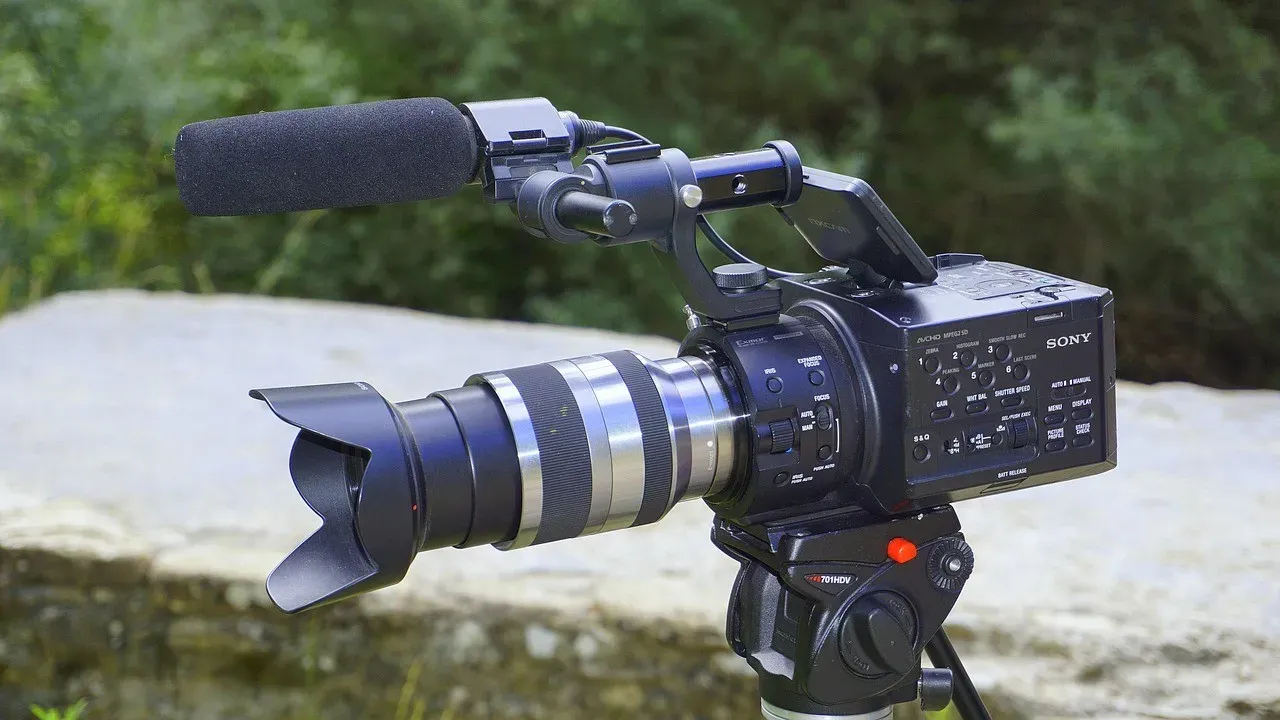
El Mariachi, a tale of mistaken identity leading a group of hitmen after an innocent musician, is one of the greatest triumphs in independent film history. Director Robert Rodriguez aspired to be a filmmaker from a very young age, making many of his own no-budget films before finally taking the leap with his first real movie. That original $7,000, infamously raised by Rodriguez participating in clinical trials, is still Guinness-recognized as the lowest-budget film ever to break $1 million at the box office.
Rodriguez wrote the literal book on guerrilla filmmaking with El Mariachi – shooting with no crew and editing by hand. Initially meant for Mexican home video, the Texas/Mexico border-set actioner caught Columbia Pictures’ attention, which then invested far more in post-production and marketing than the original shoot had required. While the movie went direct-to-video in Mexico, it became a cult classic that spawned a silver-screen trilogy and made $2 million at the box office. Rodriguez went on to become one of Hollywood’s most prolific directors, and El Mariachi remains the origin story that started it all.
7. Paranormal Activity (2007) – Blumhouse’s Big Bang Moment

Paranormal Activity is the project that put Blumhouse on the map. To this day, they’re one of Hollywood’s most consistently profitable production houses for one simple reason: they keep the budgets low for their horror flicks. After seeing how successful The Blair Witch Project was with its found-footage style, Paranormal Activity was made on an even smaller budget of an estimated $15,000.
Filmed with a budget of just $15,000, Paranormal Activity went on to gross $193 million worldwide. Where Blair Witch used handheld cameras in the woods, Paranormal Activity used in-home cameras to frame the action, making the premise more relevant and relatable. By igniting a revolution in narrative simplicity and guerrilla marketing techniques, the film emboldened a generation of storytellers and provided a blueprint that reshaped indie cinema’s approach to storytelling and financing. The Blumhouse model it birthed is still one of the dominant forces in studio horror today.
8. Mad Max (1979) – The Post-Apocalyptic Franchise That Started on a Doctor’s Salary
George Miller’s dystopian classic was filmed in Australia for around $350,000. The production was so barebones that Miller, still working as a doctor at the time, poured his own earnings into the film. The raw, anarchic energy of its chase sequences set the tone for a series that would eventually culminate in the high-budget masterpiece Fury Road.
Decades before Miller took audiences to Fury Road and its brand of big-budget spectacle, he birthed this universe in 1979’s inventive, ultra-low-budget Mad Max. With Mel Gibson starring as a man making his way through the remnants of a ravaged world, it became not just a successful movie, but one of the most profitable movies of all time. The budget for the film has never been fully confirmed, but at most it cost $450,000. It ended up making $100 million worldwide, making Mad Max one of the biggest surprises in box office history. What Miller built from almost nothing eventually grew into one of the most visually ambitious franchises cinema has ever seen – a reminder that the most enduring worlds are often built on the thinnest foundations.
What stands out across all eight of these films is how consistently the limitations became the point. Shaky cameras created atmosphere. Unknown actors created believability. Shooting in real locations cut costs while adding texture. The constraints weren’t obstacles to the vision – in most cases, they were inseparable from it. These films didn’t just succeed despite their budgets. In many ways, they succeeded because of them.
Partner offer
Planning a trip to Vegas?
Compare hotel rates and show tickets on VEGAS.com.