
Some of the most beloved characters in literary history did not spring entirely from a writer’s imagination. They were borrowed, piece by piece, from real flesh-and-blood human beings who walked the same streets as their creators. The line between life and fiction has always been blurry, and honestly, that makes the stories all the richer.
Some writers build up fictional people entirely from imagination, but many are inspired by real individuals. Classic fiction is replete with memorable characters that owe their three-dimensionality to being based on real people in the first place. The results can be surprising, sometimes uncomfortable, and almost always fascinating. Let’s dive in.
1. Sherlock Holmes – The Detective Who Was Actually a Real Doctor
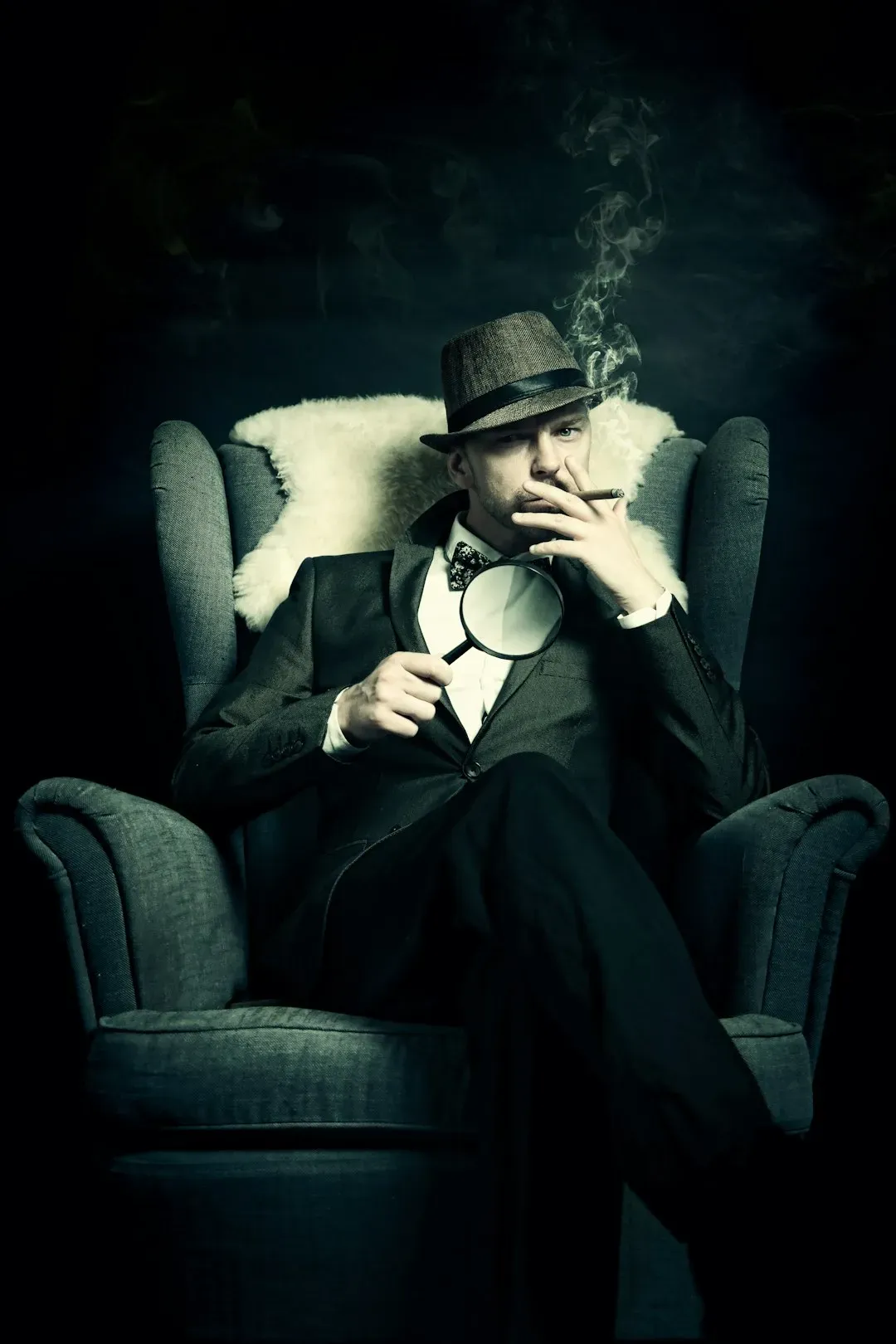
Here’s the thing about Sherlock Holmes: the world’s most famous fictional detective was not invented from thin air. Sherlock Holmes may be one of the most famous fictional characters in literature, but many people do not realize that he was actually modelled on a real-life surgeon called Joseph Bell. Bell was no minor influence. He was the template.
Arthur Conan Doyle met Bell in 1877 and served as his outpatient clerk at the Edinburgh Royal Infirmary, where he observed that Bell seemed able to diagnose patients from little information, noticing minute details. The deductive wizardry we associate with Holmes was not a fantasy. It was something Doyle literally watched happen in a hospital ward.
Bell was able to discern nearly imperceptible differences in his patients’ accents and correctly identify their places of origin. He could tell by looking at hand calluses whether a person was a carpenter, mason, or church bell ringer, and from the walking gait, whether he was a soldier or a sailor. Doyle took all of that and built a legend around it.
This ability led Doyle to model his fictional detective Sherlock Holmes on Bell. Bell was aware of this inspiration, as Doyle wrote to him that it was “most certainly to you that I owe Sherlock Holmes.” As a bonus fact: Bell was soon asked by Edinburgh’s police force to assist in solving crimes, and in 1888, Scotland Yard consulted him during its hunt for Jack the Ripper.
2. Ebenezer Scrooge – The Miser Who Actually Existed
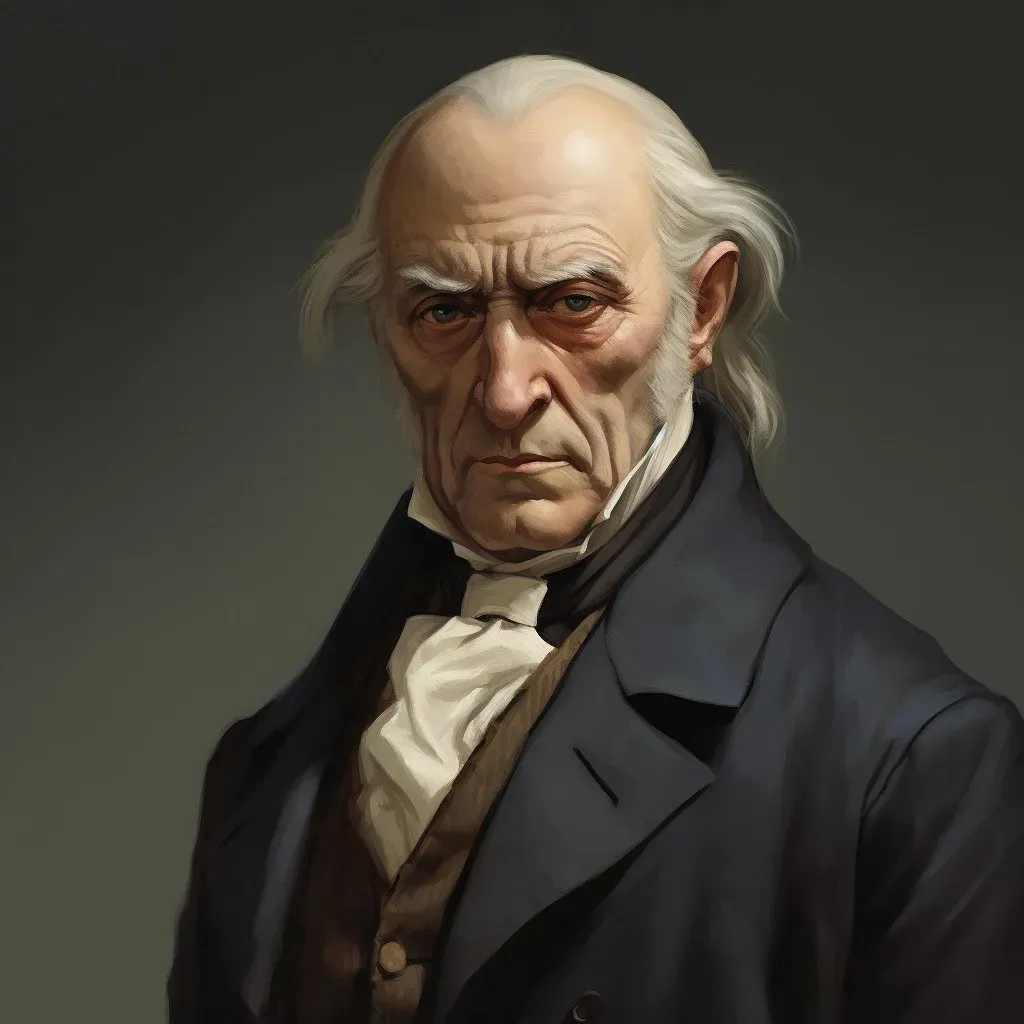
You probably think Ebenezer Scrooge was a purely fictional invention of Charles Dickens. Think again. John Elwes MP was a member of parliament for Berkshire and an eccentric miser, suggested to be an inspiration for the character of Ebenezer Scrooge in Charles Dickens’ 1843 novella A Christmas Carol. The similarities are almost comedic.
Elwes inherited his uncle’s fortune and took up his eccentric behavior, going to bed as soon as the sun set to save on candles, wearing old clothing to avoid buying new ones, letting his house fall into disrepair to avoid costs, and even eating moldy food. That is not a fictional villain. That is a functioning Member of Parliament.
Charles Dickens knew the story and mentioned Elwes both in letters and in his 1865 novel Our Mutual Friend. Though he apparently never said so explicitly, Dickens is widely believed to have modeled Ebenezer Scrooge on Elwes. The visual evidence is also compelling: the illustrations of Ebenezer Scrooge in the first edition bear a striking resemblance to John Elwes.
On his death in 1789, Elwes left £500,000 to his two illegitimate sons – a fortune he had hoarded throughout his entire life, barely spending a penny on himself. The irony practically writes itself.
3. Alice in Wonderland – The Girl on a Boating Trip

Almost everyone knows the story of Alice tumbling down the rabbit hole. Far fewer know the story of how it began: on a lazy afternoon rowing trip on the River Isis in Oxford. The Alice stories were first created on a legendary “golden afternoon” on 4 July 1862, when, while entertaining the three Liddell sisters during a boating trip, Dodgson improvised the story that would become Alice’s Adventures in Wonderland.
Alice Liddell, the real Alice of Wonderland, was the middle daughter of Henry George Liddell, Dean of Christ Church at Oxford. The main character shared many characteristics with Alice Liddell, being stubborn, precocious, and curious. The spark for one of the most enduring stories in literary history came from a child asking to hear a story on a riverbank.
Dodgson was widely assumed for many years to have derived his own “Alice” from Alice Liddell; the acrostic poem at the end of Through the Looking-Glass spells out her name in full, and there are also many superficial references to her hidden in the text of both books. Still, although Alice shares her given name with Alice Liddell, scholars disagree about the extent to which she was based upon Liddell.
Alice Liddell had three sons, two of whom were killed in World War I. To help pay taxes after the death of her husband, she put the original Under Ground manuscript up for auction in 1928. Alice traveled to the United States in 1932 to receive an honorary doctorate from Columbia University in celebration of the centennial anniversary of Carroll’s birth.
4. Long John Silver – The Pirate With One Real Leg

Long John Silver is arguably the most magnetic villain in all of adventure fiction. Menacing, charming, and genuinely terrifying in his unpredictability. So who inspired this one-legged rogue? A poet. Yes, really. When Robert Louis Stevenson was trying to come up with a good villain for Treasure Island, he was inspired by his friend William Ernest Henley, an English poet, critic and editor, a jovial fellow who had had his left leg amputated from the knee after a childhood bout of tuberculosis.
The character of famed pirate Long John Silver was actually inspired by Stevenson’s friend William Henley, a writer and editor. What makes this story even more remarkable is that Stevenson actually confirmed it to Henley directly, in writing. The two men had been close friends, which makes the literary theft feel almost affectionate.
Stevenson reportedly wrote to Henley after the book’s publication, openly confessing that the sight of his friend’s “maimed strength and masterfulness” begot Long John Silver. Some of the most significant, memorable characters in the literary world started out as real people. Details like names, occupations, or ability to do magic might have been tweaked, but it’s clear where the inspiration came from. Truth is often stranger than fiction, after all, and stealing your friends’ personalities is a time-honored writing tradition.
5. Dorian Gray – The Handsome Poet Who Became a Monster
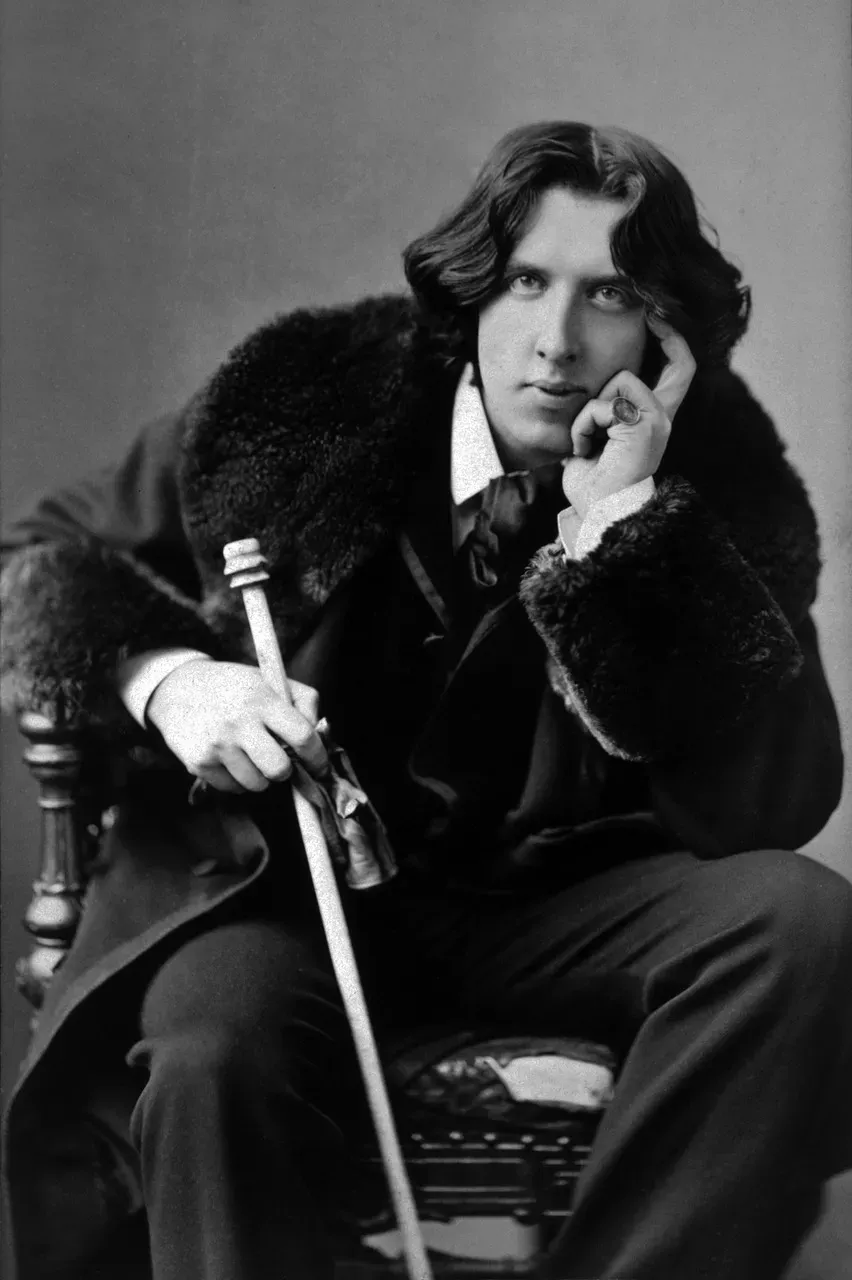
Oscar Wilde’s most famous novel is drenched in beauty, corruption, and moral horror. The title character, Dorian Gray, appears to be a pure product of Wilde’s imagination. Except he was not. A member of Oscar Wilde’s lively literary circle, John Gray was a lovely, boyish poet who could pass for a 15-year-old at age 25. In The Picture of Dorian Gray, Wilde describes the youth as a “young Adonis,” and judging by a black-and-white photo of John Gray, he was not far off.
Wilde met Gray in London at the home of a fellow artist and, for a while, he was one of the author’s many romantic affairs. The similarities between Gray the character and Gray the poet were striking. Like Dorian, John Gray found himself easily corrupted by the city, and the title character’s first name came from an ancient Greek tribe, the Dorians, who were famous for perpetuating love among men.
John Gray would go on to escape Oscar Wilde’s circle of friends and become a priest. That is quite the character arc for someone supposedly synonymous with vanity and moral decay. After the publication of The Picture of Dorian Gray, people began to call John Gray “Dorian,” which made him so uncomfortable that he went so far as to sue a London publication for libel for making the association.
6. Molly Bloom – The Wife Modeled on a Real Marriage
James Joyce’s Ulysses is one of the most technically demanding novels ever written. But buried inside its labyrinthine structure is something quietly personal: the main female character, Molly Bloom, was drawn directly from real life. Molly Bloom corresponds in many ways to Penelope from the Odyssey, but was also modelled off of Joyce’s own wife, Nora Barnacle. The novel, which takes place in a single day, is set on June 16, 1904, the occasion of their first date.
Leopold Bloom’s unfaithful wife, Molly, was based partially on the Odyssey’s Penelope, but more directly on Joyce’s own wife, Nora Barnacle. There is something both deeply romantic and faintly odd about setting an entire literary masterpiece on the anniversary of your first date with your wife. Joyce clearly had a flair for the dramatic.
Molly Bloom is a sensual, unfaithful woman in the novel, a part that Nora pretended to play more than she actually carried out. She and Joyce wrote intensely longing letters to one another when they were apart, and often she mentioned the attractions of various other men, though she never indulged in them. So Nora gave Joyce the raw material. He just turned up the volume on it considerably.
7. Dill Harris – When Your Best Friend Writes You Into a Novel

To Kill a Mockingbird is one of the great American novels. Scout Finch is beloved. Atticus Finch is iconic. Yet the character of Dill, that curious and imaginative boy who appears during summer visits, tends to get less attention. That is a shame, because Dill has one of the most fascinating real-life origins of all. Dill Harris was based on Harper Lee’s best friend Truman Capote, and Capote bragged about it constantly.
Harper Lee based Jem and Scout’s best friend and summer neighbor Dill on her own childhood friend, Truman Capote. The two grew up near each other in Monroeville, Alabama, and their friendship left a permanent mark on both of their literary careers. Harper Lee admitted that the character of Dill was based on childhood friend Truman Capote, who spent time with his aunts in Monroeville, Alabama. Their friendship continued into adulthood.
Capote was super into the fact that Harper Lee had put him in the book, which contributed to the false rumor that Capote actually wrote all of To Kill a Mockingbird. I think that detail says everything you need to know about Truman Capote’s personality. The man loved being at the center of things, even when the story was not his.
8. Sethe – A Character Born from a Devastating True Story
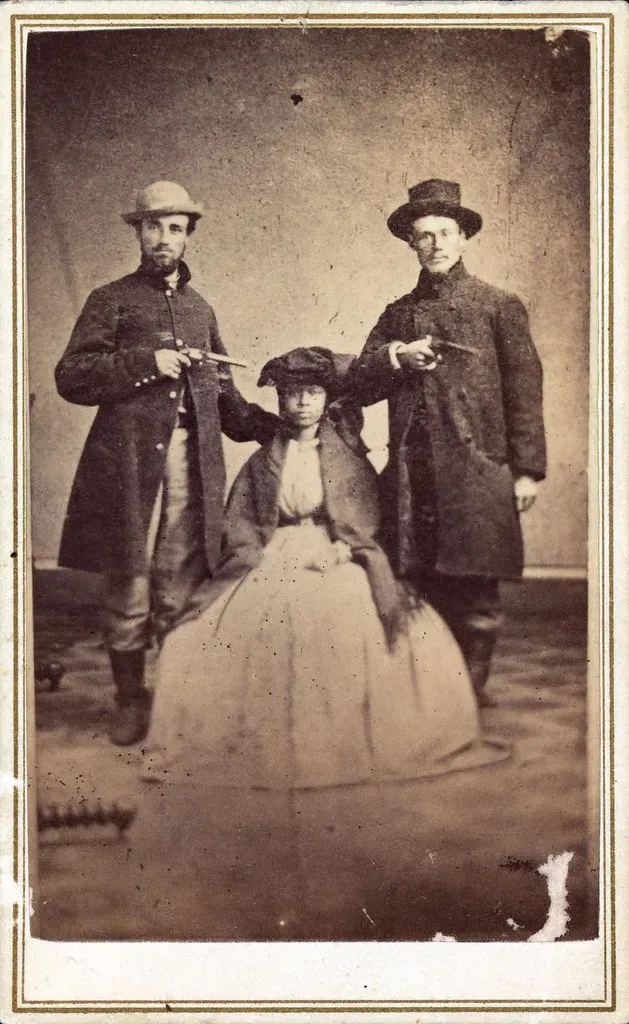
Toni Morrison’s Beloved is one of the most powerful American novels ever written. Its central character, Sethe, is an escaped slave who commits an act of unthinkable violence to protect her children from being returned to slavery. The story feels almost impossible to believe. Toni Morrison based her fifth novel on the famous case of Margaret Garner, an escaped slave who in 1856 stabbed her two-year-old daughter to death rather than allow her to be returned to slavery. The case was a sensational one that engaged the abolitionist cause, but Garner and her husband were ultimately returned to slavery.
Sethe was based on a slave named Margaret Garner, who fled from Kentucky to Ohio when one of the coldest winters in recorded history froze the Ohio River solid enough to serve as an escape route. When slave-catchers surrounded the house she had barricaded herself in, she did in fact kill her daughter, and when captured, was in the process of killing her other children to spare them a life of slavery. Margaret never stood trial; returned to her owners in Kentucky, she was moved frequently in a successful effort to hide her from the Northern authorities.
Margaret Garner died in 1858, of typhoid. Garner was a popular subject of sentimental poetry and paintings after her death; Morrison was inspired not only to base her character of Sethe on Garner, but also wrote the libretto for the opera Margaret Garner. Morrison turned an almost unbearable historical truth into art that endures, ensuring Margaret Garner’s story would never be forgotten.
What These Stories Tell Us About Literature Itself

Writers are often told to write what they know, so it should come as no surprise that many of the most famous characters in literary history are based on real people. Whether drawing inspiration from their spouses, friends and family, or inserting themselves into the text, authors pull nearly every word and sentence from some element of reality, and most often, that element is people.
There is something almost humbling about this. The stories we think of as pure imagination are actually deeply human documents. Every Sherlock, every Scrooge, every Dorian Gray was a living, breathing person at some point. Writers are, at their core, people-watchers with pens.
Ernest Hemingway once said that a writer should create “living people; people, not characters. A character is a caricature.” Good characterization invites the reader to personally identify with a narrative. The characters who endure the longest may be the ones rooted in the truest kind of reality: actual human experience, borrowed, transformed, and given back to the world as literature.
So next time you fall in love with a fictional character, consider this: somewhere in history, that person might have existed. They may have walked down a street, eaten a meal, or sat across from an author who saw something worth remembering. Which of these surprised you most?