Pop culture loves a good one-hit wonder story. A song rockets up the charts, gets stuck in everyone’s head for a summer, and then the artist seems to vanish, filed away under nostalgia playlists and trivia nights. But quite a few of these supposed flashes in the pan never actually left the music business. They just moved behind the scenes, writing songs that became massive hits for other people, sometimes far bigger than the one that made them famous in the first place.
What follows are eight artists remembered mostly for a single charting moment, who quietly built second careers as songwriters for hire. Some of their names you will recognize instantly. Others might surprise you once you realize how many familiar choruses trace back to them.
1. Nick Gilder, “Hot Child in the City”

Nick Gilder topped the Billboard Hot 100 in 1978 with the glammy, slightly unsettling “Hot Child in the City,” a song that has followed him around as his defining moment ever since. Fewer people know that he spent much of the 1980s as a working songwriter, penning tracks for artists across rock and pop. His songwriting credits include songs for Pat Benatar, Joe Cocker, and Bette Midler, alongside his 1978 No. 1 hit “Hot Child in the City.”
His most notable outside success came in 1984, when he co-wrote “The Warrior” for the band Scandal, fronted by Patty Smyth. “The Warrior,” which Gilder and Holly Knight co-wrote for Scandal featuring Patty Smyth, peaked at number seven in 1984. It was a rock radio staple for years and remains the song most people don’t realize came from the “Hot Child” guy.
2. Gregg Alexander, “You Get What You Give”

New Radicals burned bright and fast, scoring one enormous hit with “You Get What You Give” in 1998 before frontman Gregg Alexander disbanded the group almost immediately. What looked like a short-lived project turned out to be a launching pad. Alexander, the New Radicals mastermind, was just starting to transition to a new role as a behind-the-scenes songwriter for hire.
That transition produced one of the biggest pop hits of the early 2000s. Before it was released on Santana’s Shaman album and became a Billboard Hot 100 top ten hit that went on to win a Grammy for Best Pop Collaboration with Vocals, “The Game of Love” was one of many songs Alexander wrote after New Radicals disbanded. The track, sung by Michelle Branch, went through several other vocalists first, including Tina Turner and Macy Gray, before landing where it belonged. Alexander also wrote another song with an unlikely afterlife: he wrote The New Radicals’ nearly lost hit “Murder On The Dancefloor,” which sat in the vault until it was released as a 2001 single by Sophie Ellis-Bextor.
3. Linda Perry, “What’s Up”

If you were anywhere near a radio in 1993, you know the “What’s Up” scream, the one that made 4 Non Blondes and singer Linda Perry impossible to forget. What’s less widely known is that Perry became one of the defining pop songwriters of the following decade. As lead singer and main songwriter for 4 Non Blondes, Perry wrote the group’s international 1993 hit “What’s Up?” prior to establishing herself as a major songwriter and producer.
Her post-band résumé reads like a highlight reel of turn-of-the-millennium pop. In 2000, Perry wrote and produced eight tracks for Pink’s Grammy-nominated album M!ssundaztood, including the Grammy-nominated “Get the Party Started.” The following year she wrote “Beautiful,” which was nominated for a Grammy for Song of the Year and won Aguilera the Best Female Pop Vocal Performance Grammy. She has also written for Gwen Stefani and Alicia Keys, cementing a career that has far outlasted the one hit most casual listeners remember her for.
4. Dan Wilson, “Closing Time”

Semisonic’s “Closing Time” was inescapable in 1998, a bittersweet bar anthem built around Dan Wilson’s raspy delivery. The band never matched that success again, but Wilson quietly became one of the most in-demand co-writers in contemporary pop and country. His songwriting résumé includes “Closing Time,” which he wrote for his band Semisonic, “Not Ready to Make Nice,” co-written with The Chicks, and “Someone Like You,” co-written with Adele.
The scale of that later success is hard to overstate. He earned a Grammy nomination for “Closing Time” and won Grammys for Song of the Year for “Not Ready to Make Nice” in 2007 and Album of the Year in 2012 as one of the producers of Adele’s 21. He has since written with Taylor Swift, John Legend, and Chris Stapleton, proving that “Closing Time” was really just the opening act of his career.
5. Ray Dorset, “In the Summertime”

Mungo Jerry’s “In the Summertime” is one of the biggest one-off hits of the 1970s, a shaggy, sunny singalong that sold millions of copies worldwide. Frontman Ray Dorset never repeated that scale of success as a performer, but a decade later he wrote a song with an oddly touching backstory. Written by Ray Dorset of Mungo Jerry, the song was originally written for Elvis Presley, but he died before it was ever recorded.
The song, “Feels Like I’m in Love,” eventually found its way to a different singer entirely. It was a number-one hit on the UK Singles Chart for two weeks in September 1980 for Scottish singer Kelly Marie. Dorset later reflected on the song’s unusual journey, noting that he wrote it in 1977 with Elvis Presley in mind and even recorded it Elvis-style on his demo, only for it to end up as a B-side before someone else turned it into a chart-topper.
Partner offer
6. Trevor Horn, “Video Killed the Radio Star”

The Buggles’ “Video Killed the Radio Star” earned a permanent place in pop history as the first video ever aired on MTV in 1981, which somewhat overshadowed the fact that the song itself was a modest one-off hit. Trevor Horn, one half of the duo, went on to become one of the most influential producers and co-writers in British pop, shaping the sound of the entire 1980s. He is credited as a co-writer on Yes’s “Owner of a Lonely Heart,” the band’s surprise 1983 American number one, a track that revived Yes’s commercial fortunes almost single-handedly.
Beyond that, Horn’s production fingerprints are all over massive hits by Frankie Goes to Hollywood, ABC, and Seal, whose “Kiss from a Rose” became a global smash in the mid-1990s under Horn’s guidance. His path from novelty new wave one-hit wonder to studio powerhouse is one of the more dramatic transformations in pop music, even if his own name rarely comes up when those songs play on the radio.
7. Rupert Holmes, “Escape (The Piña Colada Song)”
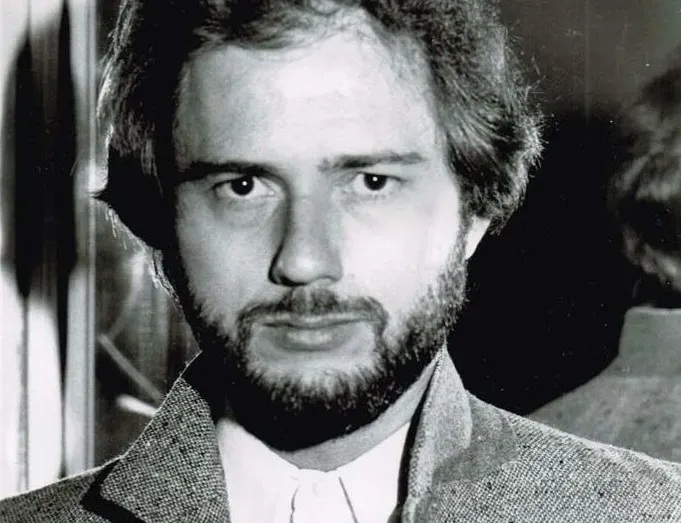
Rupert Holmes is remembered almost entirely for “Escape (The Piña Colada Song),” the tongue-in-cheek 1979 number one about a personal ad gone sideways. Long before that solo success, though, Holmes had already written a hit for someone else entirely. He penned “Timothy” for the band The Buoys in 1971, an oddly dark song about cannibalism among trapped miners that still managed to crack the top twenty despite radio stations being wary of its subject matter.
Holmes also worked closely with Barbra Streisand as a writer and arranger on her mid-1970s material, and he is credited with writing “Weekend in New England,” the tender ballad that became one of Barry Manilow’s signature hits. It is a strange career shape: a novelty chart-topper as a performer, bookended by serious songwriting work for other artists that rarely gets mentioned in the same breath.
8. Robbie Nevil, “C’est la Vie”
Robbie Nevil scored a slick, radio-friendly hit in 1986 with “C’est la Vie,” which reached the upper rungs of the Billboard chart and then largely faded from his own performing career. What he did next was pivot fully into songwriting, contributing to hits for other artists throughout the late 1980s and beyond. He co-wrote “Just Got Paid,” the 1988 hit for R&B singer Johnny Kemp, a song that still gets pulled out on throwback playlists decades later.
Nevil kept working steadily as a behind-the-scenes writer well into the 2000s, contributing to material for pop artists including Jesse McCartney. His own chart run as a performer may have been brief, but his writing credits quietly kept his name in circulation long after “C’est la Vie” stopped getting regular airplay.
Taken together, these eight stories complicate the usual joke about one-hit wonders fading into obscurity. Several of them ended up shaping the sound of decades they were supposedly locked out of, writing songs that outsold and outlasted the ones that made them famous in the first place. The label “one-hit wonder” tends to measure fame, not talent, and in each of these cases the songwriting credits tell a fuller, more interesting story than the chart position ever did.
Partner offer
Planning a trip to Vegas?
Compare hotel rates and show tickets on VEGAS.com.