Walking into an audition room is one of those strange professional moments where the stakes feel enormous but the actual window of time is tiny. Most auditions, even for feature films or streaming series, last just a few minutes. Casting directors are watching, listening, and forming impressions long before the scene starts, which means what an actor says before, during, and after the read can shape the outcome just as much as the performance itself. Some habits are so common that casting professionals across Los Angeles and beyond have quietly compiled their own mental lists of phrases that make them wince. None of these are career-ending on their own, but together they reveal a pattern worth understanding. Here are eight things actors consistently get advised to leave out of the room.
1. “I’m so sorry, I’m really nervous”
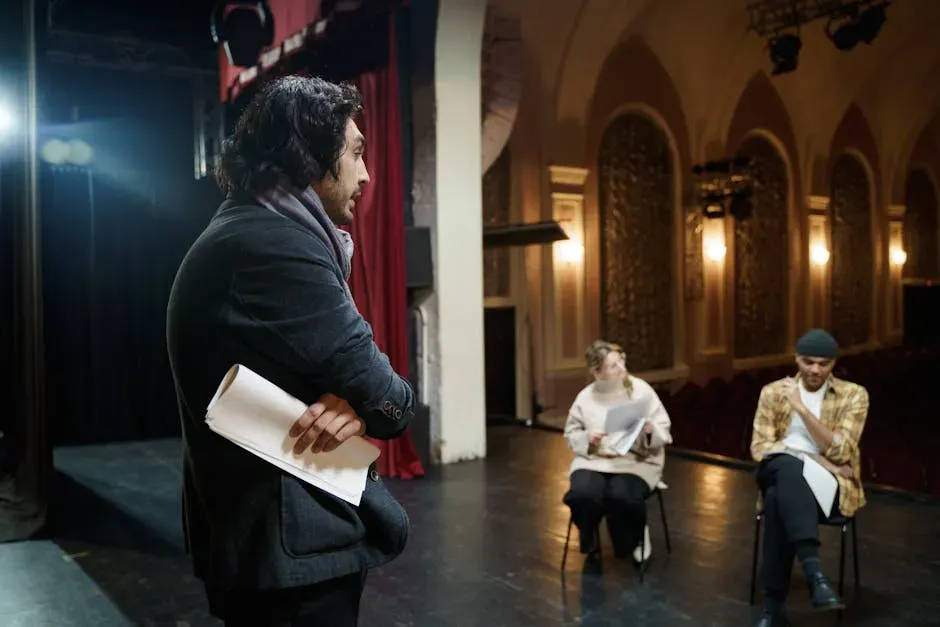
Nerves are universal, even among actors who have been working steadily for years, so naming them out loud rarely surprises anyone in the room. What it does is shift the focus away from the character and onto the actor’s own anxiety, which is the opposite of what a strong audition needs. Casting directors generally already expect some tension and have seen thousands of actors manage it without announcing it.
The stronger move is simply breathing, taking a beat, and starting the scene. If nerves affect the read, most casting teams will offer a second take anyway without needing an apology first. Naming the fear out loud tends to plant a seed of doubt that wasn’t there a moment earlier.
2. “Can I start over? I messed that up”

Asking to restart mid-scene, especially with a self-critical comment attached, breaks the illusion that the actor can hold a character under pressure. Film and television work is full of interruptions, technical resets, and multiple takes, so casting directors are really testing whether an actor can recover smoothly rather than whether they can deliver a flawless first attempt. A small stumble handled with composure often reads better than a technically perfect line delivered with visible self-doubt.
If a real reset is needed, a simple, neutral request works far better than a self-deprecating one. Something like a quiet pause and a fresh start communicates control. Undermining the work before the reader or camera even reacts gives away leverage the actor didn’t need to give up.
3. “I didn’t have much time to prepare this”
This line shows up constantly, and casting directors have heard it so often that it has essentially lost its explanatory power. Whether or not it’s true, saying it out loud frames the upcoming performance as an excuse in waiting, which changes how the room listens before a single line is spoken. Preparation time is genuinely tight in the industry, sides often arrive less than twenty-four hours before a session, but that pressure is understood as part of the job, not a special circumstance worth mentioning.
Actors who skip the disclaimer and simply perform tend to be judged purely on what they bring to the scene. If the read is a little rough, most casting professionals already factor in short prep windows without needing to be told. Saying it out loud only adds a layer of self-sabotage to a moment that didn’t require one.
4. “How did I do? Did I get it?”
Asking directly for feedback or an outcome puts casting directors in an uncomfortable spot, since most are not authorized to make casting decisions on the spot and many simply won’t know yet. Studios, showrunners, directors, and producers are typically involved in final choices, sometimes across several rounds of callbacks, so an immediate answer almost never exists. The question can come across as either naive about how the process works or, worse, as fishing for reassurance.
A polite thank you and a graceful exit leave a far better impression than pressing for validation. Representatives, whether agents or managers, are the appropriate channel for following up on results later. The room moves faster and stays more professional when actors let the process play out on its own timeline.
Partner offer
5. “I don’t usually look like this” or “I’m having a bad day”

Commenting on appearance, whether it’s hair, skin, wardrobe, or general energy, draws attention to something the casting team likely wasn’t focused on in the first place. Casting decisions are rarely made based on a single day’s grooming choices, and pointing out perceived flaws only invites scrutiny that wasn’t there before. It also signals a lack of confidence that can bleed into the actual performance.
Physical appearance matters far less than presence, preparation, and how convincingly an actor inhabits the role in front of them. If wardrobe or styling genuinely affects a specific character choice, that’s a conversation better had through a rep beforehand, not announced in the room. Otherwise, walking in and simply doing the work sends a much steadier signal.
6. Anything that criticizes another actor or production
Hollywood is a smaller industry than it looks from the outside, with casting directors, producers, and directors frequently working across multiple projects together over years. Badmouthing a previous director, a co-star, or even a rival actor who read for the same part earlier that day tends to circulate faster than actors expect. It also raises a quiet red flag about how that actor might behave on a future set under pressure.
Even lighthearted complaints about a difficult past shoot can land the wrong way if the listener happens to know the people involved. Staying neutral, or better yet, focusing conversation on genuine enthusiasm for the current project, keeps the room warm. Reputation in casting circles is built slowly but can be dented quickly by careless comments.
7. “I can do it however you want, just tell me”

Offering total flexibility sounds cooperative, but casting directors are often specifically looking for actors who bring a clear, specific choice to the material. A blank offer to do it “any way” can read as a lack of preparation or interpretation, rather than openness. Directors want to see what an actor thinks the character is doing in the scene before offering adjustments.
It’s perfectly fine, and often expected, to take direction and adjust after an initial take. The difference is arriving with a point of view first. An actor who commits to a choice and then adapts smoothly when redirected demonstrates far more range than one who never had a choice to begin with.
8. Bringing up pay, billing, or scheduling unprompted

Auditions are almost never the appropriate setting to raise questions about compensation, credit placement, or availability conflicts, since those conversations typically belong to agents, managers, and casting offices working through official channels. Bringing them up directly in the room can make an actor seem more focused on the business side than the creative one, even if the concern is completely reasonable. It can also create an awkward dynamic if the casting team isn’t the party who handles those negotiations at all.
Representatives exist specifically to manage these logistics, and most contracts, rates, and scheduling details are worked out well after a callback or offer stage. Keeping the audition focused purely on the performance protects the actor’s professional image. Business conversations have their place, and the audition room simply isn’t it.
Every one of these habits comes from a very human place, nerves, honesty, or a desire to be accommodating, so none of them make an actor look unprofessional in a dramatic sense. Still, small choices in the room add up, and casting directors notice patterns across the dozens or sometimes hundreds of actors they see for a single role. Avoiding these eight phrases won’t guarantee a callback, but it clears away distractions that have nothing to do with the actual work being judged.Partner offer
Planning a trip to Vegas?
Compare hotel rates and show tickets on VEGAS.com.