A single sentence. A few words sent in haste. Sometimes that’s all it takes to unravel a story that someone spent months trying to hide. In criminal investigations, the digital paper trail left by text messages, coded notes, and short written communications has become one of the most reliable sources of truth available to law enforcement.
Prosecutors value messages precisely because they capture raw, unfiltered moments. Unlike spoken words, which can be forgotten or denied, they create a permanent record that can be analyzed and presented in court. What follows are nine real cases where a short message, sometimes just a handful of words, changed the entire course of a criminal investigation.
1. Michelle Carter and Conrad Roy: “You Just Have to Do It”

Uploaded by JohnnyMrNinja, CC BY 2.0)
Conrad Roy III died by suicide at age 18 in 2014. His girlfriend, 17-year-old Michelle Carter, had encouraged him in text messages to commit suicide after he repeatedly expressed his desire to die. The case became colloquially known as the “texting suicide case.” What made it legally historic was the question at its heart: could words alone constitute a criminal act?
When Roy told Carter he was too troubled to go through with it, she replied urging him to stop thinking and simply act, continuing to press the question over the course of a full day. After a bench trial, Judge Lawrence Moniz found Carter guilty of involuntary manslaughter, concluding that she wanted Roy dead and that her words coerced him to kill himself. After nearly two years of unsuccessful appeals, Carter began her sentence in 2019 and was released early in January 2020 for good behavior.
2. Aaron Hernandez: “Hurry Up” and “U Grab”
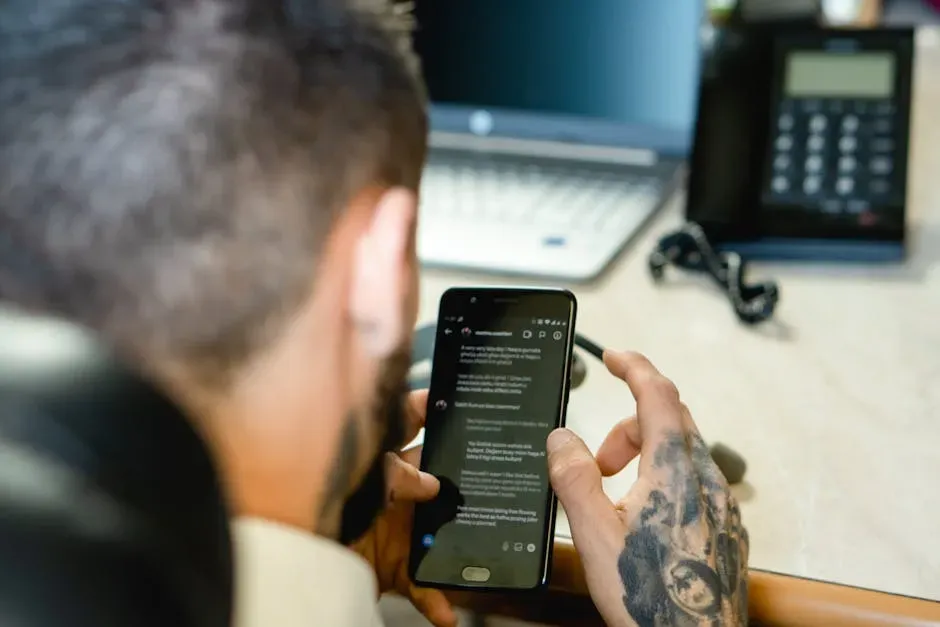
The first-degree murder conviction of New England Patriots tight end Aaron Hernandez concerned the killing of Odin Lloyd in June 2013. Hernandez had placed calls and sent messages to others accused of assisting in the murder, with texts that read like orders, including phrases such as “Hurry up” and “U grab.” In total, the prosecution referred to 17 different text messages surrounding the time of Lloyd’s death.
While the messages did not explicitly mention plans to murder Lloyd, the prosecution argued they could be read in context to suggest Hernandez’s guilt. The jury agreed, and Hernandez was sentenced to life imprisonment; he later died while incarcerated. The brevity of those messages, cryptic at first glance, became far more incriminating once investigators mapped them against a timeline of events.
3. Reeva Steenkamp’s Final Text to Oscar Pistorius

On February 14, 2013, Olympic sprinter Oscar Pistorius shot and killed his girlfriend, Reeva Steenkamp, at his home in Pretoria. The double-amputee athlete, once celebrated as the “Blade Runner,” was instantly transformed from global icon to murder suspect. Pistorius maintained throughout the trial that he had mistaken her for an intruder hiding in the bathroom.
Forensic evidence and Steenkamp’s text messages, however, pointed to a volatile relationship and supported the prosecution’s claim of intentional killing. Her final texts to Pistorius spoke of fear and volatility, with one message conveying that she was scared of how he would snap at her. Pistorius was ultimately convicted of murder in 2015 after an appeals court overturned his original culpable homicide verdict, finding him guilty under dolus eventualis, meaning he foresaw death as a possible result of his actions.
4. The Amber Guyger Case: Texts Sent While a Man Was Dying

The murder of Botham Jean drew national attention when Dallas Police Officer Amber Guyger was charged with his death. Immediately after the shooting, Guyger claimed she thought it was her own apartment and that Jean was an intruder. An investigation later revealed that Guyger knew Jean and that they had previously dated.
Text messages revealed that, immediately after shooting Jean and while he lay dying, Guyger sent messages to another man, her patrol partner. According to Jean’s family’s lawyer, Guyger was sending off messages at the very moment Botham was struggling to take his last breath. Guyger was ultimately convicted of murder and sentenced to 10 years in prison. The content and timing of those messages directly undermined her claim of shock and confusion.
5. Kwame Kilpatrick: A Political Career Ended by Thousands of Texts
The evidence that brought down Detroit’s former mayor involved thousands of text messages he had exchanged with Christine Beatty, his then-chief of staff. Some of those messages suggested improper reasons for firing the deputy police chief of internal affairs, who had led the investigation of whistleblower complaints against Kilpatrick.
Partner offer
Beatty faced charges for perjury and obstruction of justice, while Kilpatrick faced a total of eight felony charges including perjury, obstruction of justice, and misconduct in office. Kilpatrick initially alleged that racial discrimination had played a role in the verdict, but shortly thereafter he paid 8.4 million dollars to cover up evidence that he had perjured himself during the trial. The texts themselves had been obtained by a newspaper rather than by investigators, making the case one of the earliest high-profile examples of digital messaging as public accountability evidence.
6. The Ricky McCormick Coded Notes: Messages That Still Haven’t Been Solved

In 1999, the body of Ricky McCormick, 41, was found in a Missouri cornfield. The FBI had two intriguing clues: a pair of coded messages scrawled on crumpled scraps of paper found in McCormick’s trouser pocket. Despite decades of experience from the Bureau’s top cryptanalysts, the codes have never been deciphered, nor has anyone outside the FBI managed to crack them.
The FBI’s Cryptanalysis and Racketeering Records Unit publicly appealed for help from the general public in 2011, a rare admission that they were stumped. The notes remain one of the most unusual examples of a short written message that became a central clue in a murder investigation without ever yielding its secret. McCormick’s cause of death was ruled a homicide, and his killer has never been identified.
7. The Chicago Lipstick Killer: A Message on the Wall

One of the most notorious pieces of evidence in the Chicago Lipstick Murder cases was a message scrawled in lipstick at the home of Frances Brown, one of the victims. The note appeared to confess to the killings and beg for someone to stop the writer. Controversially, the note did not match the handwriting of chief suspect William Heirens, and questions arose about who actually wrote it and when.
A book by Loren Swearingen later claimed the message was actually an encrypted code. Despite the uncertainty surrounding the evidence, Heirens served 65 years in prison, one of America’s longest-ever prison terms. The case remains a stark example of how a short written message, far from resolving a case, can deepen its ambiguity and fuel debate for generations.
8. Scott Peterson: Phone Calls That Revealed a Secret Life
The case of Scott Peterson captivated the nation. Convicted in 2004 of murdering his pregnant wife Laci and their unborn son Conner, Peterson had insisted he spent Christmas Eve 2002 fishing. Laci’s remains and those of their unborn son were found months later in San Francisco Bay.
Among the most damning evidence for the jury was Peterson’s brief affair with Amber Frey, with whom he continued to communicate after Laci’s disappearance. Frey was secretly recording their calls for police, and while she obtained nothing explicitly incriminating, the audio was incredibly damaging. Peterson had initially told Frey he was single, but then confessed to her, before Laci’s disappearance, that he had “lost his wife.” That phrase, spoken casually in a private call, helped cement a portrait of a man who had already imagined a life without his pregnant wife.
9. D.B. Cooper’s Hijack Note: A Short Message That Opened Decades of Investigation
In 1971, a man calling himself Dan Cooper paid cash for a one-way flight from Portland to Seattle. On board, he handed a note to a flight attendant saying he had a bomb and wanted four parachutes and 200,000 dollars. During a quick stopover, Cooper collected the cash and freed most of his hostages before parachuting from the plane and vanishing.
That short, handwritten note triggered one of the longest-running unsolved cases in FBI history. Investigators analyzed the handwriting, the phrasing, and the demands for decades, building profiles and chasing hundreds of leads. The note itself became one of the most studied pieces of criminal evidence in American history, reproduced, examined, and debated by investigators and amateur sleuths alike. No one was ever charged, and D.B. Cooper’s true identity remains unknown.
What connects these nine cases is something worth sitting with. In each one, brevity was the point. The messages weren’t long confessions or elaborate plans. They were short, sometimes careless, sometimes calculated. Like other forms of digital communication, text messages and written notes can be used as evidence in court and can be instrumental in the outcome of both criminal and civil cases. They can provide timestamps, context, and most importantly, a person’s own words, which rarely lie the way faces can. The smallest sentence, dashed off without a second thought, can outlast everything else in a case file.
Partner offer
Planning a trip to Vegas?
Compare hotel rates and show tickets on VEGAS.com.