Most people look at a safety pin, a white dress, or a leather beret and see an accessory. History, however, sees something far more charged. Clothing has always been one of humanity’s most immediate, most public, and most personal forms of communication – and throughout the centuries, activists, rebels, and ordinary people have understood something remarkable: what you wear can shake a government.
From the cobblestones of revolutionary Paris to the fashion runways of 1980s London, garments have carried weight that no speech or pamphlet could quite replicate. They are visible. They are immediate. They cannot be unread. The nine moments below prove, with startling clarity, that dressing up can sometimes mean the most serious business in the world. Let’s dive in.
1. The Sans-Culottes of the French Revolution (1789)
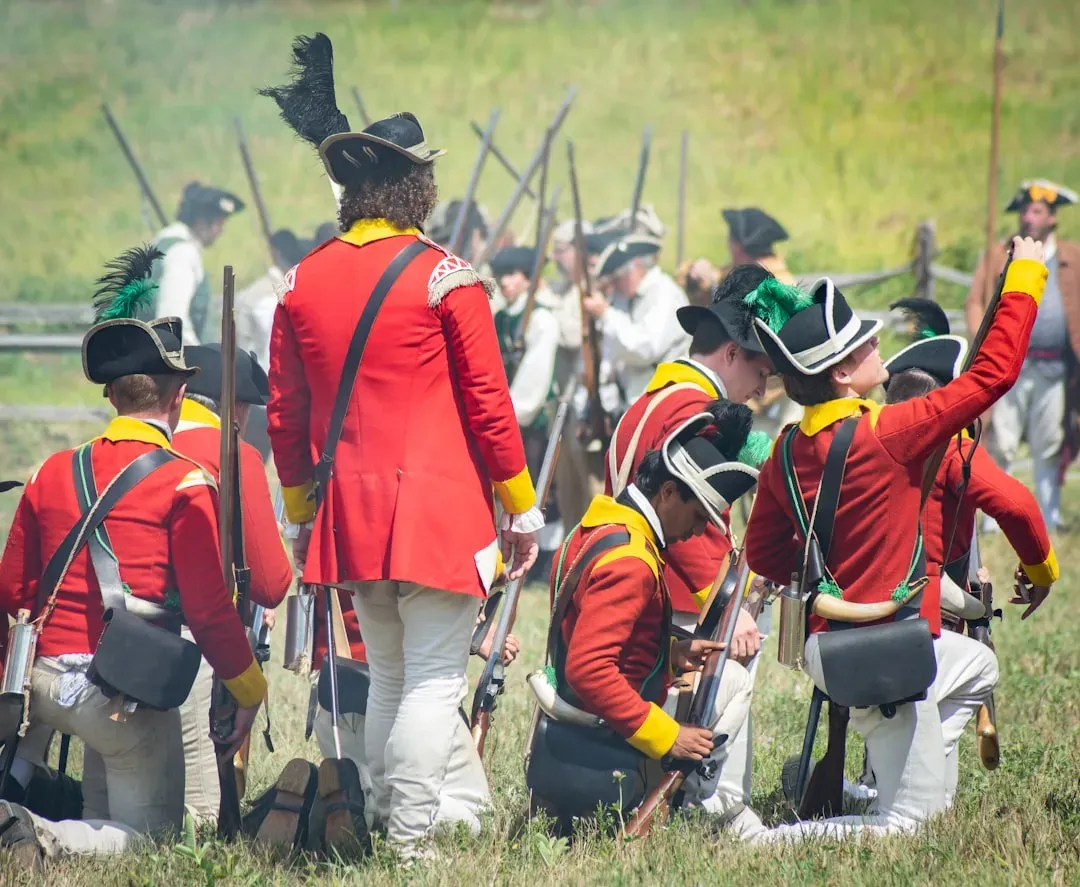
The French revolutionary commoners of the 18th century were known as the “sans-culottes,” meaning without breeches. The term referred to the low-class status of the populist revolutionaries, because they wore long, full-length trousers instead of the aristocratic knee-breeches worn over stockings. Think about that for a moment. A pair of trousers – the kind of thing you’d pull on without a second thought in the morning – became one of history’s most potent symbols of class warfare.
The working-class revolutionaries refused to wear the knee-breeches of the aristocracy, instead embracing full-length trousers. This was far more than a simple fashion choice; it was a defiant rejection of elite privilege and a vivid symbol of equality. By choosing trousers, they set themselves apart from those in power and marked their allegiance to the people. Their clothing became a kind of uniform for rebellion, instantly identifying them as fighters for justice. Honestly, it’s hard to think of a simpler or more elegant act of defiance.
2. The Suffragette White Dress (Early 20th Century)
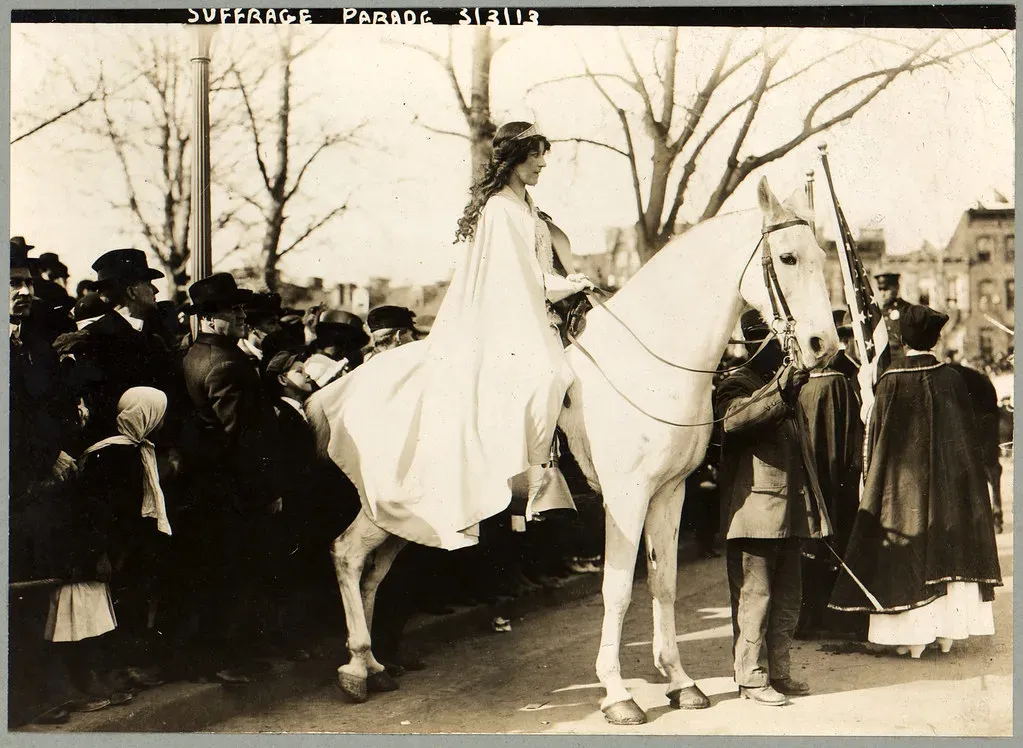
Suffragette white was first donned en masse in June 1908 on Women’s Sunday, the first major public meeting hosted by the WSPU in London’s Hyde Park. The 30,000 participants were encouraged to wear white, accessorised with touches of purple and green. The choice was not accidental or aesthetic. The three colours chosen were purple for loyalty and dignity, white for purity and green for hope, and were worn “as a duty and a privilege.”
Suffragists used fashion to gain mainstream support for their cause. The white dresses and gowns worn in the Suffrage Procession of 1913 were part of their political statement. In contrast to the smart shirtwaists or formidable skirt-suit outfits sported by many working women, protesters donned pure white accented by purple and gold sashes. White fabric was relatively affordable, which meant women of different backgrounds could participate. The colour’s association with purity also helped those involved present themselves as respectable, dignified women. The legacy of that choice still echoes today, with female politicians wearing white at key moments to invoke that history of struggle.
3. The Black Panther Party Uniform (1960s–1970s)
An afro tucked into a black beret, sunglasses over the eyes, a black leather jacket ornamented with pinback buttons, and a gun strapped across the body with a fist in the air – this was the uniform of the Black Panther Party. Although the impressive uniform garnered public attention, it was not a fashion statement. From top to bottom, the uniform worn by many Black Panther Party members was strategic and symbolic.
Black Panther leaders Huey P. Newton and Bobby Seale were inspired to adopt berets as part of the Black Panther uniform after seeing French Resistance fighters during World War II wear berets in a film. The Black Panther Party’s revolutionary ideologies and resistance against police brutality made the beret a perfect addition to their uniform. These items projected unity, discipline, and defiance in the face of systemic oppression. I think what’s most striking about this uniform is how deliberately it transformed everyday objects into weapons of political communication – nothing about it was accidental.
4. Punk Fashion in 1970s Britain
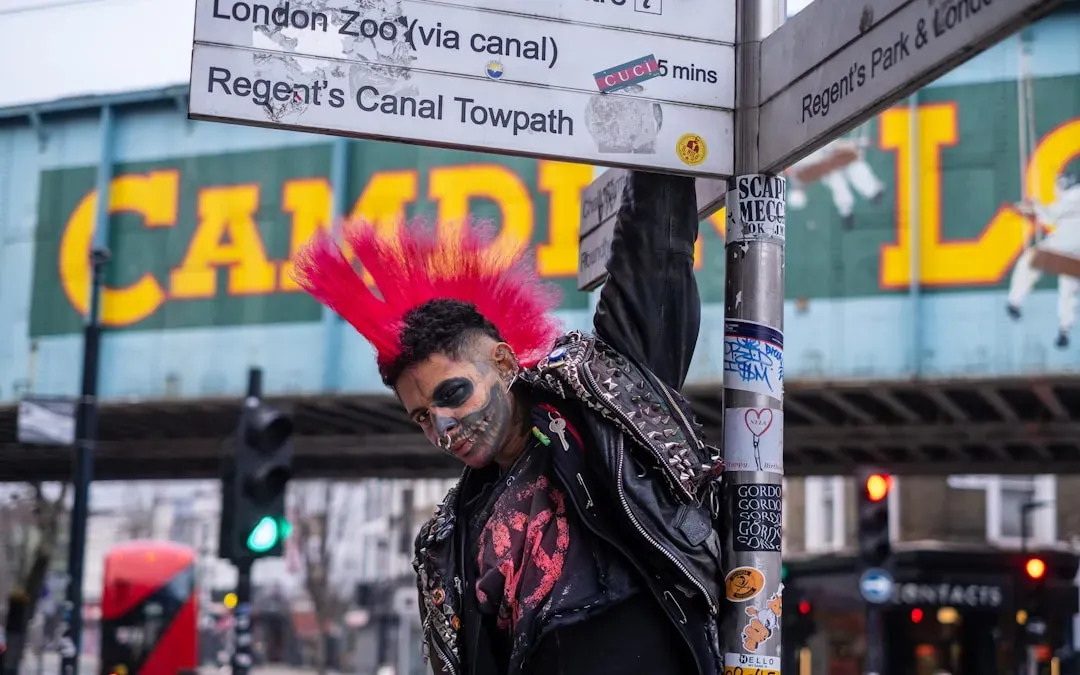
The 1970s in Britain were a time of profound social and political upheaval. Economic challenges, cultural shifts, and a growing disillusionment with the status quo created fertile ground for subcultures to emerge. It was against this backdrop of discontent that the punk movement took root, offering a visceral expression of rebellion and dissent. The result was a visual language unlike anything before it.
In 1970s London, young people who adopted the punk aesthetic wore ripped t-shirts, plaid bondage trousers, and safety-pinned leather jackets bought from SEX. Punk was not just a musical genre but a visual language where Westwood played a big role. When the Sex Pistols wore her designs on stage, punk fashion went global. Among her most daring early designs was a t-shirt from the 1970s punk era that featured a portrait of Queen Elizabeth II with a giant safety pin through her lip and her iconic “God Save the Queen” slogan, which became symbols of youthful defiance against royal authority. Clothes were no longer just clothes. They were a middle finger made fabric.
5. Katharine Hamnett Meets Margaret Thatcher (1984)

Here’s a moment that deserves its own museum exhibit. In 1984, during the Downing Street reception to mark the inaugural London Fashion Week, Hamnett met with then-Prime Minister Margaret Thatcher wearing her own T-shirt with the slogan “58% DON’T WANT PERSHING,” the anti-Tory policy reference to polls showing public opposition in the United Kingdom against the basing of Pershing II missiles in the country.
Partner offer
Sneaking a t-shirt in under her coat, she shook Margaret Thatcher’s hand wearing “58% DON’T WANT PERSHING,” a statement reiterating the public opposition to the Prime Minister granting the US permission to station nuclear missiles on British soil. The image ended up on the front cover of newspapers, bringing widespread attention to the Campaign for Nuclear Disarmament cause. By printing political messages in large block type onto simple t-shirts, Hamnett created a sensation. These t-shirts were designed to be easily copied so that as many people as possible would see her messages. Simple, cheap, absolutely devastating in its effect.
6. The Natural Hair Movement and Black Power (1960s–1980s)
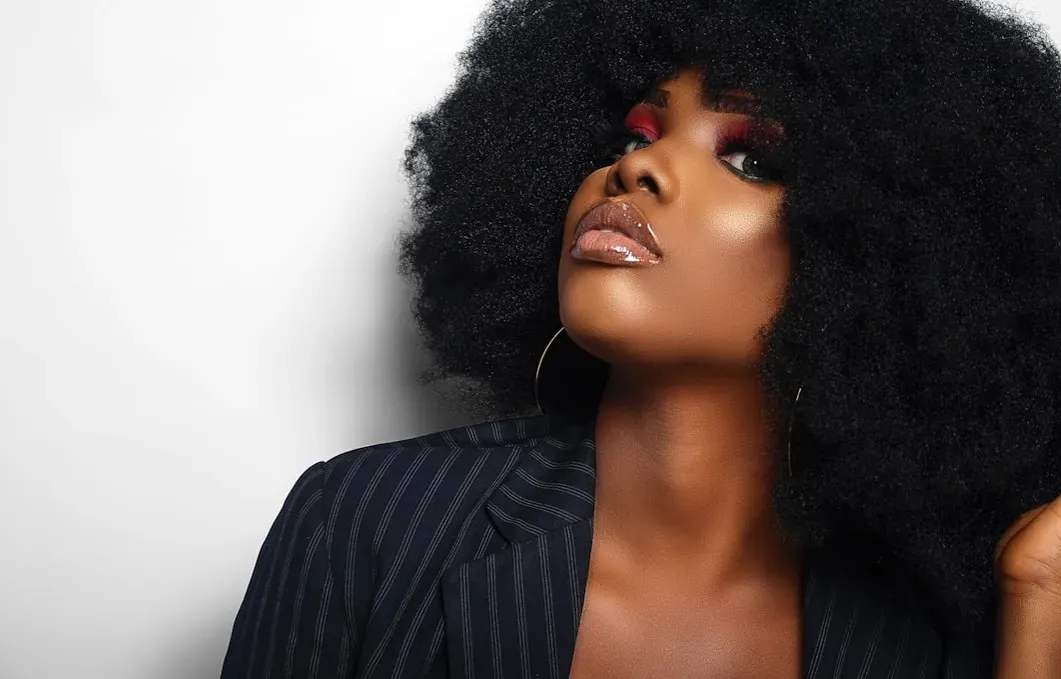
Activists Angela Davis, Nina Simone, and many others wore afros and other natural hairstyles as a symbol of Black power and rebellion against white American standards of beauty. This remained for many a radical thing to do, with countless lawsuits through the 80s and 90s challenging dress codes that banned natural hairstyles like afros, braids, locs, and cornrows. A hairstyle. Legally contested. That tells you everything about the stakes.
Afros became powerful symbols of pride, and women in pants challenged expectations that had lingered far too long. Instances of both governmental repression sought to undermine and disempower movements, including the repression of Black styles in the 1960s and 1970s. The fact that something as personal as how you wear your own hair could be legislated against proves, more than almost anything else, that fashion and power have always been deeply entwined. The natural hair movement turned the body itself into a political canvas.
7. The Mini-Skirt and Second-Wave Feminism (1960s)
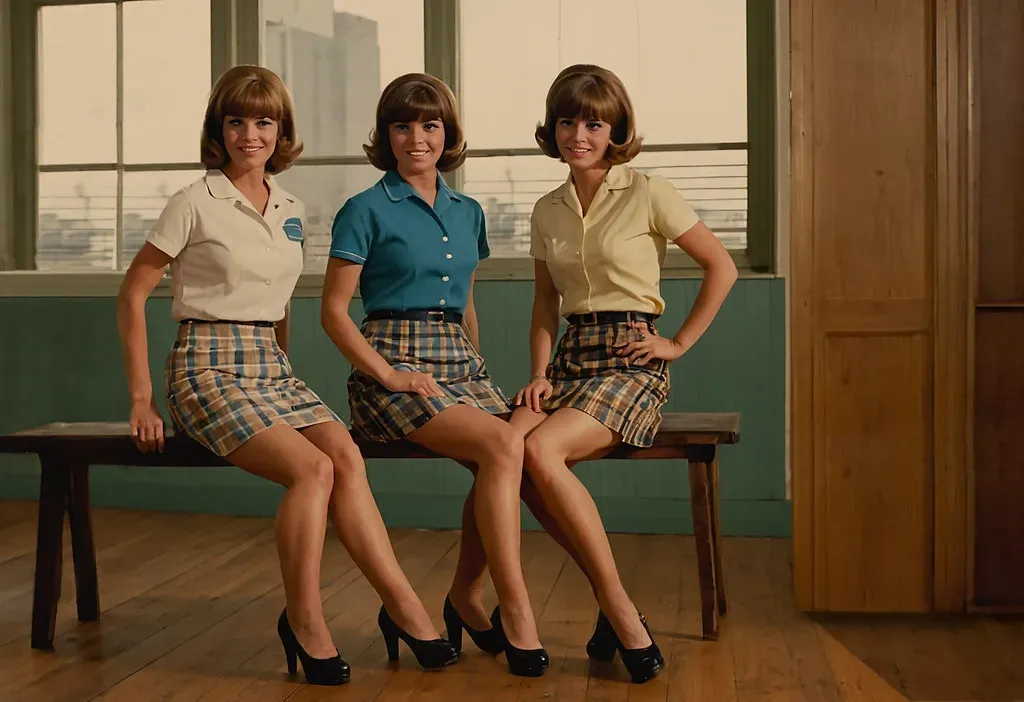
The mini-skirt was interpreted as a form of political activism, as a way of rebelling. The continuous disappointment of women at the patriarchal system, from voting to employment discrimination, led them to wear skirts with shorter hemlines as a sign of women’s liberation. Mary Quant was a revolutionary fashion designer who had a great impact on fashion history. She was credited with designing the first mini-skirt, reflecting the desire for change. From the tight corset of the 1950s to the liberation of the 60s, independence and sexual freedom were all expressed through the mini-skirt.
It sounds almost too simple. A shorter hemline as political statement? Yet in its historical context, that shift in fabric was genuinely radical – an unapologetic claim over one’s own body at a time when women were still fighting for basic legal rights. The 1960s saw the rise of the “youthquake,” with young people rejecting the conservative values of their parents and embracing a new, more liberal way of life. Fashion brands such as Mary Quant and Biba were at the forefront of this movement, creating clothing that reflected the youthful, free-spirited spirit of the time. The mini-skirt didn’t just change hemlines. It changed minds.
8. The Keffiyeh as a Symbol of Palestinian Solidarity
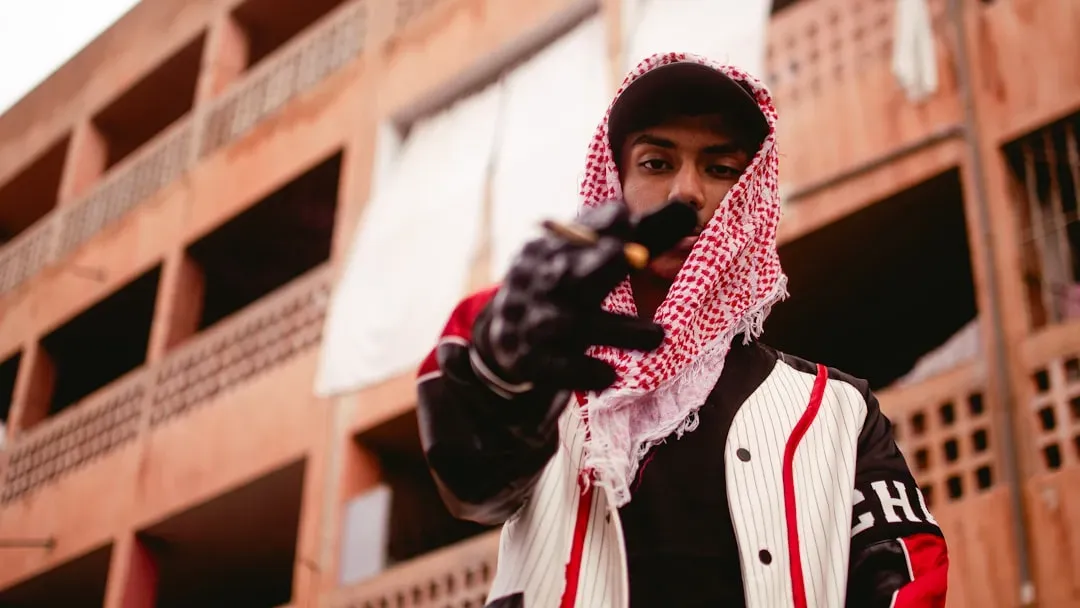
Following the 1936 Arab Revolt, the keffiyeh became a symbol of political uprising and rebellion. It was not until the rise of Arafat in the 1960s that the scarf came to symbolize Palestinian solidarity. Few garments have carried such concentrated and contested political meaning across so many decades and so many different political landscapes. The scarf has appeared among many leftist groups and anti-war organizations.
According to design critic Hala Malak, the keffiyeh dates back to pre-Islamic Sumer, where high priests would wear turbans and fishing nets when praying for prosperous fishing seasons; the integration of these two textiles eventually led to the classic fishnet pattern the keffiyeh is known for. From ancient ritual garment to 20th-century revolutionary symbol to 21st-century fashion accessory – the keffiyeh’s journey is one of the most layered political stories any piece of clothing has ever carried. Its reappearance during recent global protests in 2023 and 2024 only underscores just how enduring its political charge remains.
9. The Pussyhat at the Women’s March (2017)
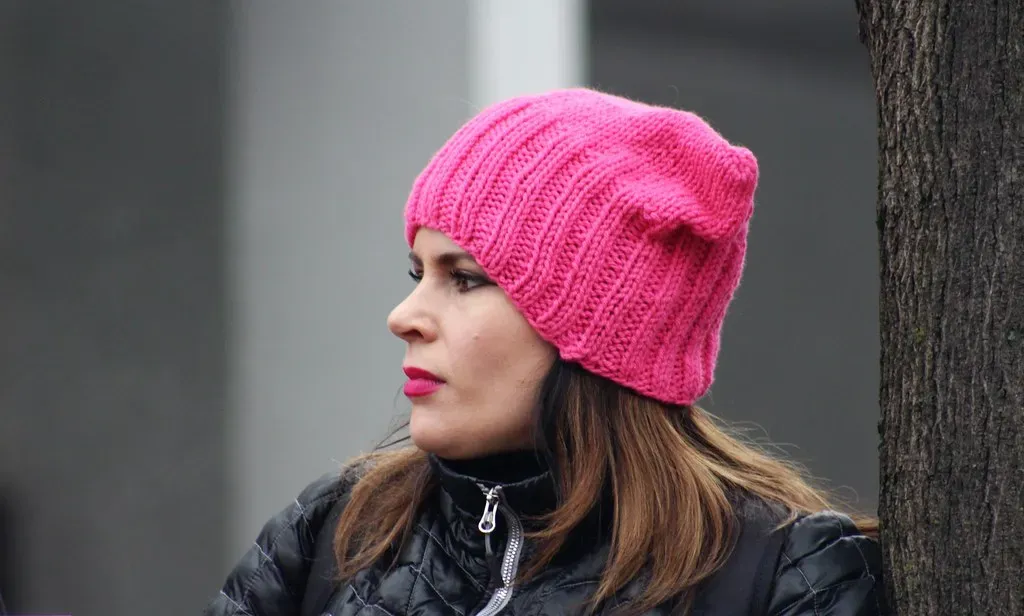
One of the most striking statements at the Women’s March was the “pussyhat,” a pink knitted hat with cat ears that became a ubiquitous symbol of the moment. The pussyhat was created as an irreverent response to Trump’s infamous comments, and served as a way for the women involved to reclaim the statement. Millions of people wore them simultaneously across dozens of countries. It was one of the most coordinated acts of fashion-as-protest the world had ever seen.
The knitted hats took on extra significance as knitting and other textile arts are so connected to the history of women’s domestic labor. By wearing the pussyhat, demonstrators communicated their opposition to misogynistic rhetoric, but also created a visible identifier of community and solidarity among participants. These two opposing types of hats – the red MAGA cap and the pink pussyhat – could be seen as examples of protest-driven and explicitly political forms of dressed activism. In a way, the pussyhat was a perfect distillation of everything on this list: something handmade, accessible to anyone, worn collectively, and impossible to ignore.
What runs through all nine of these moments is a truth that gets underestimated time and again: fashion is far more than a mere aesthetic or commercial industry – it is a dynamic and potent form of political expression. From historical revolutions to contemporary social movements, clothing has been used to symbolize resistance, foster solidarity, and challenge power structures. A garment cannot vote. It cannot legislate. But it can make a government uncomfortable, unite strangers in a crowd, and tell the world exactly where you stand – sometimes faster and more powerfully than any words could manage.
So the next time you get dressed in the morning, it might be worth pausing for half a second. What does your clothing say? And more importantly – what could it say, if you wanted it to?
Partner offer
Planning a trip to Vegas?
Compare hotel rates and show tickets on VEGAS.com.