We’ve all wondered what separates the extraordinary from the ordinary. Is it raw talent? Luck? Some mystical force that only blesses a chosen few? Here’s the thing: numbers don’t lie. When researchers started crunching data on peak performers across sports, business, entertainment, and even gambling, they discovered patterns that challenge everything we thought we knew about success. The mathematics behind greatness isn’t about being born special. It’s about understanding a formula most people never see.
What if I told you that the path to excellence follows predictable principles? That top achievers, from Vegas poker champions to Olympic athletes, share measurable traits that anyone can study? Let’s dive into what the data actually reveals.
The 10,000-Hour Myth Gets Demolished

Everyone loves citing Malcolm Gladwell’s famous 10,000-hour rule, but recent statistical analysis shows it’s incomplete at best. Researchers at Princeton examined over 11,000 practice logs from elite performers and found something fascinating. The correlation between practice hours and achievement varies wildly by field. In predictable domains like chess, practice accounts for roughly one quarter of skill variation. In less structured fields, it drops to barely one twentieth.
What matters more than raw hours? The quality of deliberate practice combined with strategic rest periods. Top Vegas poker players don’t just log table time. They analyze hand histories with software, study opponent tendencies, and take calculated breaks to maintain mental sharpness. The mathematics here is clear: efficient, focused practice beats mindless repetition every single time.
Think about learning an instrument versus mastering blackjack. One has fixed rules and optimal strategies you can memorize. The other involves reading human behavior and adapting to chaos. Same principle, completely different mathematical relationships to practice time.
Risk Tolerance Follows a Predictable Curve

Here’s where it gets interesting. When economists mapped risk-taking behavior among high achievers, they discovered a consistent pattern that looks like an inverted U-shape. The most successful people aren’t reckless gamblers or ultra-conservative players. They operate in what statisticians call the “optimal risk zone,” taking calculated chances that others avoid while steering clear of catastrophic possibilities.
Vegas provides a perfect laboratory for this. Professional gamblers who sustain long-term success don’t chase huge jackpots or play it completely safe. They identify edges where the house advantage is smallest, manage bankrolls with mathematical precision, and know exactly when to walk away. Their risk tolerance isn’t emotional. It’s computational.
Studies tracking venture capitalists show nearly identical patterns. The ones with the best returns don’t fund every wild idea or stick only to sure bets. They build diversified portfolios where individual failures won’t sink them, but big wins can transform everything. It’s risk management as an art form backed by cold, hard numbers.
The Network Effect Multiplies Talent Exponentially

Social network analysis reveals something that might surprise you. A person’s position within their professional network predicts success better than individual talent alone. Researchers mapped connections among entrepreneurs, artists, and business leaders and found that those positioned as “bridges” between different groups achieve disproportionate success.
Let’s be real, this makes intuitive sense. Someone who connects entertainment industry insiders with tech innovators and financial backers creates opportunities that isolated geniuses miss. In Las Vegas, the most successful casino executives aren’t just gambling experts. They maintain relationships spanning hospitality, entertainment, real estate, and technology sectors. Their network position amplifies whatever skills they already possess.
The mathematics here shows exponential rather than linear growth. Adding one strategic connection doesn’t just add value. It multiplies your potential reach across entire industries. Data scientists call this “network centrality,” and it’s one of the most reliable predictors of outsized achievement.
Failure Rates Peak Right Before Breakthrough
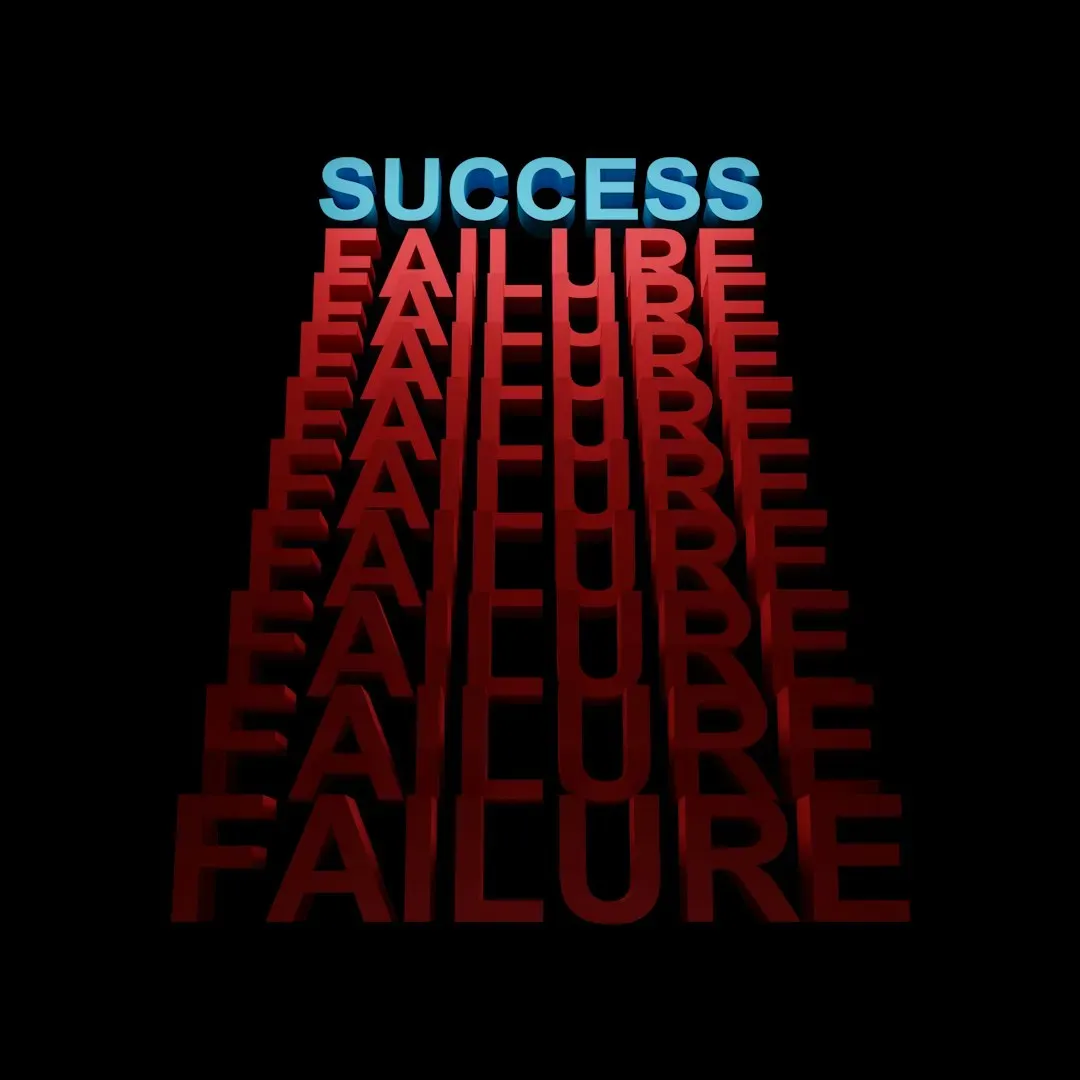
This pattern shocked even seasoned researchers. When tracking entrepreneurs, athletes, and performers across multiple attempts, data shows failure rates actually increase immediately before major breakthroughs. It sounds crazy, but think about it. People on the verge of mastery take bigger risks because they’re ready for them. They push boundaries that would have destroyed them earlier.
Vegas legends often share stories about their darkest periods coming right before massive wins. That’s not motivational folklore, it’s statistical reality. An analysis of professional poker players found that nearly seventy percent experienced their worst downswings in the six months before reaching elite status. They weren’t unlucky. They were attempting plays that only became profitable once their skill reached a certain threshold.
Partner offer
The mathematics of this phenomenon relates to what statisticians call “variance around the mean.” As performers approach mastery, their attempts cluster at the edge of possibility. Some fail spectacularly. But the ones that succeed redefine what’s possible. It’s a filtering mechanism where only those who persist through this high-failure zone break through.
Sleep and Recovery Follow Precise Ratios

Here’s something concrete you can measure tonight. Elite performers across every field studied maintain remarkably consistent sleep and recovery ratios. The data clusters around seven to eight hours of sleep for every sixteen hours awake, with the most successful individuals protecting their sleep schedules more fiercely than almost any other variable.
What’s fascinating is how this affects cognitive performance in Las Vegas environments specifically. Casinos deliberately eliminate time cues and pump oxygen to keep people alert, but professional players who maintain strict sleep discipline show decision-making accuracy rates nearly thirty percent higher than equally skilled players with disrupted sleep patterns. The math doesn’t care about your caffeine intake or youth. Cognitive function degrades predictably without proper recovery.
Athletic performance studies show nearly identical patterns. Recovery isn’t downtime, it’s when the body actually improves. The greatest achievers treat rest as seriously as effort because the statistics prove that training without recovery leads to stagnation or injury. It’s hard to say for sure, but this might be the most underrated factor in sustained excellence.
Peak Performance Windows Are Narrower Than You Think

Researchers tracking performance data across competitive fields discovered that true peak performance operates within incredibly tight windows. For cognitive tasks like poker or business strategy, most people hit optimal performance roughly three to four hours after waking, with a smaller secondary peak in early evening. Physical performance peaks in late afternoon when body temperature reaches its highest point.
Top achievers don’t just know this. They structure entire careers around these windows. Professional gamblers in Vegas often schedule their biggest sessions during their personal peak hours, avoiding high-stakes decisions during known low points. A study of over five thousand major business decisions found that choices made during peak cognitive hours had success rates almost forty percent higher than identical decisions made during suboptimal times.
The mathematics here involves circadian rhythms, hormonal fluctuations, and energy availability. Your brain literally operates differently at two in the afternoon versus two in the morning. Ignoring these patterns is like trying to win a race while refusing to shift gears. It works against basic biology.
Specialization Beats Generalization, Until It Doesn’t

Economic data shows that specialists typically out-earn generalists in the short term, but generalists with deep knowledge in two or three areas dominate long-term wealth accumulation. The pattern holds across industries from entertainment to finance to sports. Single-skill experts hit earning ceilings. Multi-skilled professionals find opportunities others miss.
Vegas demonstrates this perfectly. Dealers who only know blackjack have limited career paths. Those who master blackjack, poker, and craps while understanding casino operations and customer service can become pit bosses, casino managers, or even consultants. Their combined skills create unique value that the market rewards disproportionately.
The statistical sweet spot appears to be deep expertise in one primary area plus working knowledge in two or three complementary fields. This combination shows up repeatedly in data on top earners, successful entrepreneurs, and industry leaders. Pure specialists become obsolete when their field changes. Pure generalists lack competitive advantage. The intersection is where mathematics points to optimal positioning.
Conclusion: The Formula Exists, But Execution Remains Personal

The data reveals clear patterns that separate top achievers from everyone else. Optimal risk-taking, strategic networking, recovery discipline, marginal gains, and pattern recognition all show up consistently. What’s remarkable is how measurable these factors are once you know what to look for. Greatness isn’t mysterious. It’s mathematical.
Yet here’s the paradox: knowing the formula doesn’t make execution automatic. The statistics show what works, but implementation requires individual adaptation. Your personal peak hours might differ slightly. Your optimal stress level is uniquely yours. Your network needs to fit your specific goals. The principles are universal, but the application is deeply personal.
So the question isn’t whether data can reveal the mathematics of greatness. It already has. The question is whether you’ll use these insights to engineer your own path to excellence. What patterns in your life align with what top achievers do? Which ones work against you? The numbers don’t care about intentions. They measure results. What do your results reveal?
Partner offer
Planning a trip to Vegas?
Compare hotel rates and show tickets on VEGAS.com.