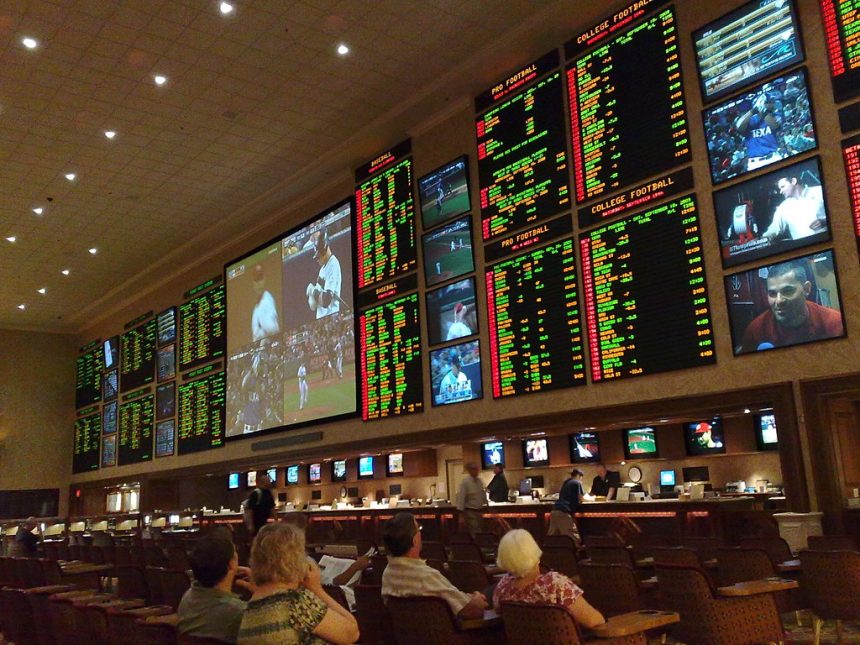

Prediction Platforms Eclipse Traditional Sportsbooks (Image Credits: Flickr)
Las Vegas – U.S. Rep. Dina Titus introduced federal legislation last month to prevent prediction markets from offering contracts tied to sporting events. The measure addresses growing concerns that platforms like Kalshi operate as unlicensed wagering operations, bypassing state regulations in gambling hubs such as Nevada. With legal challenges mounting nationwide, the bill highlights tensions between federal oversight and state gaming authority.[1][2]
Prediction Platforms Eclipse Traditional Sportsbooks
Trading volumes on prediction markets skyrocketed after they began offering sports-related contracts. Kalshi alone exceeded $1 billion during the recent Super Bowl, while Nevada sportsbooks recorded just $133.8 million in wagers – a 12 percent drop from the previous year.[2][3] These binary yes-or-no contracts pay $1 if the prediction proves correct, with prices reflecting market-perceived probabilities, such as 60 cents implying a 60 percent chance.[1]
Regulators view these offerings as gambling rather than legitimate derivatives. The platforms fall under federal Commodity Futures Trading Commission oversight, which critics argue lacks the expertise for gaming integrity. States contend this setup diverts revenue and exposes users to risks without local safeguards.[4]
Nevada Leads State-Level Pushback
Nevada Gaming Control Board issued a cease-and-desist order to Kalshi in March 2025, sparking a year-long dispute. The state shifted its enforcement action to Carson City District Court after a favorable appeals court ruling, seeking to halt unlicensed operations.[1] More than 20 states, including New Jersey, Massachusetts, Maryland, Illinois, Montana, and Ohio, have pursued similar actions through lawsuits or notices.[2]
Arizona took a bolder step by filing 20 misdemeanor counts against Kalshi for illegal gambling and election wagering. Attorney General Kris Mayes declared that no company can selectively ignore state laws. This trend favors state courts, where judges have proven more receptive to regulators than federal venues.[1]
Details of the Fair Markets and Sports Integrity Act
The Fair Markets and Sports Integrity Act, or H.R. 7477, amends the Commodity Exchange Act to bar CFTC-registered entities from listing sports or casino-style event contracts. Introduced on February 10, 2026, it has been referred to the House Agriculture Committee but awaits a hearing.[5][1] Rep. Titus emphasized consumer protections missing on these platforms.
“This is not just to protect the gaming industry,” she stated upon introduction. “This is to protect people who bet on these platforms and have no recourse if something goes wrong. There is no regulation to protect the consumer or programs for problem gambling.”[1][2] The bill ensures states retain authority over wagering, including taxes, jobs, and anti-money laundering measures.
Wider Congressional Response to Prediction Markets
Rep. Titus’s effort joins a wave of proposals addressing prediction market risks. Lawmakers have introduced measures targeting insider trading, sensitive events, and government-related contracts. Kalshi’s overall sports trading volume surged nearly 2,000 percent to $37.3 billion in the past year, with sports comprising over 86 percent.[4]
- Sen. Richard Blumenthal’s Prediction Markets Security and Integrity Act sets age limits and know-your-customer rules.
- Rep. Ted Lieu and Sen. Adam Schiff’s Death Bets Act bans contracts on war, assassination, or terrorism.
- Rep. Ritchie Torres’s Public Integrity in Financial Prediction Markets Act prohibits federal officials from trading.
- Sen. Chris Murphy and Rep. Greg Casar’s BETS OFF Act blocks wagers on government actions or controlled outcomes.
These initiatives reflect bipartisan worries over unregulated expansion, though prediction firms defend their CFTC status.[1]
Key Takeaways
- Prediction markets like Kalshi treat sports outcomes as derivatives, evading state gaming licenses.
- Nevada and 20+ states pursue court actions to enforce local rules.
- Titus’s H.R. 7477 awaits committee review, aiming to prioritize state oversight.
States with legalized sports betting, now 40 in number, rely on regulated operations for community investments. Rep. Titus’s bill could redefine the balance if it advances, safeguarding integrity amid booming alternatives. What impact will federal action have on Nevada’s gaming landscape? Share your thoughts in the comments.