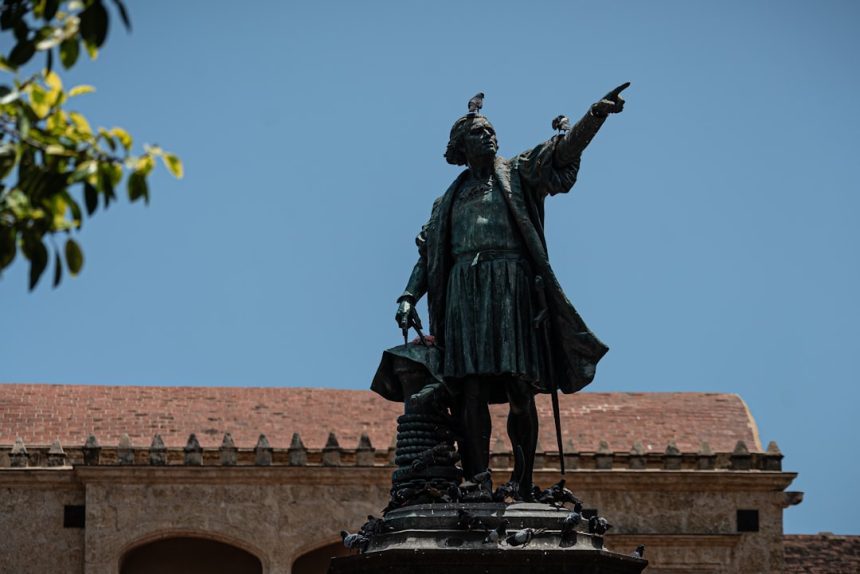

The Dramatic Fall in Baltimore (Image Credits: Unsplash)
Washington, D.C. – A carefully crafted replica of a Christopher Columbus statue now graces the White House campus, symbolizing resilience amid shifting cultural tides. The monument, modeled after one destroyed in Baltimore during 2020 protests, appeared overnight on March 22, 2026, outside the Eisenhower Executive Office Building.[1][2] This installation revives a figure central to debates over exploration, legacy, and public memory. Officials hailed the move as a tribute to historical achievement.
The Dramatic Fall in Baltimore
Vandals targeted the original statue in July 2020, shortly after the killing of George Floyd sparked nationwide unrest. The marble figure, which had stood in Baltimore since 1984, was pulled from its pedestal, shattered, and cast into the Inner Harbor – its severed head among the debris.[3] Protesters viewed it as emblematic of colonialism, part of a wave that saw dozens of monuments dismantled across the country.
Recovery proved challenging. Fragments sank into the murky waters, but local efforts soon intervened. The incident underscored tensions over how America reckons with its past, as cities grappled with symbols of their founding narratives.
From Salvage to Sculpture: A Family’s Determination
Tilghman Hemsley, a Maryland artist and fisherman, organized divers to retrieve the sunken pieces shortly after the toppling. His son, Will Hemsley, then undertook the arduous task of replicating the statue – a process marked by meticulous craftsmanship and significant expense.[3] This labor preserved the original’s form, transforming wreckage into renewal.
The replica drew support from Italian American groups, including the Conference of Presidents of Major Italian American Organizations, which facilitated its donation to the White House. Such private initiative bridged the gap left by public division.
Installation Ceremony and White House Embrace
Workers positioned the statue on the north side of the Eisenhower Executive Office Building, facing Pennsylvania Avenue and secured behind fencing near the West Wing. The quiet predawn placement avoided fanfare but quickly captured national attention.[1] President Trump praised Columbus in a letter to donors, calling him “one of the most gallant and visionary men to ever walk the face of the Earth.”[2]
White House spokesman Davis Ingle reinforced the sentiment. “In this White House, Christopher Columbus is a hero,” he declared. “And he will continue to be honored as such by President Trump.”[2][1] The placement signals a deliberate reclamation of public space for longstanding icons.
Columbus’s Enduring, Contested Legacy
Christopher Columbus remains a pivotal figure in world history. His 1492 voyages linked the Old and New Worlds, spurring advances in navigation, map-making, and global exchange – developments that reshaped civilizations.[3] Crew mutinies and perilous returns tested his resolve, yet he bridged hemispheres at great risk.
Critics highlight flaws: enslavement of natives, administrative failures that led to his return to Spain in chains, and unintended devastation from diseases. Supporters emphasize context – a brutal 15th century – and his role in modernity’s foundations. The statue’s journey mirrors this duality.
- Voyages catalyzed unprecedented global connectivity.
- Exploration advanced geography and maritime science.
- Legacy fuels ongoing debates over heroism versus harm.
- Public monuments reflect evolving societal values.
- Restoration efforts underscore cultural preservation.
Broader Implications for Public Memory
The reinstallation reignites conversations about iconoclasm and commemoration. Statues, long markers of communal identity, faced widespread scrutiny in 2020. This White House decision counters that trend, affirming select historical narratives.
While some celebrate the gesture as restorative, others question glorifying a controversial explorer. The statue’s secure position invites reflection on balance – honoring achievements without erasing complexities.
Key Takeaways
- A 2020-toppled Baltimore statue inspired a precise replica now at the White House.
- Trump administration views Columbus as a visionary hero.
- The move revives national dialogue on history and public symbols.
This chapter in the Columbus saga closes one era of destruction while opening another of contention. Public art continues to evolve, shaped by time and tide. What do you think about the statue’s new home? Tell us in the comments.