They’re on your keyboard, your phone, your clothes, your car dashboard, and the walls of every hospital. You glance at them dozens of times a day without giving them a second thought. Symbols are such a natural part of modern life that most of us never stop to ask the obvious question: where did these things actually come from?
The answers, it turns out, are far more surprising than you’d ever expect. We’re talking about Viking kings, medieval monks, ancient Roman merchants, and one very emotional British pacifist. Get comfortable, because the hidden stories behind these everyday symbols are genuinely fascinating. Let’s dive in.
1. The Ampersand (&)
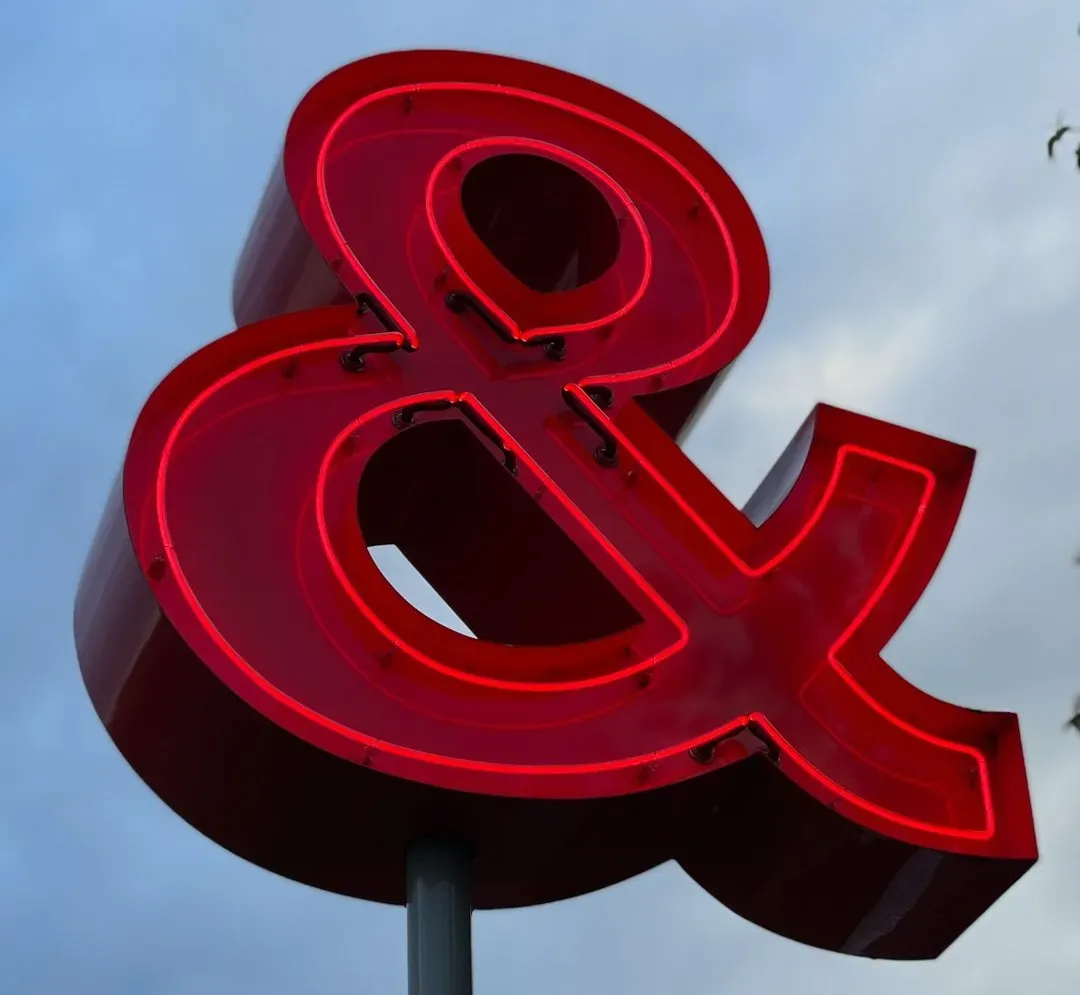
Here’s the thing about that curvy little “&” sign: most people assume it’s just a stylistic flourish that means “and.” Technically, that’s true. But the real origin is way more interesting. The ampersand is actually a ligature, a joining of the Latin letters “e” and “t,” spelling “et,” which means “and.” Roman scribes started blending these two letters as early as the first century, and over centuries, the symbol evolved into the curly shape we recognize today.
Created by the ancient Romans, the ampersand made its debut on a wall in Pompeii. It started out as a representation of the Latin word “et,” but the symbol didn’t receive its formal title of “ampersand” until the late 18th century when British schoolchildren began using it as the alphabet’s 27th letter after Z. Over the years, in the mouths of babbling schoolchildren, “and per se and” eventually morphed into “ampersand.” Honestly, that might be the most charming word origin story in the entire English language.
2. The @ Symbol
Long before it became the beating heart of every email address and social media handle, the @ sign lived a much quieter, dustier life. The origin of the symbol itself is something of a mystery. One theory is that medieval monks, looking for shortcuts while copying manuscripts, converted the Latin word for “toward,” which is “ad,” into “a” with the back part of the “d” as a tail. Or it came from the French word for “at,” which is “à,” and scribes swept the nib of the pen around the top and side. The first documented use was in 1536, in a letter by Francesco Lapi, a Florentine merchant, who used @ to denote units of wine called amphorae, shipped in large clay jars.
Before the late 20th century, its primary use was commercial, where it signified “at the rate of.” When Ray Tomlinson was fiddling with code that would allow users to send messages across ARPANET, the experimental network that preceded the Internet, he needed a marker to separate the name of the user from that of the host terminal. He settled on @, one of the least utilized characters in ASCII, which was unlikely to appear in user or computer names. From ancient wine jars to your Instagram handle, that’s one remarkable journey for a single symbol.
3. The Hashtag (#)

Most people think the hashtag was basically invented by Twitter. It wasn’t. Not even close. The pound sign, the number sign, or more recently the hashtag, are all the same symbol. It comes from the Latin abbreviation for weight, “lb,” standing for “libra pondo,” which means “pound by weight.” Calling it “the number sign” originated in Britain, as the name “pound” was confused with the British currency. So before it was trending on social media, it was measuring grain and livestock.
The origin of the label “hash” is linked to the stripes that members of the military receive for every three years of service, called “hash marks,” which can be found on military jackets. In the 1980s the # symbol began to be referred to as a “hash,” and in 2007 Chris Messina, a former Google developer, used Twitter to suggest that people start grouping tweets or other social media posts on the same topic with #topic. The rest, as they say, is internet history. What was once a farmer’s measuring tool is now how revolutions get organized online.
4. The Bluetooth Symbol (⌿)
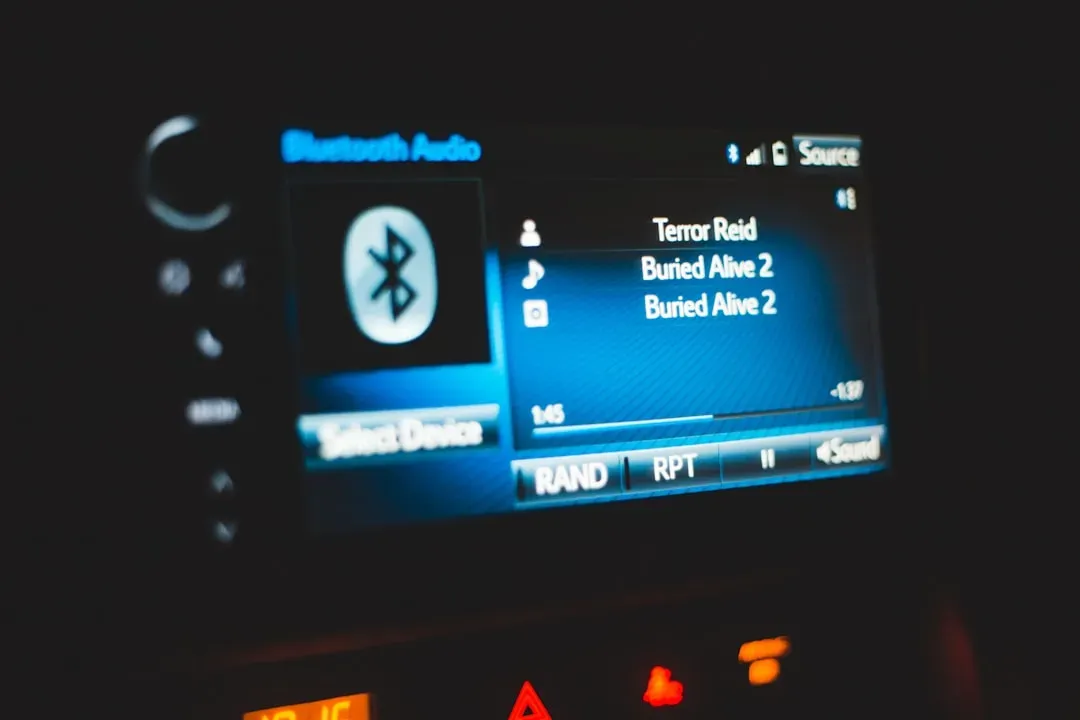
Every time you pair your earbuds to your phone, you’re summoning a Viking. I know that sounds unhinged, but stay with me. The Bluetooth symbol is actually a combination of two Nordic runes: Hagall and Bjarkan, which stand for H and B. These were the initials of Harald “Bluetooth” Gormsson, the 10th-century king credited with uniting Denmark and Norway. The creators of Bluetooth technology chose this name because their invention links devices together just as King Harald united people.
The design draws influence from Nordic runes, the symbols that made up the written language of the Vikings. As the symbols were usually carved into stone or wood, they were entirely comprised of straight lines rather than curves. The initials of the Danish king, the letter Hagall and the letter Bjarkan, were taken from the runic alphabet and combined to form the famous symbol we all know today. The Bluetooth standard was officially launched in 1998. So yes, your wireless headphones are speaking Old Norse. Think about that next time you ignore a phone call.
5. The USB Symbol

You’ve plugged in a USB cable roughly a thousand times, probably flipped it over at least half of those times, and yet never once looked closely at that little symbol on the port. Look closely at any USB port and you’ll see a symbol that resembles Neptune’s trident, and that’s exactly what it represents. The three-pronged design symbolizes the universal connectivity that USB provides, allowing multiple different peripheral types to connect through one standard port. The circle, square, and triangle at the trident’s tips represent the various devices that can connect: cameras, storage devices, and other peripherals. This simple symbol effectively communicates USB’s core promise: one connection for everything.
The trident symbolizes power, and in terms of the USB, it means that it has the power to single-handedly connect multiple devices through one universal point. It’s a surprisingly poetic design choice, using the weapon of an ancient sea god to represent modern technological dominance. The engineers who dreamed this up clearly had a flair for mythology. Worth a respectful nod, honestly.
6. The Power Button Symbol (⏻)
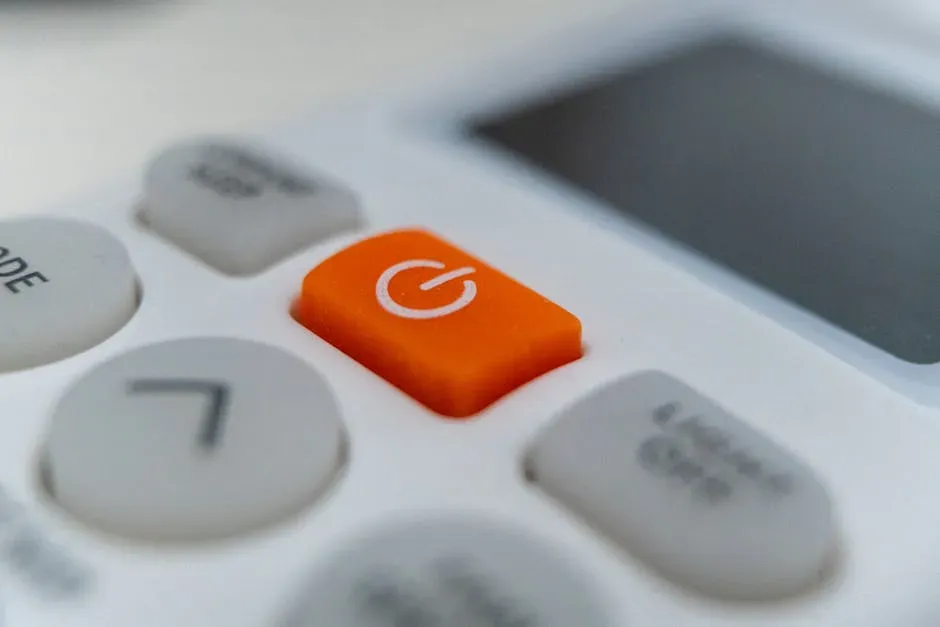
That circle with a vertical line poking through it sits on nearly every device you own. It feels almost too simple to have an interesting origin, but it absolutely does. That circle with a vertical line through it isn’t just a modern design choice; it’s literally speaking in binary code. The symbol combines the concepts of 0 (represented by the circle) and 1 (represented by the vertical line), the fundamental building blocks of digital computing. Established by the International Electrotechnical Commission in 1973, this symbol bridges the gap between “on” and “off” states, representing a standby mode where devices are partially powered.
It’s almost beautifully minimalist when you understand it. The entire concept of digital on and off, the foundation of every computer ever made, squeezed into two shapes. Zero and one. Off and on. Think of it like a light switch made into art. The elegance is easy to miss when you’re just trying to restart a frozen laptop, but it’s genuinely clever design.
7. The Infinity Symbol (∞)
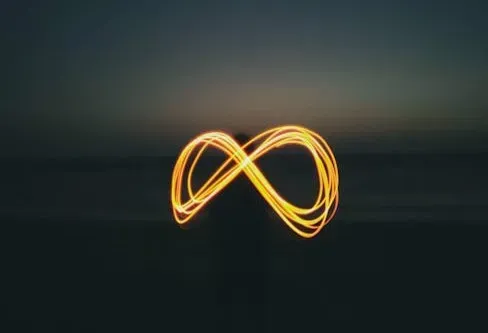
People plaster this symbol on jewelry, tattoos, and inspirational posters with the assumption that it represents eternal love or spiritual harmony. Surprise: it was originally just math. The very first person to have written about the infinity symbol was English mathematician John Wallis in 1655. John Wallis decided to utilize a sideways eight to represent infinity, referring to a quantity with no end or bound, a quantity larger than any number. It’s a strictly logical invention, not a romantic one.
However, the idea of a continuous, never-ending loop existed long before Wallis. Ancient civilizations often used the lemniscate, a shape resembling the modern infinity sign, to represent eternal cycles, balance, and the interconnectedness of life. In Celtic art, endless knots conveyed themes of eternity and unity, while some Eastern philosophies incorporated similar looping designs to symbolize the cyclical nature of life, reincarnation, and the universe. It’s hard to say for sure how much Wallis was influenced by these older traditions, but the shape clearly tapped into something universally human. A sideways eight now outsells wedding rings as a tattoo motif. Wallis would probably be baffled.
8. The Peace Sign (☮)

Here’s a symbol that most people assume is ancient, maybe even prehistoric. It looks ancient. It feels deep. Actually, it was designed by a specific person, in a specific year, for a very specific political purpose. Its creator is the British graphic artist Gerald Holtom. He invented the symbol on 21 February 1958 on behalf of the British Campaign for Nuclear Disarmament, which is why it is also known as the CND symbol. British peace activists planned a protest march from London to the nuclear weapons research centre in Aldermaston and wanted a symbol for it.
The vertical line in the center represents the flag semaphore signal for the letter D, and the downward lines on either side represent the semaphore signal for the letter N. “N” and “D,” for nuclear disarmament, enclosed in a circle. Holtom also described the symbol as representing despair, with the central lines forming a human with its hands questioning at its sides against the backdrop of a white Earth. Although specifically designed for the anti-nuclear movement, it has quite deliberately never been copyrighted. No one has to pay or seek permission before they use it. A symbol of freedom, it is free for all. That decision is why it spread across every continent within a decade.
9. The Caduceus (The Medical Snake Symbol)

Walk into almost any pharmacy or medical office in the United States and you’ll likely spot a staff with two snakes coiled around it and a pair of wings on top. Most people assume this is the ancient symbol of medicine. It isn’t. Not even slightly. This ancient symbol, also called the Staff of Hermes, depicts two snakes intertwining around a stick that is capped by wings. It’s used as a medical logo, but for almost all its roughly 5,000-year history, the caduceus had nothing to do with medicine.
The caduceus is actually the symbol of Hermes, the messenger god associated with commerce and negotiation, not medicine. The true medical symbol is the Staff of Asclepius: one snake, no wings, representing the Greek god of healing. The U.S. Army Medical Corps mistakenly adopted the Caduceus in the early 1900s, and the confusion has persisted ever since. One survey found that roughly two thirds of professional healthcare associations correctly use the Rod of Asclepius as their symbol, while the vast majority of commercial healthcare organizations use the caduceus. The mix-up has been documented, debated, and widely criticized for over a century. Yet here we are.
10. The Heart Shape (♥)
Let’s be real: the heart shape looks nothing like an actual human heart. A real heart is a lumpy, asymmetric muscle. The symbol we use for love is smooth, symmetrical, and visually elegant. So where did it come from? One of the most compelling theories traces it back to an ancient plant. The shape traces back to a plant called silphium in ancient Greece, whose seeds resembled the modern heart. The plant was used as a contraceptive, linking it to love and romance, a connection that stuck through centuries.
Silphium was so prized in ancient Cyrene (modern-day Libya) that the city put it on their coins. The plant eventually went extinct from overuse, which is both a tragic ecological story and a fascinating explanation for why we draw hearts the way we do. Over time the shape drifted from the botanical and into the purely emotional, becoming the most universally recognized symbol for love on the planet. A plant that no longer exists gave us the symbol we put on Valentine’s Day cards. Somehow that feels exactly right.
11. The Percent Sign (%)
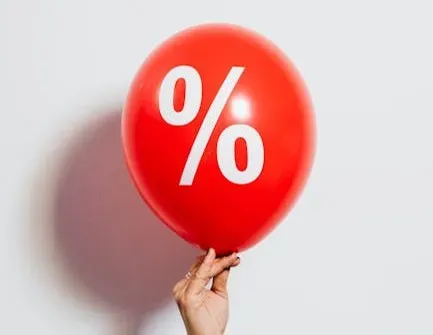
You see this tiny symbol constantly, whether you’re reading a nutrition label, calculating a discount, or watching a weather forecast. It feels utterly modern. It really isn’t. That little percent sign is a relic of Renaissance Italy, originally short for “per cento” or “for a hundred.” Early financial documents abbreviated the phrase as “pc,” which gradually transformed into the slashed symbol we use today. The slash and the two circles evolved directly out of the hasty cursive handwriting of Italian merchants keeping track of trades and taxes.
Over centuries, the “pc” abbreviation was written more and more loosely in account books, the “p” eventually dissolving, the “c” splitting into two small circles, the connecting stroke becoming the diagonal line between them. It’s essentially a word that got doodled into a symbol through sheer laziness and speed. Even today, every time a store advertises a sale, they’re unknowingly echoing Renaissance Italian bookkeeping. Some symbols carry more history in them than you’d ever guess from a quick glance.
It’s genuinely strange to think about how many layers of human history are compressed into the symbols we scroll past without a second look. A Viking king lives inside your Bluetooth icon. A medieval monk’s scribble became the foundation of modern email. A grief-stricken British pacifist sketched a design in 1958 that ended up on a billion T-shirts. These symbols didn’t fall from the sky. They were invented, repurposed, argued over, and slowly adopted until they felt inevitable. Which one surprised you the most?