
What Executive Function Actually Is (and Why It Matters More Than Ever)
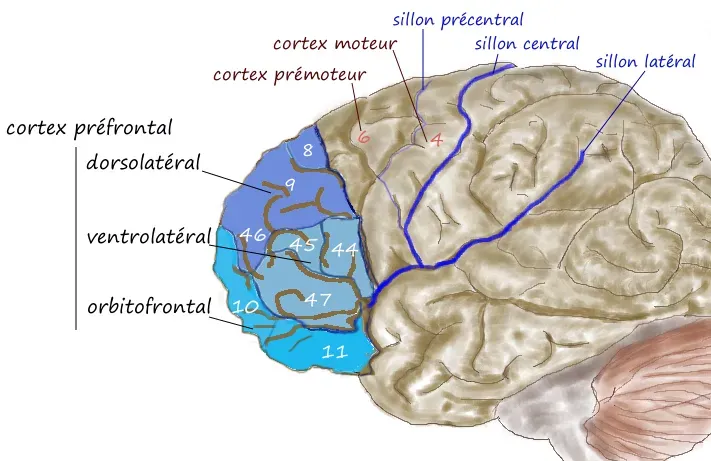
Executive function is not a single skill. It’s an umbrella term for a set of higher-order mental processes that govern how you plan, make decisions, manage impulses, and stay on task. The core components include working memory, inhibitory control, and cognitive flexibility. Think of it as the brain’s air traffic control system: without it, every incoming signal competes for the runway at the same time.
These skills underpin nearly everything we do in a given day, from writing a report to having a difficult conversation without losing composure. Total sleep deprivation and prolonged distraction decrease performance across a variety of tasks, and performance on these tasks is closely linked to three basic cognitive processes: attention, working memory, and executive functions. When these processes are compromised, everything downstream suffers, including memory, creativity, and the ability to course-correct when something goes wrong.
The 47-Second Problem: How Quickly Attention Slips Away

There’s a number that tells the whole story in one shot. According to research, average attention on a screen decreased from two and a half minutes in 2004 to about 75 seconds, and now people can only sustain attention on a single screen for an average of 47 seconds. That’s not a quirk. That’s a structural collapse in how long the modern mind can hold a single line of thought before something pulls it away.
A 2024 survey found that Americans now check their phones an average of 205 times per day, a dramatic increase from the previous year. That translates to approximately once every five minutes during waking hours, a rate so high that no cognitive task can survive uninterrupted for more than a few minutes. What this means in practice is that deep, sustained thinking has become something most people do rarely, and often accidentally.
The True Cost of Multitasking on the Brain

Most people believe they are reasonably good at handling several things at once. The research disagrees firmly. One critical finding to emerge from decades of study is that we significantly inflate our perceived ability to multitask, and there is little correlation with our actual ability. In fact, multitasking is almost always a misnomer, as the human mind and brain lack the architecture to perform two or more tasks simultaneously.
Even brief mental blocks created by shifting between tasks can cost as much as roughly two fifths of someone’s productive time. On top of that, even brief interruptions have been shown to increase error rates by a significant margin. The brain doesn’t just slow down when it switches tasks. It makes more mistakes, retains less information, and takes longer to re-engage. The illusion of busyness masks a very real decline in quality.
Notifications, Dopamine, and the Distraction Loop

Microsoft’s 2025 Work Trend Index found that employees face a ping from meetings, emails, or chats every two minutes during core work hours, adding up to approximately 275 interruptions per day. That kind of fragmentation doesn’t just break your workflow. It rewires your expectations. The brain begins to anticipate interruption, making uninterrupted focus feel strange and uncomfortable over time.
Research has proven that social media has a significant negative impact on the sustained attention spans of young adults, and cognitive processes like working memory and cognitive control mediate this impact. The fragmented nature of social media can weaken the brain’s ability to focus, especially when engaged in more demanding tasks. The dopamine reward cycle tied to notifications and social feeds doesn’t care whether the content is useful. It just cares that there’s a hit incoming, and your executive function pays the price for chasing it.
How Sleep Deprivation Quietly Dismantles Executive Function

Sleep is not a luxury the brain tolerates going without. It’s the primary maintenance window for executive function. Sleep deprivation selectively impairs attention networks, primarily impairing brain executive function, followed by alertness. When you consistently underslept, the prefrontal cortex, the region most responsible for planning, self-control, and decision-making, begins to operate at a measurably reduced capacity.
Participants with longer duration of sleep deprivation exhibited higher inhibitory costs, task-switching costs, and switch error rates, along with prolonged reaction times. Sleep deprivation disrupts synaptic processes, resulting in impaired long-term potentiation, reduced hippocampal neurogenesis, and diminished connectivity between the prefrontal cortex and limbic structures. In plain terms: without adequate sleep, your ability to filter noise, stay on task, and make sound decisions erodes in ways you may not even notice until the damage accumulates.
The Refocusing Penalty: Why Distractions Cost More Than They Seem

Being interrupted for 30 seconds doesn’t cost you 30 seconds. Research from UC Irvine found that employees regain full focus approximately 23 minutes after an interruption, and even brief distractions have long-lasting impacts on productivity. That’s the hidden economy of distraction: you pay in compound time, not face value. A single notification checked quickly can hollow out the better part of an hour.
Studies on how multitasking affects the brain reveal that constant task-switching builds up “switch costs,” leaving employees mentally fatigued, less accurate, and more stressed. According to an American Psychological Association survey, roughly two fifths of adults routinely multitask with digital devices, significantly increasing self-reported stress and lowering productivity. Stress and fractured focus form a feedback loop: the more stressed you feel about falling behind, the harder it becomes to focus long enough to actually catch up.
Mindfulness, Meditation, and Rebuilding Attention From the Ground Up

There’s an encouraging counterpoint to all the cognitive erosion. Mindfulness-based practices have accumulated a strong body of evidence supporting their role in rebuilding executive function. Research across 111 randomized controlled trials found that mindfulness-based interventions produced small-to-moderate significant effects on global cognition, executive attention, working memory accuracy, inhibition accuracy, shifting accuracy, and sustained attention. These are not trivial improvements for people who feel their focus has been chipped away year by year.
Mindfulness can improve executive functioning, which involves higher cognitive control functions. Mindfulness-based interventions teach focused attention and open monitoring exercises specifically designed to enhance these executive function abilities. Mindfulness-based cognitive enhancement is often explained through a muscle metaphor, where repeated practice strengthens cognitive skills much like physical training builds muscle. The analogy is apt. You don’t rebuild sustained attention in a single session, but consistent practice produces measurable change over weeks, not years.
Structured Routines and Time-Blocking: The Practical Architecture of Focus

Willpower alone is not a reliable defense against a world engineered to steal your attention. What actually works is structure, planned in advance, so that decisions about where to direct your focus don’t have to be made in the middle of a distracted afternoon. Research shows that attention spans improve meaningfully in low-distraction environments, and turning off notifications can boost focus by a significant margin. These are simple environmental changes with real cognitive returns.
Time-blocking, the practice of assigning fixed periods to specific tasks, takes this further. Research found that participants who avoided switching tasks during focused work sprints felt considerably more productive than those who did not. The Pomodoro Technique, which involves working in short focused bursts with scheduled breaks, has been shown to improve focus measurably and maximize productivity. The key insight here is structural: when the environment and the schedule do the heavy lifting, executive function doesn’t have to constantly fight for control. It just has to show up.
Reclaiming sustained attention in 2026 is less about resisting technology and more about designing conditions where focus becomes the default, not the exception. The brain still has the capacity for deep, sustained thought. It just needs the right architecture around it to remember how.