Film criticism has always been a strange, layered business. Critics and general audiences watch the same images on the same screen, yet sometimes walk out of the theater having seen, felt, and judged entirely different movies. The gap between professional praise and popular disdain is not just a curiosity – it reveals something genuinely interesting about how people process cinema, what they expect from it, and what they think it owes them.
What makes platforms like Rotten Tomatoes especially revealing is that they track two distinct scores: critics and audiences. Usually the two scores reflect a similar opinion, but sometimes the two groups could not disagree harder if they tried. The following eight films are among the most striking examples of that divide – cases where critics championed a movie that regular viewers flatly rejected.
1. mother! (2017)

Darren Aronofsky’s psychological horror film stars Jennifer Lawrence, Javier Bardem, Ed Harris, and Michelle Pfeiffer. Its plot follows a young woman whose tranquil life with her husband at their country home is disrupted by the arrival of a mysterious couple, leading to a series of increasingly chaotic and destructive events. Metacritic assigned the film a score of 76 out of 100, based on 51 critics, indicating “generally favorable” reviews.
Audiences polled by CinemaScore gave the movie a rare average grade of “F” on an A+ to F scale. The disconnect was enormous. When it came to what the movie was actually about, everyone had a theory: it was biblical, ecological, about fame, or about what it feels like to be the female love object of a male egomaniac. Aronofsky responded to the CinemaScore rating by saying that the film was meant to be difficult: “How if you walk out of this movie are you not going to give it an ‘F’? We wanted to make a punk movie and come at you.”
2. Star Wars: The Last Jedi (2017)

Star Wars: The Last Jedi created one of the most dramatic divides between critics and audiences ever recorded on Rotten Tomatoes, landing at 93% from critics versus 56% from audiences. The film raked in 2017’s highest box office opening and glowing reviews from critics, with its opening yielding the second highest opening weekend of all time.
Visually the film was considered a masterpiece that wasn’t afraid to do the unexpected, all of which caught the attention of critics. For fans, however, the handling of characters like Luke Skywalker left viewers at odds, with some dissatisfied with the hero’s grizzled demeanor and lackluster death. A group of individuals sought out Rotten Tomatoes and Metacritic and gave the film a negative score with the desire to create a negative consensus – activity known as “review bombing,” more frequent in video game user polls.
3. It Comes at Night (2017)

On Rotten Tomatoes, the A24 horror film holds an approval rating of 88% based on 257 reviews, with an average rating of 7.4 out of 10. Critics were drawn to its minimalism and thematic density. The critical consensus praised how the film made lethally effective use of its bare-bones trappings, proving once again that what’s left unseen can be just as horrifying as anything on screen.
On CinemaScore, audiences gave it a dreadful “D,” and the box office was weak, with poor word-of-mouth spreading quickly. The core problem was one of expectation. It Comes at Night wasn’t received well by the general audience in part because it wasn’t advertised as the movie it actually was – A24 marketed it as a horror film. The film left many questions unanswered, and for some viewers, the lack of a concrete threat or resolution felt frustrating, falling short for those expecting a more straightforward horror experience.
4. Noah (2014)

Darren Aronofsky’s Noah holds a 75% score on Rotten Tomatoes from critics. It was praised by most critics for its unique approach to the material and willingness to explore complex themes in quasi-surrealistic ways. The film brought serious production values and a heavyweight cast, including Russell Crowe, to a story from the pages of the Bible.
Noah has a dreadful 41% audience score, with many low scores attributed to the lack of faithfulness to the biblical tale. Half the audience expected a faithful biblical epic and were not at all ready for the giant CGI rock monsters Aronofsky brought to the table. Critics were a lot more open to the weirdness. While critics found the film’s weirdness to be a strength, viewers thought it made the whole thing absurd and confusing, brought down by an annoying sense of self-seriousness.
Partner offer
5. Sausage Party (2016)
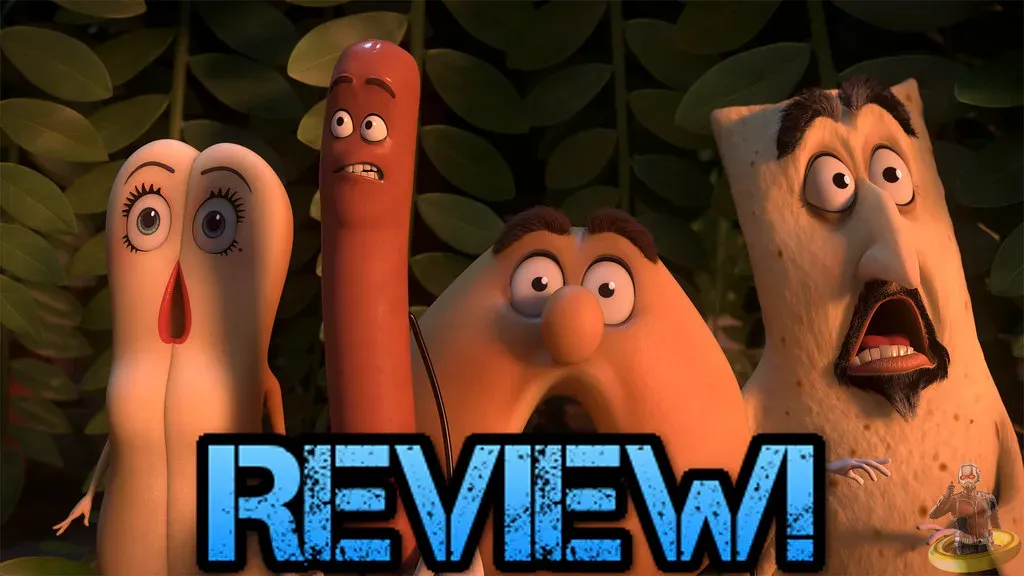
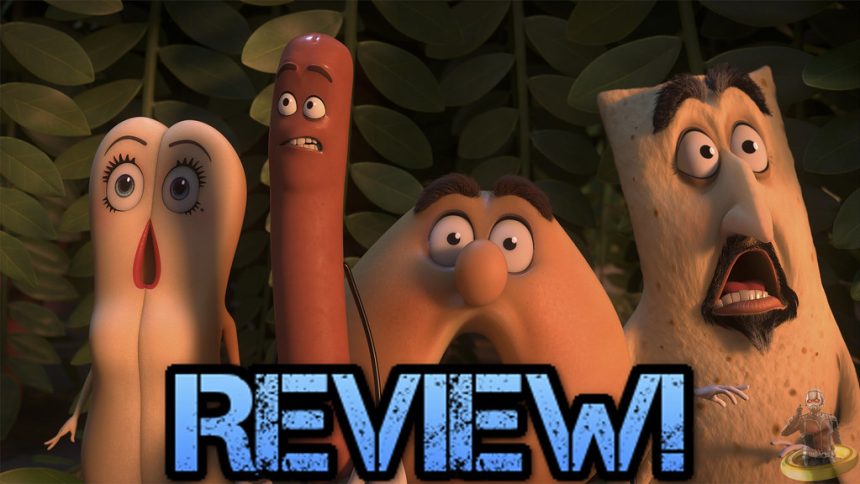
Seth Rogen’s animated comedy left critics salivating at an 82% Tomatometer score but audiences with a bad taste in their mouths at a 50% rating. Acclaimed by cinephiles for its raucously profane gags and unexpected intellectual depth, the film faced harsher criticism from general moviegoers who perhaps sought the kind of thoughtless fun promised by Rogen’s less abstract films.
Comedy is perhaps the most subjective movie genre. The kinds of humor that work for some may be entirely unappealing to others. In Sausage Party’s case, the film’s brazen, borderline-surreal satire landed perfectly for critics who appreciated the sheer ambition of the premise – but for audiences expecting a breezy animated romp, the unrelenting crudeness and allegory felt like a bait-and-switch. The gap between the two scores remains one of the more surprising mismatches in animated film history.
6. Hail, Caesar! (2016)

One of the most divisive movies in the Coen Brothers’ career, Hail, Caesar! is set in 1950s Hollywood and follows studio fixer Eddie Mannix, played by Josh Brolin, as he tries to calm a group of unhappy actors, not to mention a cadre of communist writers who’ve kidnapped the studio’s biggest star. Critics responded warmly to its nostalgic pastiche and layered comedy. While critics thought the film was divine, it seems audiences wanted to stab Caesar in the back.
Hail, Caesar! does meander with its plot frequently, and can feel disjointed and random at times, including a musical number with Channing Tatum. Likewise, the plot is purposefully very convoluted, and the movie’s first watch can hurt the presentation when one is trying to keep up with the plot details. The film earned warm critical notices for its craft, but general viewers found the self-referential Hollywood humor less rewarding without a strong narrative spine to hold it together.
7. Spy Kids (2001)

Somewhat unprecedented for a film featuring life-sized animated thumbs and flashy CGI, Spy Kids was a surprise critical hit upon its initial release in 2001, receiving a glowing score of 93% among professional reviewers. Audiences were far less impressed, giving it a score of 47%. For a family film aimed at children, the critic-to-audience gap was genuinely startling.
While absurdity was the film’s main strength among critics, Spy Kids’ sheer weirdness was lost on general audiences. The first sequel, The Island of Lost Dreams, scored the franchise its second certified Fresh rating. Professional reviewers seemed charmed by the surreal, hyperactive creativity, while a lot of general viewers apparently drew the line at the nightmare thumb creatures. It’s a rare case where a film universally aimed at kids ended up feeling more at home in a film critic’s notebook than in a child’s memory.
8. Don’t Look Up (2021)

The allegorical satire Don’t Look Up holds a notable divide on Rotten Tomatoes. While the sheer spectacle of the film’s star-studded cast won most audiences over with a 78% score, Adam McKay’s heavy-handed and overly ambitious messaging was critiqued by reviewers with a 55% Tomatometer. It’s an unusual reversal in this list, with critics more skeptical and audiences more entertained – though the film still generated one of the loudest disagreements in recent memory.
The divisiveness in the discourse surrounding Don’t Look Up was replicated across the broader film conversation, with the Adam McKay film holding a 22% divide between the two camps. Critics focused on the messaging being heavy-handed and lacking in subtlety, while people who put it on for a casual night in found it goofy, fun, and entertaining in a way that mirrored real-world frustrations without forcing them into an existential crisis. The film became a cultural flashpoint – less about cinema than about how differently people process political satire.
What ties these eight films together isn’t necessarily quality, or lack of it. Streaming and franchise dominance have changed what most people are actually watching, so critics and audiences are often not even operating in the same part of the film landscape anymore. What you end up with isn’t just disagreement over individual movies – it’s a deeper split in what people think movies are for. These divides are less verdicts on the films themselves and more windows into two genuinely different ideas of what going to the movies means.
Partner offer
Planning a trip to Vegas?
Compare hotel rates and show tickets on VEGAS.com.