Science fiction writers have a strange habit of getting things right. Long before smartphones, surveillance drones, or virtual reality headsets existed, a handful of authors sat down and imagined worlds that look uncomfortably close to the one we live in today. Some predicted the technology itself, while others foresaw the social and psychological fallout that would come with it.
What makes these seven novels so unsettling isn’t just their gadgets or gizmos. It’s how accurately they captured the emotional texture of modern life, the isolation, the surveillance, the addiction to screens, and the erosion of privacy that so many of us now take for granted. Revisiting them in 2026 feels less like reading fiction and more like flipping through an old diary that somehow describes tomorrow’s headlines.
1. 1984 by George Orwell
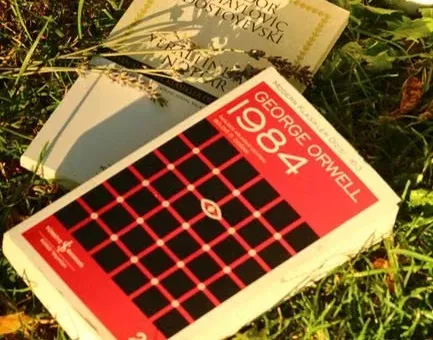
Orwell’s 1949 masterpiece imagined a totalitarian state where telescreens watch citizens in their own homes and language itself is weaponized to control thought. The term “Orwellian” has become shorthand for exactly the kind of pervasive surveillance and doublespeak that regularly shows up in conversations about government monitoring, facial recognition, and algorithmic content moderation. What Orwell couldn’t have known was how willingly people would eventually carry their own telescreens in their pockets.
The eerie part isn’t that governments built giant screens to spy on citizens. It’s that the surveillance ended up being quieter and more voluntary than Orwell imagined, embedded in smartphones, smart speakers, and social media platforms that track behavior in exchange for convenience. Debates over data privacy, facial recognition in public spaces, and state-level internet censorship still borrow Orwell’s vocabulary because nobody has described the phenomenon better.
2. Brave New World by Aldous Huxley
Published in 1932, Huxley’s novel skipped the jackboots and instead imagined a society pacified through pleasure, genetic engineering, and a mood-stabilizing drug called soma. Citizens aren’t oppressed so much as distracted into compliance, kept docile through entertainment, consumerism, and chemical comfort rather than fear. It’s a softer, subtler form of control than Orwell’s, and many critics argue it’s the version that better matches modern life.
Huxley’s fixation on genetic engineering feels particularly sharp given how far reproductive and genetic technology has advanced, from IVF screening to gene-editing tools like CRISPR. Meanwhile, his vision of a population soothed by endless entertainment and mood-altering substances echoes conversations happening right now about social media addiction, prescription drug use, and the attention economy. Huxley didn’t need jackboots because he understood that comfort can be just as effective a leash as fear.
3. Neuromancer by William Gibson
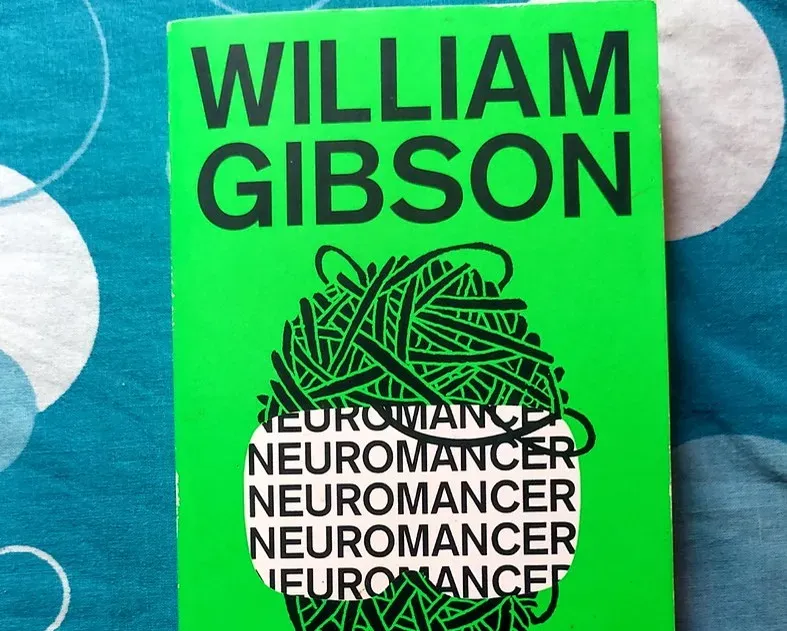
William Gibson’s 1984 science fiction novel is widely considered the defining work of the cyberpunk genre, set in a gritty near-future world dominated by powerful corporations and advanced computer networks. Gibson coined the term “cyberspace” in this novel, helping launch the cyberpunk genre. In 1984, five years before Tim Berners-Lee introduced the Internet to the world, Gibson coined the term “cyberspace,” his version of the World Wide Web. The novel imagined a digital realm where hackers jack in to steal data and corporations wield more power than governments, a dynamic that feels increasingly familiar in an era dominated by tech giants and cybercrime.
Neuromancer popularized now-common concepts like cyberspace and artificial intelligence, earning Gibson a reputation as a prescient futurist. Interestingly, Gibson himself has downplayed the idea that he was predicting anything specific. It’s worth noting that Gibson has never claimed to predict the future, and in interviews he explicitly denies any charges of prescience. Still, his portrayal of a world stitched together by data networks, corporate espionage, and rogue artificial intelligence reads less like fantasy and more like an early sketch of the internet age.
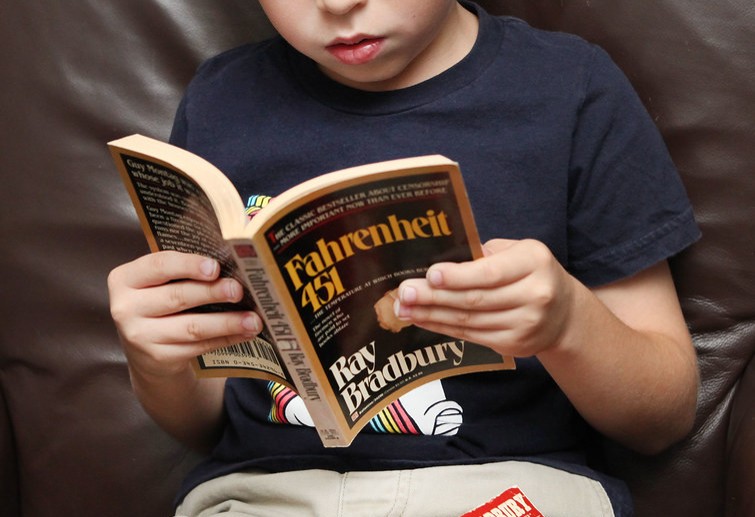
4. Fahrenheit 451 by Ray Bradbury
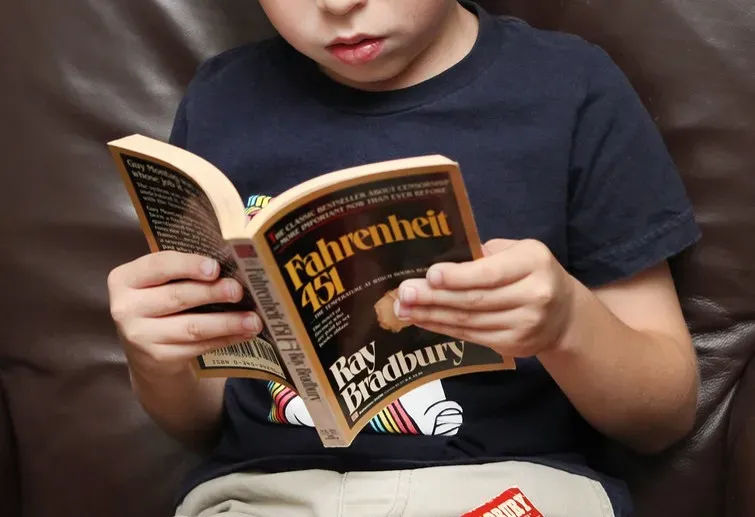
Bradbury’s 1953 classic is famous for its book-burning firemen, but the more chilling prediction sits quietly in the background: wall-sized interactive television screens that dominate family life, alongside tiny earpiece radios that pump constant noise and chatter directly into people’s ears. Substitute “wall screens” for televisions or smart displays and “earpieces” for wireless earbuds, and the parallel writes itself.
Bradbury was less concerned with the technology than with what it replaced. His characters have stopped reading, stopped thinking deeply, and stopped talking to each other in any meaningful way, drowned out by shallow entertainment and constant background noise. That anxiety about shrinking attention spans and the slow erosion of deep reading feels every bit as relevant now as it did seven decades ago, especially as short-form video content continues to reshape how people consume information.
5. The Machine Stops by E.M. Forster

Written in 1909, long before television or the internet existed, Forster’s novella imagines a future where humanity lives underground in isolated pods, communicating almost exclusively through a machine that allows instant messaging and video-like communication. People rarely meet in person, preferring the mediated safety of screens, and physical touch becomes almost taboo. It’s a startlingly precise sketch of video calls, remote living, and social withdrawal.
The story’s real punch comes from its portrayal of total dependence. Forster’s characters have outsourced nearly every function of daily life to the Machine, from food delivery to intellectual stimulation, and panic when it begins to fail. That fragile reliance on unseen infrastructure mirrors modern anxieties about what happens when cloud services, power grids, or global supply chains suddenly go dark. Forster wrote this over a century before remote work and video conferencing became normal, which makes the novella feel almost impossibly ahead of its time.
6. Do Androids Dream of Electric Sheep? by Philip K. Dick

Philip K. Dick’s 1968 novel, later adapted into Blade Runner, wrestles with a question that has become newly urgent, what actually separates human consciousness from artificial intelligence that can convincingly mimic emotion. Dick’s replicants are engineered to be nearly indistinguishable from humans, forcing his characters to rely on elaborate empathy tests to tell the difference. As large language models and AI chatbots become increasingly persuasive conversational partners, that same unease about authenticity has moved from speculative fiction to everyday tech commentary.
The novel’s deeper concern is empathy itself, and whether it can be manufactured, faked, or lost entirely in an increasingly automated world. Dick also imagined a planet damaged by pollution and radioactive dust, pushing wealthier humans to emigrate offworld while those left behind cope with environmental decay. That backdrop of climate anxiety and ecological collapse, paired with debates over AI consciousness and rights, makes the novel feel less like retro pulp fiction and more like a live discussion happening in labs and legislatures today.
7. Snow Crash by Neal Stephenson
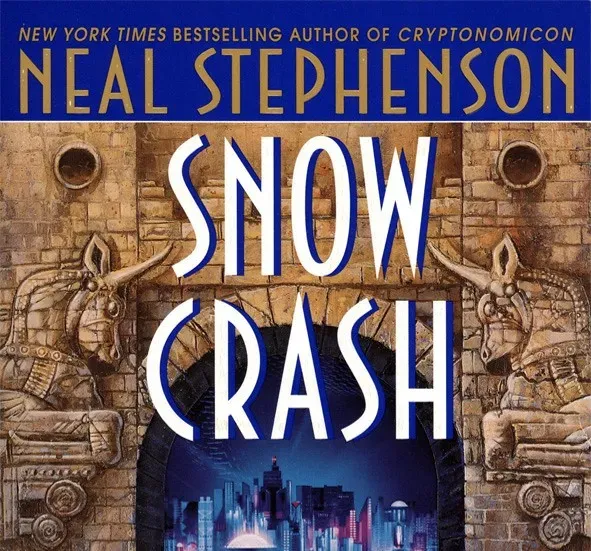
Author Neal Stephenson coined the term “metaverse” in his 1992 science-fiction novel “Snow Crash,” which envisions a virtual reality-based successor to the internet. In the novel, people use digital avatars of themselves to explore the online world, often as a way of escaping a dystopian reality, and nearly three decades later that’s essentially the future that Zuckerberg says he’s trying to build with Meta, minus the dystopia. Stephenson also imagined a world of privatized city-states, corporate-run enclaves, and runaway inflation, themes that feel newly relevant amid ongoing debates about corporate power and economic instability.
What’s remarkable is how the term has outlived the specific technology Stephenson originally imagined. Neal Stephenson coined the word “metaverse” in his seminal 1992 sci-fi novel Snow Crash, and thirty years later, Sotheby’s auctioned off rare items associated with the book while Stephenson worked on a new blockchain company. Stephenson himself has noted that the bulky VR goggles many assumed would define the metaverse haven’t turned out to be the dominant interface, with mass-market platforms like Fortnite, Minecraft, and Roblox instead capturing that “mashup” spirit he originally described. It’s a reminder that predicting a concept can be more powerful, and more accurate, than predicting the exact hardware that delivers it.
None of these authors owned a crystal ball. What they had instead was a sharp eye for where technology, power, and human behavior were already heading, and the courage to follow those trends to their most uncomfortable conclusions. Reading them now isn’t just a literary exercise, it’s a way of recognizing patterns that are still very much unfolding around us.
Perhaps that’s the real lesson buried in all seven books. Science fiction rarely predicts the future with perfect precision, but it often captures the underlying anxieties and appetites that shape it. The technology changes, the specifics shift, yet the human tendencies these authors identified, our hunger for control, comfort, connection, and escape, remain stubbornly, recognizably the same.