Every film has a version that never made it to theaters. Somewhere between the first draft and opening night, a scene gets torn out, an ending gets flipped, or an entire act gets thrown in the trash because a test audience hated it. Most of the time nobody notices the difference. Every once in a while, though, the rewrite is the whole reason the movie survived at all.
Pretty Woman almost ended with a drug overdose and an empty stare
Before it was a romantic comedy, Pretty Woman was a much colder script called 3000, named after the amount of money Edward pays Vivian for a week of her time. According to Digital Spy, it was originally supposed to be called $3,000, which was referencing the amount of money Vivian got paid by Edward. The tone matched the title. 3000 was devoid of the latter’s charm and sensational appeal, tapping into a darker narrative that’s a norm on the fringes of society, with the overarching theme centered on the harsher, darker realities of sex work.
The ending was even bleaker than the setup. Julia Roberts confirmed this in a recent interview saying at the end of the original script, Richard’s character threw her character out of the car, threw the money on top of her and drove away and the credits rolled. Vivian’s friend Kit didn’t fare any better in that draft, and Vivian herself was written with blank and empty eyes staring out of a bus window as she and best friend Kit headed off to Disneyland. Director Garry Marshall pushed for a full rewrite, and screenwriter J.F. Lawton eventually landed on the fire escape ending audiences actually got, turning a cautionary tale into one of the most successful romantic comedies of its era.
Fatal Attraction needed a bloodier finish to work at all
Glenn Close’s Alex Forrest was originally supposed to take her own life after framing Michael Douglas’s character for her murder. The movie’s original ending had Alex frame Dan for her murder before killing herself. It played as a somber, almost tragic note, and on paper it made a certain kind of psychological sense.
Test audiences did not agree. Executive Ned Tanen candidly said they want us to terminate the bitch with extreme prejudice. Director Adrian Lyne resisted the change at first, later explaining that the other ending felt flat, and after watching a preview with producers Stanley Jaffe and Sherry Lansing, they felt that dramatically it didn’t work that well. The reshot climax, with Anne Archer’s character killing Alex, turned Fatal Attraction into one of the defining thrillers of the 1980s.
First Blood was supposed to end with Rambo’s death

John Rambo dying at the end of his own movie sounds almost unthinkable now, given how the character became a four-film action franchise. Yet that was the original plan for First Blood, mirroring the more downbeat tone of David Morrell’s source novel. Think First Blood, where Sylvester Stallone’s John Rambo originally died in the final moments instead of surviving to draw more blood in four sequels.
The shift toward a survival ending changed the entire trajectory of the character. Rambo became less a tragic casualty of war and more a wounded but enduring symbol, which gave Stallone a franchise rather than a single, grim character study. It is a reminder that the difference between a forgettable war drama and a decades-long action series can come down to a handful of rewritten pages near the end of the shoot.
Toy Story was nearly cancelled over a mean-spirited first pass
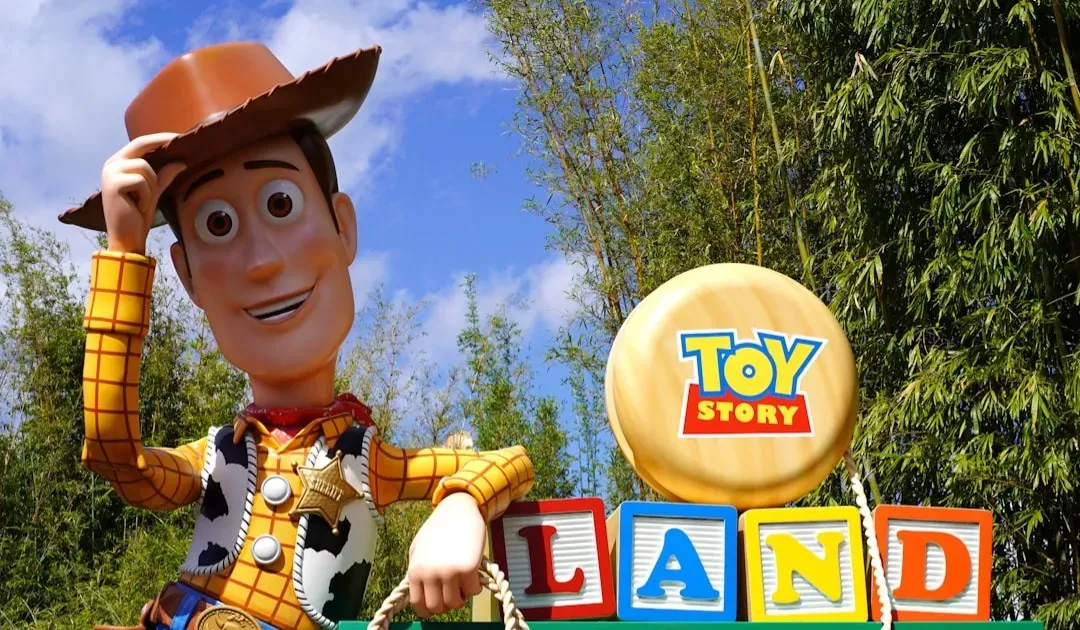
Pixar’s very first feature almost didn’t survive its own production. Disney had pushed for an edgier tone, and the resulting reel, later nicknamed the Black Friday reel, painted Woody as a genuinely unlikeable bully. Disney executives were disgusted with the result, and John Lasseter felt embarrassed throughout the whole thing because of how unhappy, unsympathetic and mean-spirited the characters were, while Tom Hanks made it clear he hated this rendition of Woody.
The screening was disastrous enough that production nearly stopped for good. Disney’s head of feature animation halted production, and there were calls to just call off making Toy Story, with the script going through rewrites while production stayed halted, since it looked like the film would be canceled unless a good rewrite got done in time. Pixar was given roughly two weeks to soften Woody and rebuild the story around genuine warmth instead of cynicism, and that emergency rewrite became the foundation of the movie people actually watched in theaters.
World War Z rewrote its entire third act during reshoots
Brad Pitt’s zombie epic went into production without a locked ending, which is rarely a good sign for a film with a nine figure budget. The blockbuster ended up delayed from a December 2012 release date to June 2013, so as to allow for extensive reshoots after the shooting script’s third act and ending had been rewritten. By the time executives saw a rough cut, the mood in the room was not good. Lindelof described the original conclusion as abrupt and incoherent, echoed by a Paramount executive who recalled the room going silent and thinking the ending of the movie simply did not work.
Damon Lindelof and Drew Goddard were brought in to fix what was left. After watching a rough cut, Lindelof had two options, either write around what already existed or scrap a whole chunk of the movie and try something else, and the production went with the second, more drastic route. The result scaled the finale down from a sprawling battle sequence to a tense, quiet standoff in a research facility, and critics generally agreed the smaller ending worked better than what had originally been shot.
Sunset Boulevard’s framing device was rewritten after audiences laughed at the wrong moment
Billy Wilder’s 1950 classic is remembered for its haunting opening, with a dead man narrating his own story from a swimming pool. That was not the first version. The original cut opened in a morgue, where several corpses chat with one another before Joe Gillis explains how he ended up there.
Preview audiences reportedly laughed at the morgue scene, finding it unintentionally comic rather than eerie. Wilder scrapped the sequence and replaced it with the now-famous floating body shot and voiceover, a much cleaner way into the story. The change is a small technical fix in retrospect, but it is the kind of adjustment that kept a genuinely strange structural choice from tipping the whole film into unintentional comedy.
Blade Runner got a studio-mandated happy ending it never asked for
Ridley Scott’s 1982 film is now treated as a landmark of science fiction, but its theatrical cut carried a voiceover narration and a tacked-on happy ending that the studio insisted on after poor test screenings. Executives worried audiences would leave confused or depressed without some kind of explanation and resolution. The added narration, delivered by Harrison Ford, was widely seen as clunky even at the time.
Years later, Scott released a director’s cut that stripped the narration and restored the ambiguous ending he had originally intended. Critics and audiences responded far more warmly to that version, and it eventually helped rehabilitate the film’s reputation from a box office disappointment into a genre classic. The episode is often cited as proof that a rewrite forced on a director is not automatically a fix, and sometimes the version studios reject on release turns out to be the right one all along.
Speed got its snap and humor from an uncredited pass
Speed’s script by Graham Yost had the bones of a solid action thriller, a bus that cannot slow down and a bomb that will detonate if it does. What it reportedly lacked, in early drafts, was the light, quick banter between Keanu Reeves and Sandra Bullock that made the finished film so likable. Joss Whedon did an uncredited polish on the dialogue, a common but rarely acknowledged practice in Hollywood.
The tweaks did not change the plot mechanics, but they gave the characters personality under pressure, which is often the difference between a competent thriller and one people rewatch for decades. Speed became one of the defining action films of the 1990s, and much of its charm sits in small exchanges that likely would not exist without that late pass. It is a useful example of how a rewrite does not always mean structural surgery. Sometimes it just means making people sound like people.
Beauty and the Beast was scrapped and started over from scratch
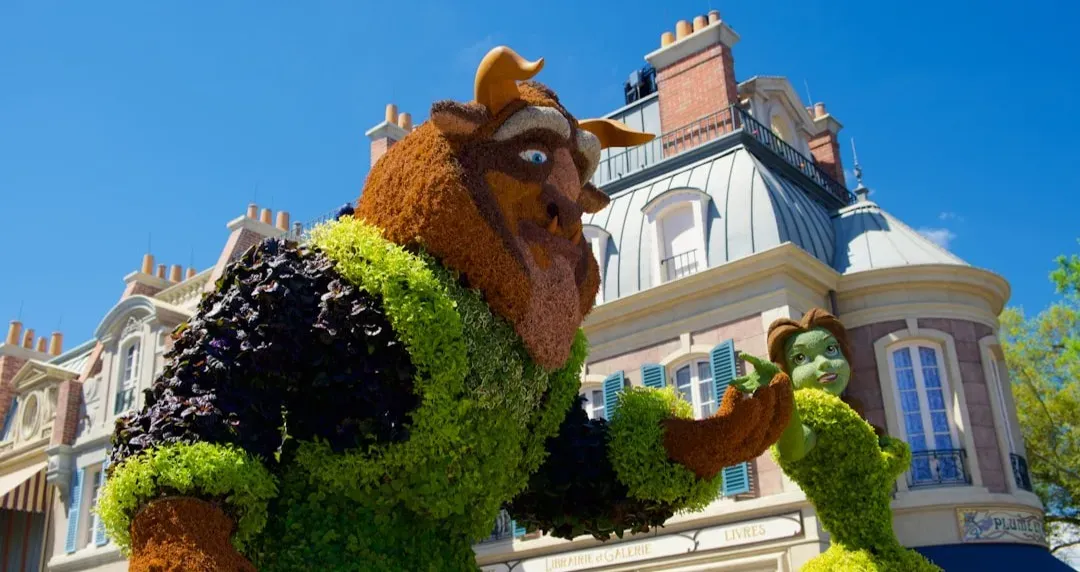
Disney’s animated Beauty and the Beast is remembered as one of the studio’s crowning achievements, the first animated film nominated for a Best Picture Oscar. Its first attempt looked nothing like that. The 1989 original screenplay for the 1991 movie Beauty and the Beast had been scrapped by Jeffrey Katzenberg for being perceived as too dark, the same reason the Black Friday reel for Toy Story was later created and rejected.
Screenwriter Linda Woolverton was brought in for a full rewrite, restructuring the story around Belle’s independence and giving the Beast a more sympathetic arc rather than a purely menacing one. That rebuilt version became the film that earned six Oscar nominations and reshaped how Disney approached its animated features for the following decade. The original, darker draft never saw the light of day, and few outside animation historians even know it existed.
What these rewrites have in common
None of these films were fixed by a single lucky line or a clever twist added at the last minute. In every case, someone involved, a director, a producer, a studio head, was willing to admit that what had already been shot or written simply was not working, even after months or years of investment. That kind of admission is harder than it sounds, especially on a project already over budget or behind schedule.
What separates these stories from the countless other films that got rewritten and still flopped is timing and nerve. The changes came late enough to be genuinely risky, yet early enough to still matter before release. It is a pattern worth remembering the next time a movie seems doomed in its early buzz. The version audiences eventually see is rarely the first one anyone wrote.