Putting a different name on the cover is an old literary habit. Writers have done it to dodge prejudice, to separate genres, to protect their privacy, or simply to try something new without baggage. Some of these books became so famous that the invented name now outshines the real one.
Here are ten well-known titles that first reached readers under a pseudonym. The facts below are long-established and widely documented in literary history.
1. Nineteen Eighty-Four by George Orwell

George Orwell was the pen name of Eric Arthur Blair. He began publishing as Orwell in 1933 with Down and Out in Paris and London. Blair reportedly chose the name partly to spare his family embarrassment over his account of living in poverty.
Nineteen Eighty-Four came out in 1949, shortly before his death in January 1950. Its vocabulary, including Big Brother and doublethink, still turns up in debates about surveillance and propaganda. Few readers now think of the book as the work of Eric Blair.
2. Jane Eyre by Currer Bell
Charlotte Brontë published Jane Eyre in 1847 as Currer Bell, and the title page called it an autobiography. Her sisters Emily and Anne also took male-sounding names, Ellis and Acton Bell. The initials matched their own, which kept the disguise close to home.
Charlotte later explained that the sisters feared critics treated women writers with prejudice. The book was an immediate success, and speculation about the author’s identity followed. Her real name became public in the years afterward.
3. Middlemarch by George Eliot
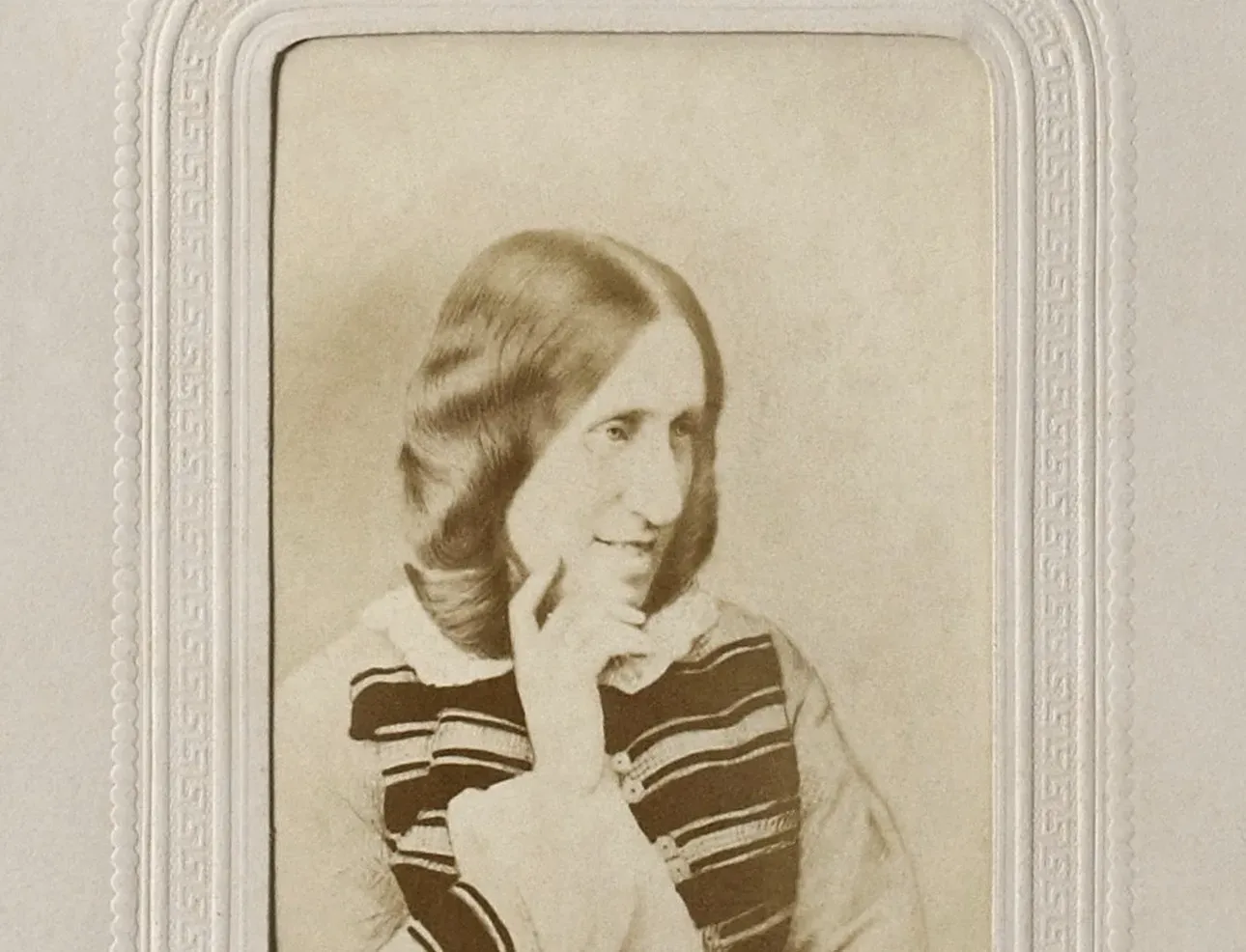
Mary Ann Evans wrote as George Eliot. She wanted her fiction to be taken seriously and to remain separate from her earlier career as a journalist and translator. Her private life, including her relationship with George Henry Lewes, also made anonymity attractive.
Middlemarch appeared in installments in 1871 and 1872. It’s often described as one of the greatest English novels, and Virginia Woolf famously called it a book for grown-up people. Evans’s identity was revealed in the 1850s, yet she kept the pen name for her whole career.
4. Alice’s Adventures in Wonderland by Lewis Carroll
Charles Lutwidge Dodgson was a mathematics lecturer at Oxford. He published Alice’s Adventures in Wonderland in 1865 under the name Lewis Carroll. The name was a playful reworking of his own first and middle names, via Latin forms.
He kept his mathematical writing under his real name. That division between the serious academic and the whimsical storyteller was deliberate. Wonderland and its sequel, Through the Looking-Glass, have stayed in print ever since.
5. Adventures of Huckleberry Finn by Mark Twain
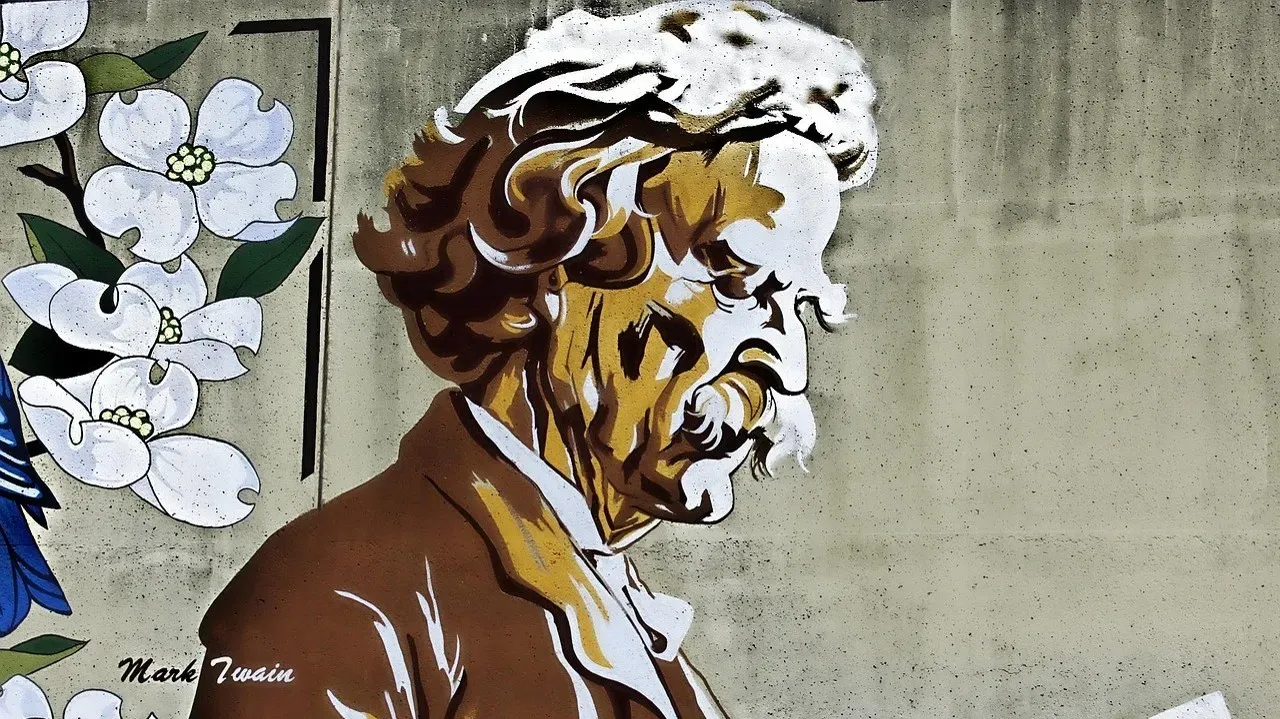
Samuel Langhorne Clemens adopted Mark Twain in the early 1860s. The name comes from a riverboat term for a depth of two fathoms, a nod to his years working on the Mississippi. It suited a writer so tied to that river.
Huckleberry Finn was published in 1884 in Britain and 1885 in the United States. It remains central to American literature and a frequent subject of debate over its language and treatment of race. Twain’s persona became so powerful that it often swallowed Clemens entirely.
Partner offer
6. Frankenstein? No: Doctor Zhivago? Try Lolita? A Better Fit: Les Misérables? Instead, Consider Stendhal’s The Red and the Black

Marie-Henri Beyle published under the name Stendhal, borrowed from a German town. He used many pseudonyms during his life. Le Rouge et le Noir appeared in 1830 under that name.
The novel follows Julien Sorel, an ambitious young man in post-Napoleonic France. It’s regarded as a landmark of psychological realism. Beyle’s habit of inventing identities is part of what makes his career so distinctive.
7. The Cuckoo’s Calling by Robert Galbraith
J.K. Rowling released this crime novel in 2013 as Robert Galbraith. She has said she wanted to work free of expectations after Harry Potter. The secret held for a few months before it leaked, and sales rose sharply afterward.
The book launched the Cormoran Strike series, which has continued with further novels since. The case shows how a pen name can function as a creative fresh start, even when it can’t stay secret forever.
8. The Bachman Books by Richard Bachman

Stephen King created Richard Bachman in the late 1970s. Publishers then believed an author should release only one book a year, and King wanted to publish more. Rage appeared in 1977 under the Bachman name, followed by The Long Walk and Thinner.
A bookstore clerk named Steve Brown spotted similarities and exposed King in 1985. The Long Walk and The Running Man, both Bachman titles, have since drawn wide attention, including screen adaptations. King later said he regarded Bachman as a separate voice.
9. My Brilliant Friend by Elena Ferrante

Elena Ferrante is a pseudonym, and the author’s real identity has never been officially confirmed. The first Neapolitan novel, My Brilliant Friend, appeared in Italian in 2011 and in English in 2012. The author has said anonymity lets the books stand on their own.
In 2016 an Italian journalist published a claim about who Ferrante might be, which prompted a heated debate over privacy. Because the author has not confirmed any name, it’s wise to treat that as speculation. The series has since reached a global audience.
10. Rebecca? No: Gone to Seed? Try The Name of the Rose? Choose Lust for Life? Final Pick: Fahrenheit? Settle on Carmilla?

Let’s finish with a firmly documented case: Daphne du Maurier’s contemporaries aside, Isak Dinesen was the pen name of Karen Blixen. She published Seven Gothic Tales in 1934 under that name in the United States. Her memoir Out of Africa followed in 1937.
Blixen drew on her years running a coffee farm in Kenya. She also used other names, including Pierre Andrézel, for some work. Out of Africa later inspired a well-known 1985 film, though the book itself is a quieter, more reflective account.
A pen name can be a shield, a strategy, or a game. For these writers it sometimes opened doors that their own names might have kept shut. Whatever the motive, the invented identity often became inseparable from the work itself.
Partner offer
Planning a trip to Vegas?
Compare hotel rates and show tickets on VEGAS.com.