Most of us pick a movie after hearing someone’s opinion first. Often it’s a friend, a headline, or a star rating, and behind many of those quick judgments sits a critic who taught audiences what to look for.
Criticism has changed a great deal in 2026, with social feeds and aggregated scores now crowding the field. Yet the habits of thought that shape those conversations were set by a small group of writers and broadcasters. Here are seven whose work still echoes.
Roger Ebert, the Critic Who Made Film Talk Accessible
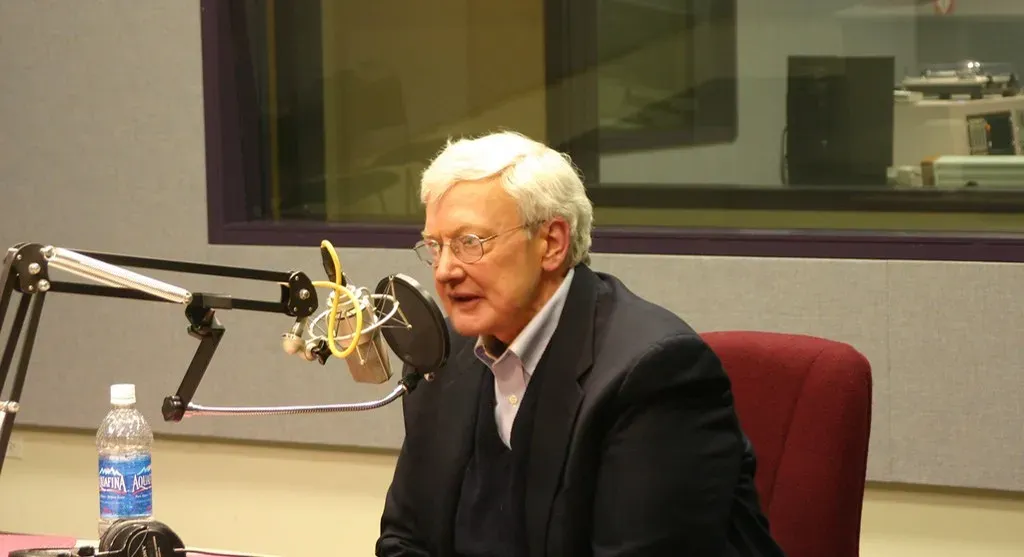
Roger Ebert began reviewing for the Chicago Sun-Times in 1967. In 1975 he became the first film critic to win the Pulitzer Prize for criticism. His reviews were plain spoken and warm, and they treated a popular audience as intelligent.
He also kept his writing public in a way few critics had. His website and later online presence let readers follow his thinking until his death in 2013. Many working critics still cite his clarity as a standard, and his archive remains widely read.
Pauline Kael and the Power of a Personal Voice

Pauline Kael wrote for The New Yorker from 1968 until 1991. She favored energy, vulgar vitality, and emotional response over polite reverence. Her prose read like an argument with the reader, which made her both beloved and fiercely disputed.
Her 1971 essay Raising Kane stirred debate about who deserved credit for the screenplay of Citizen Kane. Whatever one thinks of her conclusions, she showed that criticism could be a form of writing with its own style. She died in 2001, and her collected reviews are still in print.
Andrew Sarris and the Auteur Debate
Andrew Sarris brought the idea of the director as the central author of a film to American readers. His 1962 piece Notes on the Auteur Theory appeared in Film Culture, a journal that helped push film talk toward serious study. Later, in 1968, he published The American Cinema, which ranked directors into categories.
Writing for The Village Voice, he made the question of who made a movie a daily topic. Today it’s normal to say a film belongs to its director, and that habit owes a lot to him. He died in 2012.
Partner offer
James Agee and Criticism as Literature
James Agee reviewed films for Time and The Nation during the 1940s. He was already a poet and novelist, and he brought a literary sensibility to movie reviews. His pieces were attentive to detail, behavior, and the small moments that give a scene its truth.
His reviews were later gathered in Agee on Film. He also worked as a screenwriter, with credits including The African Queen. He died in 1955, yet his reputation as an early model of serious American film writing has lasted.
Bosley Crowther and the Weight of the Newspaper Verdict
Bosley Crowther was the chief film critic of The New York Times from 1940 to 1967. In that era a Times review could affect a film’s reception, and his opinions carried real institutional weight. He often championed socially minded dramas and foreign releases.
His tenure ended during a time of great change in American film. His negative response to Bonnie and Clyde in 1967 is often cited as a sign that he was out of step with a new generation. The episode is a useful reminder that even powerful critics can be overtaken by shifting taste.
Manny Farber and the Idea of Termite Art
Manny Farber was a painter as well as a critic, and he wrote for outlets such as The New Republic and The Nation. His 1962 essay White Elephant Art vs. Termite Art set out a distinction that critics still use. He admired films that seemed absorbed in the task at hand over those that announced their own importance.
His prose was dense, odd, and visual, which made him a critic’s critic rather than a household name. Still, he influenced later writers who value texture and craft over prestige. He died in 2008.
Gene Siskel and the Rise of the Thumbs
Gene Siskel reviewed films for the Chicago Tribune and partnered with Roger Ebert on television. Their show began as Sneak Previews on public television in 1975 and later moved into commercial syndication. The thumbs up or thumbs down became a shorthand known well beyond film circles.
The format turned disagreement into entertainment, and it showed viewers that two informed people could argue about a movie respectfully. Siskel died in 1999. The two thumb gesture remains a familiar way of summing up a film in public conversation.
Partner offer
Planning a trip to Vegas?
Compare hotel rates and show tickets on VEGAS.com.