Somewhere in the history of American cinema, a star’s greatest performance was fed into a furnace, shelved in a damp basement, or simply thrown away. Studios in the early decades didn’t see movies as art to be kept. They saw them as products that had already earned their money.
That attitude left gaps that still can’t be filled. The titles below show how a film can disappear, whether through fire, cost cutting, neglect, or plain indifference. Some of these stories have partial happy endings, though many don’t.
London After Midnight, the Holy Grail of Lost Horror

Tod Browning’s 1927 thriller starred Lon Chaney as a detective who disguises himself as a vampire, complete with jagged teeth and wild eyes. It was a hit for MGM, and Chaney’s makeup became one of the most famous images of the silent era.
The last known print is reported to have been destroyed in an MGM vault fire in 1967. In 2002, Turner Classic Movies released a reconstruction built from production stills and the original script. It’s a clever substitute, yet it isn’t the film itself.
Cleopatra of 1917 and the Fox Vault Fire
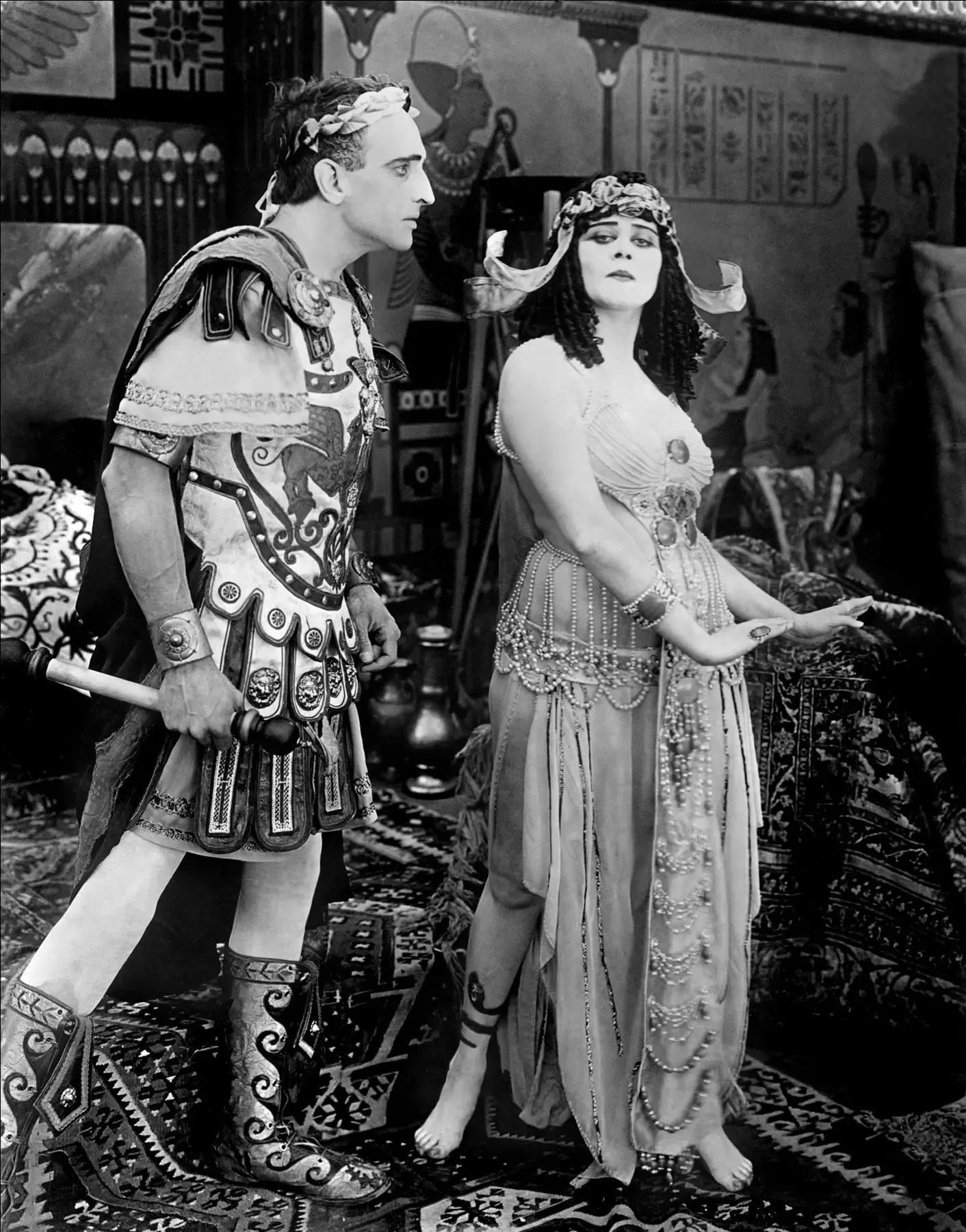
Theda Bara, one of the first true screen vamps, played the queen of Egypt in this lavish Fox production. Today only fragments of the film are known to survive.
Much of Fox’s early catalog was lost in a 1937 fire at its storage facility in Little Ferry, New Jersey. Many silent negatives went with it, which is one reason Bara’s career is so hard to judge today. Most of her best known work can no longer be seen.
Greed, the Eight Hour Masterpiece That Was Cut Apart
Erich von Stroheim’s 1924 adaptation of a novel about money and obsession was shot largely on real locations. His first cut is widely reported to have run around eight hours, far too long for any theater.
MGM trimmed it to roughly two and a half hours, and the removed footage was destroyed. A 1999 restoration used surviving stills to approximate the longer version. Critics still rank the shortened film among the great silent works, which makes you wonder what the full cut looked like.
The Magnificent Ambersons and Orson Welles’s Missing Cut

After Citizen Kane, Orson Welles made this period drama in 1942. His version ran about two hours and ten minutes, but RKO took it away from him while he was working abroad.
The studio cut it to eighty eight minutes, reshot the ending, and reportedly destroyed the removed negative to free up vault space. Film historians have searched for a surviving print for decades without success. It remains one of the most discussed what ifs in American film.
The Divine Woman and the Fragments of Garbo’s Silent Years

Greta Garbo starred in this 1928 MGM drama, directed by Victor Sjöström. Only a single reel is known to survive, which is a tiny piece of a full feature.
Garbo’s silent films are mostly intact, so the loss stands out. It shows that even the biggest stars at the biggest studio weren’t safe from neglect.
Why So Many Films Burned or Crumbled
Early films were shot on nitrate stock, which is highly flammable and can ignite at fairly low temperatures. Once a reel caught fire, it was extremely hard to put out. Old nitrate can also decompose into a sticky mass or powder.
Storage added to the problem. Studios kept reels in warehouses without climate control, and many were later scrapped for their silver content. Others were discarded simply because nobody expected home video or television to create a market for old titles.
What the Numbers Say About Silent Cinema
A study published by the Library of Congress in 2013 examined American silent feature films made between 1912 and 1929. It found that roughly seventy percent of them no longer exist in their original format. Only about one in seven survives as a complete original 35mm release.
Martin Scorsese’s Film Foundation has long said that about half of American films made before 1950 are lost. That figure is an estimate, not an exact count, because nobody knows for sure how many films were ever made. Still, the scale of the loss is clear.
Metropolis and the Films That Come Back
Fritz Lang’s 1927 science fiction epic had been cut heavily after its premiere, and the missing scenes were long presumed gone. In 2008, a 16mm print containing much of that footage turned up in a film museum in Buenos Aires.
Restorers used it to assemble a far more complete version, which premiered in 2010. The damaged quality of the recovered scenes is visible on screen, and it was left that way on purpose. The result is the closest anyone has come to Lang’s original film.
The Dawson City Film Find
In 1978, construction workers in Dawson City, Yukon, dug up several hundred reels of nitrate film buried under an old recreation hall. Distant towns at the end of distribution routes often found it cheaper to dump prints than to ship them back.
The cache included newsreels and silent features once believed lost. The cold ground helped preserve some of them. The discovery gave archivists proof that missing films can still surface in unlikely places.
Where Preservation Stands Today
The National Film Preservation Act of 1988 created the National Film Registry, and the Library of Congress continues to add titles to it each year. Archives, studios, and nonprofits now copy fragile originals to stable formats. Digital restoration has also made it possible to repair films that were once considered beyond saving.
Recoveries still happen, but they depend on luck, donations, and patient searching. I haven’t confirmed any specific discoveries from 2024 to 2026, so this article doesn’t claim any. For now, London After Midnight, most of Cleopatra, and the full cuts of Greed and The Magnificent Ambersons remain missing.