


Two decades of watching careers rise and stall leaves you with a pretty clear eye for certain patterns. Some artists grind quietly, learn fast, and build something real over time. Others stay stuck, cycling through the same behaviors year after year while wondering why doors aren’t opening. The gap between those two groups is rarely about raw talent.
More often, it comes down to habits. Specific, repeatable ways of operating that signal to every booker, label rep, sync supervisor, and collaborator exactly where an artist is mentally. Here are nine of them that still show up everywhere, even in 2026.
1. Treating Criticism Like a Personal Attack


The amateur doesn’t want to hear criticism, only praise and accolades, and will bristle at the merest mention that something might be able to be better. This reflex is almost universal at the beginning, but most professionals learn to outgrow it quickly. The ones who don’t carry it for years.
The pro is constantly looking for any angle to improve, because they are in service to their art, not their ego. That mindset shift is not a personality trait. It’s a practiced discipline. When feedback stings, that’s usually the feedback that matters most.
2. Waiting to Be Discovered

Labels no longer operate with traditional A&R discovery or artist development. They’re not going to find you at a bar playing to twenty people, love your song, and sign you. That model largely disappeared, yet plenty of artists still operate as if it’s still 1998. The passive waiting game is one of the clearest amateur signals there is.
The amateur sits back and thinks the world will discover him or her, but the pro knows he or she has something to prove every day. Social media is now the new radio, press, discovery, touring, branding, fan club, and A&R, all wrapped into one. Choosing to ignore that reality doesn’t make it less true.
3. Never Finishing Anything

No one can stream a chorus you never finished. Streaming officially became the top revenue source for independent artists, surpassing both downloads and physical sales. What moves you forward is finishing. Not perfecting – finishing. This is a deceptively simple point that trips up more artists than almost anything else.
The amateur will avoid, avoid, avoid, because the work is painful. The professional will embrace it. The professional sits down and does it anyway, struggling through the pain of creation, whereas the amateur would rather avoid the pain entirely, and therefore will never write their symphony. Incomplete work accumulates no audience and earns no money.
4. Releasing Music Without Testing It
Roughly two thirds of artists release frequently but only a small fraction test their material, leading to an extremely high flop rate. Volume alone is not a strategy. Releasing track after track into the void without any feedback loop is one of the most common ways independent artists burn through goodwill and momentum simultaneously.
Untested tracks often fail to connect with listeners, and a solid quality gate process prevents these errors. That doesn’t mean spending months in endless revision. It means putting a small trusted circle in front of the work before the public sees it, and actually listening to what comes back.
5. Playing Out of Tune and Not Noticing

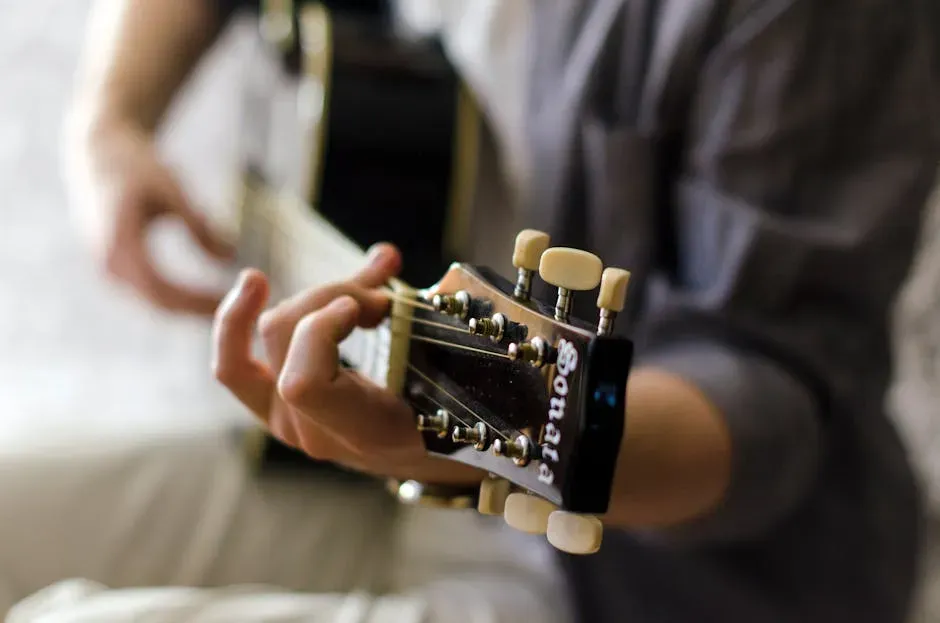
Playing an out-of-tune instrument is probably the most recognizable trait of an amateur. There is only one thing worse: playing out of tune and not hearing it. One out-of-tune musician in a band can ruin the entire band’s performance. It sounds like a basic point. It is a basic point. That’s precisely why it still turns heads at shows in 2026.
Partner offer

Nothing says “amateur hour” louder than plugging a guitar in at a show and getting no sound from the amp because the batteries in the active pickups haven’t been replaced. Preparation is a form of professionalism. Showing up with functioning, in-tune gear sends a message before a single note is played.
6. Having No Consistent Brand Identity

Many musicians describe themselves in very broad terms. They say they are versatile. They say they experiment. They say they do everything. That sounds creative, but it is not memorable. Trying to appeal to everyone is one of the most efficient ways to reach no one in particular.
Labels look for artists who occupy a specific space. They want to understand your sound, your vibe, and your audience quickly. If they cannot place you in their mind, they move on. Whether you are an independent artist or signed under a label, your name, image, and brand are what set you apart, and with social media, streaming, and AI-generated music gaining attention, protecting and defining your brand is essential to staying recognizable.
7. Ignoring the Legal and Copyright Basics

Registering your works provides a public record of ownership, strengthens your position in legal disputes, and is required before filing infringement lawsuits. Many artists mistakenly rely on mailing themselves a copy of their work for a postmarked date, known as the “poor man’s copyright,” which does not provide any real legal protection. That gap in knowledge has cost artists real money across every generation.
Many artists don’t realize that you can only claim statutory damages and attorney’s fees if you register your work before an infringement happens or within three months of publication. After that window, you may still sue, but you’re limited to actual damages, which are harder to prove and often much lower. Joining a Performing Rights Organization like ASCAP, BMI, or SESAC is also essential, since PROs collect performance royalties from radio, TV, streaming, and live venues.
8. Overspending on Production While Underspending on the Business
Common artist errors include ignoring taxes, chasing vanity projects, and funding lavish entourages with poor budgeting from day one. Two budget killers drain most artist revenue: overspending on production and neglecting revenue diversification. Pouring every dollar into a studio session while having no plan for distribution, promotion, or licensing is a pattern that repeats with each new generation of hopefuls.
Successful acts treat music as a business first, and building that habit early avoids the career mistakes that kill momentum. Emerging artists who operate on tighter budgets may need a business manager even more, as every penny counts. The romance of ignoring the financial side wears off fast when royalties go uncollected and tax season arrives without a plan.
9. No Electronic Press Kit, or a Terrible One
Understanding how to make an EPK that resonates with your target audience can be the difference between getting booked or being overlooked. A well-crafted EPK doesn’t just present information – it tells your story, communicates your brand, and convinces bookers that you’re worth investing in. An absent or outdated EPK is one of the fastest ways to signal that you’re not operating seriously.
Your EPK is often reviewed in less than two minutes, so every element must count by being scannable, visually engaging, and getting straight to the point. Venue bookers and festival organizers receive hundreds of submissions, and a professional EPK immediately separates you from amateur acts and demonstrates your commitment to your craft. In a market where there are estimated to be over eleven million artists and creators on Spotify alone, the EPK is often the first and last impression you make.
None of these habits are permanent character traits. They’re patterns, and patterns can change. The artists who close the gap between amateur and professional rarely do it in one dramatic leap. They do it by honestly auditing how they operate and quietly fixing the things that have been holding them back for longer than they’d like to admit.
Partner offer
Planning a trip to Vegas?
Compare hotel rates and show tickets on VEGAS.com.


