
Journey from Factory to Launch Site (Image Credits: Pexels)
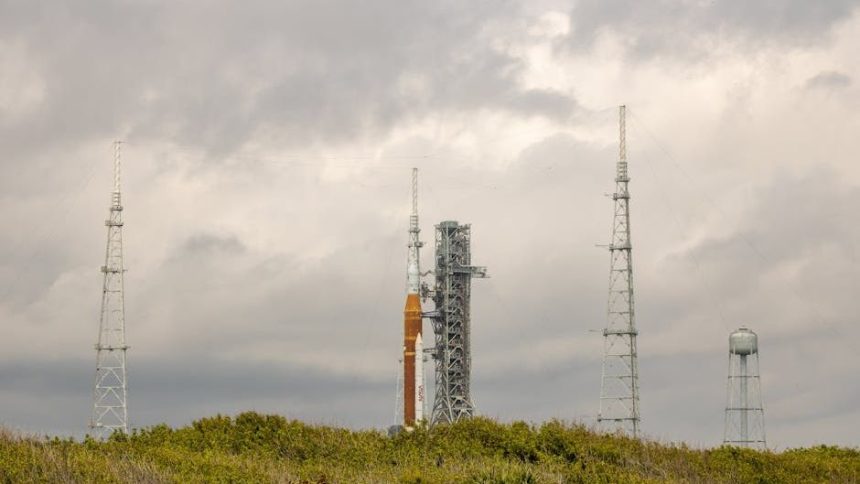
Kennedy Space Center, Florida — The top four-fifths of NASA’s Space Launch System core stage for the Artemis III mission pulled into this bustling spaceport on April 27 aboard the Pegasus barge.[1][2] Technicians offloaded the 212-foot segment the following day and maneuvered it into the Vehicle Assembly Building.[3] This arrival accelerates preparations for a 2027 launch that will test critical docking maneuvers in Earth orbit.
Journey from Factory to Launch Site
Teams at NASA’s Michoud Assembly Facility in New Orleans rolled out the core stage section on April 20.[4] Boeing, the prime contractor, completed work on the liquid hydrogen tank, liquid oxygen tank, intertank, and forward skirt — components that will hold more than 733,000 gallons of super-chilled propellant.[2] The segment then embarked on a 900-mile voyage along inland waterways and the Gulf Coast.
“Seeing this SLS rocket hardware roll out is a powerful reminder of our progress toward returning humans to the lunar surface,” said Lori Glaze, acting associate administrator for NASA’s Exploration Systems Development Mission Directorate.[4] Upon reaching Kennedy’s Complex 39 turn basin, crews prepared for the short haul to the assembly site. This path marked a routine yet precise operation for such an enormous payload.
First Core Assembly at the VAB
Workers guided the core stage into High Bay 2 of the Vehicle Assembly Building on April 28.[2] There, it will connect horizontally to the engine section and boat-tail, which arrived in August 2025.[1] Engineers then plan to raise the full stage vertically for final outfitting, including installation of four RS-25 engines from Stennis Space Center later this year.
This process represents a shift: Kennedy teams handle core stage integration for the first time, streamlining operations for future missions. Booster motor segments from Northrop Grumman in Utah began arriving April 13, with more due this summer. Those five-segment solids will stand 17 stories tall and provide the bulk of liftoff power.
| Component | Status | Key Milestone |
|---|---|---|
| SLS Core Stage (top 4/5) | In VAB High Bay 2 | Offloaded April 28, 2026[2] |
| Engine Section & Boat-Tail | Integrated | August 2025[1] |
| Booster Motor Segments | Processing | First shipment April 13, 2026[2] |
| Orion Crew Module | Heat shield complete | Testing underway[2] |
Engineering the Rocket’s Heart
The completed core stage stretches 212 feet and fuels the SLS’s four RS-25 engines, which burn for over eight minutes to generate more than 2 million pounds of thrust.[4] Paired with the boosters, the stack delivers 8.8 million pounds total — enough to hurl Orion and its crew into space.[2] Flight computers within the stage manage ascent through the atmosphere.
Partner offer
Orion hardware advances in parallel. The crew module’s upgraded heat shield features 186 Avcoat blocks, fully installed and inspected. Service module tests confirmed solar array deployments and adapter fittings. Integration with the launch abort system follows later in 2026.
Artemis III’s Orbital Proving Ground
Slated for late 2027, Artemis III sends four astronauts in Orion to low Earth orbit atop SLS.[5] The crew will demonstrate rendezvous and docking with at least one commercial human landing system from SpaceX or Blue Origin. These maneuvers pave the way for Artemis IV’s crewed lunar touchdown in 2028.
- Launch from Kennedy’s Pad 39B
- Orion-SLS single stack to orbit
- Docking tests with Starship HLS or Blue Origin lander
- Return via Orion splashdown
Such capabilities extend beyond the Moon, supporting deeper exploration toward Mars. NASA has not yet named the Artemis III crew.
Riding Artemis II’s Wake
Artemis II wrapped up earlier this month with a flawless 10-day lunar flyby. Commander Reid Wiseman, pilots Victor Glover and Christina Koch, and mission specialist Jeremy Hansen looped the Moon on April 1 launch.[2] Their Orion capsule returned to Kennedy’s processing facility on April 28 for detailed analysis.
Post-flight work includes data recovery, heat shield disassembly, and avionics checks. Lessons from this crewed test directly inform Artemis III refinements. Hardware flows steadily into place as NASA maintains its cadence.
With the core stage secured and boosters stacking soon, Kennedy’s grounds hum with purpose. This convergence signals NASA’s steady march back to the Moon — not as visitors, but as architects of sustained presence.
Partner offer
Planning a trip to Vegas?
Compare hotel rates and show tickets on VEGAS.com.