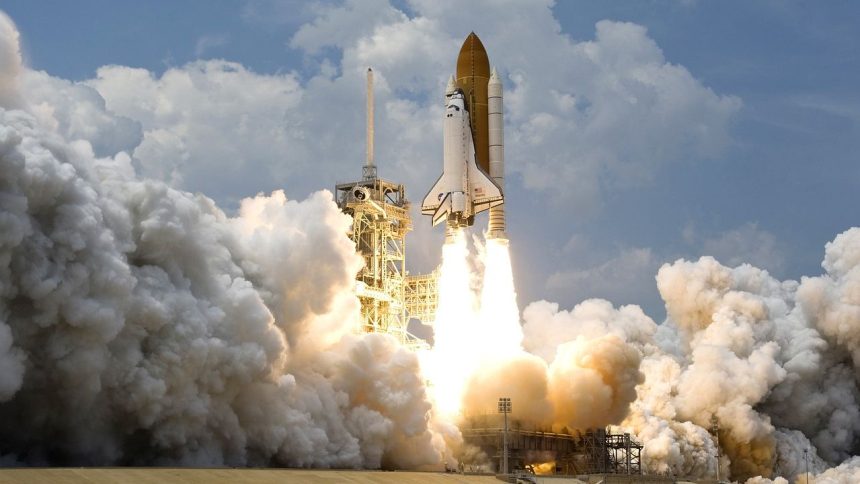
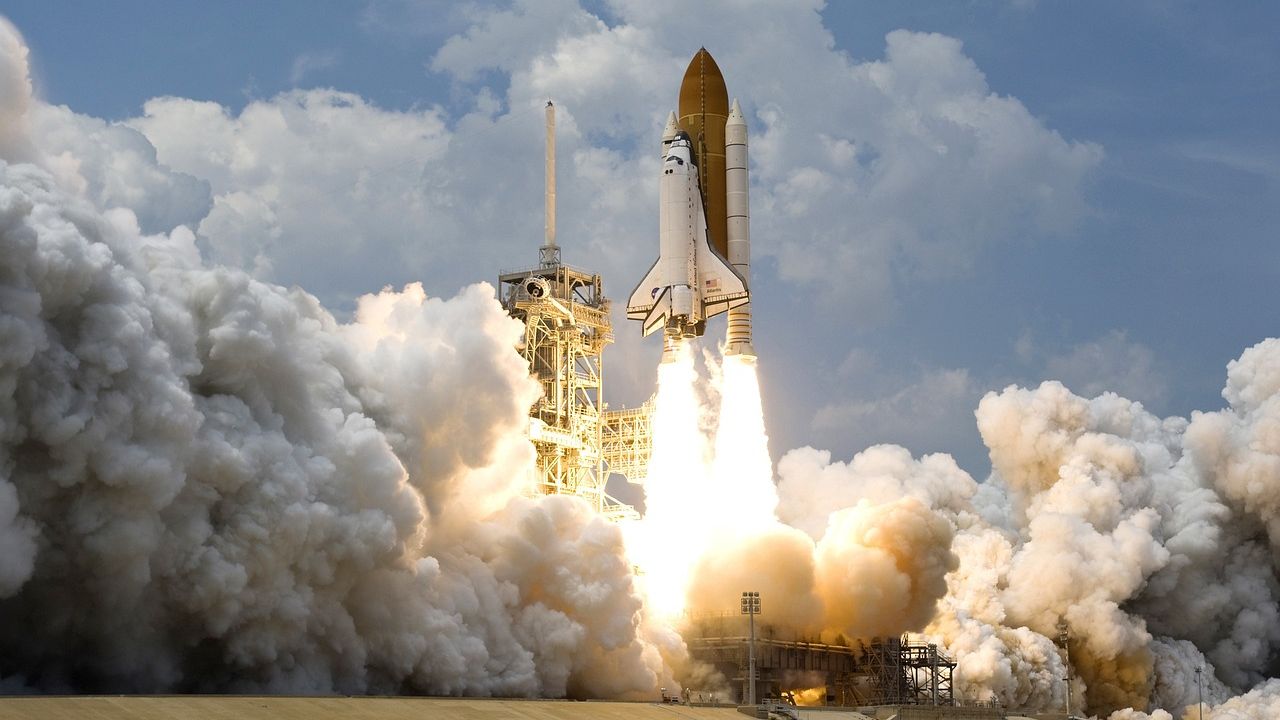
A 900-Mile Barge Journey Culminates (Image Credits: Pixabay)
Kennedy Space Center, Florida — NASA marked a pivotal step in its Artemis program as the core stage for the Artemis III mission arrived here on April 27, 2026.[1][2] Technicians offloaded the massive hardware from the Pegasus barge the following day, positioning it for integration inside the Vehicle Assembly Building. This development arrives on the heels of the successful Artemis II crewed lunar flyby, where astronauts Reid Wiseman, Victor Glover, Christina Koch, and Jeremy Hansen set a new distance record beyond low Earth orbit.[3][2]
A 900-Mile Barge Journey Culminates
The SLS core stage embarked on its voyage from NASA’s Michoud Assembly Facility in New Orleans on April 20, covering 900 miles along inland waterways.[1] Workers at Michoud, led by Boeing, completed the top four-fifths of the structure, encompassing the liquid hydrogen tank, liquid oxygen tank, intertank, and forward skirt. This segment alone represents a feat of precision engineering, built to withstand the rigors of spaceflight.
Upon docking at Kennedy’s Turn Basin, teams wasted no time. On April 28, they maneuvered the component into the Vehicle Assembly Building for the first core stage assembly ever conducted at this site.[2] Previously, such work occurred elsewhere, but shifting operations to Kennedy streamlines processing for future missions. Lori Glaze, acting associate administrator for NASA’s Exploration Systems Development Mission Directorate, highlighted the moment during rollout: “Seeing this SLS rocket hardware roll out is a powerful reminder of our progress toward returning humans to the lunar surface. This is the backbone of Artemis III.”[4]
Integration and Power in the Vehicle Assembly Building
Inside High Bay 2 of the VAB, the core stage now awaits connection to its engine section and boat-tail, which arrived in August 2025.[1] Once mated, the full 212-foot-tall stage will house more than 733,000 gallons of super-chilled liquid propellant to feed four RS-25 engines.[4] These engines, supplied by L3Harris Technologies, will fire for over eight minutes during ascent, generating more than 2 million pounds of thrust each.
Meanwhile, solid rocket booster segments began arriving earlier this month. The first shipment from Northrop Grumman in Utah reached Kennedy on April 13, with more expected this summer.[2] Technicians inspect and prepare these in the Rotation, Processing and Surge Facility before stacking them into 17-story boosters. Together with the core stage, the boosters will produce 8.8 million pounds of liftoff thrust, more than 75 percent from the solids alone.
Partner offer
What Matters Now: This influx of hardware keeps Artemis III on track for a late 2027 launch, despite past delays in lander development.[3]
Artemis III: Proving Rendezvous for Lunar Landings
The mission will loft a crew in the Orion spacecraft from Pad 39B to demonstrate rendezvous and docking with commercial human landing systems in Earth orbit.[5] NASA plans to test one or both landers from SpaceX’s Starship and Blue Origin’s Blue Moon, capabilities essential for Artemis IV’s crewed lunar touchdown in 2028. Unlike earlier flights, Artemis III stays in orbit, focusing on these critical interfaces without a lunar landing.
Orion preparations advance in parallel. All 186 Avcoat blocks for its upgraded heat shield are installed and tested, while the service module underwent thermal cycling and solar array checks. Crew-service module integration with the launch abort system follows later this year.[2] These steps build confidence for the high-stakes orbital demonstration.
Momentum from Artemis II’s Historic Flight
Artemis II launched on April 1, 2026, carrying its four astronauts around the Moon before splashing down off San Diego on April 10.[3] The crew traveled 252,760 miles from Earth, the farthest humans have ventured since Apollo 17 in 1972. Now, the Orion capsule resides at Kennedy’s Multi-Payload Processing Facility for de-servicing, yielding data on heat shield performance and avionics that directly informs Artemis III.
Post-flight analysis already shapes procedures for upcoming missions. Engineers remove payloads, avionics for reuse, and the heat shield for inspection, ensuring iterative improvements. This rapid turnaround underscores NASA’s cadence for sustainable lunar exploration.
As the core stage settles into its new home, it symbolizes steady progress amid the Artemis program’s complexities. With hardware stacking underway and lessons from Artemis II in hand, NASA edges closer to routine deep-space operations, laying groundwork for Moon bases and eventual Mars voyages.
Partner offer
Planning a trip to Vegas?
Compare hotel rates and show tickets on VEGAS.com.