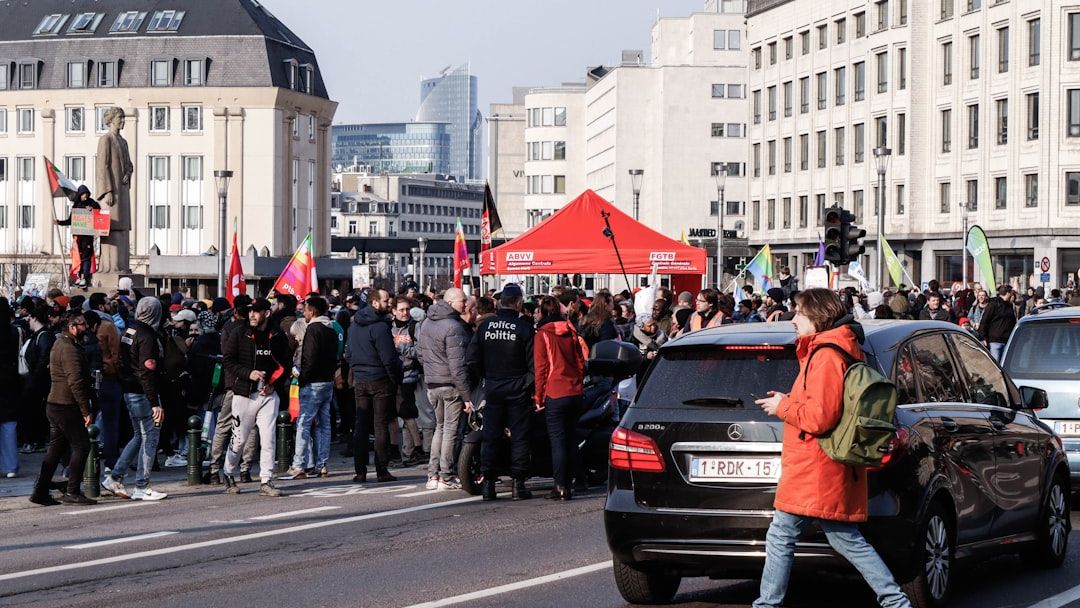
Alternative shows counter Eurovision amid protests over Israel’s participation – Image for illustrative purposes only (Image credits: Unsplash)
Brussels hosted one of several alternative concerts this week as anger over Israel’s role in the Eurovision Song Contest continued to build. Palestinian songwriter Bashar Murad opened the event with a bilingual rendition of Nina Simone’s “I Wish I Knew How It Would Feel to Be Free,” drawing sustained applause from the crowd. The performance formed part of a wider effort to create space for voices excluded from the main competition in Vienna.
Boycotts Signal Growing European Divide
Five countries have withdrawn from this year’s contest, citing Israel’s military operations in Gaza and other regions. Spain, Ireland, the Netherlands, Slovenia and Iceland all opted out, leaving performers from 35 nations to compete. The European Broadcasting Union, which organizes the event, rejected calls to exclude Israel despite earlier precedent with Russia in 2022.
Public pressure has mounted through street demonstrations and political statements across the continent. Organizers of the Brussels concert described the boycotts as a direct response to what they see as inconsistent application of the contest’s values. Israel’s participation has drawn particular scrutiny because the country has won the competition four times since joining in 1973.
Performers Offer Alternative Platform
Musicians from across Europe joined Palestinian artists at the Brussels gathering to highlight the humanitarian situation in Gaza. Katrien De Ruysscher of the activist group SOS Gaza said the events exist because Israel’s presence makes the official contest untenable for many. Similar programs are underway in Austria, Germany, Slovenia, Italy and Spain.
Partner offer
Spanish public television, which has broadcast Eurovision in previous years, will instead air its own program on Saturday evening. Titled “La Casa de la Música,” the broadcast will feature 20 Spanish musicians and mark the broadcaster’s 70th anniversary. None of the alternative events expect to match the 166 million viewers who watched last year’s contest.
Calls for Reform Meet Institutional Resistance
Amnesty International secretary general Agnès Callamard argued that Eurovision should apply the same standards it used against Russia. “Songs and sequins must not be allowed to drown out or distract from Israel’s atrocities or Palestinian suffering,” she said. The broadcasting union responded by tightening voting rules after allegations of irregularities in recent contests, yet it kept Israel in the lineup.
Israeli President Isaac Herzog welcomed the decision, stating that the country deserves representation on international stages. Many Israelis have expressed frustration at what they view as unfair targeting amid the broader protests.
Hope for a Return to Original Purpose
Murad, whose parents once petitioned for Palestinian inclusion in the contest, said the alternative events aim to remind organizers of Eurovision’s founding ideals. “The purpose of these alternative programs that are happening is to remind Eurovision what it’s actually about,” he said. He expressed hope that the parallel shows could encourage reflection on the competition’s claim to unite people through music.
Whether these smaller gatherings can influence the larger event remains uncertain. For now, they provide a visible counterpoint to the official proceedings in Vienna and underscore the deep divisions the contest has exposed this year.
Partner offer
Planning a trip to Vegas?
Compare hotel rates and show tickets on VEGAS.com.