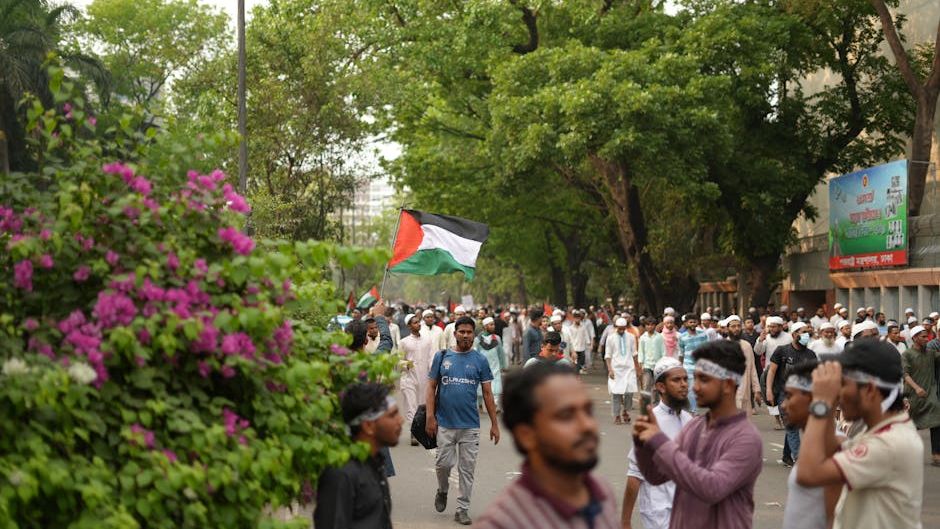
Envoy says stalled Gaza ceasefire has failed to meet expectations of Israelis and Palestinians – Image for illustrative purposes only (Image credits: Pexels)
Jerusalem – Seven months after Israel and Hamas reached a U.S.-brokered ceasefire, the agreement has delivered little of what either side was promised. Nickolay Mladenov, the high representative for the International Board of Peace, said Tuesday that the door to Gaza’s future remains closed. The truce was meant to bring disarmament of militant groups, Israeli troop withdrawals, and large-scale reconstruction after more than two years of war. Instead, mutual accusations of violations have persisted, aid flows have fallen short, and fears of renewed fighting have grown.
Core Elements of the Truce Have Not Advanced
The phased ceasefire envisioned Hamas handing over its weapons and Israel pulling back its forces from the enclave. Reconstruction of the heavily damaged coastal strip was also supposed to begin in earnest. None of those steps have taken meaningful shape since the truce took hold last October. Mladenov noted that the lack of movement has left Palestinians without the recovery they were assured and has failed to provide Israelis with the lasting security they seek.
Efforts to advance the deal have been limited to diplomatic visits and statements rather than concrete actions on the ground. The International Board of Peace, established under the Trump administration to oversee post-war planning, has convened regularly but produced few visible results. Hamas continues to maintain control over large parts of the territory, while Israeli forces have conducted limited operations in recent days.
Mutual Accusations and Limited Aid Flows
Both sides have traded claims of breaches throughout the seven-month period. Aid organizations report that Israel has restricted the volume of humanitarian supplies entering Gaza below the levels outlined in the agreement. At the same time, Hamas has not disarmed and remains an active governing force in roughly half the strip.
These developments have created a fragile status quo that satisfies neither party. Palestinians have seen only modest improvements in daily life, while Israeli officials have expressed ongoing concern about militant capabilities. The result is a ceasefire that exists more on paper than in practice.
Envoy Delivers Blunt Assessment in Jerusalem
Mladenov, a veteran U.N. diplomat and former Bulgarian government minister, addressed the situation directly during his visit to the city. “Seven months since the ceasefire, the door to the future of Gaza is still closed,” he said. “It is not what the Palestinians were promised and it is not what they deserve. And it is not giving Israel the security to move forward, as the Israeli people also want.”
His remarks came as the board continues to push for implementation of the original deal. Mladenov’s role places him at the center of efforts to bridge the gap between the two sides, yet the absence of progress has left the envoy describing a situation that falls well short of expectations on both sides of the conflict.
Human Toll and Renewed Concerns Over Escalation
The war that preceded the ceasefire began with Hamas-led attacks on October 7, 2023, that killed about 1,200 people in Israel and took 251 hostages. Israel’s subsequent military campaign has killed more than 72,724 Palestinians, according to the Gaza Health Ministry, which does not distinguish between civilians and fighters but reports that roughly half the dead were women and children. U.N. agencies and independent experts generally regard the ministry’s figures as reliable.
Recent Israeli strikes inside Gaza have heightened fears among residents that full-scale fighting could resume. Aid groups continue to document shortages of food, medicine, and building materials, underscoring how little has changed for civilians since the truce began. The combination of stalled diplomacy and fresh military activity has left many wondering how long the current calm can last.
Path Forward Remains Unclear
With the ceasefire now well into its eighth month, the gap between the original vision and current reality continues to widen. The International Board of Peace has yet to produce a workable timetable for disarmament or reconstruction. Both Israeli and Palestinian populations have expressed frustration that the agreement has not delivered the stability or recovery they were told to expect.
Diplomatic efforts are ongoing, but the absence of concrete steps has left the situation in a holding pattern. Mladenov’s assessment makes clear that without renewed momentum on the core provisions of the deal, the prospects for lasting calm remain distant.