History has a strange habit of producing people whose real lives are so improbable that no editor would accept them in a manuscript. Wars survived by farmers turned ghost soldiers. Pirate queens who commanded fleets that dwarfed entire navies. Inventors who died broke after rewiring civilization. The six figures below didn’t just live interesting lives – they lived lives that belong in the kind of stories people stay up all night reading. Every fact here is verified and documented.
Nikola Tesla: The Genius Who Died Alone After Lighting the World
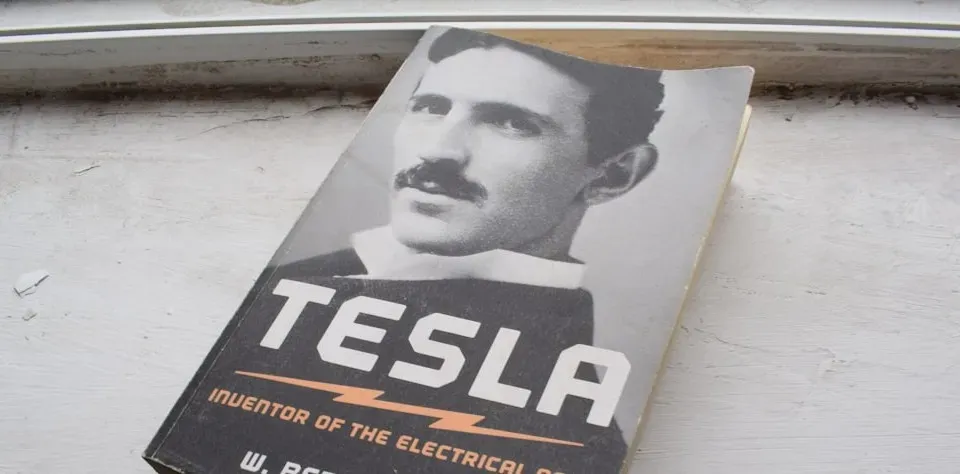
Tesla was born “at the stroke of midnight” with lightning striking during a summer storm, and when the midwife remarked he would be “a child of the storm,” his mother famously replied, “No, of light.” That origin story almost feels too on-the-nose for a man who would go on to transform electricity itself. The puzzle of alternating current came to him in dramatic fashion in February 1882 – while walking with a friend at sunset, reciting poetry by Goethe, a spasm of revelation struck Tesla, and he stood transfixed, explaining how an AC motor would work. His college years were no less turbulent: Tesla worked furiously, from 3am until 11pm every day, but his exuberance led to burnout in his second year, and he became addicted to gambling, playing cards for 48 hours in a single stretch – eventually losing his scholarship altogether.
At one point, Edison told Tesla he would pay $50,000 for an improved design for his DC dynamos. After months of experimentation, Tesla presented a solution and asked for the money. Edison demurred, saying, “Tesla, you don’t understand our American humor.” Tesla quit soon after. Together with Westinghouse, they championed AC power against Edison’s direct current in the “War of Currents,” which reached its dramatic peak at the 1893 World’s Columbian Exposition in Chicago, where Tesla’s system lit the fairgrounds in a blaze of electric light – a spectacle that convinced the public, secured the future of AC, and laid the foundation for the electrical grid that still powers our lives. Having spent most of his money, Tesla lived in a series of New York hotels, leaving behind unpaid bills, and he died in New York City in January 1943.
Grigori Rasputin: The Man Who Simply Would Not Die

In the decade prior to his death, Rasputin had risen rapidly through Russian society, transforming himself from an obscure Siberian peasant into one of the most prominent figures in the czar’s inner circle. He was born in 1869 in the village of Pokrovskoye, on the Tura River that flows eastward from the Ural Mountains, where Europe meets Asia in Siberia. His hold on the Romanov family came through the Tsarina’s hemophilic son Alexei, whose recovery from a near-fatal episode was described by one attending physician as “wholly inexplicable from a medical point of view.” On 12 July 1914, a 33-year-old peasant woman named Khioniya Guseva attempted to assassinate Rasputin by stabbing him in the stomach outside his home – Rasputin was seriously wounded, and for a time it was not clear if he would survive.
A group of Russian nobles conspired to kill Rasputin on December 30, 1916, in the basement of the Moika Palace, the St. Petersburg residence of Prince Felix Yusupov. The would-be killers first gave Rasputin food and wine laced with cyanide; when he seemed unaffected, they shot him at close range and left him for dead. In spite of these murderous measures, Rasputin revived, made an attempt to flee the palace grounds, and was intercepted, shot again, and beaten. They then bound Rasputin – who was remarkably still alive – and threw him into the freezing Neva River. His battered body was found several days later, and it was reported that there was water in his lungs, indicating he finally died by drowning. Autopsy reports, however, show that no poison was actually found in Rasputin’s system.
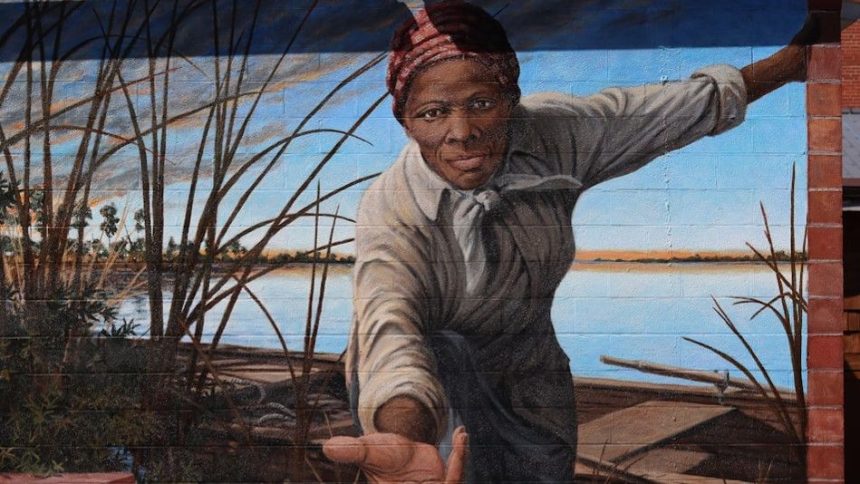
Harriet Tubman: The Conductor Who Never Lost a Passenger

Born into slavery in Dorchester County, Maryland, Tubman was beaten and whipped by enslavers as a child. Early in life, she suffered a traumatic head wound when an irate overseer threw a heavy metal weight – intending to hit another slave – but hit her instead. The injury caused dizziness, pain, and spells of hypersomnia, which occurred throughout her life. Despite carrying these permanent neurological injuries, she refused to let them define her boundaries. The 1850 Fugitive Slave Act passed by Congress created a more dangerous journey for any enslaved person traveling northbound, and with the government now compelling northern law enforcement to capture free Black Americans, Tubman’s strategies as a conductor became more militant and she began carrying a firearm for protection.
After escaping slavery, Tubman made some 13 missions to rescue approximately 70 enslaved people, including her family and friends, using the network of antislavery activists and safe houses known collectively as the Underground Railroad. During the American Civil War, she also served as an armed scout and spy for the Union Army. On Veteran’s Day 2024, Tubman was posthumously awarded the rank of one-star brigadier general in the Maryland National Guard in recognition of her military service during the American Civil War. She famously said of her years as a conductor that she never ran her train off the track and never lost a passenger – a claim that, given the stakes involved, remains one of the most extraordinary in American history.
Ching Shih: The Pirate Queen Who Defeated Empires
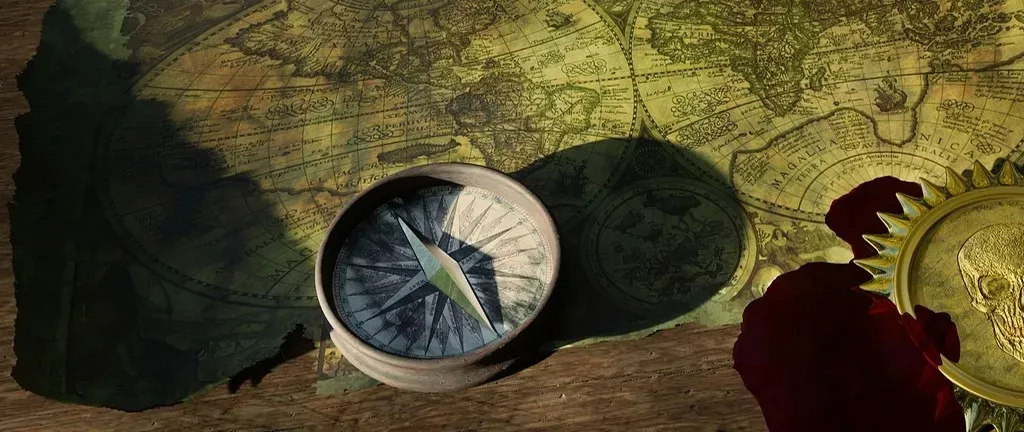
The fearsome female pirate Ching Shih lived and pillaged during China’s Qing Dynasty and is considered to have been the most successful pirate in history. Born into poverty before becoming a sex worker, she was plucked out of relative obscurity by Cheng I, a notorious pirate who operated in the South China Sea. As head of the Red Flag Fleet, she commanded over 1,800 pirate ships and an estimated 80,000 pirates. In comparison, Blackbeard commanded four ships and 300 pirates within the same century. Ching Shih’s husband died in 1807 at the age of 42, possibly from a tsunami or because he was murdered in Vietnam – either way, this left her leadership in a perilous position. Using her business savvy and her husband’s connections, Ching Shih managed to temper warring, power-hungry captains from other ships.
Her ships engaged in conflict with several major powers, including the British, the Portuguese, and the Great Qing regime. In 1810, Ching Shih negotiated a surrender to Qing authorities that allowed her and her partner to retain 24 ships and over 1,400 pirates, and to avoid prosecution. She enforced a strict code of conduct among her fleet, with execution as the penalty for rape, desertion, and theft from the communal treasury. Unlike fellow pirates Anne Bonny and Mary Read, whose captures resulted in a death sentence, Ching Shih received amnesty and could return to civilian life without ceding any of her wealth. She went on to marry a former underling, and together they returned to Guangdong province, where Ching Shih opened and operated a gambling house until her death in 1844.
Simo Häyhä: The Ghost in the Snow
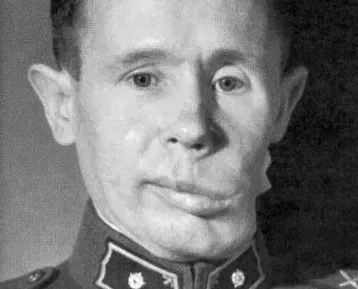
Simo Häyhä was born on 17 December 1905 in the Kiiskinen hamlet of the Rautjärvi municipality in southern Finland. He was the seventh of eight children in a Lutheran family of farmers. Nobody could have predicted what this quiet farmhand would become during a single brutal winter. Simo Häyhä killed more enemy combatants than any sniper in recorded military history, achieving over 500 confirmed kills in less than 100 days of combat, in temperatures that plunged to 40 degrees below zero. The 34-year-old Finnish farmer accomplished what no sniper before or since has matched, using methods so effective that the Red Army launched artillery barrages on entire forest sections just hoping to eliminate him.
Häyhä didn’t use a scope because it could reflect sunlight and give away his concealed position, and he didn’t employ a spotter – a fellow combatant that most snipers use to help track and identify targets. On top of his white camouflage, he would build up snowdrifts around his position to further obscure himself. The snowbanks also served as padding for his rifle and prevented the force of his gunshots from stirring up a puff of snow that an enemy could use to locate him. As he lay on the ground in wait, he would hold snow in his mouth to stop his steamy breaths from betraying his position. An explosive bullet fired by a Soviet soldier struck Häyhä in the lower left jaw, tearing away half his face. He slipped into a coma, remained unconscious for seven days, and when he finally woke on March 13, 1940, Finland and the Soviet Union had already signed the Moscow Peace Treaty – the war was over.
Nikola Tesla’s War of Currents: An Industry’s Most Dramatic Rivalry

The public battle between Tesla and Thomas Edison wasn’t just a scientific disagreement – it was a full-scale propaganda war fought in newspaper columns, public demonstrations, and eventually at the gates of the world’s most watched events. The Westinghouse installation using Tesla’s technologies was “outshining” Edison’s lighting efforts, and Tesla supplied a spectacular personal rebuttal to Edison’s claim that AC current was by nature too dangerous for everyday use. Since Tesla’s first introduction of AC electricity, the “War of Electric Currents” had been waged, with Edison insisting on the safety of DC current over AC. Edison even organized public electrocutions of animals to demonstrate the supposed danger of alternating current – a campaign that ultimately failed.
After an unsuccessful attempt to start his own Tesla Electric Light Company and a stint digging ditches for $2 a day, Tesla found backers to support his research into alternating current. In 1887 and 1888 he was granted more than 30 patents for his inventions and invited to address the American Institute of Electrical Engineers on his work. Tesla died in his room on January 7, 1943. Later that year the U.S. Supreme Court voided four of Marconi’s key patents, belatedly acknowledging Tesla’s innovations in radio. The AC system he championed and improved remains the global standard for power transmission. He had surrendered his royalty rights to save Westinghouse from financial ruin, a decision that left him penniless – yet the entire modern world runs on the system he built.