
Television credits can be confusing. Viewers often see a director’s name at the start of an episode and assume that person is in charge of the whole show. In most scripted series, though, the person with the final say over the season is the showrunner, who is usually a writer-producer.
The two jobs overlap, and some people hold both. Still, they involve different responsibilities, different timelines and different kinds of authority. Here are the main differences, section by section.
Who Holds the Overall Vision

The showrunner is generally described as the top creative and managerial leader of a television series. The Writers Guild of America West describes the role as the person with ultimate responsibility for a show’s creative direction and day-to-day operation, and that person is usually the head writer and executive producer. In practice, the showrunner decides what the series is about, how its story unfolds across a season and what tone it keeps.
A director, by contrast, usually shapes how a particular episode looks and feels on screen. That work is real and skilled, but it sits inside the framework the showrunner has already set. This is why TV is often called a writer’s medium, while film is more often described as a director’s medium.
Writing Versus Staging

Showrunners almost always come up through the writers’ room. They lead the team that breaks story, outlines episodes and develops character arcs. Many also personally rewrite scripts to keep the voice consistent from episode to episode.
Directors typically start from a finished script and translate it into images, performances and pacing. They plan shots, work with actors on the set and guide the way a scene is staged. They usually don’t rewrite the story on their own, because changes generally go through the showrunner’s office.
Season-Long Role Versus Episode-Long Role

A showrunner’s involvement usually spans the whole production cycle, from development and writing through shooting, editing and delivery. That can mean many months of continuous work on a single series. The job doesn’t really end when filming wraps, since post-production continues.
Directors on a typical series are often hired for individual episodes, working for a limited stretch of prep, shooting and a short editing window. Some series do use one director for several episodes, or even a full season, particularly limited series. Even then, the director is working within the showrunner’s overall plan, unless that person is also the creator or showrunner.
Managing People, Budgets and Studios

Showrunners act as the bridge between the creative team and the business side. They deal with the studio and the network or streaming service, and they help manage budgets and schedules. They also oversee hiring decisions across writers, producers and key departments, which makes the job part creative leader and part executive.
Directors manage people too, but mostly on the set. They lead actors and the camera, lighting and other crews during the shoot. Their responsibility to the production is real, yet they usually don’t control the season’s budget or the studio relationship in the same way.
Partner offer
Who Has the Final Word

In television, the showrunner typically has the last creative word. A guest director may offer ideas, but the showrunner approves scripts, casting choices and, in many cases, the final cut. That structure helps a show feel like one coherent series even when many different directors work on it.
Film is different. The director usually carries more final creative control, though studios and producers still have major influence. This difference in power is one of the clearest ways to separate the two professions.
Post-Production and the Final Cut

After filming, the director commonly delivers a director’s cut of the episode. The Directors Guild of America has long negotiated protections that give directors a period to prepare their cut before the producers take over. After that, the showrunner usually steers the edit to the finish.
That means the version viewers see is often shaped as much by the showrunner as by the credited director. Music, visual effects and final adjustments are typically reviewed at the showrunner level, to keep the series consistent.
When One Person Does Both
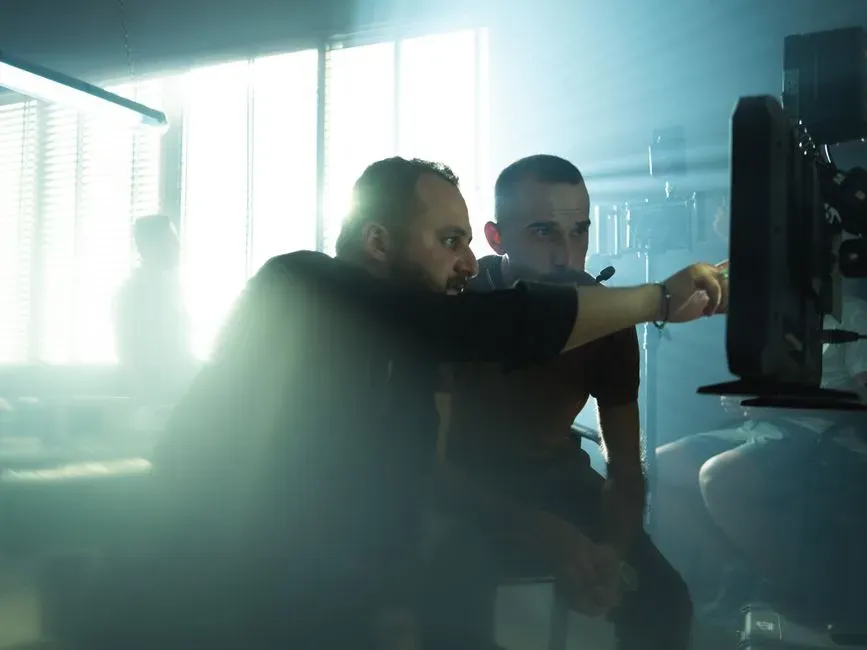
Some people hold both jobs. A creator might write a series, serve as showrunner and direct several episodes, especially the pilot, which often sets the visual template for the series. Doing both is demanding, but it can give a series an especially unified style.
Even then, the two jobs remain distinct. One person is making decisions about the season’s story and operation, while the same person, in another moment, is making decisions about lenses, blocking and performances. Credits reflect that split, since showrunner is a working role rather than an official credit, and the person is usually credited as executive producer.
Different Career Paths and Guilds

Careers tend to diverge too. Showrunners usually rise through writing ranks, such as staff writer, story editor and co-executive producer, and they are generally members of the Writers Guild. Directors may come from film school, camera work, acting or assistant director jobs, and they belong to the Directors Guild of America.
Their contracts and protections come from different unions, which reflects how separate the crafts are. Understanding that split helps explain why a series can have a dozen directors across a season but typically only one showrunner at its center.
Conclusion

The simplest way to remember the difference is that the showrunner runs the series, while the director leads the shoot of an episode. One carries the long view of the story and the operation, and the other brings a specific hour of television to life on screen.
Next time you watch an episode, check the credits for the writer and executive producer names. They’ll often point you to the person who really set the show’s direction.
Partner offer
Planning a trip to Vegas?
Compare hotel rates and show tickets on VEGAS.com.