
By the time a camera rolls on the first day of a TV shoot, a great deal of the show already exists on paper. Writers have usually spent months arguing over character arcs, cutting storylines, and deciding which questions the audience gets answered. The work is less glamorous than it sounds, and much of it happens in a windowless room with a whiteboard.
How much gets planned depends on the network, the budget, and the kind of show. A streaming drama with eight episodes works differently from a broadcast comedy ordering twenty-two. Still, most seasons follow a surprisingly similar path before production starts.
Starting With the Big Idea and the Season Question

Most writers begin with a central question the season will explore, not with a list of plot events. It might be whether a family can survive a secret, or whether a detective can trust a new partner. That question gives every later decision something to measure against.
The showrunner usually owns this vision. In American television, the showrunner is the head writer and executive producer who guides both the scripts and the production, so the season’s direction often comes down to one person’s judgment.
Building the Writers’ Room

The writers’ room is where much of the planning happens. A typical room includes a showrunner, writers at different seniority levels, and a writers’ assistant who records what gets decided. The structure is hierarchical, though good rooms tend to invite ideas from everyone at the table.
Room size and length have become a live issue. The 2023 Writers Guild of America strike ended with an agreement that set minimum staffing and duration requirements for rooms on certain series, aiming to stop the shrinking of rooms that had become common in the streaming era. The agreement, which runs through spring 2026, was a direct response to writers working in smaller groups for shorter periods.
Mapping Character Arcs First

Many rooms plan people before plot. They ask where each major character starts the season, what they want, and where they should end up. Plot events then become the pressure that forces those changes.
This approach helps avoid episodes that feel interchangeable. If a character needs to go from guarded to vulnerable by the finale, writers can place small steps along the way, rather than rushing the change in the last hour.
Breaking the Season Into Episodes
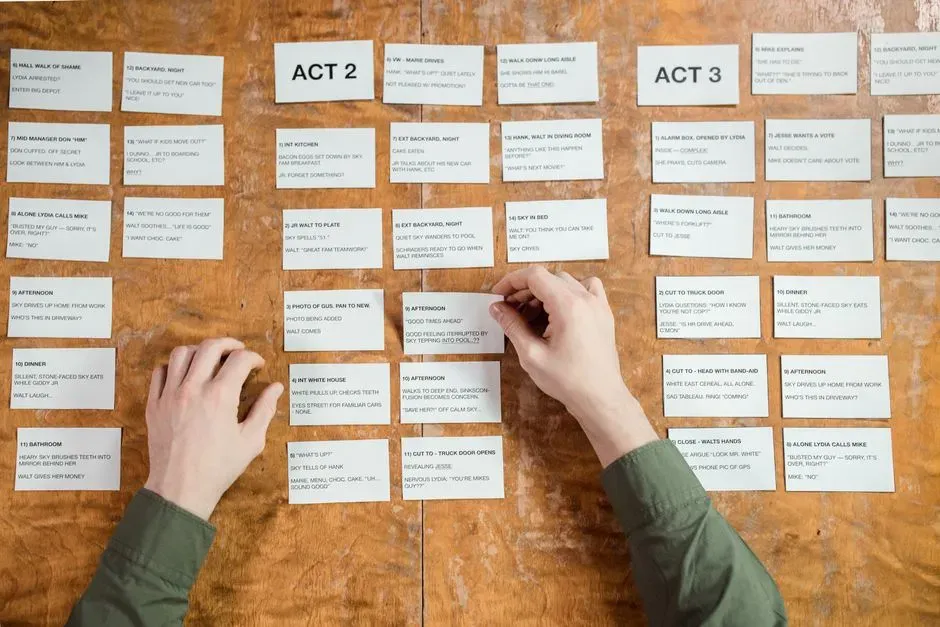
Once the arcs are clear, the room divides the season into episodes. Writers often pin index cards or sticky notes to a board, one per scene or beat, and move them around until the rhythm feels right. Premieres and finales get special attention, since they carry the heaviest narrative load.
Episode count shapes this step a lot. Streaming seasons often run shorter than the traditional broadcast order, and shorter orders tend to leave less room for standalone stories. Writers on a compact season usually plan it almost like a long film.
Partner offer
Deciding How Much to Plot in Advance

Not every show plans to the same depth. Some writers outline the whole season, including the ending, before anyone writes a script. Others map only a few episodes ahead and leave space to adapt as the story develops.
Each method has trade-offs. A fully mapped season supports planted clues and satisfying payoffs, which matters for mysteries. A looser plan allows the writers to respond to what is working, including standout performances, though it risks loose threads.
Turning Outlines Into Scripts

After the outline is approved, individual episodes are assigned to writers or small teams. A writer typically drafts a detailed episode outline for the showrunner and the network or studio to review, then moves to a first draft. Notes come back, and revisions follow.
The showrunner often does a final pass to keep the voice consistent across episodes. That polish matters because several people may have written the season, yet the audience should feel it belongs to one show.
Working With Networks, Studios, and Budgets

Creative plans must meet financial reality. Producers break scripts down to estimate costs for locations, effects, stunts, and cast, and a scene that looks small on the page can be expensive to shoot. Writers are sometimes asked to rework a sequence to fit the budget.
Executives at the network or streaming service also weigh in at several stages, from the pitch to the final scripts. Their notes might concern pacing, tone, or audience fit. Good showrunners learn which notes to adopt and which to negotiate.
Coordinating With Directors, Designers, and Casting

Scripts do not stay in the writers’ room for long. Directors, production designers, costume teams, and casting directors read them to plan the look and the logistics of the shoot. Their questions can send writers back to the page when a location or prop proves impractical.
Production often shoots episodes out of order to use sets and actors efficiently, so a season needs to be mapped tightly enough that scenes cut together later. Writers and the script supervisor help track continuity so that details line up across episodes.
Leaving Room for Changes During Production

Even a carefully planned season shifts once filming starts. Actors may bring new ideas to a role, schedules can change, and weather or location problems can force rewrites. Many shows keep some writers on during production to handle these changes quickly.
That flexibility is part of the plan, not a failure of it. A season prepared in detail gives the team a firm base, and the later adjustments tend to be small ones that make the finished episodes stronger.
Partner offer
Planning a trip to Vegas?
Compare hotel rates and show tickets on VEGAS.com.