Radio has always had a curious relationship with meaning. A driving beat, a catchy hook, and a singable chorus are often enough to push a song into heavy rotation, regardless of what the lyrics are actually saying. Programmers are busy people, listeners are half-distracted, and the human brain has a remarkable talent for filtering out words it finds inconvenient.
The result is a long, quietly strange history of songs that dealt with gun violence, addiction, suicide, obsessive stalking, and emotional collapse – all while being treated as background music for grocery stores and morning commutes. These nine songs made it onto the radio and stayed there, sometimes for years, before anyone really stopped to listen.
1. “Pumped Up Kicks” – Foster the People

After being moved by the alarming rise of mental illness among teenagers, lyricist Mark Foster wanted to delve inside the head of an isolated youth who goes on a rampage at his school. The song’s whistled hook and bouncy indie-pop production made it one of the defining tracks of 2010, and it was everywhere. School dances, car commercials, summer playlists. Nobody seemed to notice the shooter in the chorus.
Radio stations quietly censored certain lyrics for airplay, which meant millions of people danced to a song about a gunman without ever registering what was being said. Growing up, members of Foster the People were exposed to youth gun violence – Cubbie Fink’s cousin survived the Columbine High School shooting in 1999. The dissonance between the sound and the subject remains genuinely unsettling once you hear it.
2. “Every Breath You Take” – The Police

It remains one of the most popular wedding songs ever recorded, which Sting has repeatedly noted with visible discomfort, because the track is about obsessive surveillance and control over an ex-partner, not romantic devotion. The song was written around the same time Sting divorced his wife of eight years, Frances Tomelty. In his own words, it is a “sinister” song about a dangerously obsessive man watching an ex-lover. He even credits George Orwell as an inspiration, as the possessive tone of the lyrics was inspired by Big Brother.
Sting felt disconcerted after finding out listeners enjoyed the song and thought it was a love song. The track really emphasizes control and jealousy. The protection implied by the melody is actually the claustrophobia of being watched. The song topped charts in multiple countries and is still played at weddings to this day, which is a cultural irony that has aged rather poorly.
3. “Semi-Charmed Life” – Third Eye Blind

It is perhaps one of the most universally misunderstood popular songs. It has been used in movie montages to denote a certain “good life” aesthetic, but the real meaning behind the lyrics is darker than the melody makes it seem. In reality, this is a song about a drug bender. Third Eye Blind lead singer Stephen Jenkins has said that the lyrics about drug use and addiction, particularly crystal meth, are meant to sound bouncy and light to reflect how a drug user feels while using “sort of a bright, shiny drug.”
Some radio stations found it controversial at the time and aired a version of the song that censored the mention of “crystal meth.” Most listeners, though, never caught the references at all. Jenkins threads references to unsafe encounters, grinding teeth, and the slow dissolution of meaningful relationships throughout verses that practically bounce with energy. The juxtaposition feels deliberate – addiction often starts with genuine euphoria before it turns predatory.
4. “Hey Ya!” – OutKast

When you really pay attention, the song is actually really sad. Its lyrics are about “the state of relationships today,” André 3000 previously explained in an interview with VH1. In fact, the whole song is about how love can be an illusion, highlighting that some people are simply sticking together out of fear of being alone. The track was released on August 25, 2003, and went on to become a huge success, reaching number one in a slew of countries including the United States, Australia, and Canada, as well as peaking at number three on the UK singles chart.
André 3000 didn’t write a dance anthem. He wrote a heartbreak disguised as a celebration. The song is the sound of someone smiling through emotional collapse. André once explained that the upbeat chorus was designed to distract listeners from the pain of the lyrics. He literally gave them something to dance to so they wouldn’t drown in the melancholy. Even the music video contained an open coffin on the stage, a detail most viewers missed entirely for years.
5. “Fire and Rain” – James Taylor

Released in August 1970 by Warner Bros. Records, “Fire and Rain” follows Taylor’s reaction to the suicide of Suzanne Schnerr, a childhood friend, and his experiences with drug addiction and fame. Taylor’s friend Suzanne Schnerr died by suicide while he was in England recording his first album. Taylor went six months after her passing before learning that she had died, because his family and friends decided he needed to concentrate on recording his album and didn’t want to distract him with the bad news.
Partner offer
The second part of the song details Taylor’s struggle to overcome drug addiction and depression. The third part deals with coming to grips with fame and fortune. In April 2011, the song was named at number 227 on Rolling Stone’s list of 500 greatest songs of all time. For most of its popularity, listeners assumed it was a gentle folk ballad about lost love – not a meditation on grief, heroin, and hospitalization written across multiple stints in psychiatric care.
6. “Born in the U.S.A.” – Bruce Springsteen
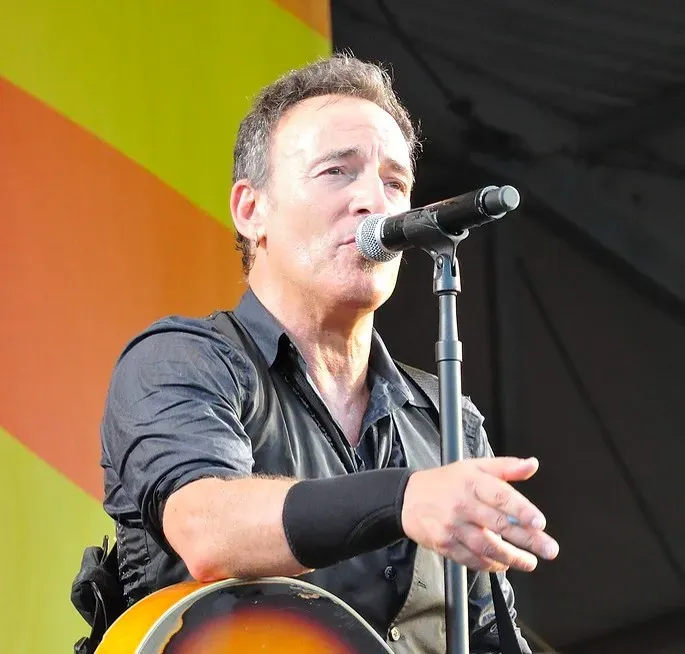
Bruce Springsteen’s anthem gets misappropriated at political rallies with stunning regularity, and it’s not hard to see why, if you’re not actually listening to the words. The bombastic chorus and driving beat sound like pure American pride distilled into four minutes of rock and roll. The verses, however, tell a different story entirely: a Vietnam veteran returns home to find his country has discarded him, his brother dead, his job prospects nonexistent, his place in society erased.
Most people thought it was a patriotic song about American pride, when it actually cast a shameful eye on how America treated its Vietnam veterans. With the rollicking rhythm, enthusiastic chorus, and patriotic album cover, it is easy to think this has more to do with American pride than Vietnam shame. The irony cuts deeper when politicians use it as a campaign song – they’re essentially soundtracking their rallies with a protest song about governmental neglect of veterans. Springsteen has addressed this misreading repeatedly, but the anthem version simply refuses to die.
7. “Angel” – Sarah McLachlan

These days, people often know Sarah McLachlan’s “Angel” because of ASPCA commercials. Before those became popular, people enjoyed the song because they thought it was about finding comfort and peace. However, its real message is much darker. The “arms of the angels” that McLachlan sings about are actually a reference to heroin and the false comfort that the drug can provide users. She was inspired to write the hit after reading an article about a member of the Smashing Pumpkins overdosing on heroin.
The song’s lush, cathedral-like production and McLachlan’s soft soprano voice made it feel like a lullaby or a hymn. Radio programmers heard something celestial and timeless. What they were actually broadcasting was a meditation on the seductive pull of addiction and the numbness it offers people in crisis. The song reached the top of the adult contemporary charts and became a ubiquitous comfort song – all while describing something far more specific and far more troubled.
8. “Total Eclipse of the Heart” – Bonnie Tyler

When songwriter Jim Steinman featured “Total Eclipse” in his Broadway musical Dance of the Vampires in 2002, he opened up about the song, stating: “With ‘Total Eclipse of the Heart,’ I was trying to come up with a love song and I remembered I actually wrote that to be a vampire love song. Its original title was ‘Vampires in Love’ because I was working on a musical of Nosferatu. If anyone listens to the lyrics, they’re really like vampire lines. It’s all about the darkness, the power of darkness and love’s place in dark.”
Originally penned for a vampiric Broadway musical, the track was formerly titled “Vampires in Love.” The lyrics center around life in eternal darkness and other standard vampire tropes. The power ballad became one of the biggest-selling singles of the 1980s and spent weeks at number one on both sides of the Atlantic. Most listeners heard a dramatic love song. Steinman had written something considerably stranger, and the production – all swirling strings and gothic grandeur – was designed to match that original, darker vision entirely.
9. “Crash Into Me” – Dave Matthews Band

The 1996 hit from the album Crash by Dave Matthews Band was described by the band’s lead singer as a song “about the worship of women,” and it has a dreamy musical feel to match. The song’s music video also featured light, ethereal visuals to fit the song. It turns out that the lyrics are told from the perspective of a Peeping Tom who’s worshiping a woman by watching her through her bedroom window.
The warm guitar work and Dave Matthews’ languid vocal style turned the track into a staple of adult alternative radio and late-night playlists throughout the late 1990s. It became a romantic touchstone for an entire generation of college students. The framing of the narrator as an uninvited voyeur hiding in the dark while watching someone undress was either missed entirely or quietly overlooked by the millions of listeners who made it one of the most streamed Dave Matthews Band songs to this day.
There’s something worth sitting with in all of this. Music moves faster than comprehension. A melody communicates mood in seconds, while a lyric needs someone to actually stop and listen before it lands. Radio programmers are largely in the mood business, which means that a song with a catastrophic subject and a danceable groove will almost always get a pass. These nine songs are proof of that – some of the darkest material of the past several decades, played cheerfully on morning radio, sung along to without a second thought.
Partner offer
Planning a trip to Vegas?
Compare hotel rates and show tickets on VEGAS.com.