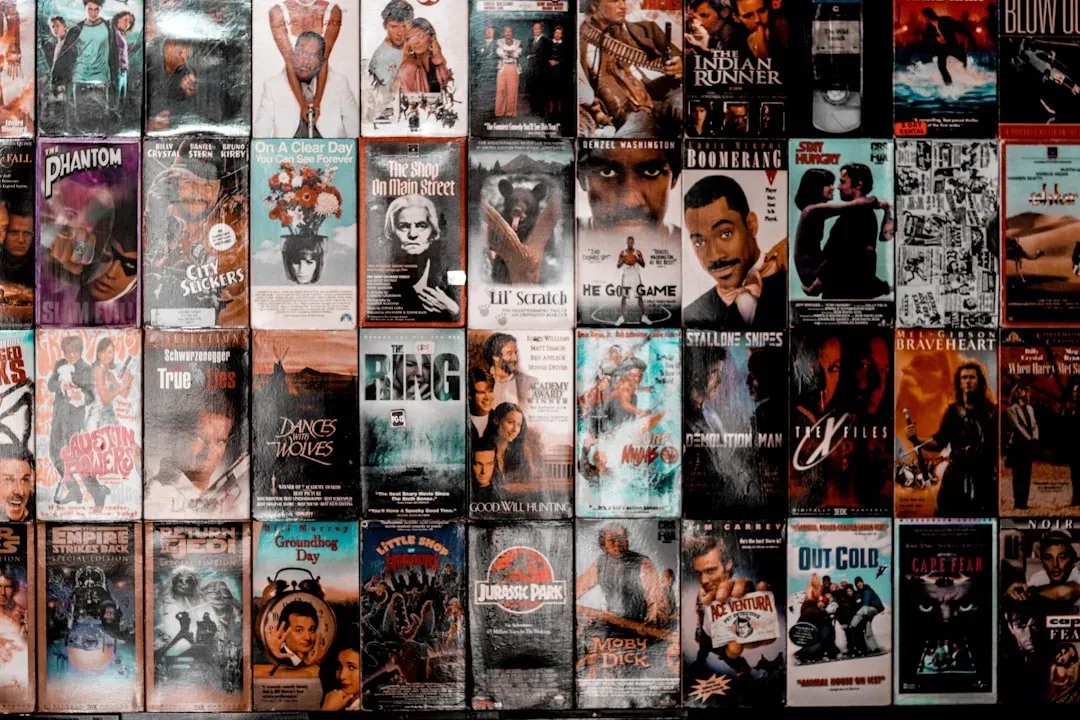
There was a particular kind of teenage bedroom in the 1990s. Tape marks on the wallpaper, a corkboard crowded with ticket stubs, and at least one glossy poster peeling slightly at the corners because nobody ever bought enough thumbtacks. The faces on those posters weren’t random. They were the actors who defined an entire decade of pop culture, the ones whose magazine covers got torn out and taped up right next to the movie promos.
If any of these six names ring a bell from your own wall space, you’re about to take a walk down memory lane. This isn’t just nostalgia for nostalgia’s sake, though. Looking back at how these actors built their fame says a lot about how Hollywood stardom actually worked before the internet changed everything.
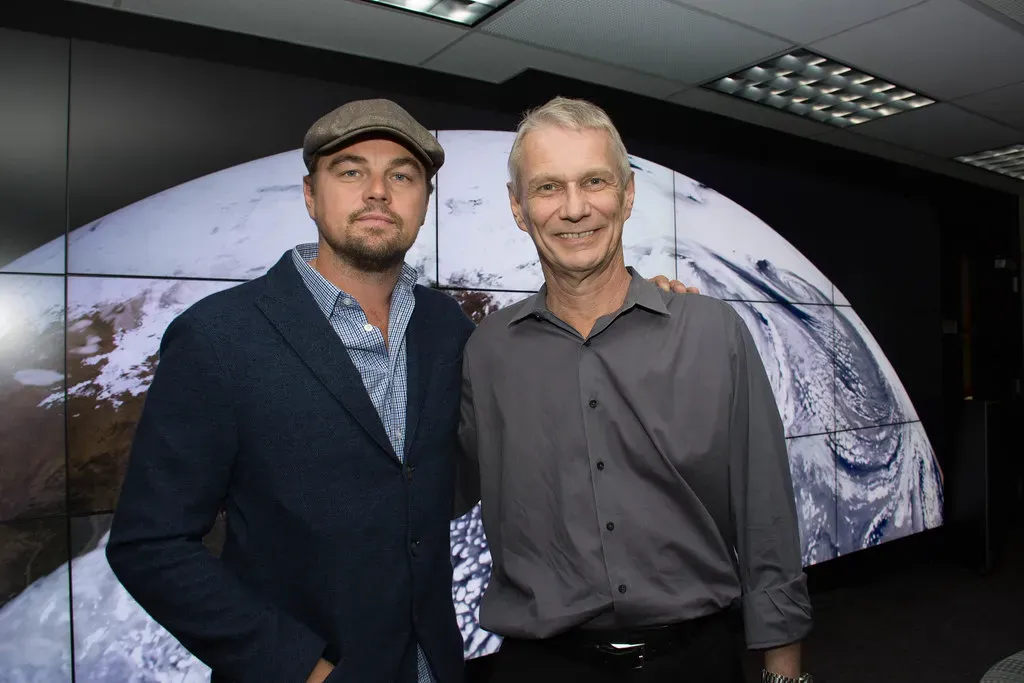
Leonardo DiCaprio (NASA Goddard Photo and Video, Flickr, CC BY 2.0)
Before the Oscars and the Scorsese collaborations, Leonardo DiCaprio was, for millions of teenage fans, simply Leo. His transformation from teen heartthrob in Titanic to prestigious adult actor is well documented, but it’s worth remembering just how total his poster-wall dominance was in the late ’90s. He reached the peak of stardom in the late 1990s, when he was the male lead in Titanic and Romeo + Juliet, appearing constantly on the covers of teen magazines.
What made him different from other pretty faces of the era wasn’t just the bone structure. Writers have pointed out that he was far from the only actor with cheekbones and floppy hair to land magazine covers, so his looks alone don’t explain the obsession. Something about the vulnerability he brought to those romantic roles gave young fans a version of male stardom that felt approachable rather than intimidating, and that combination turned him into arguably the most-postered actor of the decade.
Johnny Depp
Johnny Depp (Gage Skidmore, Flickr, CC BY-SA 2.0)
Johnny Depp’s poster appeal in the ’90s came from a strange place: he was famous for undermining his own pretty-boy image at every turn. After rising to prominence as a teen idol on 21 Jump Street, he spent the decade deliberately choosing roles that obscured his looks rather than showcased them, starting with the title role in Tim Burton’s Edward Scissorhands in 1990.
That film alone explains a lot of the poster sales. It grossed $56.3 million in North America and another $29.6 million overseas, becoming a genuine box office success on a $20 million budget. Depp followed it with a string of offbeat, arthouse-adjacent choices like What’s Eating Gilbert Grape, Ed Wood, and Donnie Brasco, and the fact that his fans kept buying his posters despite roles that actively avoided conventional leading-man appeal says a lot about how magnetic his screen presence actually was.
Brad Pitt
Brad Pitt (Image Credits: Rawpixel)
If your poster wall had a shirtless cowboy on it sometime around 1991 or 1992, there’s a good chance it was Brad Pitt. He first drew wide attention as the cowboy hitchhiker in Ridley Scott’s Thelma & Louise, and that brief, charged role has been cited as the moment that defined him as a sex symbol. It wasn’t a huge part, but audiences noticed, and Hollywood noticed too.
From there, Pitt built a run of leading roles that kept him plastered across bedroom walls for the rest of the decade: A River Runs Through It, Legends of the Fall, Interview with the Vampire, Seven, and Fight Club. His performance in Twelve Monkeys even earned him a Golden Globe and an Oscar nomination, proving that the poster-boy image came with real range underneath it. By the time Fight Club hit theaters in 1999, he’d fully shed the label of “just” a pretty face, even if that’s exactly how most fans first fell for him.
Will Smith
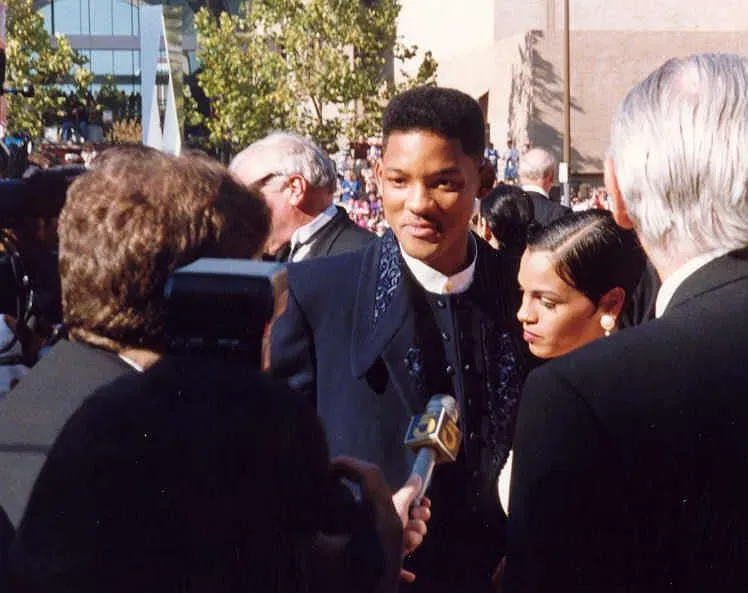
Will Smith (By Alan Light, CC BY 2.0)
Will Smith’s route to poster fame started on television, not film. He first became a household name playing a fictionalized version of himself on The Fresh Prince of Bel-Air, a sitcom that ran for 147 episodes across six seasons and made him instantly recognizable to an entire generation. That show alone would have earned him wall space in plenty of bedrooms.
Then came the movie career, and it exploded almost overnight. Independence Day grossed over $817 million worldwide and was the highest-grossing film of 1996, and Smith followed it a year later with Men in Black, which earned roughly $588 million globally and placed third for 1997 behind only Jurassic Park 2 and Titanic. Between the sitcom, the summer blockbusters, and a genuinely successful side career in hip-hop, Smith became one of the most bankable and most-postered faces of the entire decade.
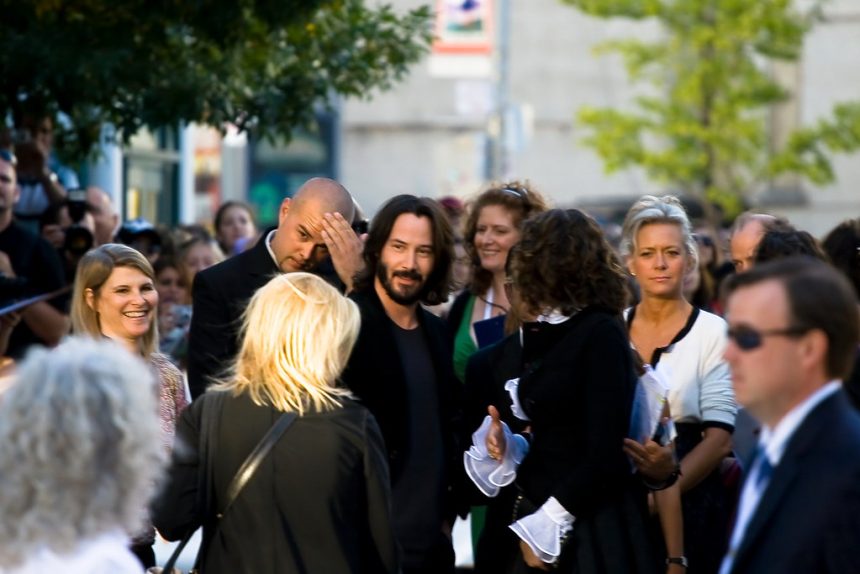
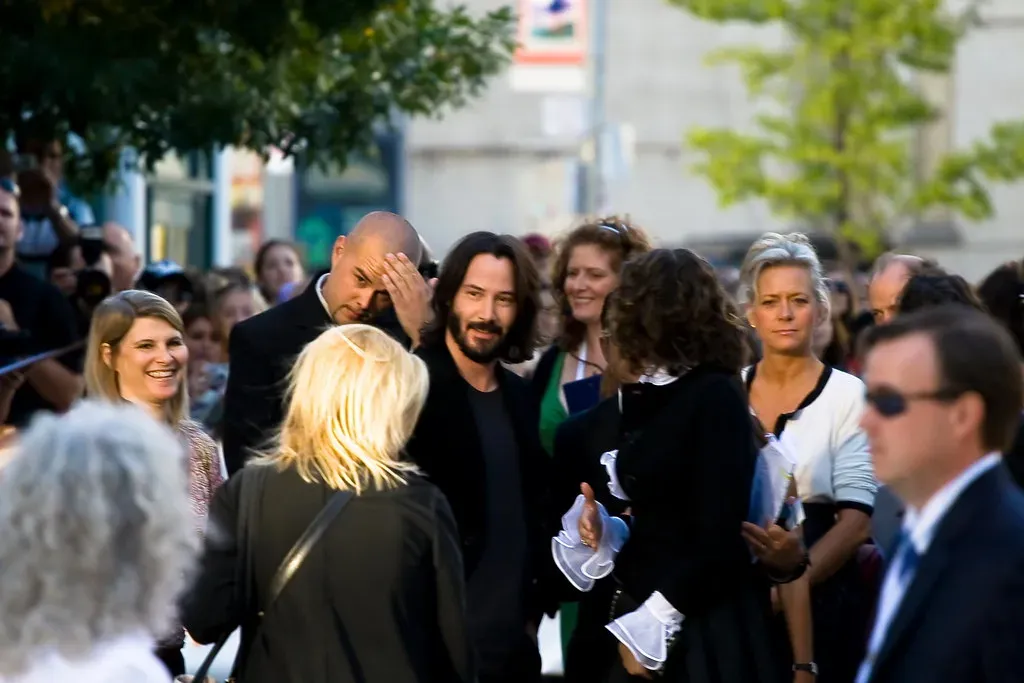
Keanu Reeves
Keanu Reeves (Josh Jensen, Flickr, CC BY-SA 2.0)
Keanu Reeves spent the ’90s bouncing between goofy comedy and genuinely thrilling action, and somehow made both work for his poster appeal. He’d already broken through playing the amiable slacker Ted in Bill & Ted’s Excellent Adventure, but it was 1991’s Point Break, opposite Patrick Swayze, that started building his action credentials with its skydiving sequences and surfer-gang bank robbers.
By 1994, Speed turned him into a full-fledged action star, and the film’s success kicked off a run where he alternated between smaller passion projects and big studio releases for the rest of the decade. Reeves capped it all off in 1999 with The Matrix, playing Neo in a film that reshaped both science fiction and action filmmaking for years afterward. Few actors managed to be both the dorky comic-relief guy and the stoic action hero on the same poster wall, but Reeves somehow pulled it off.
Tom Cruise
Tom Cruise (Image Credits: Unsplash)
By the time the ’90s rolled around, Tom Cruise had already built serious momentum from Top Gun and Risky Business in the previous decade, and he spent the new one cementing himself as the era’s biggest all-around movie star. Films like A Few Good Men and Jerry Maguire showed he could carry serious drama, while Mission: Impossible, launched in 1996, gave him a franchise built specifically around his willingness to perform increasingly dangerous stunts himself.
That commitment to physical, hands-on action work became part of his brand and part of what made his posters so appealing to a generation of fans. His reputation for performing his own stunts and pushing productions to their limits was already forming in the ’90s and only grew more pronounced in the decades since. For a lot of households, a Cruise poster wasn’t just about the face, it was about the sense that whatever was happening on screen, he was actually the one doing it.
A decade that shaped modern celebrity
A decade that shaped modern celebrity (Image Credits: Unsplash)
Looking back at these six names together, a pattern emerges. Each one became a poster fixture through a different combination of luck, talent, and calculated career choices, whether that meant leaning into heartthrob status or actively rebelling against it. The ’90s poster wall wasn’t just decoration. It was a fairly accurate snapshot of who held real cultural power at the time.
These actors have all aged into different phases of their careers since then, some more gracefully than others, but the imprint they left on that particular era of fandom hasn’t faded much. If one of these names sent you digging through an old closet or a box of childhood memorabilia while reading this, that’s probably the whole point.