There’s something deeply uncomfortable about watching a school you love start to unravel, budget line by budget line. As a teacher inside the Clark County School District, I’ve had a front-row seat to the numbers behind the headlines – and honestly, the picture is more complex, and more urgent, than most parents realize.
The cuts being reported right now are not just district-level accounting problems. They filter down directly into your child’s classroom, their elective choices, their access to counselors, and the stability of the people who teach them every single day. I’m going to walk you through exactly what’s happening and why it matters. Let’s dive in.
A District Built for Growth, Now Facing Contraction
For decades, CCSD was a district that just kept expanding. New schools, new hires, always more. That era is clearly over. The district remains the fifth largest in the country and serves over 300,000 students, but the trajectory has shifted sharply downward. CCSD is contending with its largest student loss in years, with enrollment plunging by more than 9,000 students – a 3% drop between September 2024 and September 2025 – deepening ongoing challenges. The decline continues an eight-year trend, with CCSD enrollment having peaked around 327,000 students in 2017 and falling steadily since.
Administrators have attributed the enrollment loss to declining birth rates, slower migration to Las Vegas amid economic uncertainty and growing competition from charter schools, private schools and homeschooling. Think of it like a hotel that keeps losing guests but still has to pay the full staff. The overhead doesn’t shrink overnight. The district is now caught in that painful squeeze, and kids are the ones feeling it most.
The $50 Million Problem Your Child’s School Is Facing Right Now

Let’s talk real numbers, because this is where things get shocking. The Clark County School District will have about $50 million less to fund schools for the 2026-27 school year, according to a fact sheet district officials released. That’s not a rounding error. That’s a massive hole. The fact sheet said 284 schools will see budget reductions next school year, and enrollment fell at more than 201 of those schools this year.
More than 1,200 workers will be impacted by $50 million in budget cuts after projected decline in enrollment, hitting 284 schools across the Clark County School District. To be clear, those are real people – teachers, counselors, aides, and security staff – who are now looking at an uncertain future. Salaries account for 84% of the CCSD budget, according to a district spokesperson, which means when money gets tight, people are almost always the first thing to go.
What Enrollment Decline Actually Does to a School’s Budget
Here’s the thing a lot of parents don’t fully understand: in Nevada, the money follows the student. If fewer kids show up, less money arrives. The additional decrease in enrollment led to a decrease in funding of $34,203,600, calculated at $9,501 per pupil for 3,600 fewer students between the spring projection and the fall actuals. That’s tens of millions that simply vanished from school budgets because kids weren’t there to generate it.
Student enrollment in CCSD is down. Fewer students mean less money. Interest rate changes mean the district will not bring in as much money as projected, to the tune of $26 million. Layer that on top of rising salary obligations and you’ve got a perfect storm. It’s a bit like a restaurant that lost a third of its dinner reservations but still has to pay a full kitchen crew – something has to give.
The Staffing Cuts and What They Look Like on the Ground

The numbers from the February 2026 announcement were jarring. The district identified 682 licensed positions including teachers and counselors, 500 support staff positions including custodians, security guards and bus drivers, and 64 administrative positions including principals and student success coordinators as facing surplus designation for the 2026-2027 school year. These are not abstract figures. These are people with students who rely on them.
At one Henderson elementary school, parents reported losing one guidance counselor of two, losing security staff, losing a specialist, and losing other support staff who had been there for years. I think the counselor cuts are especially painful. Kids in high-need schools don’t have a backup plan for mental health support. When that person disappears, they just go without.
Nevada’s Chronic Funding Gap Makes Everything Worse

It would be unfair to talk about CCSD’s budget crisis without putting it in a much bigger context. Nevada has never been a state that invests generously in its schools. At $11,280 per pupil, Nevada once again ranked 48th in the country, more than $5,000 behind the national average and about $1,000 behind both Alabama and Mississippi. That’s a staggering gap that has persisted for years. Honestly, it’s hard not to feel frustrated when you hear that.
The 2023 Nevada Legislature, buoyed by large Democratic majorities in both houses, approved a record $12 billion K-12 education budget, with about $2.2 billion of that being new or added money. Yet, despite a $2.6 billion education funding increase, Nevada student scores have not improved. The core problem remains: more money helped, but not enough, and not fast enough to outpace rising costs and shrinking enrollment.
Teacher Shortages: A Crisis That Budget Cuts Will Deepen
Before we even get to the cuts, CCSD was already in a teacher shortage crisis. According to district data, there were 1,316 teacher vacancies as of February 2024, including 389 openings for elementary teachers and 303 for special education professionals. That’s not a small gap. That’s entire schools running on substitutes and improvisation.
According to NEA data, states with the highest number of students enrolled per teacher in fall 2022 included Nevada, with 25.4 students per teacher, making it the most overcrowded in the nation. Now, with budget cuts surplusing hundreds of additional staff on top of a pre-existing shortage, the situation risks becoming truly untenable. CCSD Superintendent Jhone Ebert acknowledged how the district, which in the past few years had aggressively pushed teacher recruitment to combat chronic understaffing, is now adjusting dramatically as the decline in student enrollment accelerates.
Class Sizes: Already Extreme, Potentially Getting Worse
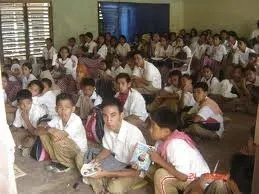
If you are a Vegas parent and you’ve ever thought your kid’s class seemed too crowded, you’re not imagining things. Nevada ranks first in the nation in class size. Nevada’s largest-in-the-nation class sizes don’t just impact student learning – they are a serious working condition issue for classroom educators and also contribute to issues of student behavior and school safety. Imagine trying to give individualized attention to 35 or 40 kids at once. It’s not teaching at that point. It’s crowd management.
Now, with over 1,200 positions being surplused, class sizes stand to grow further. Parents worry that with fewer staff, class sizes are going to increase, hurting student learning. One teacher who is facing cuts put it plainly, warning that “increasing class sizes in an already strained system is a disservice to our youth.” It’s hard to argue with that.
Support Staff: The Invisible Backbone Now Being Cut

Here’s what rarely makes the headline but matters just as much: support staff. The aides, bus drivers, security personnel, and cafeteria workers. The budget surplus designations include 500 support staff positions: custodians, security guards, bus drivers, and others. These are often the people who know a struggling student by name, who notice when something seems off, and who fill critical gaps that teachers simply cannot.
At least 37 Clark County School District employees were not retained because of districtwide enrollment declines. CCSD told district staff that the laid-off employees, all support staffers, were unable to match with other available positions during the reduction-in-force process. Losing support staff is a slow bleed that parents feel in subtle but real ways – longer wait times, less supervision, less personalized attention for kids who need it most.
The Birth Rate Problem Nobody Wants to Talk About

There’s a deeper structural issue driving all of this, and it goes well beyond district mismanagement. Birth rates in the Las Vegas metro have been falling for years. Both birth rates and total births in Clark County have trended downward since the mid-2000s. Over 30,000 babies were born in Clark County in 2007, compared with just over 24,000 in 2024, according to data from the Centers for Disease Control and Prevention’s National Center for Health Statistics.
Currently, about 24,500 CCSD students are enrolled in 12th grade, while CCSD is serving about 17,600 new kindergartners. That gap tells you everything about where enrollment – and funding – are headed in the next decade. A district built for growth is now being forced to right-size itself, and it’s a painful, messy process that plays out in every single classroom.
What Rising Teacher Pay Means for the Budget Paradox

There’s a deeply uncomfortable irony in all of this. Teachers fought hard for better pay, and rightly so. After years of being among the lowest-compensated educators in the country, they won meaningful raises. Teachers will receive average total compensation of $129,350 next school year including benefits, up from $105,609 in the 2023-24 school year, according to the school district statement. That’s a significant increase and one that was long overdue.
The problem is that higher salaries cost the district more money per employee, even as enrollment-based revenue is shrinking. The district had underestimated how much teacher raises would cost them. In January 2024, the district projected the average licensed employee salary at about $115,000, but that estimate grew to about $121,000, contributing directly to the budget miscalculations. It’s a genuine paradox: teachers deserve more pay, but higher pay costs jobs when the student count drops. There’s no clean answer here.
What Parents Can Actually Do About It
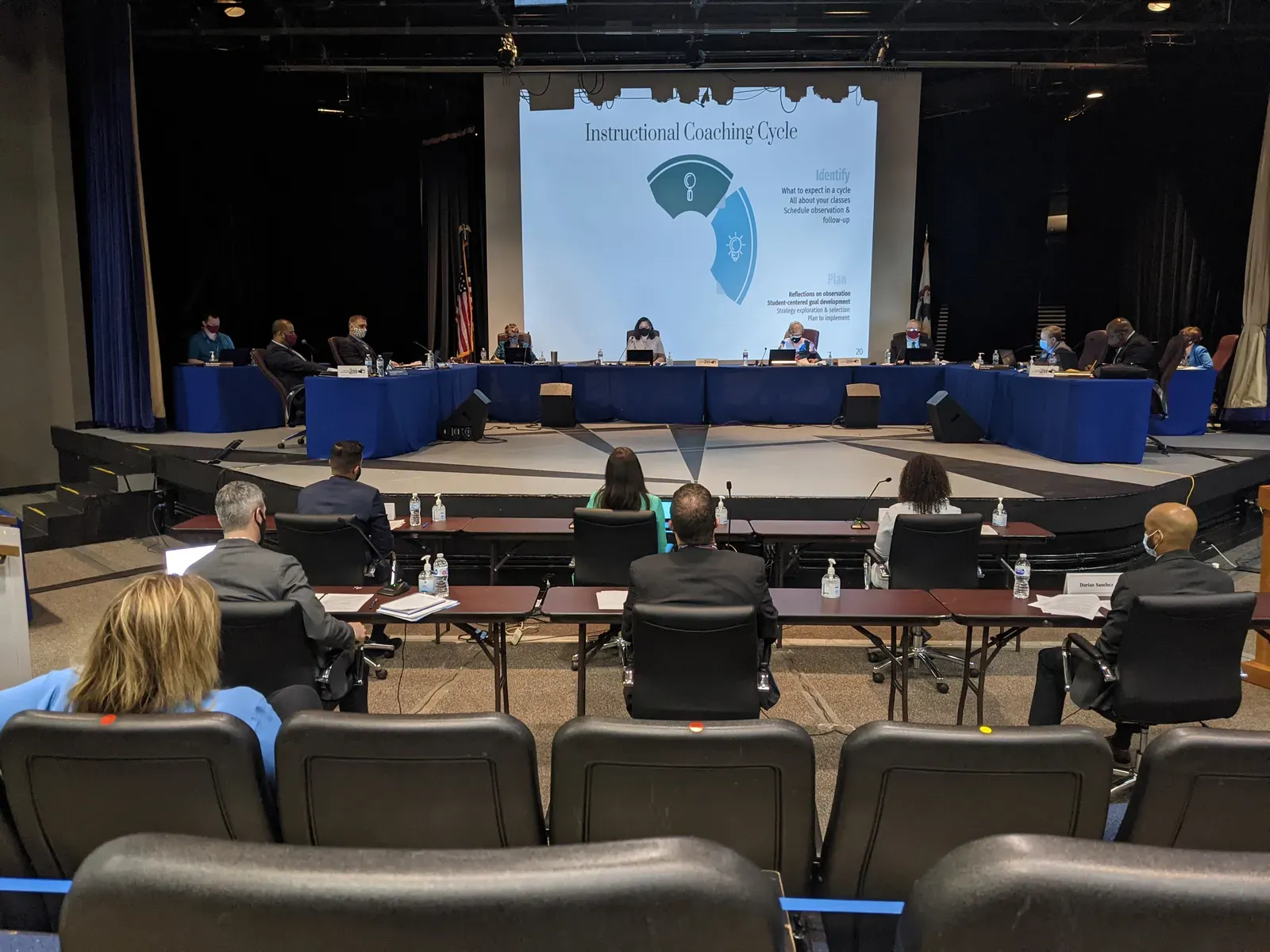
It would be easy to read all of this and feel helpless. I get it. But parents have more power in this process than they often realize. Part of the budgeting process involves important planning decisions like hiring of staff that happen in the spring, helping principals know how many people they can hire or if they need to surplus staff so they can find positions at other schools. That means spring is the moment when community voices matter most.
On January 15, 2025, the Clark County School District provided school principals with the estimated amount of money allocated to each local school precinct for the 2025-2026 school year. Every school has a School Organizational Team (SOT) where parents can formally participate in budget decisions. Showing up to those meetings, asking direct questions, and making noise with your school board trustees is not just encouraged. Right now, it is necessary. The district’s budget won’t be finalized until May – there is still time to shape what happens next.
The CCSD budget crisis is not a Vegas-only story. It reflects a national reckoning with declining enrollment, rising costs, and the long-term consequences of chronically underfunding public education. But for families in the Las Vegas Valley, it is deeply personal. Your child’s counselor, their art teacher, their after-school aide – these are the faces behind the numbers. What would you do if your kid’s school lost ten staff members overnight? What would that actually change for them?