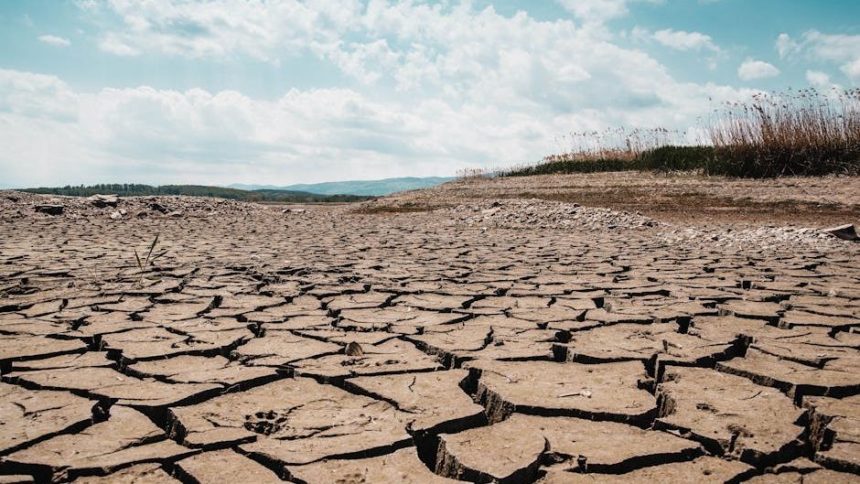

New Paper Shows Surges of Concentrated Precipitation Can Lead to Dryer Landscapes – Image for illustrative purposes only (Image credits: Pexels)
The American West is experiencing a pronounced shift in how moisture arrives, with snow and rain increasingly falling in concentrated surges rather than steady, widespread events. Researchers tracking these patterns report that the rate of concentration ranks among the highest observed anywhere in the world. The change is now recognized as a distinct driver of aridification, one that can leave soils and vegetation drier between storms even when total annual precipitation remains roughly the same. This development carries direct consequences for water planning, ecosystem health, and the region’s response to the current El Niño cycle.
Why Precipitation Concentration Matters
Traditional measures of drought have focused primarily on total rainfall or snowfall deficits. The new analysis shows that the timing and intensity of delivery can matter just as much. When moisture arrives in short, heavy pulses, much of it runs off before it can soak into the ground or recharge aquifers. The intervals between these events then become longer and drier, allowing evaporation and plant uptake to deplete available water more rapidly.
Over time, this rhythm produces landscapes that behave as though they are receiving less precipitation overall. The effect is measurable in soil-moisture records and in the health of forests and rangelands that depend on consistent subsurface water.
Consequences for Water Systems and Ecosystems
Reservoir operators and irrigation districts have long planned around average seasonal totals. Concentrated delivery complicates those calculations because peak flows can overwhelm storage capacity while subsequent dry spells increase demand. Managers may need to adjust release schedules and invest in infrastructure that captures brief high-volume events more effectively.
Native vegetation and wildlife face parallel stresses. Shallow-rooted plants and young trees are especially vulnerable during the extended dry intervals that follow intense storms. In some areas, the pattern is already linked to higher tree mortality and shifts in species composition, changes that can alter fire risk and watershed function for years afterward.
Links to El Niño and Seasonal Forecasting
The current El Niño phase is expected to bring above-average precipitation to parts of the West. Yet the same atmospheric conditions that favor heavier individual storms can also reinforce the very concentration pattern now under study. Forecasters are therefore examining whether the coming season will simply deliver more water in fewer events, leaving the underlying aridification trend intact.
Improved understanding of this dynamic could help refine seasonal outlooks and drought indices that currently treat all precipitation as equally effective at relieving moisture deficits.
Broader Implications for Drought Science
The findings suggest that aridification is not driven solely by declining totals but also by changes in the character of precipitation itself. This distinction matters for climate models and for policy discussions that rely on those models to project future water availability. Regions outside the American West that are seeing similar shifts in storm intensity may face comparable challenges, even if their overall precipitation amounts have not yet declined.
Researchers emphasize that the observed concentration is a trend, not an absolute rule, and that year-to-year variability remains large. Continued monitoring will be needed to determine how persistent the pattern proves to be under different climate conditions.
What matters now
- Water agencies are reviewing storage and delivery strategies to handle shorter, heavier inflows.
- Ecosystem managers are tracking soil-moisture recovery times between events.
- Seasonal forecasts are incorporating intensity metrics alongside total precipitation outlooks.
The recognition that concentrated precipitation can itself promote drier landscapes adds a new dimension to drought assessment. It underscores the need for management approaches that account for both the quantity and the delivery pattern of moisture in a warming climate.