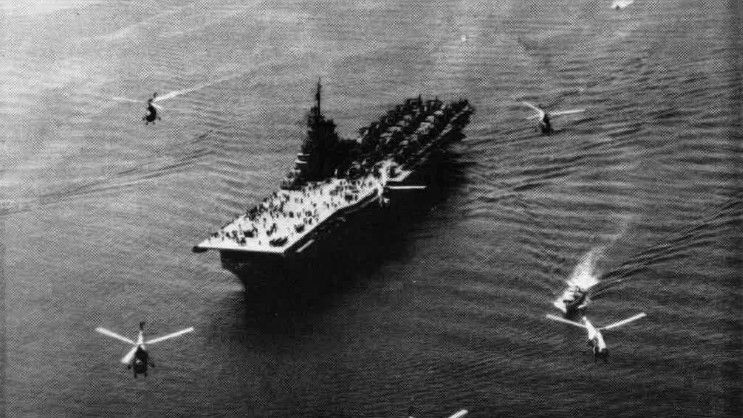
Iran opened fire on US warships; 6 small boats destroyed in retaliation: Centcom – Image for illustrative purposes only (Image credits: upload.wikimedia.org)
Sailors aboard U.S. warships in the Middle East faced live fire from Iranian forces on Monday, heightening risks for American personnel in a volatile region. U.S. Central Command responded decisively, eliminating six small Iranian boats in retaliation. Adm. Brad Cooper, the command’s leader, confirmed the details of the rapid exchange, which carried immediate implications for naval operations there.
The Initial Attack
Iranian forces targeted U.S. warships directly that day, marking a bold provocation amid persistent regional strains. The incident unfolded in waters critical to international shipping and military movements. U.S. personnel on the vessels had to react swiftly to the incoming fire, navigating a scenario fraught with danger.
Details emerged quickly through official channels. Centcom’s account highlighted the precision of the threat, underscoring how such actions test defensive postures. No U.S. casualties were reported in the immediate aftermath, though the event demanded heightened vigilance.
U.S. Military’s Counteraction
The American response came without delay. U.S. forces destroyed six Iranian small boats, neutralizing the immediate danger posed by the attackers. This retaliation aimed to deter further aggression and protect ongoing missions.
Adm. Brad Cooper provided the authoritative update on the operation’s success. His statement emphasized the effectiveness of U.S. capabilities in the face of hostility. The action reflected standard protocols for defending assets under threat.
Context of Rising Tensions
Centcom oversees U.S. operations across a expansive area, including key hotspots in the Middle East. Monday’s clash fit into a pattern of intermittent provocations that challenge stability. Iranian small boats have featured in prior incidents, often testing boundaries with larger naval powers.
The destruction of the six vessels sent a clear message. It reinforced commitments to freedom of navigation and ally security. Observers noted how such events ripple through diplomatic and military planning.
Implications for Personnel and Operations
For the sailors involved, the encounter brought real hazards into sharp focus. Warships patrolling these routes operate under constant readiness, with crews trained for exactly these threats. The swift resolution likely boosted confidence in defensive measures.
- Immediate threat elimination protected U.S. assets.
- No reported injuries among American forces.
- Centcom’s transparency aided allied coordination.
Looking ahead, the incident prompted reviews of patrol strategies. It served as a reminder of the human element in high-stakes deployments, where split-second decisions safeguard lives and interests.
This Middle East naval skirmish, though contained, left enduring questions about escalation risks. As U.S. forces maintain their presence, the balance between deterrence and restraint remains central to regional dynamics.